Cross Body Heel Tap
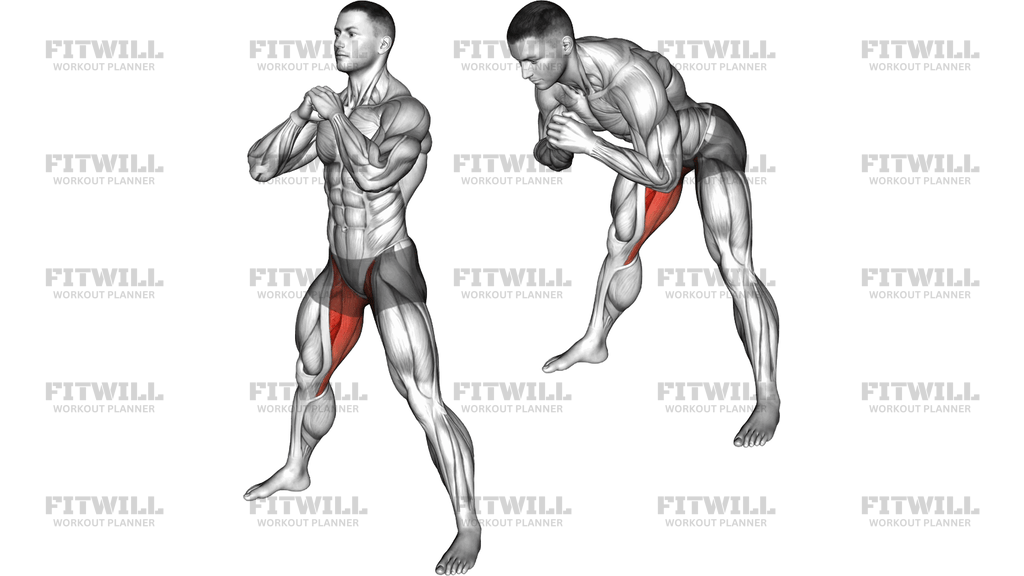
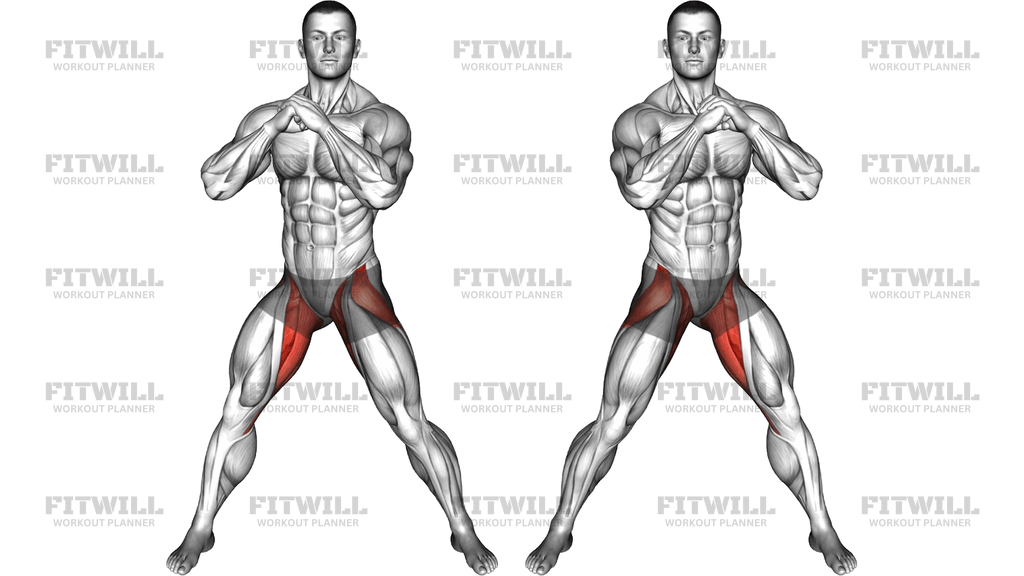
The Cross Body Heel Tap is a standing, no-equipment movement where you cross one leg in front of the other and tap your heel on the floor across the midline of your body, then return to a narrow staggered stance and repeat. It looks simple, but because your feet stay close together and the working leg travels diagonally across your body, your inner thighs have to actively control the leg while your deep core and hip stabilizers keep you balanced.
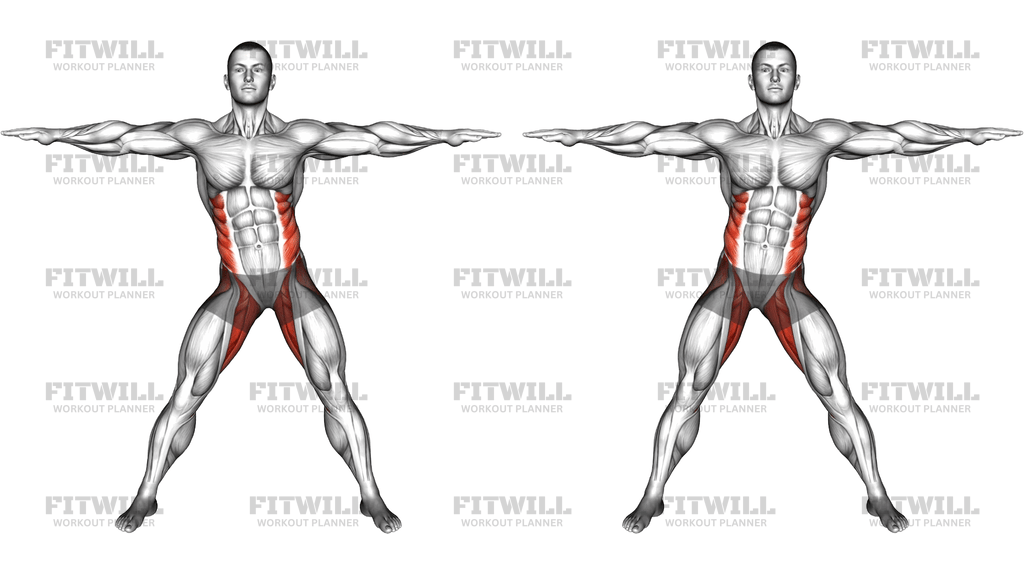
The main work comes from the adductors on the inner thigh of the standing leg, which resist the crossing motion and pull the leg back, while the abs — especially the lower abdominals and obliques — brace to stop your torso from swaying. The muscles around the standing ankle and hip work quietly the whole time to hold your alignment, which is why this exercise often feels harder than it looks after just a few reps per side.
This is a useful movement for anyone who wants to wake up the inner thighs without loading the lower back, including beginners, people returning from lay-offs, and lifters who squat or hinge but rarely train adduction directly. It also fits well into warm-ups, Pilates-style sessions, and balance work for older adults, since it challenges single-leg stability in a low-impact way.
Setup matters more than speed here. Stand tall with your arms crossed in front of your chest or hands on your hips, shift your weight onto one leg with a soft knee, and position the other foot just behind and across the standing leg. If your stance is too wide, the crossing leg gets a free ride; if it is too narrow or your torso leans, you lose the balance challenge that makes the exercise effective.
To execute well, sweep the crossing foot forward and across the midline, gently tapping your heel on the floor on the outside of the standing foot, then draw it back with control rather than letting it drop. Keep your hips square to the front the entire time — the leg moves, not the pelvis. Move slowly enough that you could pause at the tap without wobbling.
A practical safety point: hold onto a wall, chair, or rail when first learning the movement, and keep the working foot light on the floor rather than stomping the heel down. If you feel pinching in the front of the hip, reduce the range of the cross instead of forcing the heel further across the body.
[ Workout Log & Planner ]
Put your next workout in Fitwill
Keep your plan and training log ready when you are.


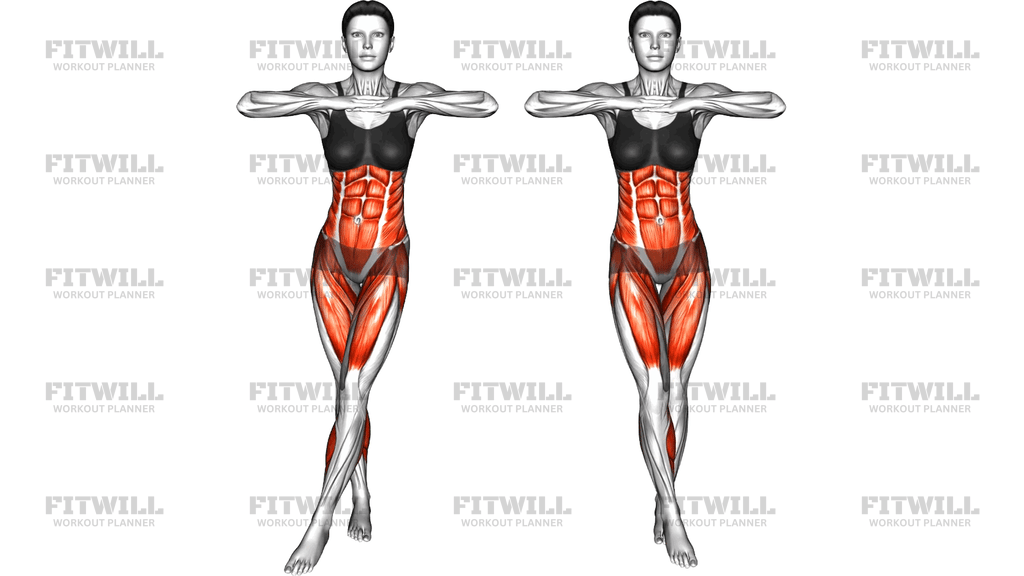
Instructions
- Stand upright with your feet together and your arms crossed in front of your chest, hands resting near the opposite shoulders for balance.
- Shift your weight onto your right leg with a soft bend in the knee, and place your left foot slightly behind and across the right so the legs are staggered in a narrow line.
- Brace your abdominals and keep your hips square to the front; do not let your pelvis rotate as the leg moves.
- Sweep your left foot forward and across the midline of your body in a smooth diagonal path.
- Tap your left heel lightly on the floor just outside your right foot, keeping the toes relaxed and the contact gentle.
- Pause for a brief moment at the tap without letting your torso lean or your standing knee collapse inward.
- Draw the left foot back along the same diagonal path to the starting staggered position, controlling the return with your inner thigh rather than dropping the foot.
- Breathe steadily throughout — inhale as the leg travels forward, exhale as you return it back.
- Complete all reps on one side, then switch your weight to the left leg and tap with the right heel for the same number of repetitions.
- Reset your stance between sets so your feet stay narrow and your posture stays tall before the next round.
Tips & Tricks
- The most common mistake is letting the hips swing toward the tapping side; imagine your pelvis is set in cement and only the leg below the hip moves.
- Keep the tap light — a heavy heel strike usually means you are losing control of the leg on the way forward instead of guiding it.
- If you wobble at the tap, widen your eyes focus to a fixed point on the wall at chest height; a moving gaze makes the balance much harder.
- Do not lock the standing knee. A soft knee keeps the adductors and hip stabilizers doing the work instead of passively hanging on the joint.
- Shorten the crossing range if you feel a pinch at the front of the hip; tap closer to the standing foot and gradually extend the reach over sessions.
- Holding your breath is a frequent giveaway that the core has disengaged — if you cannot breathe smoothly, slow the tempo down.
- Use a wall or the back of a chair for fingertip support during your first few sessions; remove it once you can tap without leaning.
- Avoid letting the toes of the crossing foot drag on the floor; lift the foot slightly as it travels across so the inner thigh, not momentum, controls the path.
- Keep reps even on both sides — most people have one direction that feels clumsier, and balancing the volume helps even out hip stability.
Frequently Asked Questions
What muscles does the Cross Body Heel Tap work?
The primary work is in the adductors of the inner thighs, which control the leg as it crosses and returns. The abs and obliques stabilize your torso, while the hip and ankle stabilizers on the standing leg keep you balanced.
Is the Cross Body Heel Tap suitable for beginners?
Yes. It is low-impact and requires no equipment, so beginners can learn it immediately. Start with fingertip support from a wall and a smaller crossing range until your balance improves.
Why do my hips rotate when I tap my heel across my body?
Rotation usually means the core is not braced or the tap is being reached for rather than controlled. Brace your abdominals, keep the hips square to the front, and shorten the crossing distance so the leg does the moving.
How many reps of the Cross Body Heel Tap should I do?
Start with 8 to 12 controlled taps per leg for two to three rounds. Because quality of balance matters more than speed, stop a set as soon as your taps become sloppy or your hips start swinging.
Can I do the Cross Body Heel Tap as a warm-up?
Absolutely. It raises awareness in the inner thighs and hip stabilizers before squats, lunges, or running, and it works well early in a warm-up before more dynamic drills.
What can I substitute if balancing is too difficult?
Hold a wall, railing, or chair back with one hand while tapping, or perform the same crossing heel tap lying on your side to remove the balance demand while still training the adductors.
Should my standing knee be straight or bent during the Cross Body Heel Tap?
Keep a soft, slight bend in the standing knee. A fully locked knee reduces stability and shifts stress to the joint instead of the hip muscles controlling the movement.
Why do I feel this more in my standing leg than the leg that is tapping?
That is normal. The standing leg's inner thigh and hip stabilizers resist the shifting weight the entire time, while the tapping leg mainly moves through its range. Switch sides evenly so both legs get both roles.
Is it safe to do the Cross Body Heel Tap every day?
Yes, as long as the volume stays moderate and you perform it with control. It is a gentle body-weight movement, but if you notice persistent hip pinching or ankle discomfort, reduce range or frequency and consult a professional if it continues.