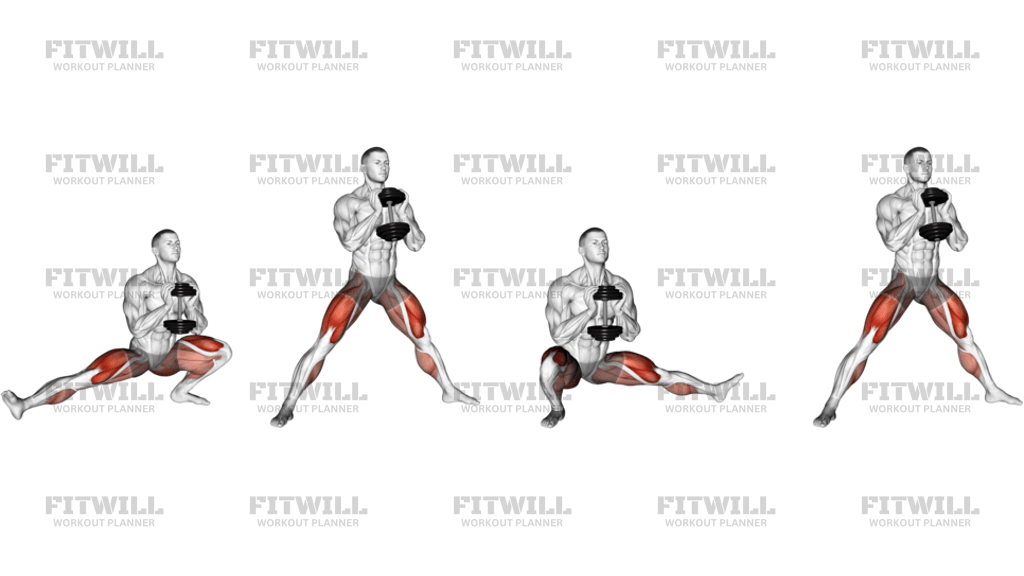
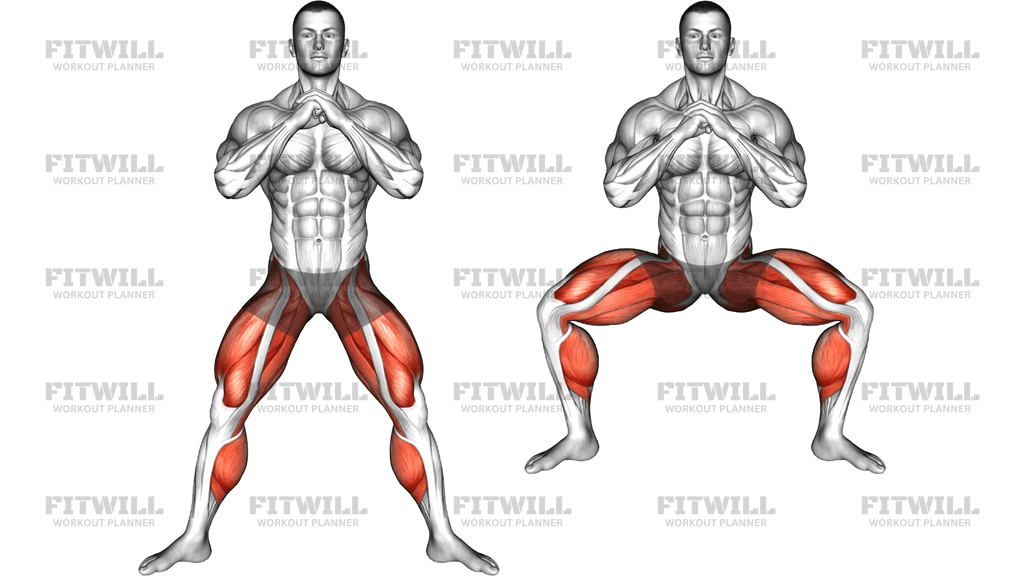
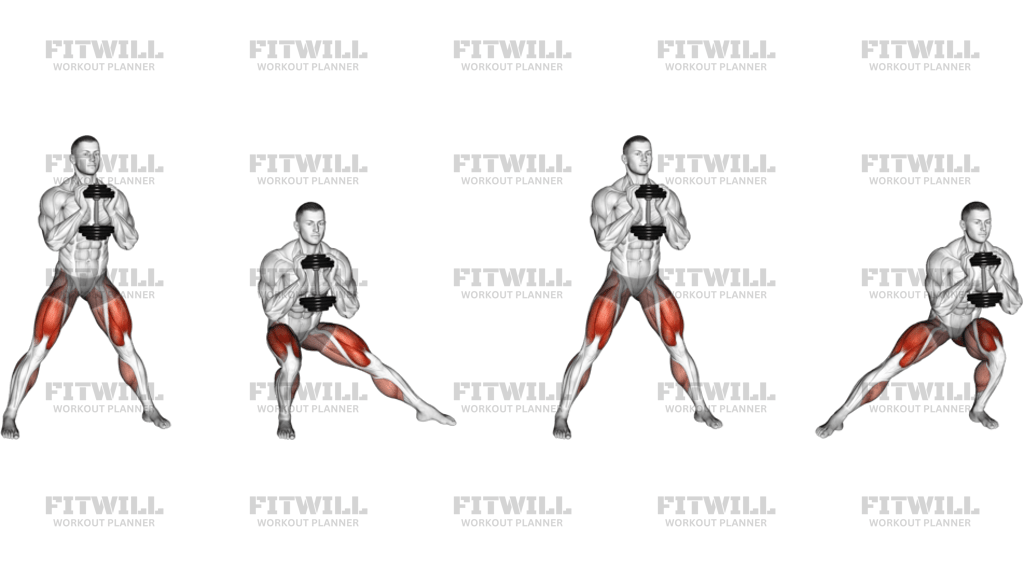
Dumbbell Sumo Deadlift
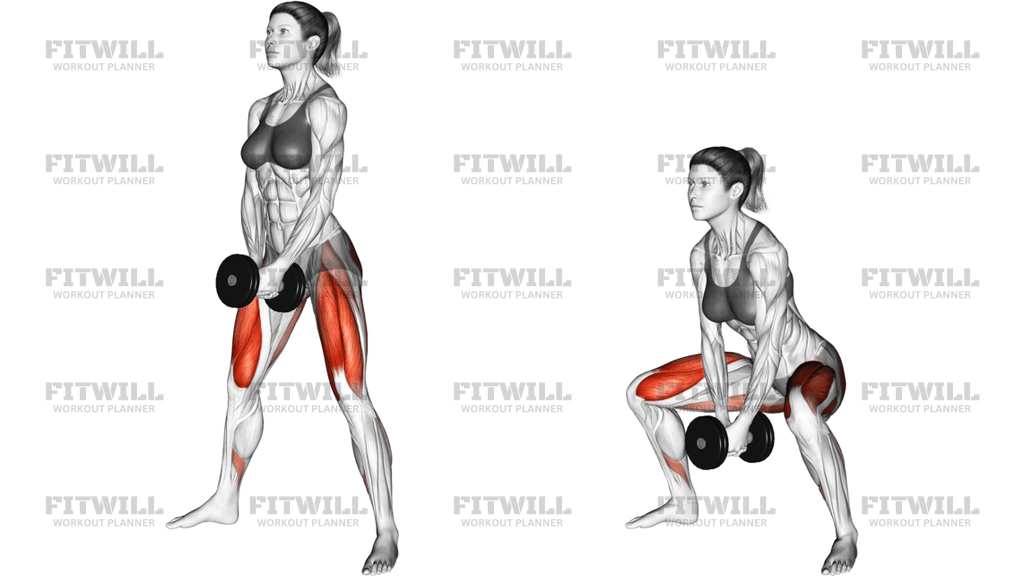
The Dumbbell Sumo Deadlift is a wide-stance hinge-and-squat hybrid where a single dumbbell is held vertically between the legs with both hands. Instead of positioning the weight in front of the body like a conventional deadlift, you stand over it with your feet set well outside shoulder width and toes turned out, so the dumbbell travels straight up and down through your midline. This changes the entire feel of the lift compared to a barbell version: the load sits closer to the floor, the torso stays more upright, and the knees track outward over the toes.
This variation is especially useful for people who struggle with barbell deadlift setup, have limited hip hinge mobility, or want a version that loads the inner thighs and quads more heavily. Because the weight is centered between the feet, there is far less shear stress on the lower back than a bent-over barbell pull, which makes it a practical choice for lifters building posterior chain strength with a more forgiving lever arm.
The primary work comes from the quadriceps and glutes, with significant contributions from the adductors on the inner thigh, the hamstrings, and the erector spinae holding the spine neutral. The wide stance places the adductors under a long stretch at the bottom, and the forearms and grip work to hold the dumbbell head securely through every rep.
Setup matters more than most people realize. The dumbbell should sit over the midfoot, your shins stay near vertical, and your chest stays tall enough that the shoulders sit slightly above the hips at the bottom. If you let the torso collapse forward or let the knees cave inward, the lift turns into a sloppy good morning and the adductor stretch is lost.
To execute it well, drive the floor apart with your feet as you stand, keep the dumbbell brushing lightly against the inside of your shins and thighs, and finish tall with your glutes contracted rather than leaning back. On the way down, push the hips back and bend the knees together so the dumbbell lowers along the same vertical path it came up.
You will see this lift used as a main lower-body strength movement in dumbbell-only training, as a teaching tool before barbell sumo deadlifts, and as a high-rep conditioning exercise with a moderate weight. It pairs well with split squats or hip thrusts when you are working with limited equipment.
[ Workout Log & Planner ]
Put your next workout in Fitwill
Keep your plan and training log ready when you are.


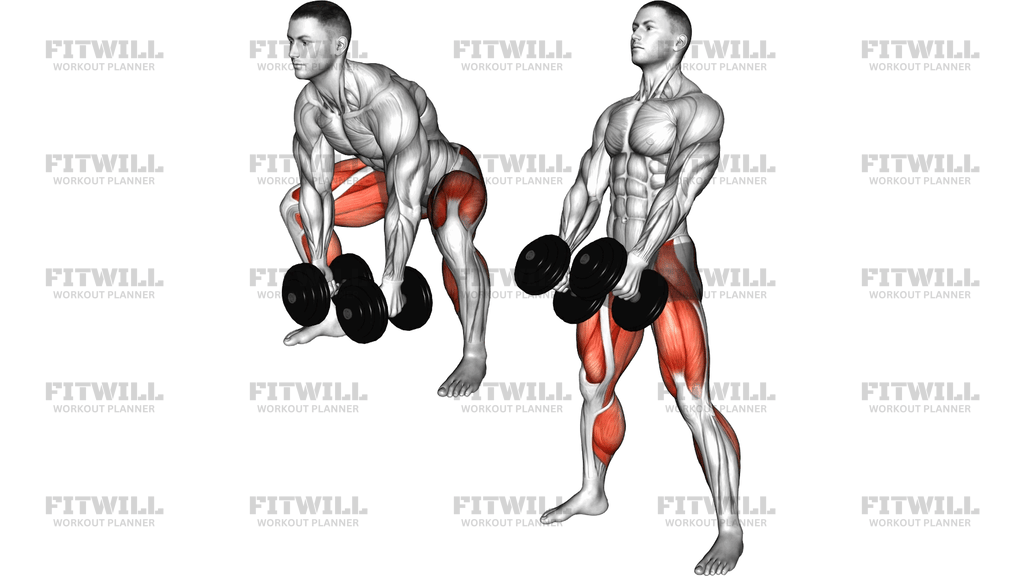
Instructions
- Place one dumbbell on the floor vertically and step over it so it sits directly over your midfoot, with your feet roughly one and a half shoulder widths apart.
- Turn your toes out about 30 to 45 degrees and let your knees flare in the same direction as your toes.
- Hinge at the hips and bend your knees to reach down, gripping the top head of the dumbbell with both hands, arms hanging straight down between your legs.
- Pull your chest up and brace your core as if preparing for a light punch to the stomach, keeping your shoulders slightly higher than your hips and your spine neutral.
- Drive your knees out so they track over your toes and keep the dumbbell close to your shins as you prepare to lift.
- Exhale through the sticking point as you push the floor away with both feet, extending your hips and knees together until you stand fully upright.
- Finish with your glutes squeezed, legs straight, and the dumbbell hanging at arm's length against your thighs; do not lean back or shrug at the top.
- Lower the dumbbell under control by pushing your hips back first, then bending your knees, letting it travel down the same vertical path between your legs until the plates touch the floor.
- Inhale and re-brace at the bottom before each rep, resetting your grip and knee position rather than bouncing out of the stretch.
Tips & Tricks
- If your knees drift inward as you stand, consciously push them toward the outside of your pinky toes; caving knees are the most common fault in this wide stance.
- Keep your hips lower than you would in a conventional deadlift. If your hips shoot up first and your chest drops, the weight is too heavy or your stance is too narrow.
- Grip the dumbbell head from above with both palms overlapping, not the handle. Holding the handle makes the dumbbell swing and pulls you off balance.
- Your shins should stay close to vertical at the bottom. If they lean far forward, you are squatting the weight instead of sitting back into the wide stance.
- Do not jerk the dumbbell off the floor. Take the slack out by pulling your shoulder blades down before the plates leave the ground.
- Turn your toes out only as far as your hips allow. If your knees roll in at the bottom, narrow the stance slightly and reduce the toe angle.
- Avoid hyperextending your lower back at the top. Finish the rep with a glute squeeze and tall posture, not a backward lean.
- Use lifting straps only for high-rep sets if your grip is the limiting factor, but train your grip with moderate sets since the two-handed hold is part of the exercise.
- If your inner thighs cramp at the bottom, spend a few sessions with a lighter dumbbell and a higher hip position before chasing depth.
Frequently Asked Questions
What muscles does the Dumbbell Sumo Deadlift work?
The quadriceps and glutes do most of the work, with strong involvement from the adductors because of the wide stance. The hamstrings, lower back, and grip muscles support the lift throughout.
How is the Dumbbell Sumo Deadlift different from a conventional dumbbell deadlift?
The wide, toes-out stance lets you sit between your feet with a more upright torso, which shifts more work to the quads and inner thighs and keeps the dumbbell moving straight up your midline. A conventional stance loads the hamstrings and lower back more because the torso leans forward farther.
Is the Dumbbell Sumo Deadlift good for beginners?
Yes, it is one of the friendliest ways to learn a hip-dominant lift because the weight sits between your feet, the balance demands are low, and the range can start shallow. Start with a light dumbbell and prioritize pushing the knees out over the toes.
Why do my inner thighs cramp during Dumbbell Sumo Deadlifts?
The adductors work hard in a long stretched position at the bottom, and cramping usually means the stance is wider or deeper than your current mobility supports. Reduce the width, limit the depth slightly, and build up over a few weeks.
Should I hold the dumbbell by the head or the handle?
Grip the top head of the dumbbell with both hands so it hangs vertically and stays stable between your legs. Holding the handle lets the dumbbell rotate and swing, which throws off the vertical bar path.
How heavy should the dumbbell be for this exercise?
Choose a weight you can lower with control and lift without your knees caving or your chest dropping for your target rep range. Because one dumbbell must be manageable to set up, very heavy sets usually come from adding reps, tempo, or a second dumbbell variation rather than max loads.
Can the Dumbbell Sumo Deadlift replace barbell sumo deadlifts?
It trains the same movement pattern and stance, but with a lighter top end and a shorter lever, so it works well as a substitute when you have no barbell or as a teaching progression. For maximal strength, the barbell version allows heavier loading.
Is it safe for my lower back?
The centered load and upright torso put less strain on the lower back than many hinge variations, but you still need a neutral spine and a firm brace on every rep. Stop and reset if you feel the dumbbell pulling you forward or your lower back rounding at the bottom.
How deep should I go on each rep?
Lower until the dumbbell plates touch the floor lightly, or as close as your hip mobility allows while keeping your chest up and knees tracking out. Depth that costs you spinal position is not worth taking.
Can I do Dumbbell Sumo Deadlifts with two dumbbells instead of one?
Yes, holding a dumbbell in each hand outside your legs with the same wide stance is a common progression. It removes the two-handed grip on one head but increases the total load and balance demand.