Side To Side Side Punch
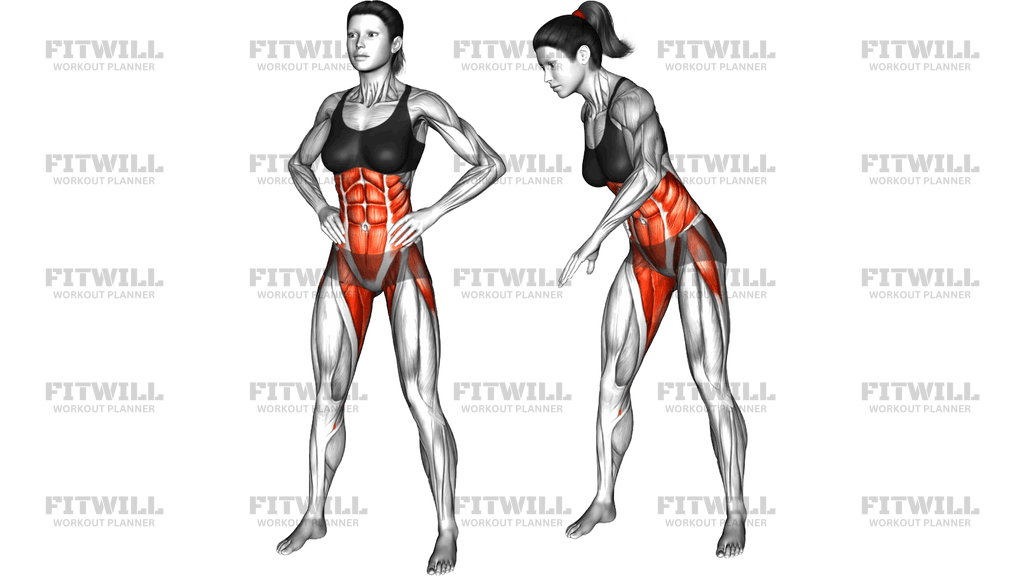
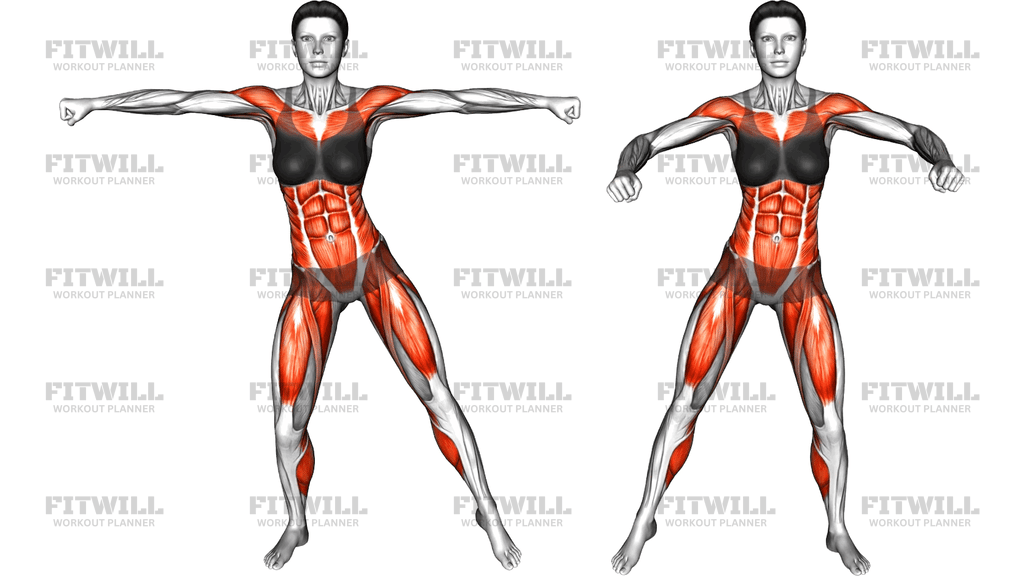
The Side To Side Side Punch is a standing body weight exercise where you settle into a wide stance, extend your arms out to your sides at shoulder height, and rhythmically shift your weight from one leg to the other. As you load each leg, that side's arm punches down and slightly across while the opposite arm stays long, then the action mirrors to the other side. The result is a continuous, flowing side-to-side motion that looks simple but asks a lot from your waist, hips, and legs.
This movement is a great fit for warm-ups, fat-burning circuits, and low-impact conditioning blocks. Because both feet stay planted, it spares the knees and ankles compared with jumping variations, which makes it accessible to beginners, older trainees, and anyone coming back from a layoff. It also works well as an active recovery drill between heavier strength sets, since it keeps blood moving without adding joint stress.
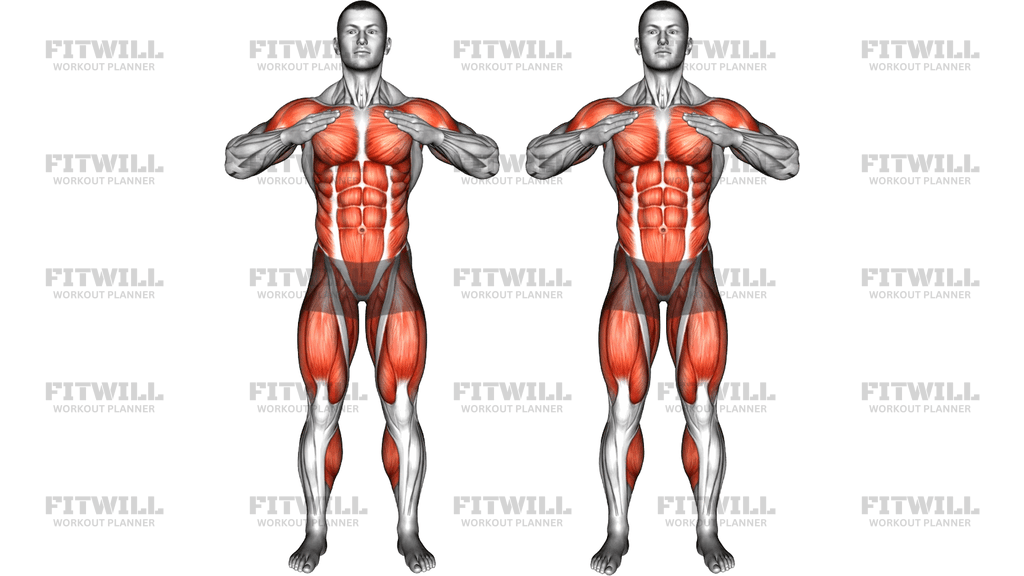
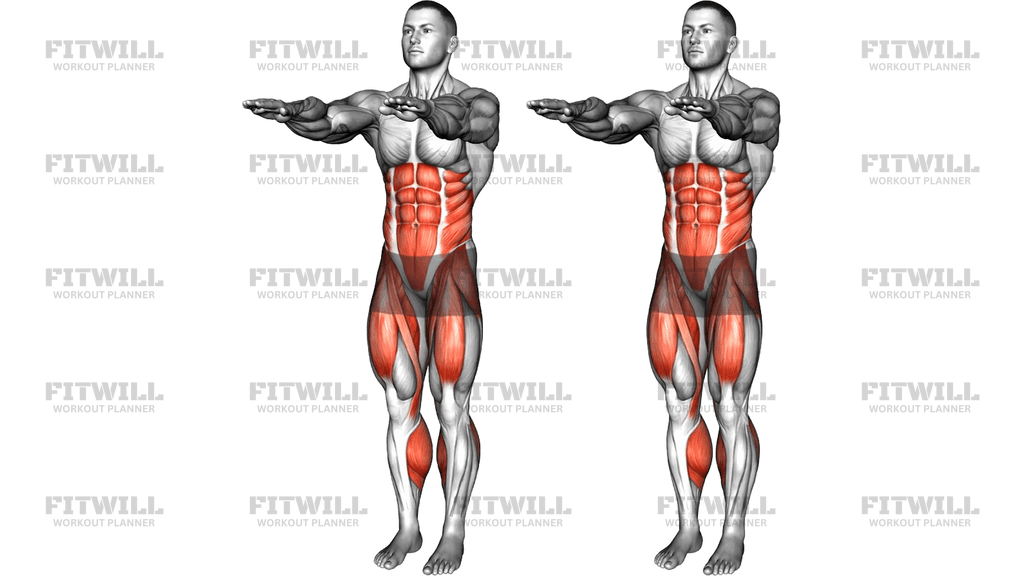
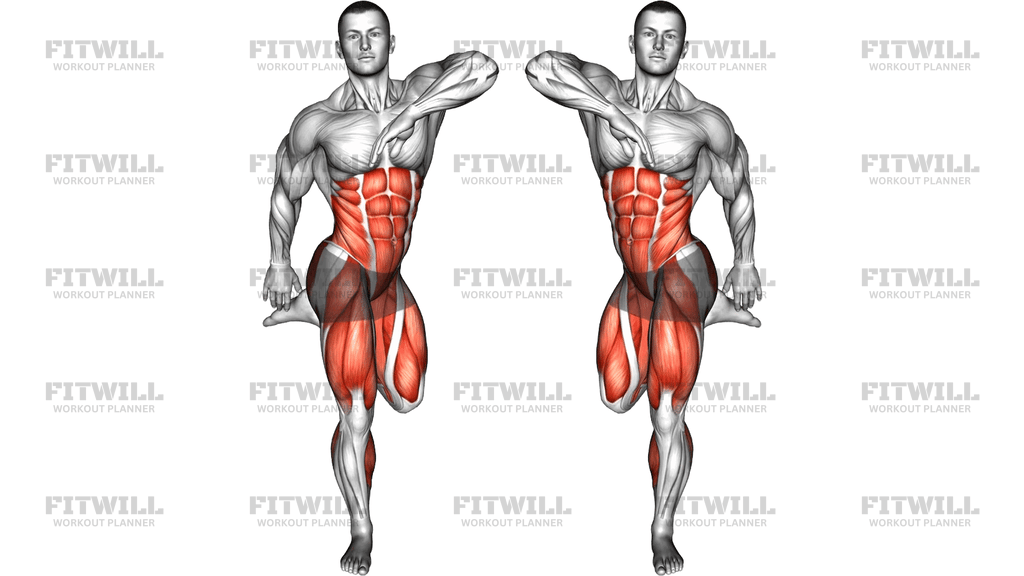
The main work comes from the obliques, which control the side-to-side shift of your torso and drive each punch. Your abs brace to keep the ribcage connected to the hips, the inner thighs and quads absorb and redirect your weight each time you load a leg, and the glutes on the working side stabilize your stance. Holding the arms out at shoulder height also wakes up the shoulders and upper back, so the whole body stays engaged from feet to fists.
Setup matters more than it looks. A stance about one and a half to two shoulder-widths wide gives your hips enough room to shift without your knees caving inward, and soft, slightly bent knees let you move with control instead of stiffness. Keeping the torso tall rather than hunching forward ensures the obliques do the work instead of your lower back rounding to fake the motion.
To execute it well, think of your weight transfer leading the arm. Shift onto the right leg, let the right knee bend naturally, and punch the right fist down toward that thigh in one smooth beat, then flow straight across to the left without pausing. The punch should feel crisp but not violent, and the return of the opposite arm to its extended position should happen at the same tempo. Keep breathing steadily throughout rather than holding your air.
A few practical points will keep this safe and effective. Move at a pace you can fully control before speeding up, keep both heels down as you shift, and stop short of any sideways lean that makes you feel off balance. If your knees or hips complain, narrow the stance slightly and reduce how far you shift. Done consistently, this drill builds rotational control, hip mobility, and conditioning that carries over to sports, daily movement, and more advanced standing core work.
[ Workout Log & Planner ]
Put your next workout in Fitwill
Keep your plan and training log ready when you are.


Instructions
- Stand tall with your feet spread one and a half to two shoulder-widths apart and your toes turned slightly outward.
- Raise both arms straight out to your sides at shoulder height and close your hands into loose fists.
- Bend your knees slightly, brace your abs, and stack your ribcage over your hips so your torso stays tall.
- Shift your weight onto your right leg and let the right knee bend a little more as your hips travel right.
- In the same beat, punch your right fist down and slightly across toward your right thigh while the left arm stays extended.
- Flow straight across: transfer onto the left leg, bend the left knee, and punch the left fist down toward the left thigh as the right arm returns to shoulder height.
- Keep both heels glued to the floor and your knees tracking over your toes with each shift.
- Exhale sharply on each punch and inhale as you cross back through the middle.
- Continue alternating side to side at a controlled rhythm for your target time or rep count.
- To finish, slow the tempo, bring your weight back to center, and lower your arms before stepping your feet together.
Tips & Tricks
- The most common mistake is bending forward at the chest to make the punch bigger. Stay upright and let the obliques shorten on the punching side instead.
- If your knees drift inward as you load each leg, narrow your stance slightly and consciously press the knee out over the little toe.
- Avoid punching so hard that your shoulder jerks. A crisp but controlled fist path protects the shoulder joint at this extended arm position.
- Keep the non-punching arm actively extended at shoulder height; letting it sag turns the drill into a one-sided movement and halves the work.
- If your lower back tightens up, reduce how far you shift side to side rather than stopping the movement entirely.
- Start slow for the first few reps to groove the timing, then build speed only as far as your heels stay planted and your torso stays tall.
- Picture driving the punch from the hip shift, not from the arm. The legs and waist create the motion, the arm just delivers it.
- On carpet or slick floors, check your footing first, since the wide stance puts small shearing forces on the feet during each transfer.
Frequently Asked Questions
What muscles does the Side To Side Side Punch work?
The obliques on both sides of your waist do the main work as they control each shift and punch. Your abs brace isometrically, and the inner thighs, quads, and glutes handle the repeated weight transfer from leg to leg.
Is the Side To Side Side Punch suitable for beginners?
Yes. Both feet stay on the floor and there is no equipment, so beginners can start with a narrower stance and a slower tempo. Increase the width of the shift and the speed only once the pattern feels smooth.
How wide should my stance be for this exercise?
Roughly one and a half to two shoulder-widths works for most people. The stance should be wide enough that your hips can shift clearly to each side without your knees collapsing inward or your heels lifting.
Why do my arms get tired during the Side To Side Side Punch?
Holding the arms extended at shoulder height keeps the shoulders and upper back under constant tension, so they fatigue before your waist does. Lower the arms slightly toward a lower diagonal if shoulder fatigue limits your set.
Should I punch downward or straight out to the side?
The punch travels down and slightly across toward the thigh on the side you are loading. This path matches the hip shift and keeps the tension on the obliques instead of straining the shoulder.
Can I use this as cardio instead of strength work?
Absolutely. Performed continuously for 30 to 60 seconds or more at a brisk rhythm, it raises your heart rate and works well in circuits, warm-ups, or low-impact cardio intervals.
What can I substitute if standing weight shifts bother my knees?
Try a narrower stance with a smaller shift, or sit on a sturdy chair and perform just the alternating punches with a gentle trunk lean. Both versions keep the oblique pattern without deep knee loading.
How do I know if I am doing the Side To Side Side Punch correctly?
You should feel the side of your waist working on each punch, your heels staying down, and your torso staying tall throughout. If you feel it mainly in your lower back or knees, shorten the range and reset your posture.