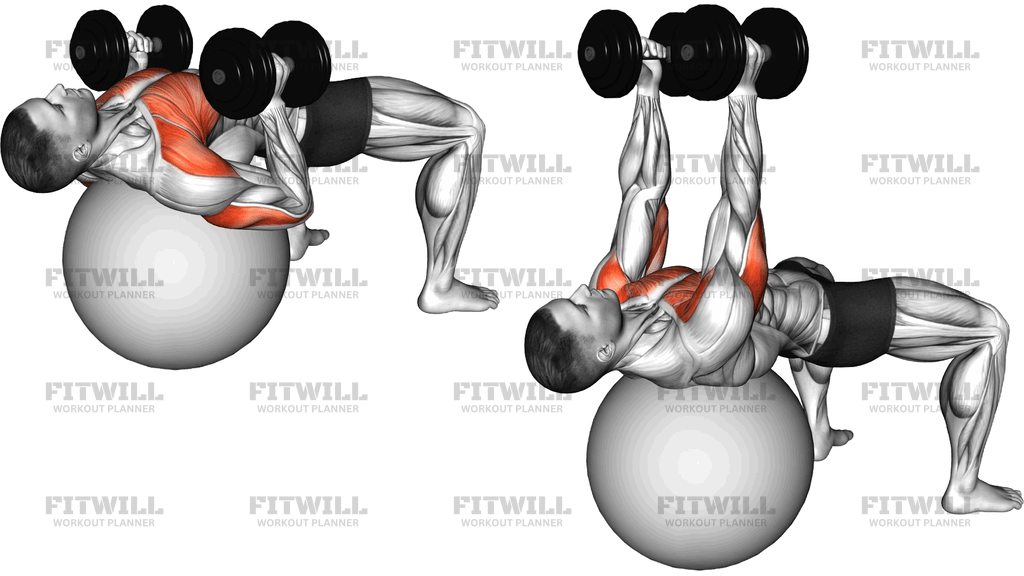
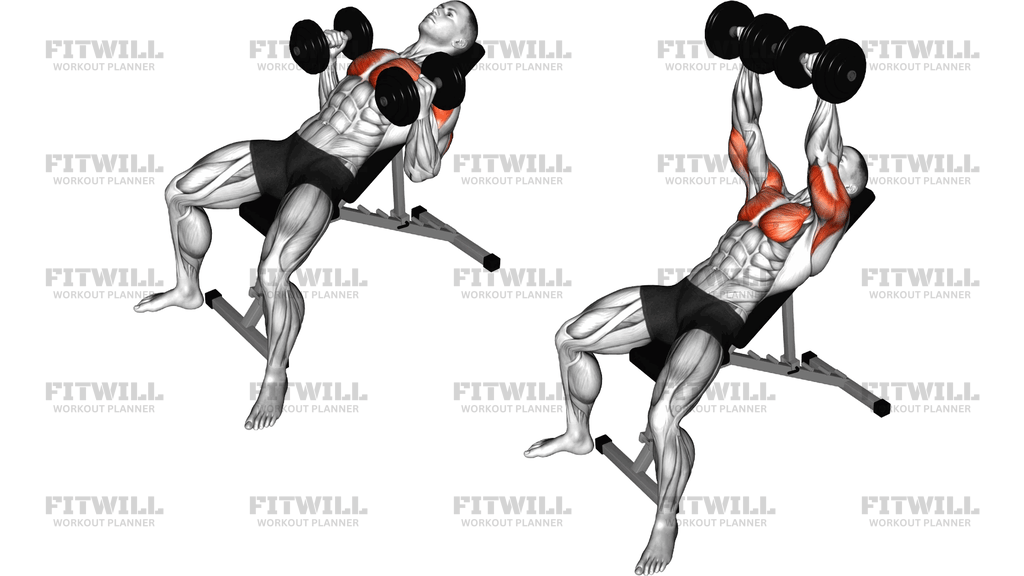
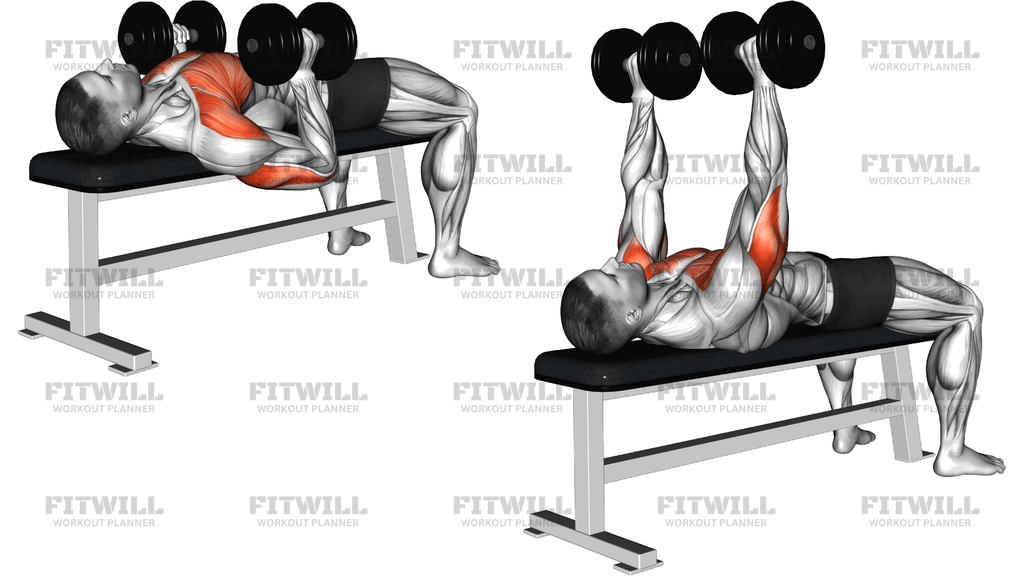
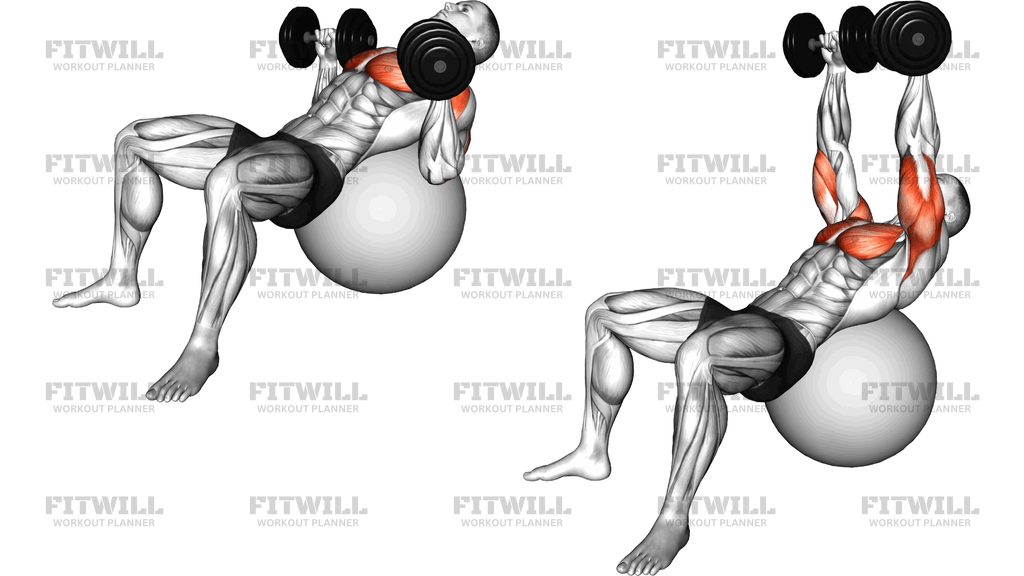
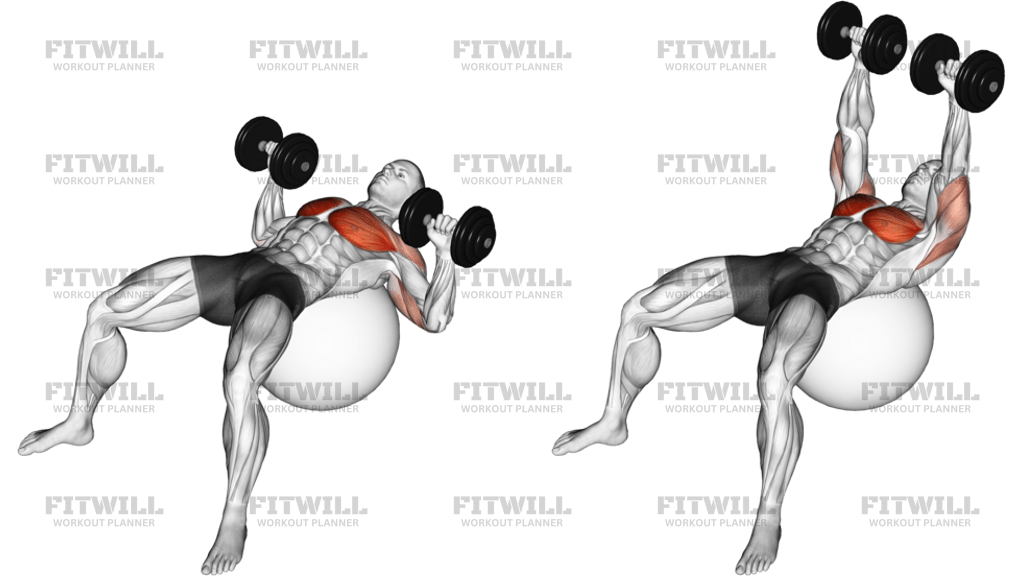
Dumbbell Glute Bridge Chest Press
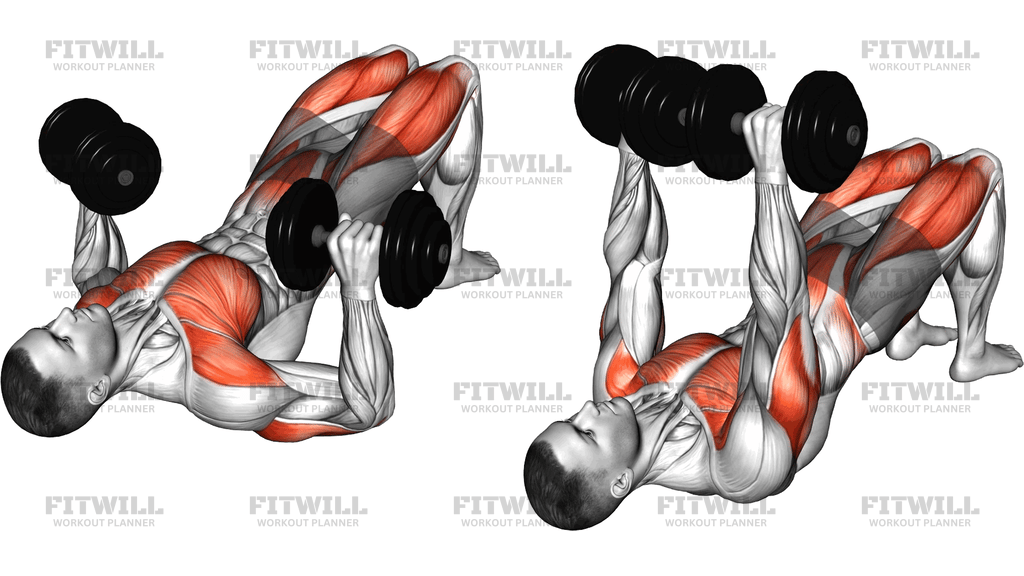
The Dumbbell Glute Bridge Chest Press is a hybrid floor exercise that combines two movements most people train separately: an isometric glute bridge hold and a dumbbell chest press. You lie on your back with your knees bent and feet flat, drive your hips up into a bridge, and then press a pair of dumbbells from your chest toward the ceiling while keeping your hips elevated the entire time. The result is a pressing movement that simultaneously loads the glutes and challenges your trunk to hold a straight line from shoulders to knees.
This exercise works well for anyone who wants more from the time they spend on the floor. Lifters training at home with limited equipment get chest, triceps, and front shoulder work from the press, plus glute and hamstring engagement from the bridge, all without a bench. It is also a smart choice for people who spend long hours sitting, because the bridge position actively lengthens the hip flexors while the glutes work to hold the hips extended.
From a muscle standpoint, the press portion primarily targets the pectorals, with the triceps and front delts assisting as the dumbbells travel up and inward. Holding the bridge keeps the gluteus maximus under constant tension, and the hamstrings and lower back musculature help maintain hip extension. Your core works isometrically the whole set; if your abdominals go slack, the bridge position collapses before your arms ever fatigue.
Setup matters more here than in a standard floor press. Because your upper back is on the ground and your hips are lifted, you have less stability than when pressing on a bench, so the weights should be lighter than your usual dumbbell press load. Plant your feet firmly about hip-width apart, position the dumbbells so your elbows rest near the floor at roughly 45 degrees from your torso, and squeeze the glutes before the first rep rather than trying to find the bridge mid-press.
Execution comes down to separating the two jobs. The lower body holds its position quietly: hips high, ribs down, no bouncing or sagging. The upper body does the dynamic work: press the dumbbells up until the arms are extended over the chest, let them come down with control until the backs of the upper arms lightly touch the floor, then drive up again. Breathe steadily instead of holding your breath, and rack the dumbbells or lower your hips only after the set is finished.
You will see this movement used in home full-body sessions, glute-focused circuits where a pressing pattern is still needed, and warm-up or finisher blocks where a coach wants low-load upper body work paired with hip extension. If your hips drop during the set, that is the signal to stop, reset the bridge, or reduce the weight rather than grinding through reps with a sagging position.
[ Workout Log & Planner ]
Put your next workout in Fitwill
Keep your plan and training log ready when you are.


Instructions
- Sit on an exercise mat with a pair of dumbbells beside your hips, then roll back onto your shoulder blades and position the dumbbells over your chest with a neutral grip, palms facing each other.
- Bend your knees to about 90 degrees and plant your feet flat on the floor, hip-width apart, with your heels roughly a hand span from your glutes.
- Drive through your heels and squeeze your glutes to lift your hips until your body forms a straight line from your shoulders to your knees.
- Hold the bridge position and brace your abdominals, keeping your ribs pulled down so your lower back does not arch excessively.
- From the top of the bridge, press both dumbbells straight up over your chest until your arms are extended and the weights are above, not behind, your shoulder line.
- Lower the dumbbells under control until the backs of your upper arms lightly touch the floor, keeping your elbows at roughly 45 degrees from your torso.
- Exhale as you press up and inhale as you lower, maintaining steady breathing instead of holding your breath while the bridge is held.
- Keep your hips at the same height for every rep; if they begin to sink, set the dumbbells down, lower your hips, and re-bridge before continuing.
- Complete all repetitions while holding the bridge, then rack the dumbbells to your chest and lower your hips back to the mat to finish the set.
Tips & Tricks
- Choose a weight well below your normal floor press load; holding a bridge removes the back support you would have on a bench, and most people overestimate what they can stabilize here.
- The most common breakdown is the hips sagging as the arms fatigue. Film a set from the side once to see whether your hip line actually stays straight, because it is hard to feel from inside the movement.
- Push the floor away with your heels rather than your toes when setting the bridge; driving through the toes shifts work toward the quads and lets the hips rise too high into an arched position.
- If your wrists bend backward as you press, rotate the dumbbells slightly so your knuckles face the ceiling and your forearms stay stacked vertically over your elbows.
- Do not let the dumbbells drift behind your head at the top; press them over the mid-chest so the shoulders stay loaded in a stable position while the glutes hold.
- Keep light contact between the backs of your upper arms and the floor at the bottom of each rep. Bouncing the elbows off the ground usually costs you the bridge position at the same moment.
- Squeeze the glutes deliberately before your first press, not just at the start of the set; re-squeezing between reps keeps the hip extension active rather than passive.
- If pressing both dumbbells at once costs you the bridge, alternate arms so one side presses while the other helps counterbalance and stabilize.
- Set the dumbbells down by bending your elbows to your sides while still bridged, then lower the hips. Dropping weights from overhead while fatigued is the riskiest part of the setup.
Frequently Asked Questions
Which muscles does the Dumbbell Glute Bridge Chest Press work?
The press targets the chest, with the triceps and front delts assisting, while the glute bridge hold keeps the glutes and hamstrings under steady tension. Your core also works isometrically to hold the straight shoulder-to-knee line.
Can beginners do the Dumbbell Glute Bridge Chest Press?
Yes, provided they start with very light dumbbells or even no weight. Practice holding a bodyweight glute bridge for 20 to 30 seconds while breathing normally, then add light pressing once the bridge holds steady.
Should my hips stay lifted the entire time during the Dumbbell Glute Bridge Chest Press?
That is the point of the exercise. The hips should stay elevated and level for the whole set, and if they start to sink, you should reset the bridge rather than continue pressing from a sagging position.
Why is the bridge version harder to stabilize than a regular dumbbell floor press?
In a standard floor press your whole back and hips stay on the ground, giving you a broad base. With the bridge held, only your shoulder blades and feet contact the floor, so the pressing force has to be controlled by your glutes and core at the same time.
How heavy should the dumbbells be for the Dumbbell Glute Bridge Chest Press?
Start with roughly half the load you would use for a dumbbell floor press or bench press. The limiting factor is usually how long you can hold a solid bridge, not how much you can press.
My hips drop as soon as I start pressing. What should I fix?
Check three things: your feet are close enough that your heels can drive the bridge, you squeeze the glutes before the first rep, and the weight is not so heavy that your body prioritizes the press over the hold. Alternating arms can also reduce the stability demand.
Can I do the Dumbbell Glute Bridge Chest Press with my shoulders on a bench instead of the floor?
You can, and that variation resembles a hip thrust combined with a press, but it changes the setup and the range of motion. The version shown is performed entirely on the floor or a mat, which keeps it accessible without a bench.
What can I substitute if I do not have dumbbells?
A barbell or a single kettlebell can replace the dumbbells, or you can press a resistance band from the bridge position. With no equipment at all, hold the glute bridge and practice the pressing pattern against light external resistance later.
Is it safe for my lower back to hold a bridge while pressing?
For most people it is fine when the ribs stay down and the glutes, not the lower back, do the lifting. If you feel your lower back arching or straining, lower the weight, reduce the range of the press, or perform the two movements on separate days.