Neutral Grip Chin Up
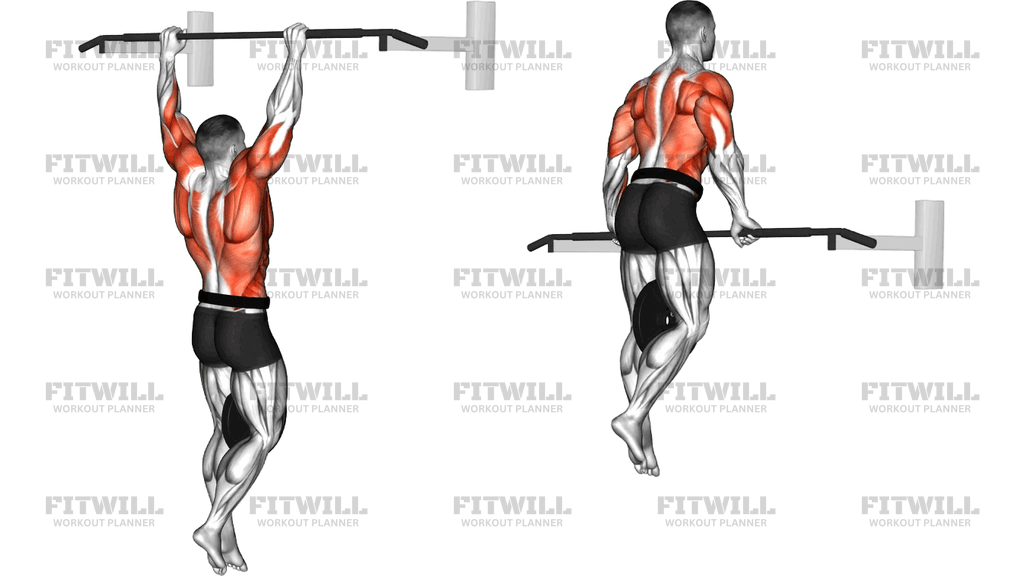
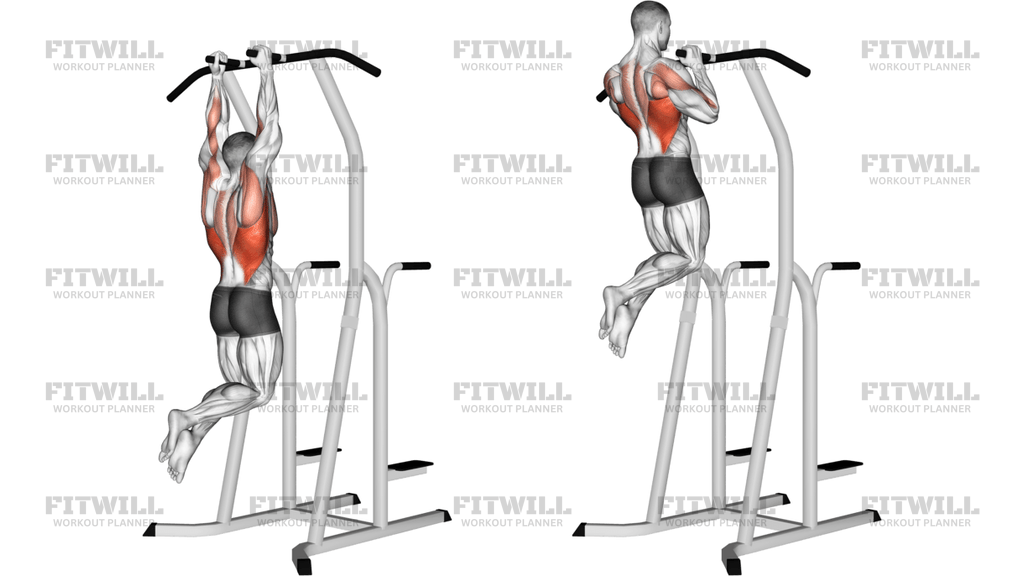
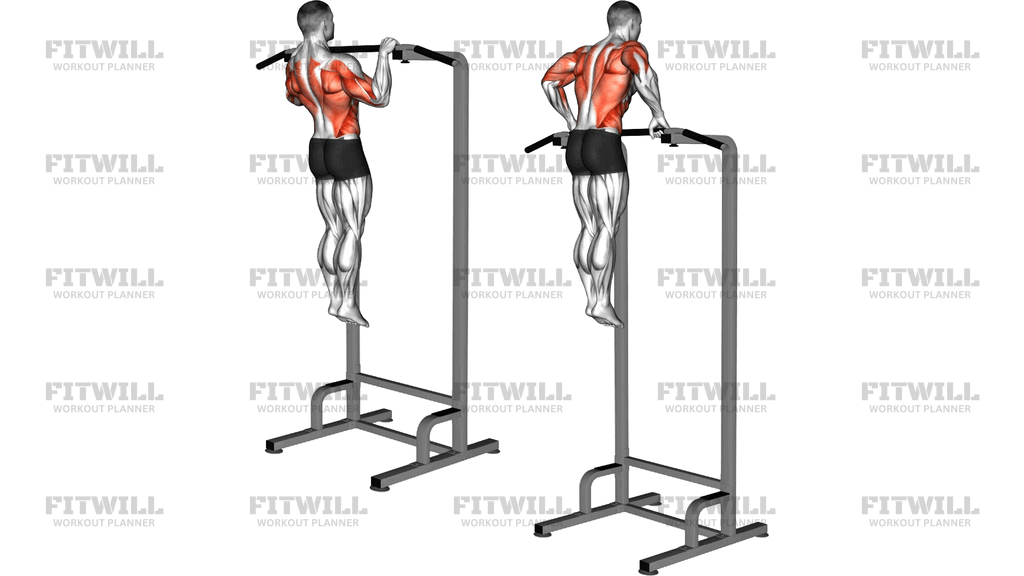
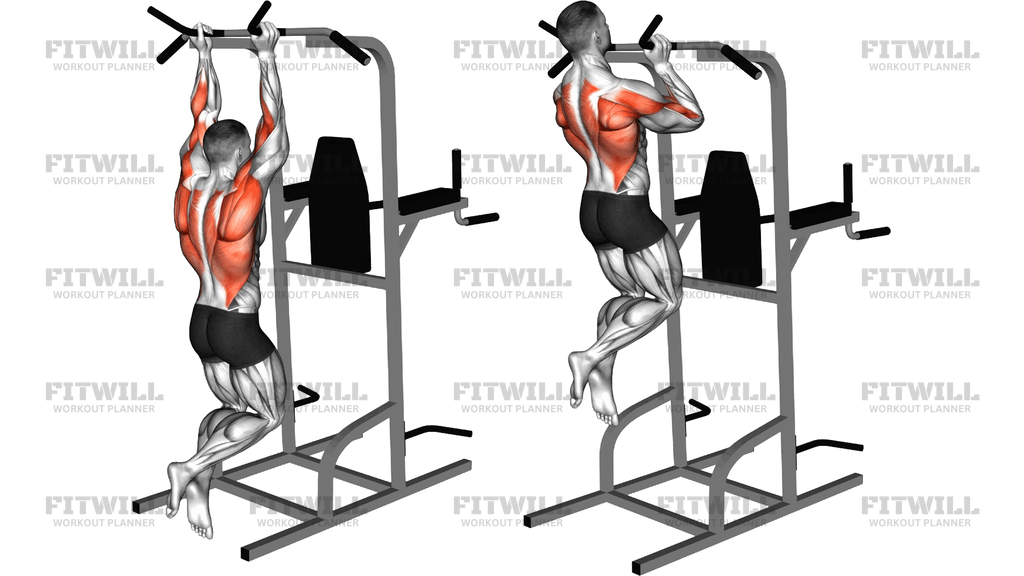
The Neutral Grip Chin Up is a vertical pulling bodyweight exercise performed on parallel handles that face each other, so your palms look at each other throughout the movement. This hand position sits between a pull up and a chin up, and most lifters find it the most comfortable of the three because it places the shoulders in a more natural alignment and reduces strain on the elbows and wrists. The image shows the movement done on a power tower with dedicated neutral handles, knees bent and feet crossed behind the body, moving from a full hang to the chin over the bar.
This variation is especially useful for people who find standard pull ups awkward on their shoulders, or for anyone building toward a first strict pull up. Because the neutral grip lets the lats and biceps work together efficiently, you can usually get more quality reps here than with a pronated grip. It is a staple in calisthenics progressions, general upper body strength programs, and warm-up work for heavier weighted pulling.
The primary muscles worked are the lats, with strong assistance from the biceps, brachialis, and forearms. The mid-back muscles, including the rhomboids and traps, pull the shoulder blades down and together as you rise, and the core works to keep your legs from swinging. Highlighted muscle regions in the illustration emphasize how much of the back is involved from the shoulders down to the lower lats.
Setup matters more than most people realize. Grip the handles fully with the thumbs wrapped around, start from a dead hang with the arms extended, and set the shoulder blades before pulling. Starting each rep from a complete hang ensures you train the full range and build strength in the stretched position, which carries over to every other pulling exercise.
To execute well, pull your elbows down toward your ribs and drive them slightly forward as your chest rises toward the handles. Lead with your chest rather than your chin, and finish when your chin clears the bar or your handles are level with your upper chest. Lower yourself under control to the full hang before starting the next rep. Rushing the descent and cutting the bottom range short are the two most common faults, and both rob you of progress and add stress to the elbows.
Because it requires only a pull-up station with neutral handles, the Neutral Grip Chin Up fits easily into home and gym training alike. Use it as a main strength lift in low rep sets, or as higher rep back volume once you can perform eight to twelve clean reps. If you cannot yet do a full rep, band-assisted versions or slow negatives on the same handles are the natural next step.
Fitwill
Log Workouts, Track Progress & Build Strength.
Achieve more with Fitwill: explore over 9600 exercises with images and videos, access built-in and custom workouts, perfect for both gym and home sessions, and see real results.
Start your journey. Download today!




Instructions
- Stand facing a pull-up station or power tower and grasp the two parallel handles so your palms face each other, wrapping your thumbs fully around each handle.
- Hang with your arms fully extended and let your body settle, then bend your knees and cross your ankles behind you so your feet clear the floor.
- Pull your shoulder blades down and together and tighten your midsection to stop your body from swinging before you begin the rep.
- Exhale as you pull, driving your elbows down toward your ribs and keeping them angled slightly in front of your torso.
- Continue pulling until your chin clears the level of the handles and your upper chest approaches them, keeping your torso upright with only a slight lean back.
- Pause briefly at the top without shrugging your shoulders up toward your ears.
- Inhale as you lower yourself in a slow, controlled descent until your arms are fully extended again.
- Reset your shoulder position at the bottom of each rep, making sure you return to a complete dead hang rather than stopping halfway down.
- Repeat for your target reps, keeping the leg position fixed so momentum does not take over in later reps.
Tips & Tricks
- Do not start the pull with a shrug; if your shoulders rise toward your ears at the bottom, depress the shoulder blades first and only then bend the elbows.
- Avoid kipping with the hips and legs. If your crossed feet start swinging, slow the tempo down and reduce the reps instead of muscling through with momentum.
- Squeeze the handles hard throughout the set. A loose grip on the neutral handles often leads to early forearm fatigue and a sloppy pull.
- If your chin stops just short of the handles, the likely cause is pulling with the arms only. Think about driving the elbows toward your back pockets to keep the lats involved.
- Control the last third of the descent. Most people drop quickly from chin level to the hang, which wastes the eccentric portion where a lot of strength is built.
- Keep your head neutral and look slightly up rather than craning your chin over the bar at any cost; a strained neck at the top is a sign the rep was too ambitious.
- If your elbows ache on the way down, slow the negative further and reduce total reps. The neutral grip is usually elbow-friendly, but fast lowering under fatigue is not.
- Once you can do ten or more clean reps, add load with a dip belt or hold a dumbbell between your feet instead of only adding more reps.
Frequently Asked Questions
Which muscles does the Neutral Grip Chin Up work the most?
The lats are the primary movers, supported heavily by the biceps and forearms. The mid-back muscles and core assist to control the shoulder blades and keep your body stable.
How is the Neutral Grip Chin Up different from a regular pull up?
The palms face each other on parallel handles instead of facing away on a straight bar. This shoulder position is usually more comfortable, and the biceps contribute slightly more to the pull.
Is the Neutral Grip Chin Up good for beginners?
Yes, it is often the easiest strict vertical pull to learn because the grip is joint-friendly and stronger than a pull up grip. Beginners can start with slow negatives or band assistance on the same handles.
Why do my elbows hurt when doing the Neutral Grip Chin Up?
Fast, uncontrolled lowering and dropping into the bottom position are the usual culprits. Slow the descent, keep the full grip, and reduce volume; if discomfort persists, check with a professional.
Should my chin clear the bar or my chest touch the handles at the top?
Chin clearing the handle level is the standard target. Chasing extra height by craning the neck adds no pulling benefit and strains the neck, so stop once the chin is clearly above your hands.
What can I use instead if my station has no neutral handles?
A close, supinated chin up on a straight bar is the closest substitute and trains a similar pattern. Suspension trainer rows or a lat pulldown with a neutral grip handle also work well.
How far apart should my legs be during the Neutral Grip Chin Up?
Bend your knees and cross your ankles behind you, as this keeps the legs out of the way and reduces swinging. Whatever position you choose, hold it consistently for every rep.
How many reps and sets should I do of the Neutral Grip Chin Up?
For strength, work in sets of three to six reps with plenty of rest; for muscle and endurance, aim for sets of six to twelve. Stop the set when your form slows rather than when you need to swing or kip.
Can I add weight to the Neutral Grip Chin Up?
Yes, once you can perform around ten strict reps, a dip belt with a plate or a dumbbell held between the crossed ankles works well. Add load gradually and keep the same controlled tempo.