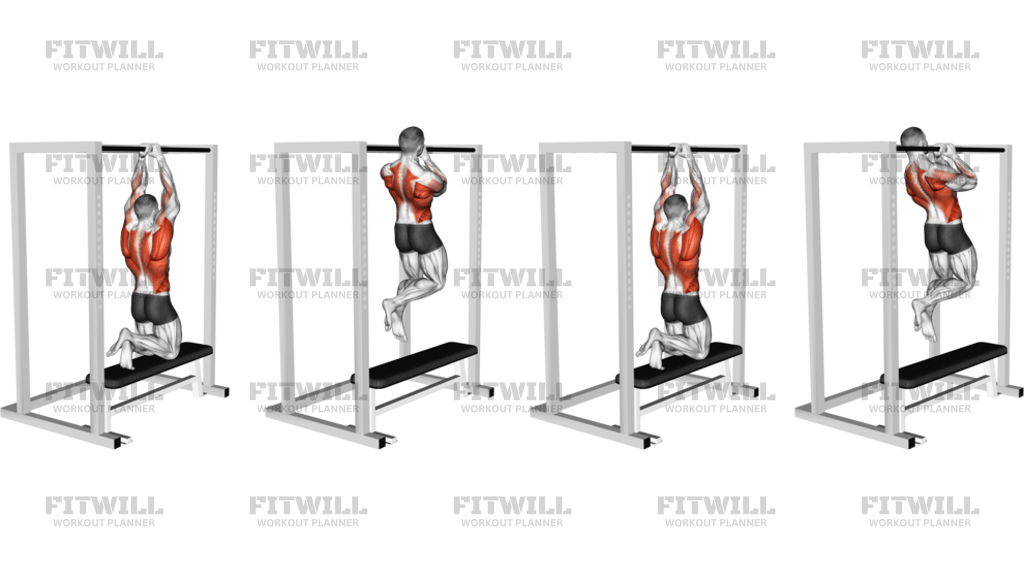
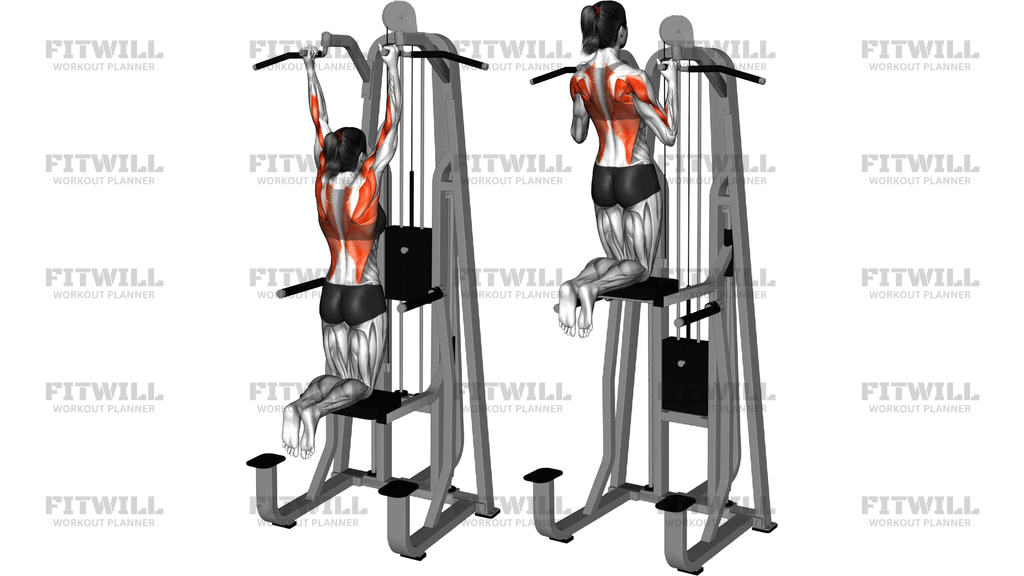
Lever Assisted Neutral Grip Chin Up
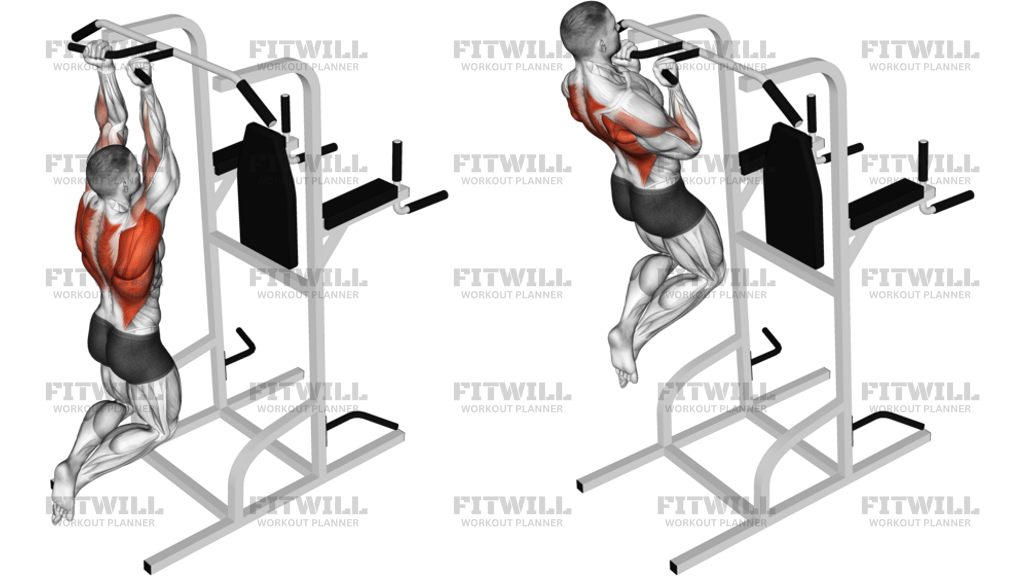
The Lever Assisted Neutral Grip Chin Up is a machine-based vertical pull performed on an assisted pull-up station with parallel handles, so your palms face each other throughout the movement. A counterweighted lever platform supports your knees, which reduces the amount of bodyweight you have to pull and lets you dial the difficulty up or down with the weight stack. It is essentially a neutral-grip chin-up with a built-in throttle for assistance.
This exercise sits in a useful spot between a lat pulldown and a full bodyweight chin-up. If you can do several pulldowns with good form but cannot yet perform strict chin-ups on a bar, the kneeling pad bridges that gap in a way that keeps your body vertical and your pull realistic. It is equally valuable on the other end of the spectrum: strong pullers use it for higher-rep back work, slow negatives, or extra volume after heavy weighted pull-ups without frying their grip and elbows.
The neutral grip is the friendliest hand position for most shoulders. With palms facing each other, the upper arm can travel close to the body, the lats get a strong line of pull, and the biceps and brachialis contribute naturally without the wrist strain some people feel on a fully supinated bar. Expect the lats to do the bulk of the work, with the biceps, rear delts, and mid-back muscles assisting, and the core working to keep your torso from swinging on the pad.
Setup matters more than people assume. The knee pad only helps if your weight is actually on it and the selected assistance roughly matches the help you need. Set too much assistance and you are doing a light pulldown; too little and your form collapses before the set is over. Kneel onto the pad one knee at a time while holding the handles, let the lever settle, and start every rep from a fully hanging position with arms extended.
Execution is simple but easy to rush. Pull by driving your elbows down and back toward your hips rather than just bending your arms, lift until your chin clears the handles, pause briefly, and lower under control until your elbows are completely straight. That bottom position is where most of the shoulder and lat benefit lives, so resist the temptation to bounce out of it.
Because the machine counterbalances your bodyweight, progress is straightforward: reduce the selected weight in small increments over weeks as your strength grows, and keep the movement honest by avoiding half reps and pad-bouncing. When you can handle only a small amount of assistance for clean sets, you are close to unassisted neutral-grip chin-ups on a bar.
[ Workout Log & Planner ]
Put your next workout in Fitwill
Keep your plan and training log ready when you are.


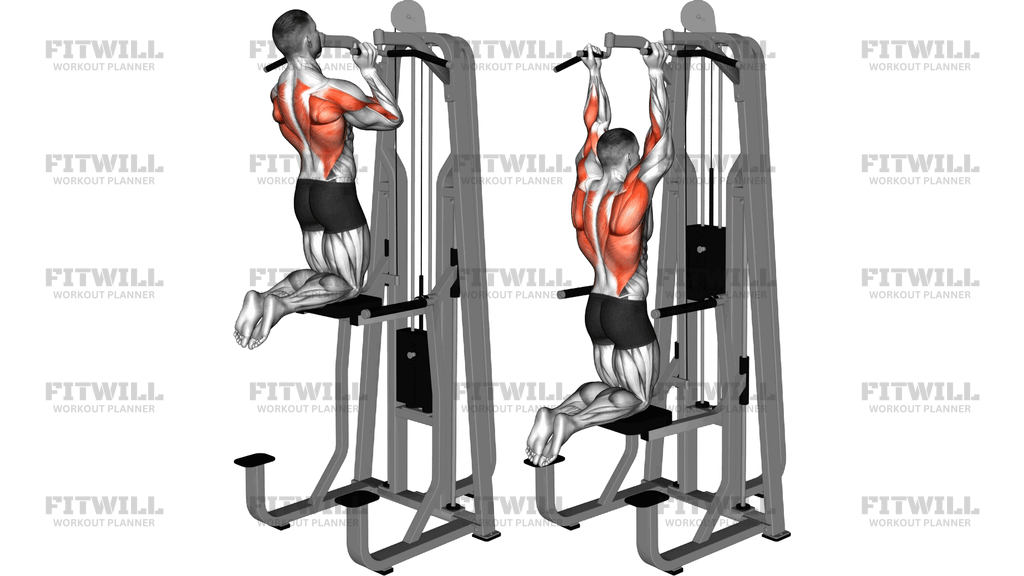
Instructions
- Set the weight stack to your chosen assistance level so the knee pad sits high enough to reach while holding the handles.
- Grip the parallel handles with palms facing each other, hands about shoulder-width apart, and step onto the side foot pegs to steady the lever before kneeling.
- Lower one knee and then the other onto the pad, settling into an upright kneeling position with your torso vertical or leaning back only slightly.
- Let your arms extend fully and hang for a moment, allowing the lever to stabilize and your shoulders to settle into a dead hang.
- Brace your core lightly, pull your shoulder blades down, and drive your elbows down and back toward your hips to start the pull.
- Continue pulling until your chin clears the top of the handles, keeping your chest up and elbows tracking close to your sides.
- Pause at the top for a beat, squeezing your lats rather than shrugging your shoulders toward your ears.
- Lower yourself slowly until your arms are completely straight and you are back in a full hang before starting the next rep.
- Exhale as you pull up and inhale as you lower down, keeping the breathing steady through the set.
- To finish, step onto the foot pegs with your weight still on the pad, then remove one knee at a time and step off safely.
Tips & Tricks
- Set the assistance so your last two or three reps are challenging but clean; if you are flying through twelve easy reps, the counterweight is doing too much of the work.
- A common mistake is bouncing off the pad at the bottom. Let the lever come to a complete stop in the hang before each pull, or you lose the hardest part of the range.
- If your chin fails to clear the handles but your arms keep bending, the load is fine but the path is wrong. Cue elbows to hips instead of pulling with the hands.
- Keep your knees and shins resting on the pad rather than pushing hard through your toes; driving with the legs turns the set into a half squat and distorts the assistance.
- Avoid leaning so far back that you turn the movement into a row. A slight backward tilt is fine, but your torso should stay mostly vertical so the pull stays vertical.
- Do not let your shoulders ride up around your ears at the top. Finish each rep by pulling the shoulder blades down and together, not by shrugging.
- If your grip gives out before your back does, chalk up or use a firm closed grip around the handles instead of hanging loosely from your fingers.
- Progress by reducing assistance in small steps every week or two rather than big jumps; a ten-pound drop that you can control beats a thirty-pound drop you grind through.
- Lower the pad with control when stepping off. Letting the lever slam up after a set is hard on the machine and startling for anyone nearby.
Frequently Asked Questions
Which muscles does the Lever Assisted Neutral Grip Chin Up work?
The lats are the primary mover, with strong assistance from the biceps and brachialis because of the vertical pull. The mid-back muscles, rear delts, and forearms handle stabilizing and gripping duties throughout the set.
How is the neutral grip different from a regular chin-up grip?
On a regular chin-up your palms face you, while the neutral grip places your palms facing each other on parallel handles. Many lifters find the neutral position more comfortable for the wrists and shoulders while still loading the lats and biceps heavily.
How do I choose the right assistance weight on the machine?
Pick a setting that leaves you able to complete eight to twelve controlled reps where the last two are hard. If you cannot reach a full hang or straighten your elbows, the assistance is too low; if the set feels effortless, it is too high.
Is the Lever Assisted Neutral Grip Chin Up good for beginners?
Yes, it is one of the best entries into vertical pulling because the counterweight lets you practice the exact chin-up pattern at a manageable load. Focus on full range of motion from a dead hang to chin above the handles rather than adding reps with half pulls.
Why do I have to keep my arms fully straight at the bottom?
The stretched hang is where the lats work through their longest range, and cutting it short turns the set into partial reps with much less stimulus. Straightening the arms each rep also ensures the assistance level honestly reflects your strength.
Should I kneel on the pad with both knees or one?
Both knees on the pad keeps you centered and balanced so the lever assists evenly. A single-knee position is only used briefly when climbing on or off, not during the set itself.
Can I use this exercise to work toward unassisted chin-ups?
That is its most common use. Reduce the assistance gradually over successive weeks, and once you are down to a small amount of help, mix in negatives or jumping chin-ups on a bar to finish the transition.
What should I do if my shoulders feel pinched during the pull?
Check that you are starting from a relaxed dead hang and pulling with elbows moving down and back rather than flaring forward. If discomfort persists, reduce the range slightly and keep the elbows closer to your ribs, and stop if pain rather than mild discomfort continues.
What can I substitute if my gym has no assisted pull-up machine?
Heavy band-assisted neutral-grip chin-ups on a pull-up bar are the closest alternative, with a band looped over the bar and under your knee or foot. Lat pulldowns with a neutral-grip handle train the same muscles but remove the core and hang demands.
How does this compare to a lat pulldown for building the back?
Both target the lats, but the chin-up pattern requires you to stabilize your own body on the pad, which adds core and grip work closer to real bodyweight pulling. Most lifters benefit from using both, with the assisted version prioritized when the goal is earning full chin-ups.