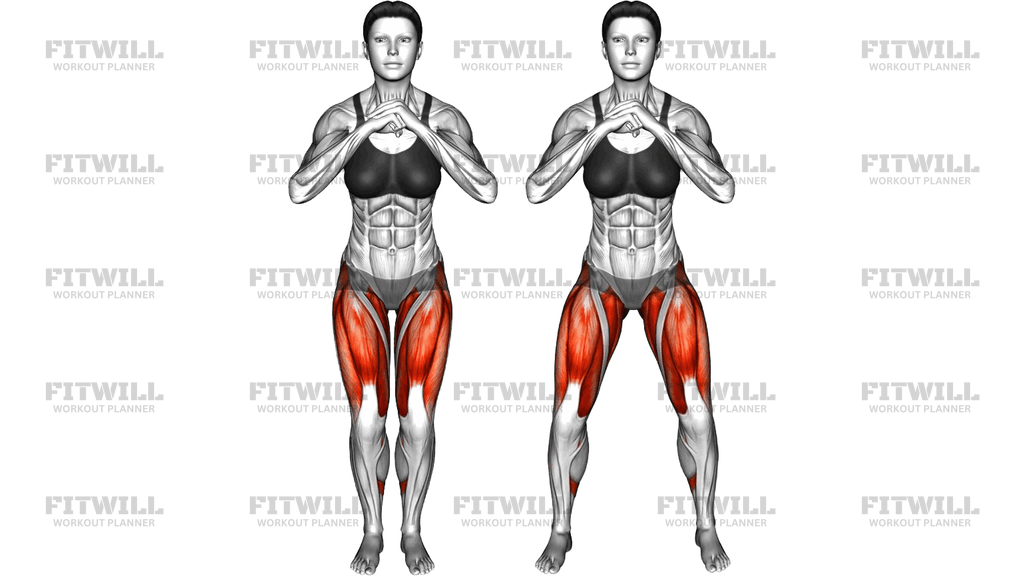
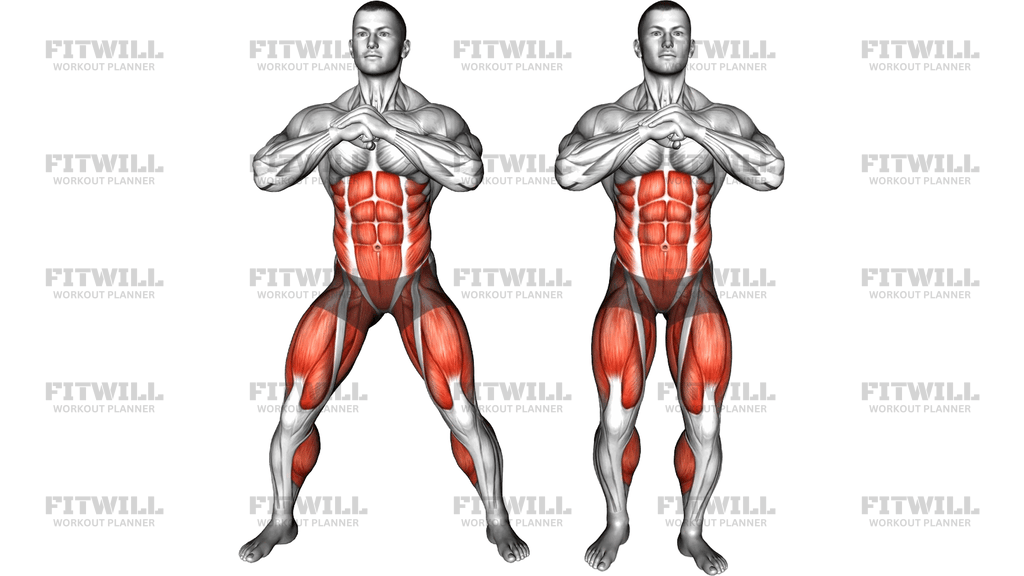
Side Lunge Rock (Advanced)
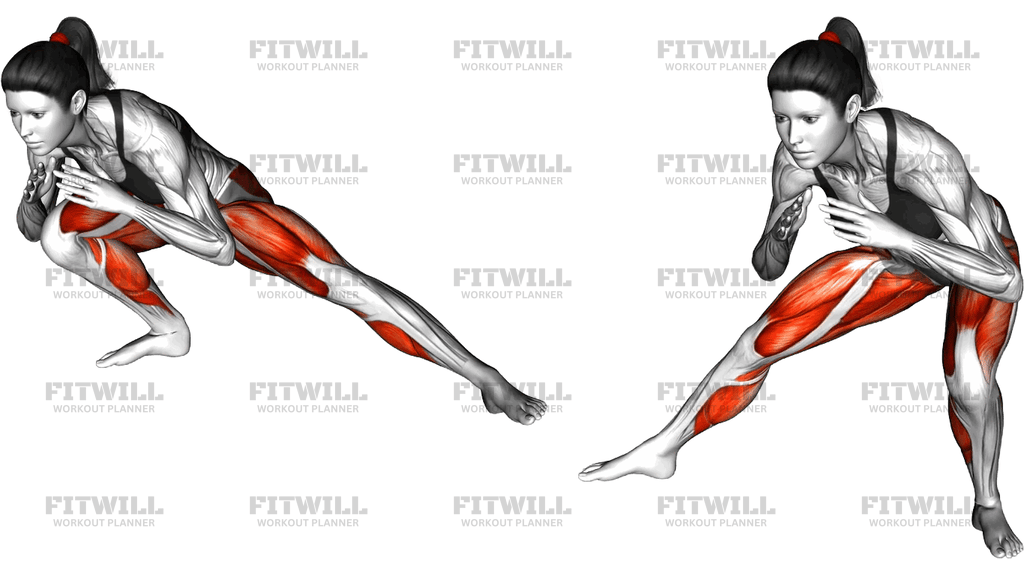
The Side Lunge Rock is a bodyweight lower-body drill that takes a deep lateral lunge and turns it into a continuous side-to-side weight transfer. Instead of standing up between reps, you stay low and rock your hips laterally from one bent leg to the other, so one side is always loaded while the opposite leg stays long and straight with the foot planted. The advanced version shown here uses a pronounced forward torso lean with the hands clasped at the chest, which increases the demand on the hips and makes the transition between sides noticeably harder.
This movement is built around the adductors. The straight leg gets a long, loaded stretch through the inner thigh every time you sink to the opposite side, while the bent leg works the quads and glutes through a deep range. Because you never fully stand up, the working leg spends the entire set under tension, which is what separates this from a standard alternating side lunge and why it earns its advanced label.
Setup matters more than it looks. A wide stance with the straight-leg foot flat on the floor is what creates the inner-thigh stretch, and if that heel lifts or the foot rolls outward, you lose both the stretch and the stability. The forward lean is deliberate: hinging at the hips with a flat back shifts load into the glutes and hamstrings and helps you keep your balance as the weight travels sideways. Rounding your lower back to fake the lean is the most common way to turn a good drill into an uncomfortable one.
To execute it well, sink into one side until the knee is fully bent and the opposite leg is straight, then push through the bent leg's whole foot to slide your hips across to the other side without rising. The path is lateral and low, almost like a slow, controlled skater's shuffle done in place. Move with intent rather than momentum; the transition is where the adductors and hip stabilizers do most of their work.
This drill fits well into warm-ups for squats and deadlifts, lower-body days focused on frontal-plane strength, and conditioning circuits for sports that demand quick lateral changes of direction. Because it requires no equipment and little space, it is also a practical option for home training, as long as you have room to spread your feet wide.
Treat depth as a skill, not a default. If you cannot keep the straight leg truly straight, the heel down, and your spine neutral at full depth, reduce the range and earn the deeper position over several weeks. Stop the set as soon as your knees drift inward or your balance breaks down, because quality transitions matter far more than the number of rocks you complete.
[ Workout Log & Planner ]
Put your next workout in Fitwill
Keep your plan and training log ready when you are.


Instructions
- Stand with your feet roughly double shoulder-width apart, toes turned out slightly, and shift your weight onto your right foot.
- Clasp your hands together in front of your chest and pull your elbows in so your arms stay tight to your body throughout the set.
- Sit your hips back and down into a deep side lunge over your right leg, letting your left leg straighten completely with the left foot flat on the floor.
- Hinge forward from the hips into a controlled lean with a flat back, and brace your core before you start moving.
- Keep the lean and the height constant as you drive through your right foot and slide your hips laterally across to the left side, bending the left knee and straightening the right leg.
- Pause briefly at the bottom of each side with the bent knee tracking over your toes and the straight leg's heel pressed into the floor.
- Continue rocking from side to side without standing up, keeping each transition smooth and under control rather than dropping with momentum.
- Inhale as you prepare to shift, and exhale as you drive out of each side lunge toward the other side.
- When the set ends, bring both feet back under your hips, stand fully upright, and walk it off briefly before your next set to reset your hips and ankles.
Tips & Tricks
- The straight leg is the stretch side, not the rest side: keep its foot flat and its knee fully locked out, because a soft knee or a lifting heel erases the inner-thigh load.
- Watch for the bent knee caving inward as you tire — cue yourself to push the knee out toward your pinky toe, especially on the transition away from that side.
- If you keep falling backward or rocking onto your heels, the forward lean is too shallow; push your hips further back and let your clasped hands travel slightly forward over the bent knee.
- Control the bottom half of each transition. Most people sink slowly into the lunge and then fall through the middle, which dumps tension off the adductors and stresses the knees.
- Keep your torso angle identical on both sides. A common mistake is leaning further on your more flexible side, which shortens the range on the tighter side and builds asymmetry.
- Widen your stance before adding depth. If your hips cannot reach a deep position with a straight back leg, a wider base often buys you the range immediately.
- Do this barefoot or in flat shoes on a non-slip surface — a spongy or grippy-then-slick floor changes how safely you can slide weight across a wide stance.
- If your inner thighs cramp, shorten the hold at the bottom and rock with a steady rhythm instead of pausing; cramping usually means the adductors are being loaded at a length they are not used to.
- Warm up with shallow, bodyweight side-to-side shifts first, then descend to full depth only once the hips feel open and the knees track cleanly.
Frequently Asked Questions
Which muscles does the Side Lunge Rock work the hardest?
The adductors of the straight leg take the biggest load through a long stretch, while the quads and glutes of the bent leg drive each transition. The gluteus medius and deep hip stabilizers on the working side also work hard to control the sideways weight shift.
Why is this version considered advanced compared to a regular side lunge?
In a regular side lunge you stand up between reps, which gives your legs a brief rest. In the Side Lunge Rock you stay low for the entire set and never unload the working leg, and the forward lean adds balance and hip-flexion demands on top of that.
Can beginners do the Side Lunge Rock?
Beginners should start with a narrower stance, a shallower bend, and a more upright torso, or practice slow alternating side lunges first. Once you can control a deep lunge on each side with the straight leg's heel down, the rock becomes a natural next step.
Why does the straight leg need to stay completely straight?
A straight leg is what places the adductors and inner thigh under a loaded stretch and keeps the foot flat for balance. Bending it slightly turns the drill into a low shuffle and removes the exact stimulus the exercise is designed to provide.
How far forward should my torso lean during this exercise?
Lean forward from the hips far enough that your chest travels over the bent knee, with your back flat rather than rounded. The lean should stay constant as you rock, since changing your torso angle mid-set throws off your balance and shifts load unpredictably.
My knee collapses inward when I rock to the other side — how do I fix it?
Slow the transition down and consciously drive the working knee out over your little toe as you push across. If it still caves, reduce your depth, because the collapse usually appears when the adductors and glutes run out of strength at end range.
What can I substitute if the deep position is too much right now?
Alternating side lunges with a full stand-up between reps, shallow side-to-side weight shifts in a half-depth stance, or Cossack squats holding a support for balance all build toward this movement. Each one trains the same lateral pattern with less simultaneous demand.
Should I add weight to the Side Lunge Rock?
Only after you can complete smooth, controlled rocks at full depth with your heels down and knees tracking out. Holding a light weight at the chest can help counterbalance the lean, but most people get plenty of stimulus from body weight at this range.
Is it normal to feel a strong pull in the inner thigh of the straight leg?
Yes, a deep stretch sensation along the inner thigh is the intended feeling, and it should ease as you rock to the other side. If you feel sharp pain, a pinching sensation in the groin, or discomfort deep in the joint, reduce your range and build up gradually.
How many rocks should I do per set?
Start with 6 to 10 controlled transitions per side and stop when your form breaks, not when your legs are completely spent. Because the straight leg stays under stretch the whole time, a few high-quality reps often go further than a long, sloppy set.