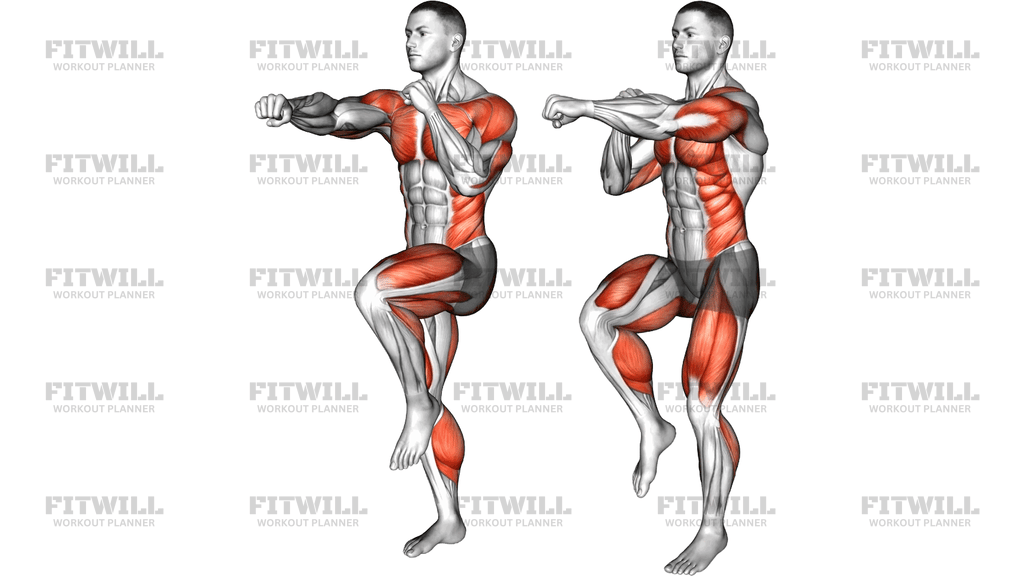
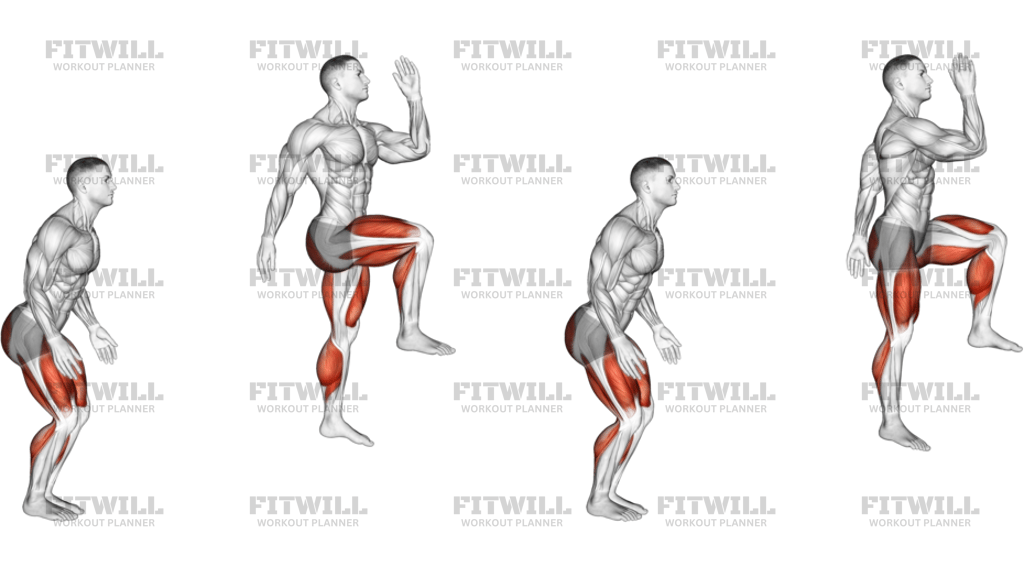
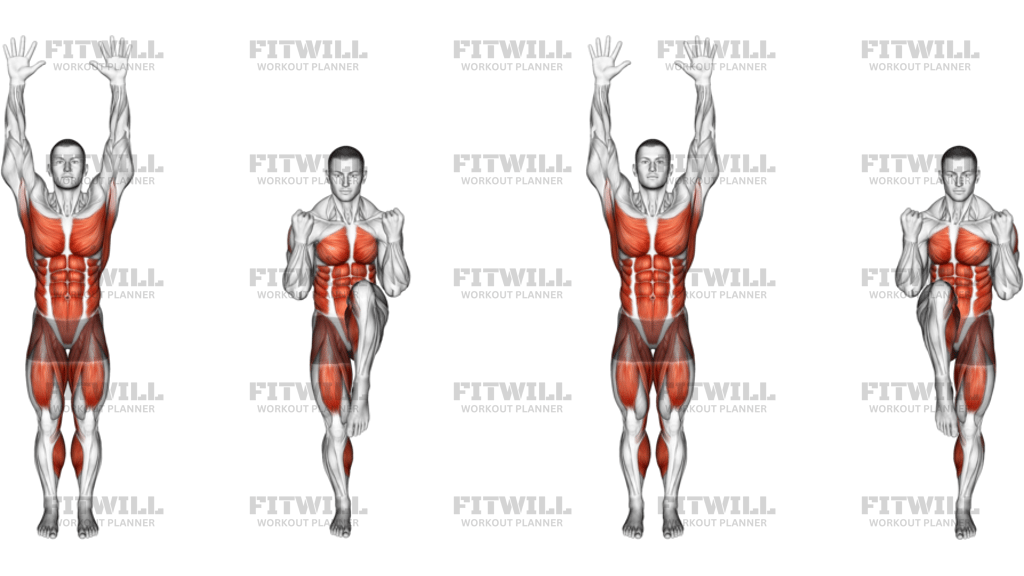
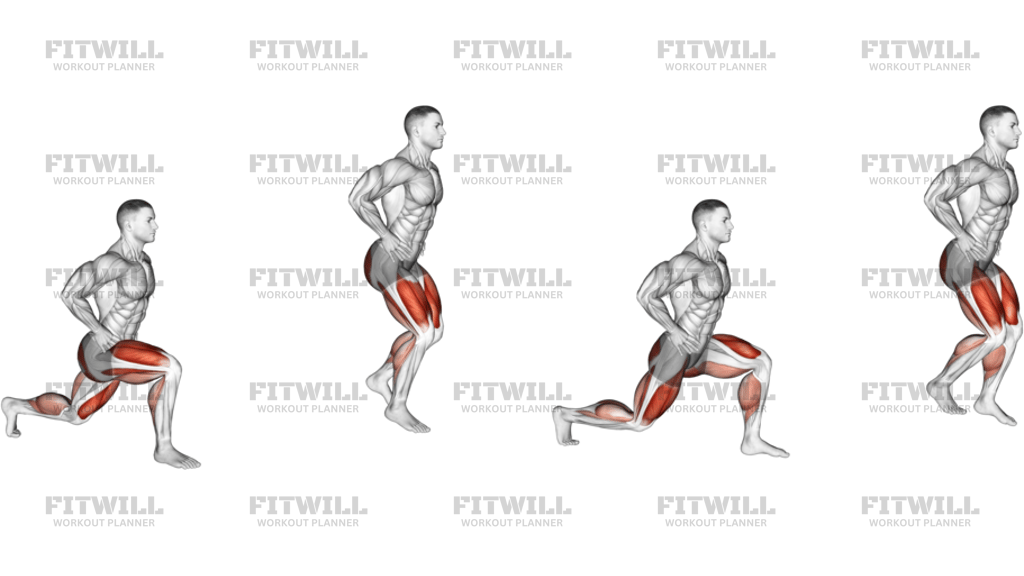
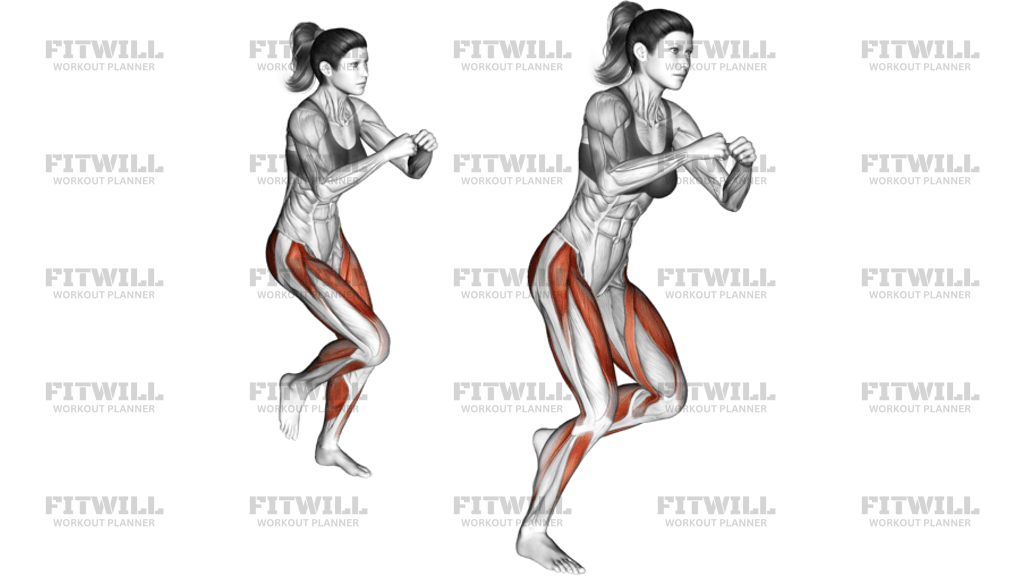
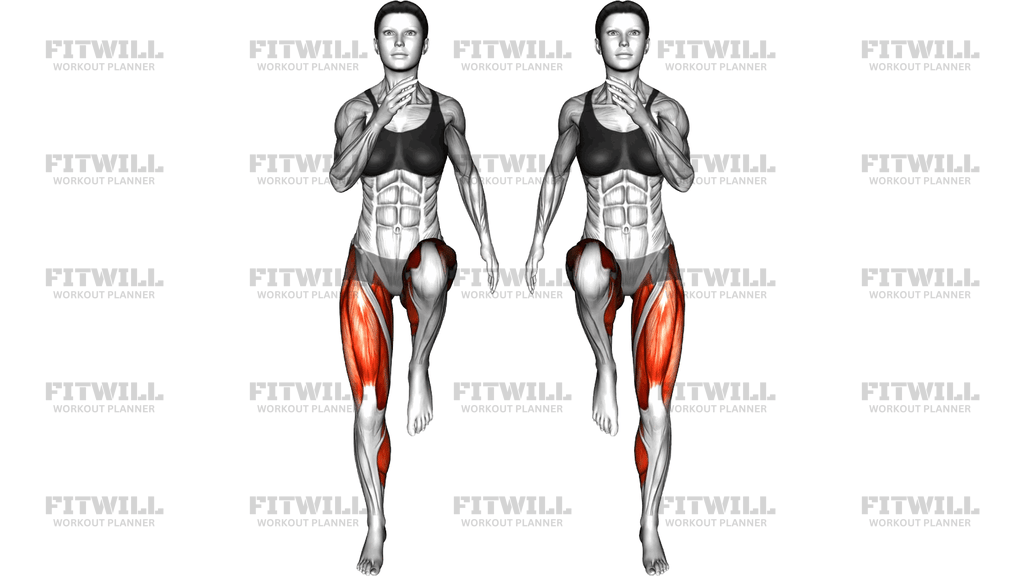
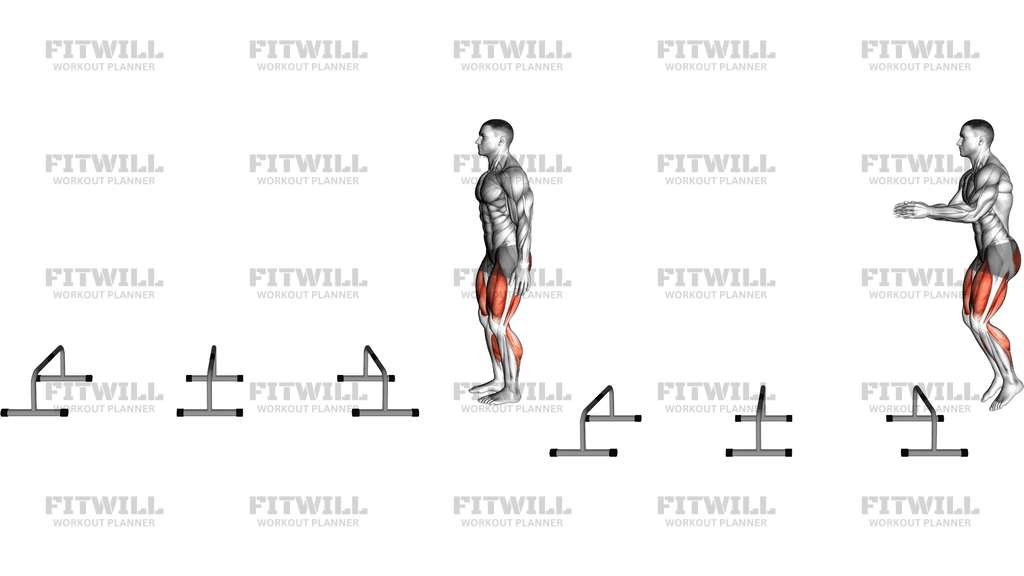
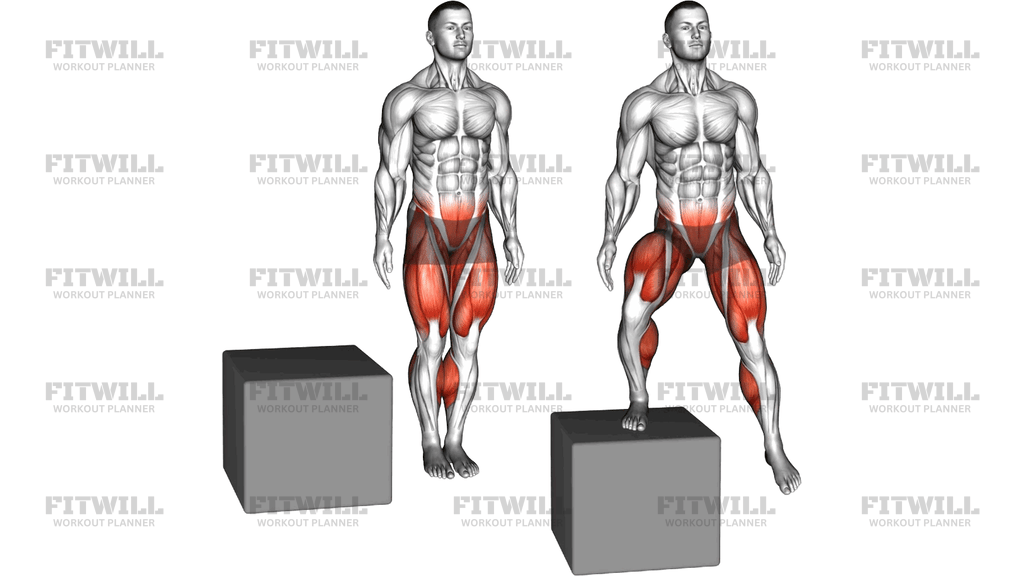
Alternate Foot Hopscotch
Alternate Foot Hopscotch is a low-amplitude lateral hopping drill performed over a pair of small floor markers or cones. You stand in a wide stance with a marker ahead of each foot, then hop side to side so that one foot lands out wide while the other taps near the middle, alternating which foot drives the hop on every rep. It looks simple, but the rapid weight shifts make it a genuine coordination and foot-speed challenge.
This drill earns its place in warm-ups and conditioning circuits because it trains exactly the qualities field and court athletes need: quick lateral changes of direction, reactive ankle stiffness, and the ability to decelerate and re-accelerate the body over a short distance. The working musculature is concentrated in the thighs, especially the quadriceps and inner thigh muscles that control the wide stance, with the calves and glutes contributing to every push-off and landing.
Setup matters more than most people expect. The two markers define your target zone, so place them far enough apart that a hop takes you clearly outside your base, but close enough that you can cycle reps quickly without your feet drifting. A stance that is too wide turns the drill into a strength grind with sloppy landings; too narrow and it becomes a shallow shuffle that barely challenges the hips.
Execution should feel springy rather than heavy. Think of the ground as hot: minimal ground contact, knees softly bent, chest up, and arms swinging loosely in the opposite direction of the legs to keep balance. The hop travels sideways over the marker, and each landing should be quiet, which tells you the calves and quads are absorbing force properly instead of letting the joints take the hit.
Because it needs nothing more than two cones and about a meter of clear floor space, Alternate Foot Hopscotch fits easily into dynamic warm-ups, agility blocks, or fatiguing finishers where you want to raise the heart rate quickly. Beginners should start with slower, deliberate hops to learn the rhythm; more advanced trainees can shorten ground contact time or add short timed intervals.
The main safety point is to respect fatigue. Lateral hopping under tired legs is where ankles roll and knees cave inward. If your landings get loud, your stance collapses, or your feet start clipping the markers, stop the set, reset your position, and resume only when you can land quietly and evenly on both sides.
[ Workout Log & Planner ]
Put your next workout in Fitwill
Keep your plan and training log ready when you are.


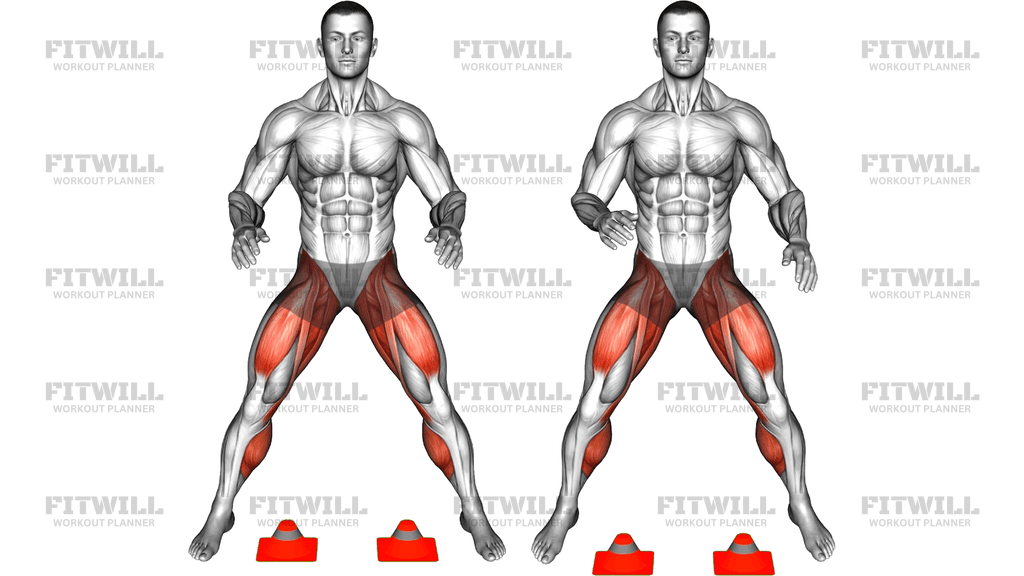
Instructions
- Place two small cones or flat markers on the floor about hip-width to shoulder-width apart, far enough in front of you that each foot has its own target.
- Stand facing the markers with your feet planted wide on either side of them, toes angled slightly out, knees softly bent, and your weight on the balls of your feet.
- Let your arms hang relaxed at your sides with elbows bent, ready to swing for balance.
- Brace your midsection lightly and keep your chest lifted with your hips pushed back into a shallow athletic stance.
- Push off with both legs and hop laterally so your left foot lands wide past the left marker while your right foot taps lightly on the floor near the middle.
- Immediately hop back the other way, driving off the left leg so the right foot lands wide past the right marker and the left foot takes the middle position.
- Continue alternating sides in a steady rhythm, keeping each ground contact short and each landing quiet.
- Breathe in a natural, even rhythm throughout, avoiding held breath as the pace increases.
- When you finish the set, decelerate the final hop, plant both feet wide, stand up tall, and step away from the markers to reset.
Tips & Tricks
- If your feet clip the markers, your targets are set too close together or you are drifting forward; move the cones apart slightly and re-center your stance before restarting.
- Loud landings are a sign you are dropping straight down instead of hopping sideways with intent — push laterally off the outside leg and stay on the balls of your feet.
- Watch for the support knee caving inward on the wide landing; cue yourself to keep the knee tracking over the little toe to protect the joint.
- Keep the middle-foot tap genuinely light — if you full-on stomp the inside foot, the drill turns into a slow side lunge and loses its foot-speed benefit.
- Your arms should swing opposite to your legs, almost like a slow-motion run; stiff, frozen arms are usually why people lose balance mid-set.
- Start with a pace you could hold for 30 seconds; sprinting from rep one usually collapses the stance width by the tenth hop.
- If one side feels noticeably weaker or slower, slow down and count reps per side to make sure you alternate evenly rather than favoring your dominant leg.
- Train barefoot or in flat, low-cushion shoes on a non-slip surface so your ankles can feel and react to each landing.
Frequently Asked Questions
What muscles does Alternate Foot Hopscotch work?
The quadriceps and inner thigh muscles do most of the work controlling the wide-stance landings, while the calves power each push-off and the glutes and hip stabilizers keep the pelvis level. It is primarily a lower-body coordination and agility drill rather than a strength builder.
Is Alternate Foot Hopscotch suitable for beginners?
Yes, as long as the pace starts slow. Beginners should perform deliberate hops with a brief pause on each landing to learn the foot pattern, then gradually speed up as the landings become quiet and controlled.
How far apart should the two markers be?
Aim for roughly hip-width to shoulder-width between the cones so each hop takes your foot clearly outside your stance. If your feet catch the markers or your landings feel cramped, widen the setup slightly.
Why do my knees cave in when I land on the wide foot?
That usually points to weak or tired hip stabilizers and inner thighs, or simply too much speed too soon. Slow the drill down, consciously track the knee over the toes, and shorten your sets before fatigue breaks your mechanics.
What can I use if I don't have cones for Alternate Foot Hopscotch?
Any two flat, low-profile objects work — chalk marks, tape lines, or a couple of small towels. Just avoid anything tall or hard that could be a trip hazard when your foot passes over it.
How long should a set last?
Ten to thirty seconds works well in a warm-up or agility circuit. The drill is quality-sensitive, so end the set when your ground contacts get louder or your rhythm breaks rather than pushing to a fixed time.
Can Alternate Foot Hopscotch replace regular cardio?
It raises the heart rate quickly and can serve as short conditioning intervals, but its main value is lateral agility and foot speed. Use it alongside, not instead of, longer steady cardio if general endurance is your goal.
Is this drill hard on the ankles or knees?
The hopping is low-height and well tolerated when landings stay soft and the surface is non-slip. If you have a current ankle or knee issue, clear the drill with a professional first and keep the pace low and the sets short.
Should I swing my arms during Alternate Foot Hopscotch?
Yes, a natural opposite arm swing helps with balance and rhythm. Keeping the arms rigid at your sides makes the rapid side-to-side weight shifts noticeably harder to control.