Repeated Small Jumps
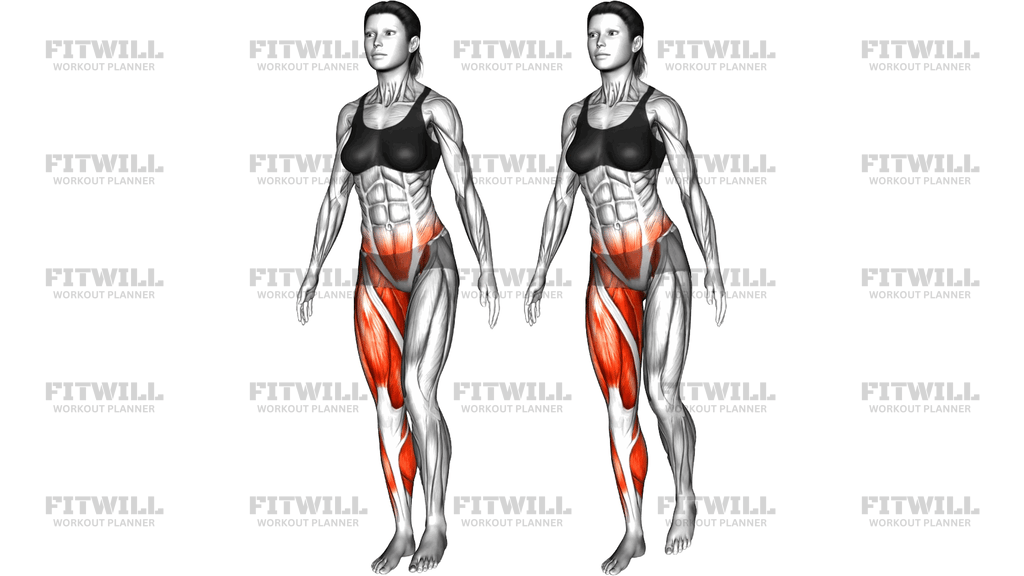
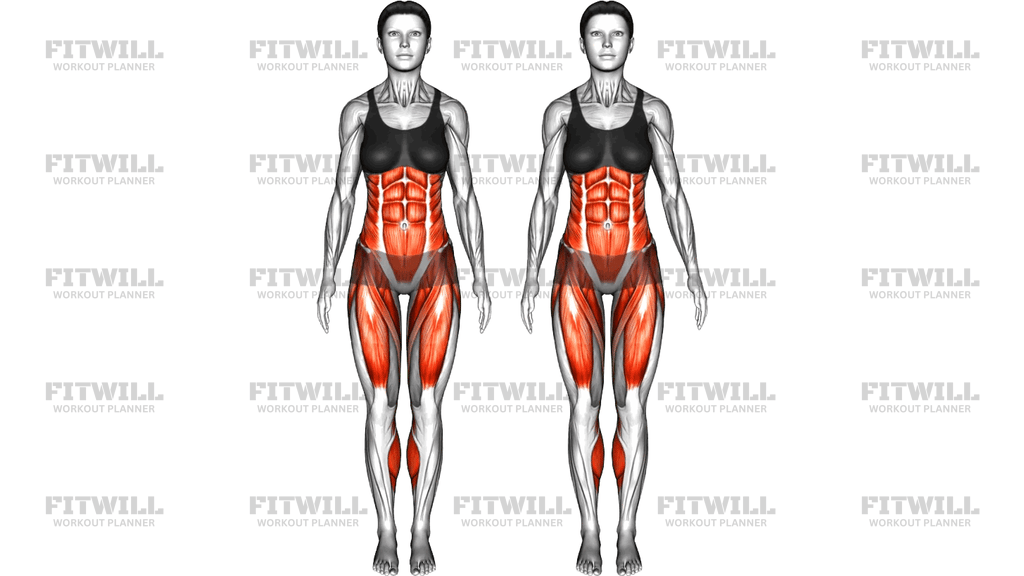
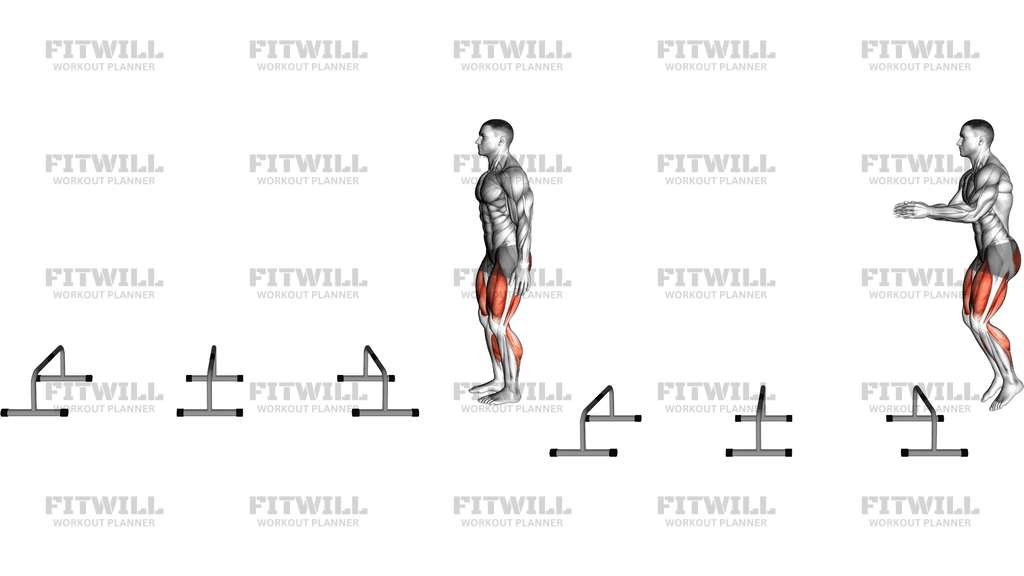
Repeated Small Jumps are a low-amplitude plyometric drill where you hop continuously over a line of short hurdles or markers set on the floor, staying on the balls of your feet and minimizing ground contact time between jumps. Because each jump is small and quick, the emphasis is on rhythm, ankle stiffness, and reactive strength rather than raw height. The highlighted work in this movement comes from the quads and calves, which absorb and re-deliver force on every landing and takeoff.
This drill suits athletes who need quick feet and springy legs — sprinters, court-sport players, and anyone training for change-of-direction speed — as well as general trainees who want to build lower-leg resilience and add a conditioning element to their leg work. It is also a gentle entry point into plyometrics: the low hurdle height keeps the impact far more manageable than depth jumps or maximal box jumps, so you can accumulate a decent training volume without hammering your joints.
Setup matters more than it looks. The hurdles should be low enough that you can clear them with a small, controlled hop rather than a max-effort jump, and spaced evenly so your rhythm stays consistent. If the obstacles are too tall or too close together, you end up tucking excessively, chopping your stride, or stalling between contacts — all of which defeat the purpose of the drill.
To execute well, stay tall with a slight forward lean, keep your knees softly bent, and think of your feet as springs: land on the balls of your feet under your hips, let the ankle and knee absorb the contact briefly, and immediately bounce into the next hop. Your arms swing subtly in rhythm with the jumps to keep you balanced and timed. The goal is quiet, springy contacts — loud, flat landings are a sign you are letting your heels crash down.
Practically, this exercise works well as a warm-up primer before squats or sprint work, as a dedicated plyometric block of 3–5 sets, or as a finisher for conditioning. Start with 2–3 sets of 8–12 hurdles and progress the number of contacts before you progress the height. Stop the set when your bounce turns into stiff, tired hops — quality of contact is the whole point of the drill.
[ Workout Log & Planner ]
Put your next workout in Fitwill
Keep your plan and training log ready when you are.


Instructions
- Place a row of low hurdles or small markers on a flat, non-slip surface, spaced evenly about one to two feet apart so you can clear each with a small hop.
- Stand facing the first hurdle with feet hip-width apart, weight on the balls of your feet, knees softly bent, and arms relaxed at your sides.
- Brace your core lightly and keep your chest tall with a small forward lean from the ankles, not the waist.
- Swing your arms slightly back, then drive them forward as you hop over the first hurdle with both feet at once.
- Land on the balls of both feet just past the hurdle, knees tracking over your toes, and keep the contact short and quiet.
- Immediately rebound into the next hop without letting your heels sink or pausing between jumps.
- Continue over the full row of hurdles, letting your arms swing in rhythm with each contact.
- Exhale sharply on each takeoff and breathe naturally on the landings rather than holding your breath.
- After the last hurdle, decelerate with a few soft steps, walk back to the start, and reset your stance before the next pass.
- Rest 45–90 seconds between sets, or longer if you are prioritizing explosive quality over conditioning.
Tips & Tricks
- If you hear loud slaps on every landing, you are landing flat-footed — cue yourself to touch down on the balls of your feet with your heels just off the floor.
- Jumping too high over each hurdle is the most common mistake; the contact gets slow and heavy. Aim to clear each hurdle by an inch or two, not by a foot.
- If your rhythm breaks halfway down the row, the hurdles are probably spaced unevenly for your stride — adjust the spacing before adding height.
- Keep your gaze a hurdle or two ahead rather than down at your feet so your torso stays tall and your balance holds.
- Let your ankles do most of the bouncing. If your knees start dipping deep into a squat between hops, you are turning a reactive drill into slow squat jumps.
- End the set the moment your hops become stiff or your ground contact noticeably lengthens — volume past that point trains sluggishness, not spring.
- Warm up your ankles and calves with a minute of light bouncing or jump rope before your first pass, since the calves absorb most of the repeated contacts.
- On a hard gym floor, do this drill in cushioned training shoes rather than barefoot until your lower legs have adapted to the repeated impacts.
Frequently Asked Questions
What muscles do Repeated Small Jumps work?
The quads and calves do most of the work, driving each takeoff and absorbing each landing. The glutes and hamstrings assist with hip extension, and the ankle stabilizers work continuously to keep you balanced on the balls of your feet.
Are Repeated Small Jumps suitable for beginners?
Yes, provided the hurdles are genuinely low and the set ends when form fades. Beginners should start with 2 sets of 8–10 contacts on a forgiving surface and build volume gradually over several weeks.
How high should the hurdles be for Repeated Small Jumps?
Low enough that a small, relaxed hop clears them — typically 6 to 12 inches. If you have to tuck your knees hard or exert maximum effort, the hurdle is too tall for this drill.
How far apart should I space the hurdles?
Space them so you can flow from one hop to the next without chopping your feet or overreaching, usually one to two feet apart. Adjust spacing first and height second when tuning the drill.
Why do my calves burn so much during this exercise?
Your calves handle the repeated ankle stiffness and rebound on every contact, so they fatigue quickly. That burn is normal, but if you feel sharp pain rather than muscle fatigue, stop and rest.
Should I land on my toes or my whole foot?
Land on the balls of your feet with your heels just off or lightly kissing the floor. Full flat-footed landings slow your rebound and send more shock up through the knees.
How many sets and reps of Repeated Small Jumps should I do?
Three to five passes over a row of 8–12 hurdles works well for most people. Prioritize short ground contacts over total volume, and rest 45–90 seconds between passes.
What can I use instead of hurdles?
Any low, stable obstacle works — cones, folded towels, chalk lines, or painted floor markings. The drill only requires something visible to clear with a small two-footed hop.
Can Repeated Small Jumps replace box jumps or depth jumps?
They serve a different purpose: they build reactive rhythm and ankle stiffness at low impact, while box jumps and depth jumps train higher-force output. Use Repeated Small Jumps as a foundation or warm-up rather than a direct replacement.
When should I avoid doing this exercise?
Skip it if you have an active ankle, knee, or Achilles issue, or if the training surface is slippery or uneven. Because it is high-frequency impact, it is also wise to avoid doing it on the same day as heavy maximal jumping.