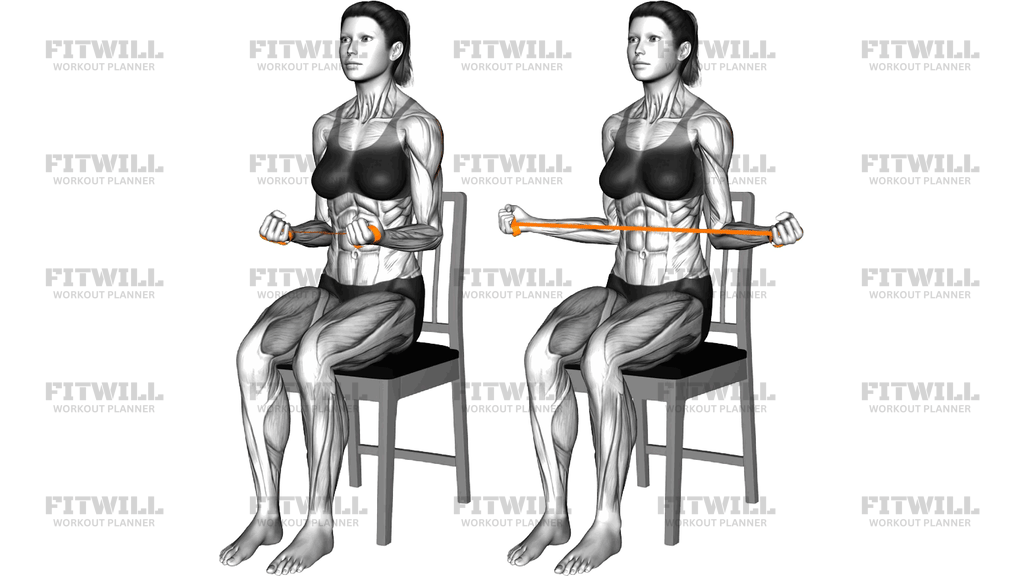
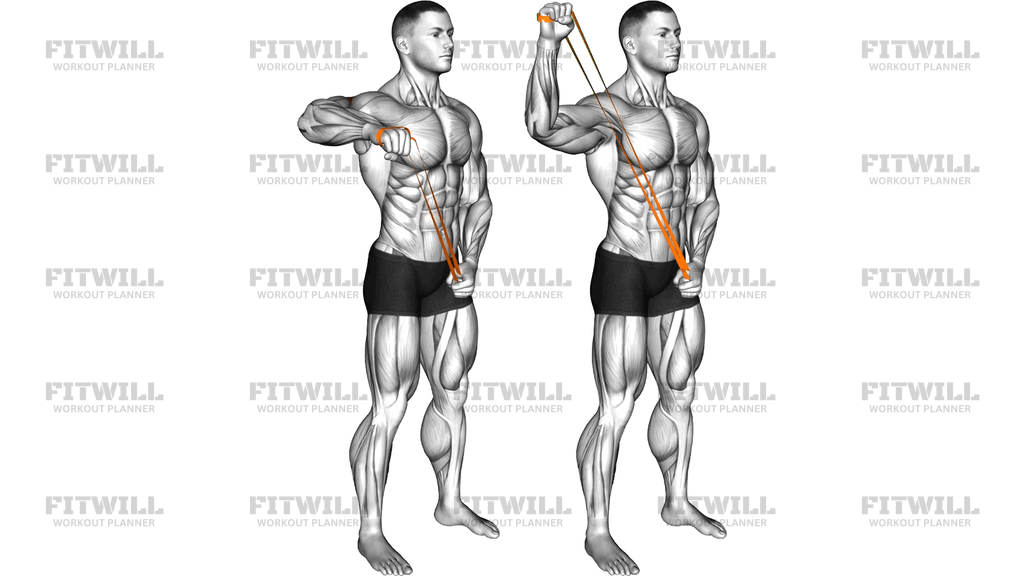
Resistance Band Standing Shoulder Extrernal Rotati
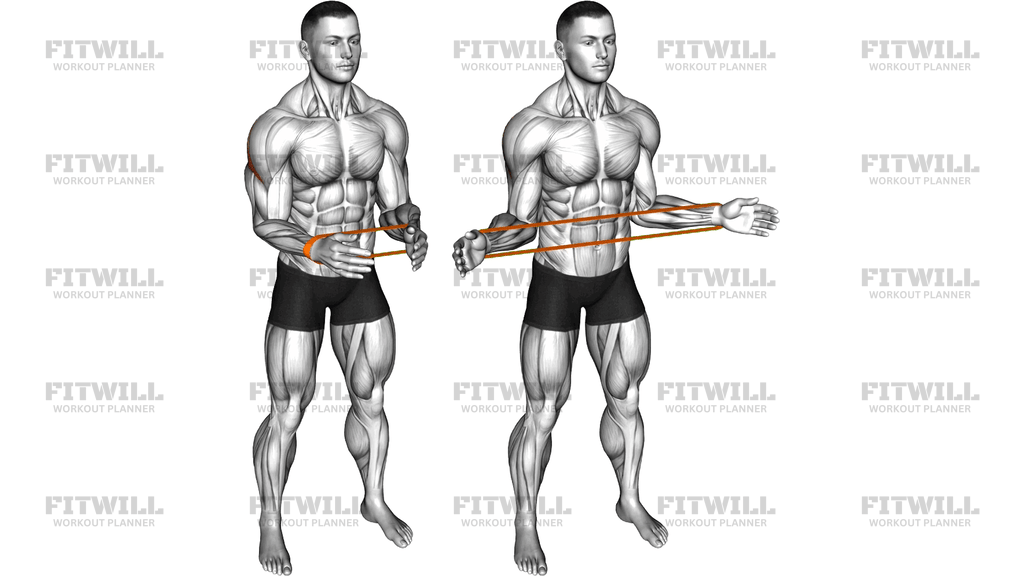
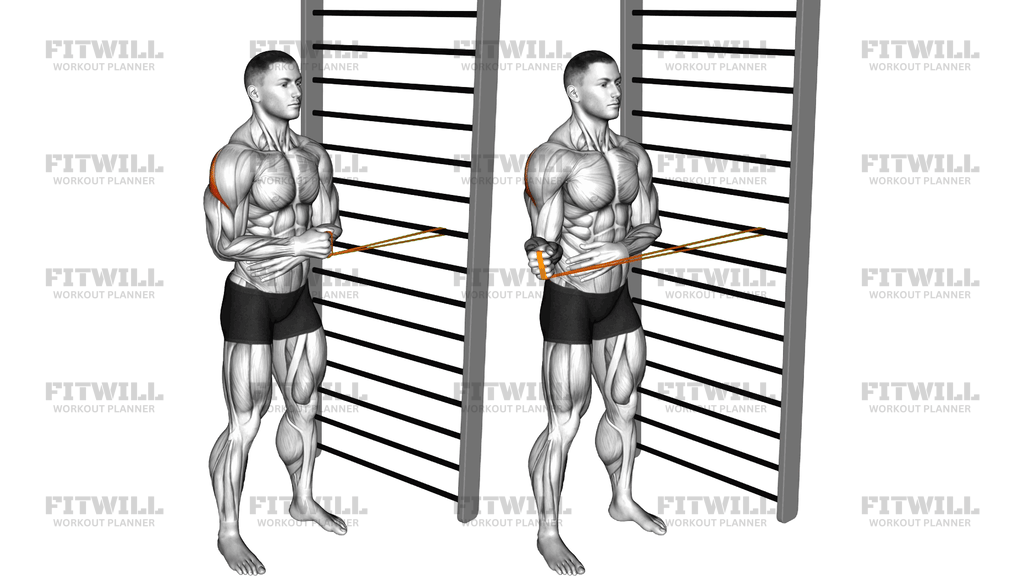
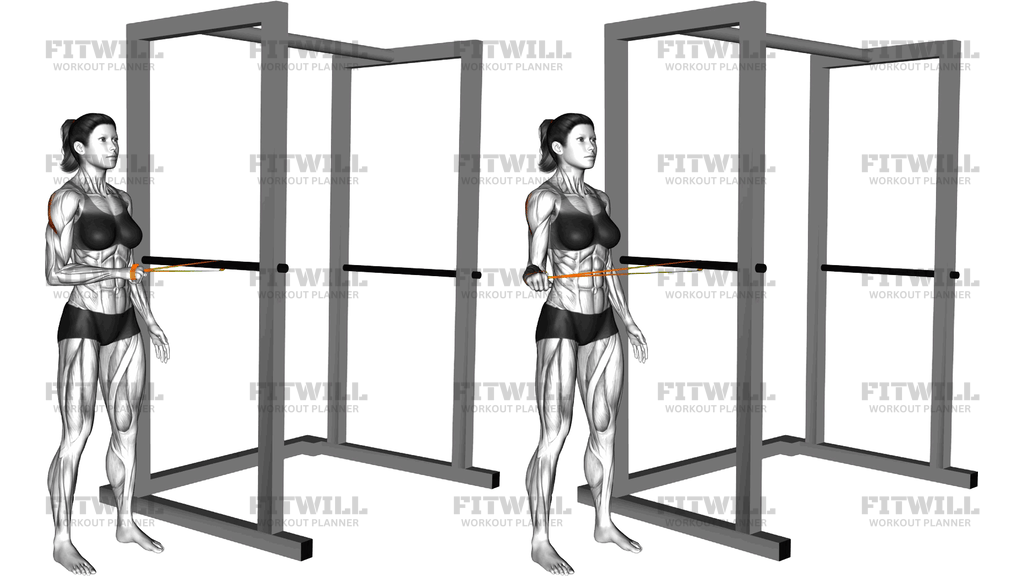
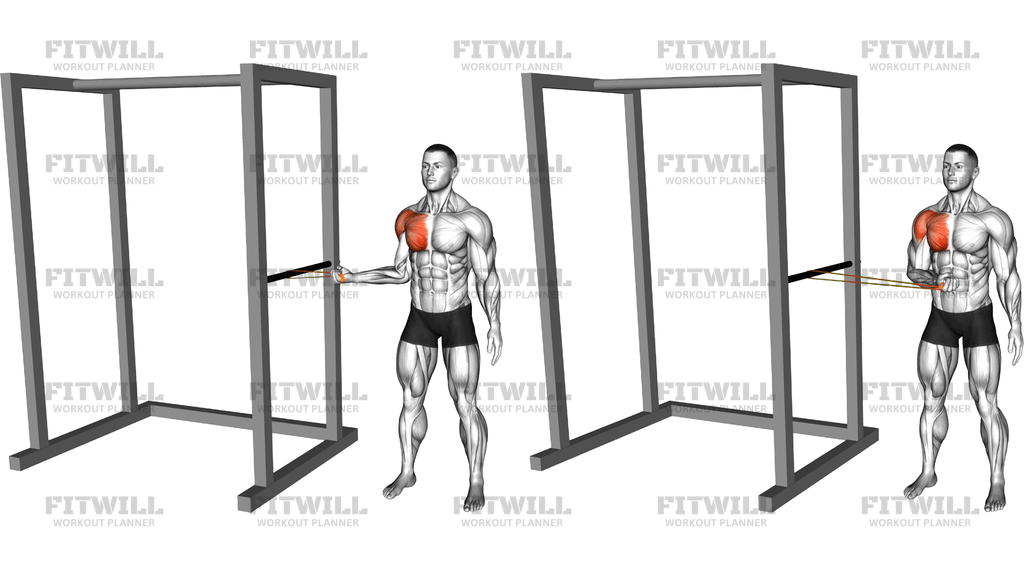
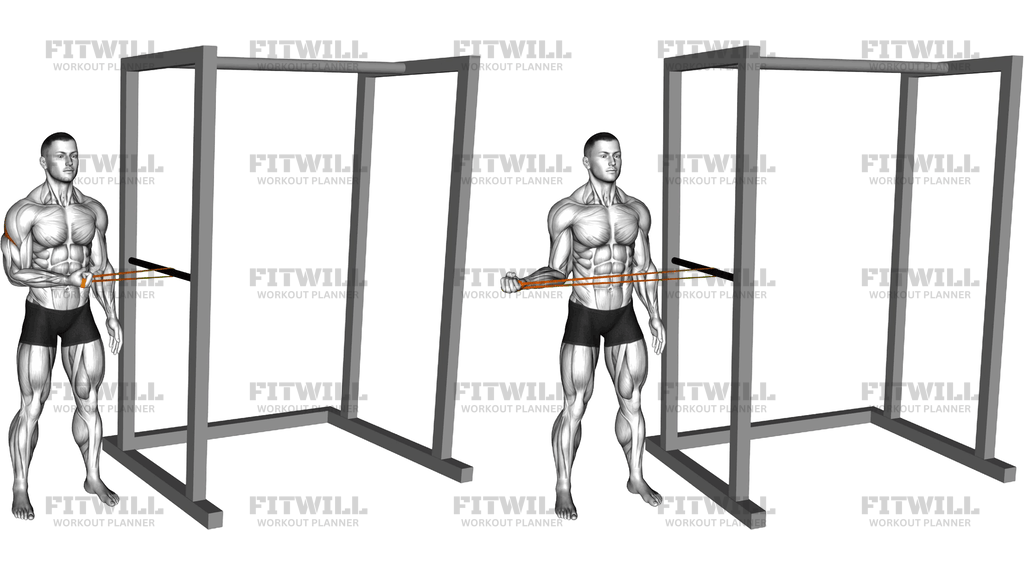
The Resistance Band Standing Shoulder External Rotation is a targeted rotator cuff exercise performed with a band anchored at roughly waist height behind your working side. You stand beside the anchor point with your elbow pinned to your ribs and bent to ninety degrees, then rotate your forearm away from your torso against the band's pull. It looks like a small movement, but it trains one of the most important and most neglected functions of the shoulder joint.
This exercise primarily works the external rotators of the rotator cuff, mainly the infraspinatus and teres minor, with support from the posterior deltoid and the muscles that stabilize the shoulder blade. Because the resistance pulls your forearm back toward the anchor, your external rotators have to work through the entire range rather than just at the start. That constant tension is one of the main reasons bands are so effective for this movement.
External rotation work is useful for nearly everyone who trains. Pressing movements like bench presses, push-ups, and overhead work heavily tax the internal rotators and the front of the shoulder, so balancing that with direct external rotation helps maintain healthy shoulder mechanics. It is also a staple in rehabilitation and prehabilitation settings, which is why physical therapists prescribe it so often for people recovering from shoulder irritation or building tolerance after time off.
The setup matters more here than in most exercises. Your elbow must stay glued to your side and bent at ninety degrees throughout, because if it drifts away from your body or creeps forward, larger muscles take over and the rotator cuff stops doing its job. Stand far enough from the anchor that there is light tension in the starting position, and keep your torso upright without leaning into the rotation.
To execute it well, rotate from the shoulder only. Your hand travels from in front of your stomach out to the side while your upper arm stays completely still. Move slowly, especially on the way back, and stop at a range where you can keep your elbow planted and your wrist neutral. Two to three sets of twelve to twenty controlled reps per side is a typical dose, usually near the start of a shoulder or upper-body session when the muscles are fresh.
Use a light band to begin. The rotator cuff is a small muscle group, and ego has no place in this exercise, a band that forces your elbow to move or your torso to twist is too heavy. Keep the movement pain-free, and if you feel pinching or sharp discomfort, reduce the tension or shorten the range before continuing.
[ Workout Log & Planner ]
Put your next workout in Fitwill
Keep your plan and training log ready when you are.


Instructions
- Anchor a resistance band at about waist height to a rack or sturdy upright, and stand with your left or right side facing the anchor so the band runs behind your working arm.
- Grip the band handle with the hand nearest the anchor, elbow bent to ninety degrees and tucked against your side, with your forearm starting across the front of your stomach.
- Step away from the anchor until the band is slightly taut in the starting position, and set your feet about hip-width apart with a tall, upright torso.
- Brace your core and pull your shoulder blade gently back so your shoulder sits stable against the band's pull.
- Keeping your elbow pinned to your ribs, rotate your forearm out to the side away from your torso until your hand points outward or you reach your comfortable end range.
- Pause briefly at the end position, making sure your elbow has not lifted, drifted back, or rolled forward during the rotation.
- Slowly rotate your forearm back to the starting position in front of your stomach, resisting the band's pull instead of letting it snap your arm back.
- Exhale as you rotate outward and inhale as you return under control.
- Complete all repetitions on one side, then re-grip the band with the other hand and turn around to train the opposite arm.
- After the set, step toward the anchor to release the band tension before letting go of the handle.
Tips & Tricks
- The most common fault is the elbow drifting away from the body as you rotate, which turns the exercise into a rear deltoid movement, check your elbow position in a mirror or place a rolled towel between your elbow and ribs.
- If your torso twists toward the working arm as you rotate, the band is too heavy, drop to a lighter band so the rotation comes from the shoulder joint alone.
- Do not let your wrist bend or your hand flop back, keep the wrist in line with the forearm so the rotation stays at the shoulder.
- Avoid rotating past the point where your elbow starts to lift, a slightly shorter range with a planted elbow beats a bigger range with compensation.
- Stand far enough from the anchor that the band keeps tension at the start, but not so far that the band yanks your arm backward during the return.
- Keep the working shoulder relaxed and down, shrugging toward the ear signals that the upper trapezius is trying to assist.
- Control the return path for two to three seconds, the lowering phase is where much of the rotator cuff's strengthening benefit comes from.
- If standing feels unstable, stagger your stance slightly with the non-working foot forward to give yourself a steadier base.
- Warm the shoulder up with a few loose arm circles before starting, cold external rotators tend to feel pinchy at end range.
Frequently Asked Questions
Which muscles does the Resistance Band Standing Shoulder External Rotation work?
It primarily targets the external rotators of the rotator cuff, especially the infraspinatus and teres minor, with assistance from the posterior deltoid. The muscles around the shoulder blade work to keep the joint stable throughout the rotation.
Why must my elbow stay at my side during the Resistance Band Standing Shoulder External Rotation?
With the elbow pinned to your ribs, the rotation happens at the shoulder joint and the rotator cuff does the work. If the elbow lifts or drifts, larger muscles like the deltoids take over and the rotator cuff stimulus drops off.
How high should I anchor the band for the Resistance Band Standing Shoulder External Rotation?
Set the anchor at roughly waist or lower-chest height, level with your elbow when it hangs at your side. This keeps the resistance pulling horizontally against your rotation rather than dragging your forearm up or down.
Is the Resistance Band Standing Shoulder External Rotation good for beginners?
Yes, it is one of the best starting points for direct rotator cuff training because the band provides smooth, adjustable resistance and the movement is small and easy to learn. Beginners should start with a light band and focus entirely on keeping the elbow planted.
How many reps and sets should I do of the Resistance Band Standing Shoulder External Rotation?
Two to three sets of twelve to twenty reps per side works well, since the rotator cuff responds better to controlled, moderate-rep work than to heavy loads. Rest about forty-five to sixty seconds between sets.
Can I do the Resistance Band Standing Shoulder External Rotation every day?
Light-band versions are often performed several times per week, and in rehab settings even daily. If you are training with meaningful tension, two to four sessions per week with a rest day between is a sensible frequency.
What can I use instead of a band for the Resistance Band Standing Shoulder External Rotation?
A cable machine with a single handle set at waist height works the same pattern, and a lying dumbbell external rotation on your side is a common free-weight alternative. The band version is often preferred because tension stays smooth through the whole arc.
Should I feel the Resistance Band Standing Shoulder External Rotation behind my shoulder?
Yes, most people feel it deep in the back of the shoulder around the shoulder blade area. If you feel sharp pain in the front of the shoulder or a pinching sensation, stop, reduce the band tension, and check that your elbow has not crept forward.
Why is my torso twisting during the Resistance Band Standing Shoulder External Rotation?
Rotation from the trunk usually means the band is too heavy or your range is too long, so your body is stealing movement from the spine. Use a lighter band, shorten the arc, and brace your core to keep the chest facing forward.