Wide Chin Up
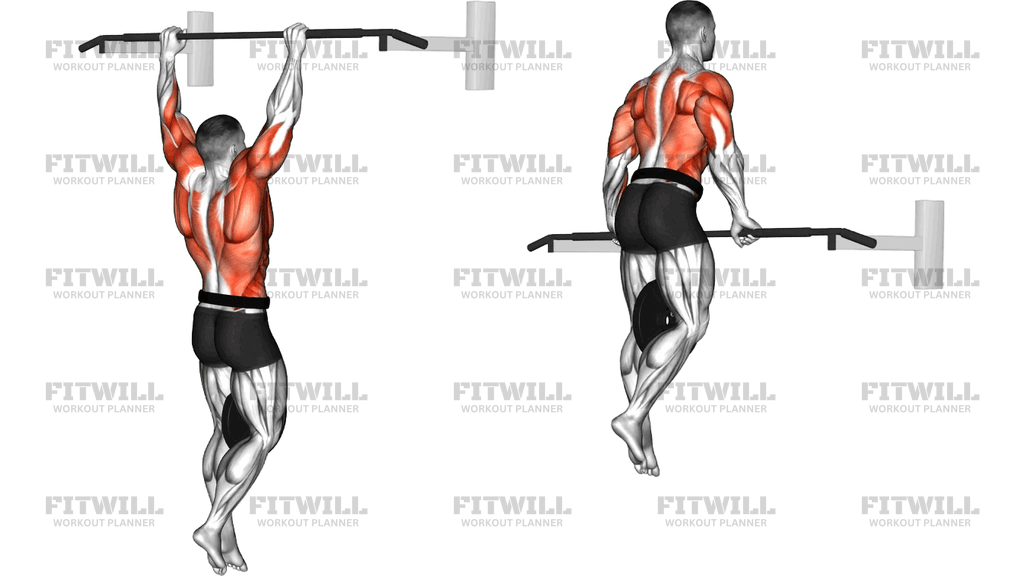
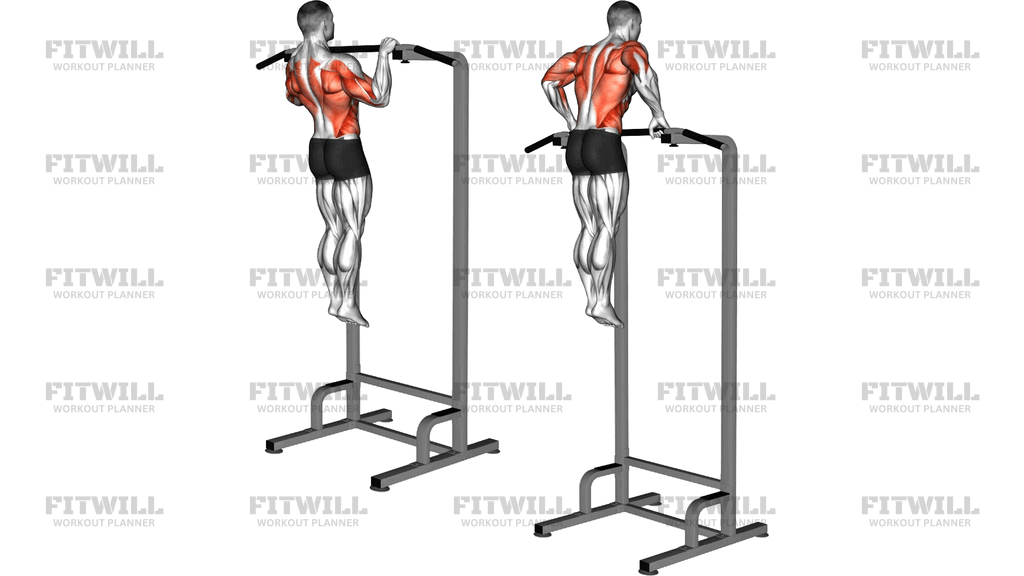
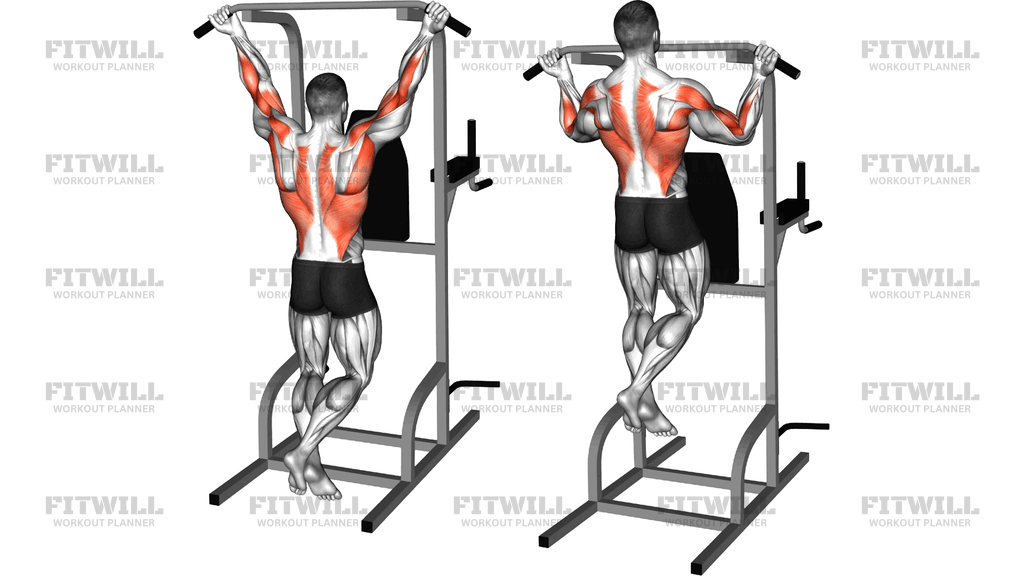
The Wide Chin Up is a bodyweight pulling exercise performed on a fixed pull-up bar with an underhand grip set noticeably wider than shoulder width. Because the palms face toward you while the hands sit wide, this variation blends the biceps emphasis of a chin-up with the broad, lateral pulling pattern of a wide pull-up. It is a demanding compound movement that trains the lats as the primary mover, with strong contributions from the biceps, mid-back muscles like the rhomboids and traps, and the forearms that keep you locked onto the bar.
This exercise suits intermediate to advanced lifters who already have some bodyweight pulling experience, since the wide underhand grip puts the arms at a mechanical disadvantage compared to a standard close chin-up. Climbers, swimmers, and anyone building a wider, denser back will get a lot out of it, and it works well as a primary vertical pull on back day or as a volume accessory after heavier barbell rowing.
Setup matters more here than on most pull variations. A grip that is too wide strains the shoulders and elbows and shortens the range; a grip barely wider than the shoulders turns the movement back into a regular chin-up. Aim for hands roughly one and a half shoulder widths apart on a sturdy overhead bar, with a full wrap of the fingers around the steel. Hang with the legs crossed behind you or bent slightly, chest lifted, and shoulders drawn down away from your ears before the first pull begins.
From there, drive the elbows down and in toward your ribs as your chest travels toward the bar, keeping the torso as vertical as possible rather than leaning back excessively. The strongest path has your upper arms moving down and slightly out while your shoulder blades pull together at the top. Lower yourself under control to a full hang, letting the lats lengthen completely before starting the next rep.
One practical caution: the wide supinated grip loads the inner elbow more than a neutral or pronated grip, so if you feel sharp elbow discomfort, narrow your hands slightly or switch to a neutral-grip pull-up for a while. Always control the descent, since dropping out of the top position is where most elbow and shoulder complaints start.
[ Workout Log & Planner ]
Put your next workout in Fitwill
Keep your plan and training log ready when you are.


Instructions
- Stand under a fixed pull-up bar and grip it with an underhand grip, palms facing you, with your hands set about one and a half shoulder widths apart.
- Wrap your thumbs around the bar and squeeze firmly so your wrists stay straight and stacked over your forearms.
- Hang from full extension with your legs crossed at the ankles behind you or bent slightly, and pull your shoulders down away from your ears to set the lats.
- Brace your midsection, lift your chest, and keep your torso vertical with only a small natural lean.
- Pull by driving your elbows down toward your ribs and your chest toward the bar, keeping your elbows tracking outward rather than flaring forward.
- Continue until your chin clears the bar and your shoulder blades are pulled together at the top.
- Lower yourself slowly and smoothly back to the full hang, resisting gravity for two to three seconds rather than dropping.
- Exhale as you pull up and inhale as you lower down, keeping the breathing steady through the whole set.
- Reset your grip and shoulder position at the bottom of each rep before starting the next pull.
- Step down from the bar safely when finished instead of jumping off under fatigue.
Tips & Tricks
- If your elbows drift far in front of your body as you rise, the grip is likely too narrow for this variation; widen your hands slightly so the pull stays lateral.
- Do not sacrifice the bottom of the rep. Stopping short of a full hang turns the Wide Chin Up into a partial and shortchanges the stretched lat position.
- Keep the elbows from flaring straight out to the sides at chest height. Press them down and slightly in to protect the shoulder and keep the lats doing the work.
- If your grip fails before your back does, chalk your hands or use lifting straps only for back-off sets, since training the forearms is part of the exercise.
- Avoid kipping or swinging your legs to finish a rep. If you need momentum, the set should end and you can cut the range or add assistance instead.
- Squeeze at the top for a brief pause with your chin over the bar. Wide grips tend to shorten range, so the hold ensures you actually reach the finished position.
- Warm up the inner elbows with a few close-grip chin-ups or lat pulldowns before going wide, especially if you have a history of elbow tendon irritation.
- If you cannot complete controlled reps, use a band or an assisted pull-up machine rather than bouncing out of the bottom of the hang.
Frequently Asked Questions
What muscles does the Wide Chin Up work?
The lats are the primary mover, with heavy assistance from the biceps because of the underhand grip. The rhomboids, traps, forearms, and core stabilizers work throughout to control the torso and hold the bar.
How is a Wide Chin Up different from a wide pull-up?
Both use a wide hand spacing, but the chin-up uses an underhand grip with palms facing you, which keeps the biceps more involved. The wide pull-up uses an overhand grip and shifts slightly more work to the lats and upper back.
Is the Wide Chin Up suitable for beginners?
Most beginners find the wide supinated grip too demanding at first. Start with regular chin-ups, lat pulldowns, or band-assisted reps, and progress to the wide variation once you can handle several strict standard chin-ups.
Why do my inner elbows ache during Wide Chin Ups?
The wide underhand position places extra tension on the elbow flexor tendons. Narrow your grip a little, lower yourself with control instead of dropping, and reduce volume until the discomfort fades.
How wide should my hands be on the bar?
Roughly one and a half shoulder widths is a reliable starting point. Going extremely wide shrinks your range of motion and increases shoulder stress without adding meaningful back involvement.
Should my chin touch the bar at the top?
Your chin should clear the bar with your chest pulled tall, but you do not need to strain your neck forward to touch it. Reaching the height by driving the elbows down matters more than contact.
Can I use a Wide Chin Up to replace lat pulldowns?
Yes, it trains a similar vertical pulling pattern, though it requires you to control your full bodyweight. If you cannot complete strict reps, pulldowns or assisted variations are the better starting point.
How many reps and sets should I do?
Three to five sets of five to ten strict reps works well for strength and back development. When you can no longer control the lowering phase, end the set rather than swinging out the remaining reps.
Is it safe to hang with my legs crossed behind me?
Crossing the ankles behind you is a common way to reduce swinging and stays safe for most people. The key is keeping your torso stable and avoiding any hip drive that turns the pull into a kipping movement.