Cat Cow To Wide Downward Dog Calf Stretch
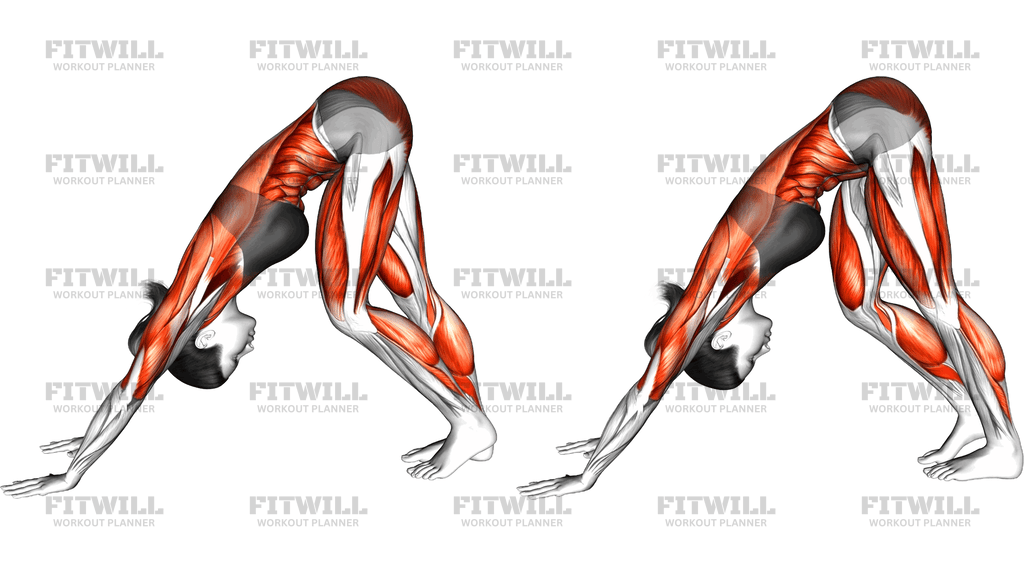
Cat Cow To Wide Downward Dog Calf Stretch is a flowing mobility sequence that moves you from a hands-and-knees Cat Cow into a wide-footed Downward Dog, where the final position doubles as a deep calf and hamstring stretch. The flow starts with spinal articulation on all fours, then travels through a tucked-toes transition into an inverted V shape with the feet set wider than hip width so the heels can sink toward the floor. It combines dynamic spinal movement with a sustained lower-leg stretch in one continuous sequence.
This sequence is especially useful as a warm-up before lower body training, running, or any session that demands ankle mobility, and it works equally well as a cool-down or a stand-alone reset after long periods of sitting. Desk workers often find the Cat Cow portion eases stiffness through the mid back and lower back, while runners and lifters appreciate how the wide Downward Dog position targets the gastrocnemius and soleus along the back of the lower leg.
The wide stance is what separates this from a standard Downward Dog. Setting the feet outside hip width shortens the distance the heels must travel to reach the floor, which lets you keep the legs long and load a comfortable, consistent stretch into the calves without forcing the lower back to round. Alternating gentle knee bends, as shown in the transition, lets you shift emphasis between the gastrocnemius when the knee is straight and the soleus when the knee is bent.
Because the sequence is performed under your own body weight, the intensity is entirely self-regulated. Pressing the palms firmly into the floor lengthens the lats and shoulders, the hip hinge in the Downward Dog draws a stretch through the hamstrings, and the pushing action gently loads the upper body, so you are mobilizing the whole posterior chain rather than isolating one muscle.
Move slowly and let breath guide the flow: exhale as you round the spine in Cat, inhale as you extend in Cow, and exhale again as you lift the hips into the wide Downward Dog. Never bounce the heels toward the floor; instead, hold the bottom position and let the stretch settle. If your shoulders or wrists complain in the inverted position, keep the knees slightly bent or shorten the hold rather than collapsing into the joints.
[ Workout Log & Planner ]
Put your next workout in Fitwill
Keep your plan and training log ready when you are.


Instructions
- Start on an exercise mat on all fours with your hands under your shoulders and knees under your hips, spine in a neutral position.
- Exhale and round your spine toward the ceiling, tucking your chin and tailbone into the Cat position.
- Inhale and reverse the curve, dropping the belly and lifting the chest and tailbone into Cow, flowing between the two shapes for several slow breaths.
- Tuck your toes under, press through the palms, and lift your knees off the floor to push your hips up and back.
- Step or walk your feet wider than hip width and straighten the legs as much as is comfortable, forming an inverted V with the body.
- Sink your heels toward the floor and hold the wide Downward Dog position, feeling the stretch along the backs of the calves.
- For a deeper soleus stretch, alternately bend one knee while keeping the opposite heel pressing down.
- Press the floor away with your hands so your weight stays in the shoulders and upper back rather than collapsing into the wrists, and keep the neck relaxed between the arms.
- Breathe steadily throughout, deepening the heel stretch slightly on each exhale for 20 to 45 seconds.
- To finish, bend the knees and lower them back to the mat, then sit back on your heels and reset before repeating.
Tips & Tricks
- If your heels hover well above the floor, widen the feet a little more or bend the knees slightly instead of forcing the heels down with a rounded back.
- Bending one knee at a time in the Downward Dog shifts the stretch lower in the calf toward the soleus; keeping both knees straight biases the gastrocnemius higher up.
- Spread the fingers and grip the mat lightly with the fingertips to take pressure off the wrists during the transition and the hold.
- Keep the hips high and reaching toward the ceiling; letting the hips drift back toward the heels turns the stretch into more of a child's pose and reduces the calf lengthening.
- Rushing from Cat Cow into the Downward Dog is a common mistake — complete several full spinal cycles first so the back is warm before the legs take on the stretch.
- If the hamstrings pull more than the calves, soften the knees until the sensation concentrates behind the lower legs.
- Keep the head heavy and the neck relaxed; lifting the head to look forward strains the neck and shortens the line through the spine.
- Pedaling the feet gently, heel to heel, is more effective than bouncing, which can trigger a protective contraction in the calves.
Frequently Asked Questions
Which muscles does Cat Cow To Wide Downward Dog Calf Stretch target?
The primary target is the calves, mainly the gastrocnemius and soleus, with supporting stretches through the hamstrings, lower back, lats, and shoulders. The Cat Cow portion also mobilizes the entire spine.
Why is the feet-wide stance used in this exercise instead of a narrow Downward Dog?
A wider stance brings the heels closer to the floor, so you can keep the legs long and load the calves evenly without rounding the back or straining to reach the ground.
Is this exercise suitable for complete beginners?
Yes, it is body weight only and self-regulated. Beginners can bend the knees generously in the Downward Dog and reduce the hold time until flexibility improves.
Should I do this stretch before or after a workout?
It works well before lower body or running sessions as a dynamic warm-up, especially if you keep the Cat Cow portion moving, and equally well afterward with longer, still holds in the Downward Dog.
My wrists hurt in the Downward Dog position. What can I change?
Press deliberately through the base of the fingers and spread the hands wide so the load moves into the palms and forearms. You can also shorten the hold or lower the knees briefly between reps.
How long should I hold the wide Downward Dog calf stretch?
Aim for 20 to 45 seconds, pedaling the heels gently. If you are using it as a cool-down, a longer 60-second hold is fine as long as the stretch stays comfortable.
Can bending one knee really change the stretch?
Yes. Bending a knee puts the calf on slack at the ankle and biases the deeper soleus, while keeping both knees straight places more tension on the gastrocnemius higher up the leg.
What should I do if my heels cannot reach the floor at all?
Keep them where they hang comfortably and focus on lengthening the spine and pressing the hips back rather than forcing the heels down. Over time the range will improve without forcing it.
Is it safe for my lower back?
For most people it is gentle, since the Cat Cow actively mobilizes the spine and the Downward Dog keeps the back relatively neutral. If rounding or lifting the hips causes discomfort, reduce the range and keep the knees bent.