Lying Arms Curl With Pillow
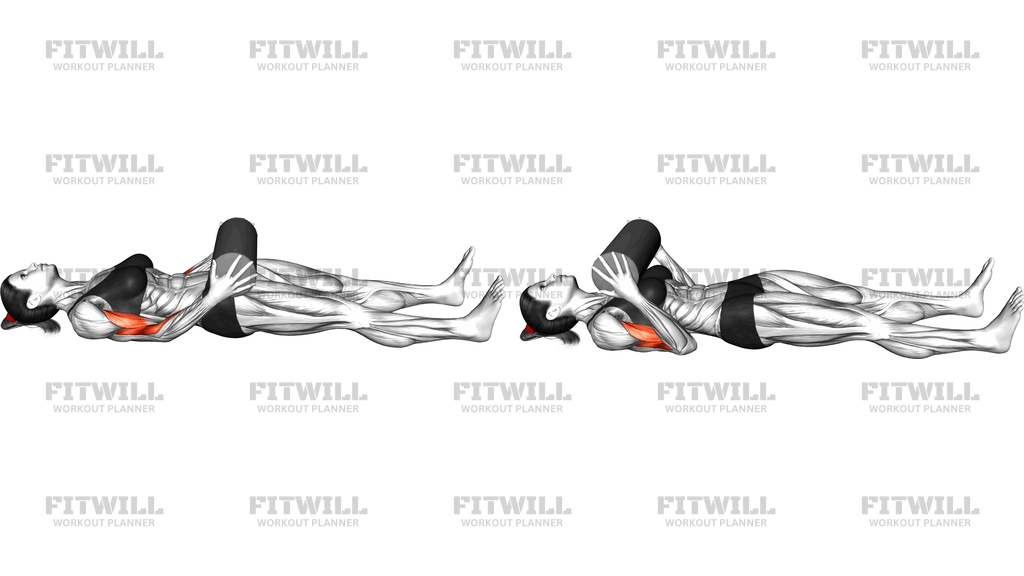
The Lying Arms Curl With Pillow is a supine biceps curl performed on the floor with nothing more than a soft pillow or cushion held between the palms. You lie flat on your back with your legs extended and your arms resting alongside your body, then bend the elbows to curl the pillow up toward your chest before lowering it back down under control. Because the pillow offers very little external load, the resistance comes from actively squeezing the cushion and moving your own forearms, which makes this a low-intensity, high-awareness arm exercise rather than a heavy strength builder.
This movement suits beginners learning what a biceps curl should feel like, people rehabbing or easing back into arm training after a layoff, older adults who want gentle elbow flexion work, and anyone training at home without dumbbells. It is also a useful activation drill before a regular arm session, since the light load lets you focus entirely on the biceps contracting without grip strain or momentum taking over.
The primary muscles worked are the biceps on the front of the upper arm, supported by the brachialis and brachioradialis, with the forearm flexors working hard to maintain the squeeze on the pillow. Keeping the arms curling while lying on your back removes any help from the lower back or from swinging the torso, so the elbows are the only moving joints and the shoulders stay relaxed on the floor.
The setup matters more than it looks. Lying flat with the head resting on the floor, legs extended, and the upper arms pinned lightly against the ribcage fixes the elbow position, which is the key to a clean curl. If the elbows drift away from the body or the shoulders lift, the biceps lose tension and the movement turns into an uncontrolled arm swing. Holding the pillow with both palms and pressing inward on it throughout the rep keeps the forearms engaged and adds a light isometric challenge that a plain bodyweight curl lacks.
To execute it well, exhale as you bend the elbows and bring the pillow smoothly up toward your chest or shoulders, pause briefly at the top while squeezing the cushion, then inhale as you lower it back toward your hips with a slow, deliberate tempo. The pillow should travel a consistent arc close to the torso, and the wrists should stay neutral rather than flicking at the top. Two to three sets of twelve to twenty slow reps is a sensible starting point, and because the load is minimal, quality of squeeze matters far more than speed or rep count.
From a safety standpoint, this is one of the gentlest arm exercises available, but stop if you feel pinching at the elbow or shoulder, and keep the range within what feels smooth and comfortable. If a pillow feels too easy once you have mastered the tempo, the natural progression is a towel roll or a light dumbbell in the same lying position.
[ Workout Log & Planner ]
Put your next workout in Fitwill
Keep your plan and training log ready when you are.


Instructions
- Lie flat on your back on an exercise mat or carpeted floor with your legs extended and your head resting comfortably on the floor.
- Hold a pillow lengthwise between both palms with your arms extended down alongside your hips, elbows fully straight.
- Gently squeeze inward on the pillow with both hands so the cushion stays secure and your forearms stay engaged.
- Keep your upper arms lightly touching your ribcage and let your shoulders relax down toward the floor before you start.
- Exhale and bend your elbows, curling the pillow up in a smooth arc toward your chest or shoulders.
- Pause for a moment at the top with the pillow near your chest, continuing to press inward on it to keep tension on the biceps.
- Inhale and slowly straighten your elbows, lowering the pillow back along the same path until it rests at your hips again.
- Keep your wrists neutral throughout so they do not bend or flick as the pillow rises and falls.
- Complete all reps with the same steady tempo, then release the squeeze on the pillow and rest before the next set.
Tips & Tricks
- If the pillow slips out of your hands, hold it across its middle rather than at one end so both palms share the load evenly.
- The most common mistake is letting the elbows drift away from the torso, which turns the rep into a loose shoulder swing; press your upper arms gently against your sides for every rep.
- Do not let your shoulders or head lift off the floor as you curl up; if they rise, you are pulling with the upper body instead of bending the elbows.
- Slow the lowering phase down to two or three seconds, since the pillow provides little resistance and the controlled descent is where most of the biceps work happens.
- Keep the squeeze on the pillow constant during the whole set; letting go of the pressure between reps removes the isometric challenge for the forearm flexors.
- Avoid flicking the wrists at the top of the curl; neutral wrists keep the tension on the biceps instead of straining the forearm joints.
- If your elbows feel pinched when fully straight at the bottom, keep a very slight bend rather than locking them out against the floor.
- Breathe in a steady rhythm rather than holding your breath, especially at the top of the curl where the squeeze is strongest.
- To make the movement harder without adding weight, add a one-second pause at the top or perform the set at half speed.
Frequently Asked Questions
Which muscles does the Lying Arms Curl With Pillow work?
The biceps on the front of the upper arm do the main work of bending the elbows, with the brachialis and brachioradialis assisting. The forearm flexors also stay active the entire time because you are squeezing the pillow inward between your palms.
Why hold a pillow instead of a dumbbell for this curl?
The pillow provides light, safe resistance and an inward squeeze that trains the forearms isometrically, making it ideal for beginners, gentle arm activation, or training without equipment. Once the tempo feels easy, you can repeat the same lying curl pattern with a towel roll or a light dumbbell.
Should my legs be bent or straight during the Lying Arms Curl With Pillow?
Keep your legs extended and relaxed on the floor, as shown in the standard setup. Bending the knees is fine if your lower back feels uncomfortable, but it does not change the arm movement.
Can beginners do the Lying Arms Curl With Pillow?
Yes, it is one of the most beginner-friendly arm exercises because the load is minimal and the floor supports your whole body. It is a good way to learn the feeling of a strict elbow curl before progressing to weighted versions.
Why do my shoulders lift off the floor when I curl the pillow up?
That usually means the elbows are drifting forward or you are pulling with the shoulders instead of isolating the elbows. Keep your upper arms resting against your ribcage and reduce the range slightly until only the forearms move.
How many reps should I do of the Lying Arms Curl With Pillow?
Start with two to three sets of twelve to twenty slow, controlled reps. Because the pillow offers little resistance, a slow tempo and a firm squeeze matter more than adding reps quickly.
What can I use if I do not have a pillow?
A rolled towel, a small cushion, or a folded blanket works the same way and still allows the inward squeeze. Any soft object you can hold firmly between both palms with straight arms at your sides will do.
Is it safe to do this exercise every day?
The low load makes it easy on the elbows, so frequent practice is generally fine for most people. If you notice elbow or forearm discomfort, reduce the volume or add a rest day.
How is the Lying Arms Curl With Pillow different from a standing biceps curl?
Lying on your back removes the ability to swing the torso or use momentum, so the elbows stay pinned at your sides and the biceps do the work alone. A standing curl allows heavier loading, but this version emphasizes strict form and control.