Dumbbell Floor Fly
Dumbbell Floor Fly is a floor-based chest isolation exercise performed lying on your back with a dumbbell in each hand. The floor shortens the range of motion compared with a bench fly, which is useful when you want to train the chest hard without letting the upper arms drop too far behind the torso. That limited range also makes the movement easier to control and usually friendlier on the front of the shoulder.
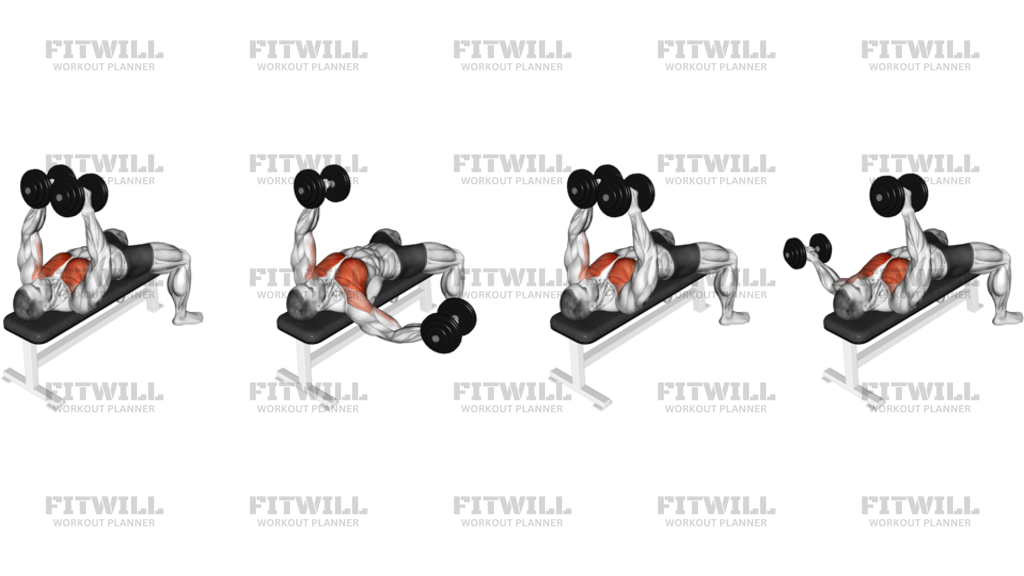
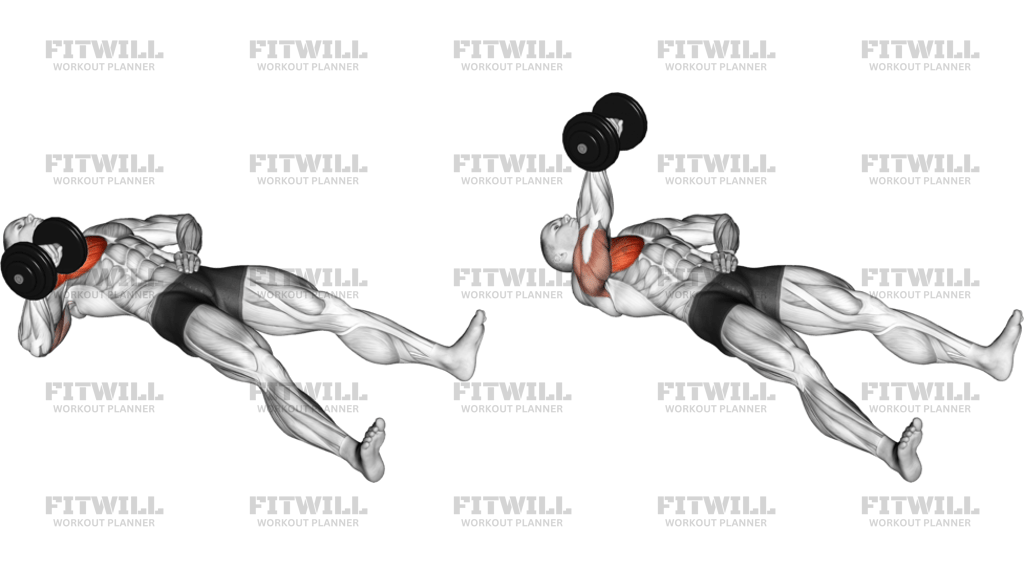
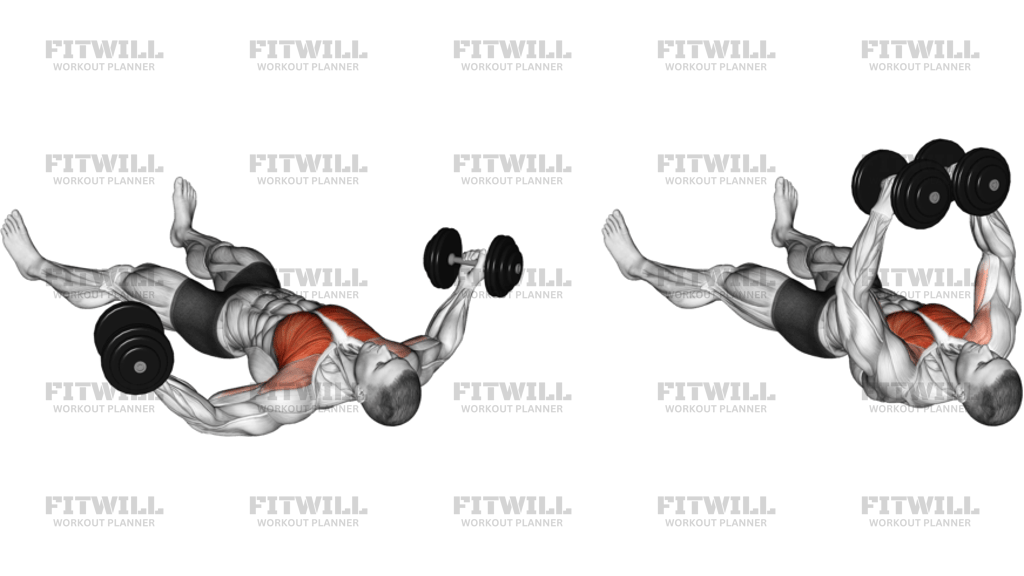
The image shows a neutral setup: shoulders supported by the floor, knees bent, feet planted, palms facing each other, and elbows kept slightly bent throughout the rep. From that position, the arms open in a wide arc until the upper arms touch the floor, then the dumbbells come back together above the mid-chest. The exercise is about keeping the same elbow angle and turning the motion into a controlled chest squeeze, not a press.
This movement primarily trains the pectorals while the front deltoids, biceps, and upper back muscles help stabilize the arms and shoulders. Because the floor stops the descent, the stretch is usually more manageable than a deep bench fly, but the chest still has to control the lowering phase. That makes the exercise useful for building mind-muscle connection, accessory chest volume, and controlled hypertrophy work when a press variation is not the best fit.
Good setup matters more than load here. Keep the ribcage down, brace lightly, and let the shoulder blades settle into the floor instead of aggressively shrugging. Open the arms only as far as you can control, then bring the dumbbells back together over the chest with a smooth arc. If the shoulders feel pinchy, shorten the range, reduce the weight, and keep the elbows slightly closer to the torso. The movement should feel like a stable chest fly from the floor, not a loose, swinging repetition.
Use Dumbbell Floor Fly as an accessory after pressing work, or as a lower-risk fly option when you want chest tension without a deep shoulder stretch. It suits home training well because it only needs dumbbells and floor space. Keep the reps deliberate, stop the set when the shoulders or wrists start to drift, and treat each repetition like a controlled squeeze rather than a speed drill.
[ Workout Log & Planner ]
Put your next workout in Fitwill
Keep your plan and training log ready when you are.


Instructions
- Lie on your back on the floor with your knees bent, feet flat, and a dumbbell in each hand held directly above the mid-chest.
- Turn your palms to face each other, stack your wrists over the handles, and keep a soft bend in both elbows before you start the rep.
- Set your shoulders down into the floor and keep your ribcage from flaring as you brace lightly.
- Lower both arms out in a wide arc, letting the elbows travel away from each other while the elbow angle stays almost unchanged.
- Continue lowering until the upper arms touch the floor lightly or you reach the deepest shoulder position you can control.
- Pause briefly on the floor without bouncing or relaxing the shoulders.
- Exhale and sweep the dumbbells back together over the chest in the same arc, finishing with the weights aligned above the sternum.
- Squeeze for a moment at the top, then repeat for the planned number of reps before placing the dumbbells down safely.
Tips & Tricks
- Treat the floor as a built-in depth stop; do not force the dumbbells into a deeper stretch than the upper arms can comfortably reach.
- Keep the elbows softly bent from start to finish so the movement stays a fly, not a pullover or press.
- Think about hugging a wide barrel above the chest instead of pushing the weights straight up.
- If the front of the shoulder feels crowded, reduce the arc slightly and keep the elbows a touch closer to the torso.
- Use lighter dumbbells than you would for pressing work; this movement gets difficult fast when the chest takes over properly.
- Keep the wrists stacked over the handles so the bells do not drift backward and load the forearm or shoulder.
- Lower under control for a clear eccentric phase, then bring the dumbbells together with the same smooth tempo.
- Let your shoulder blades stay settled on the floor instead of shrugging them up as the arms open.
- Stop the set when you can no longer keep the same elbow angle or the bells start to wobble at the top.
Frequently Asked Questions
What muscles do Dumbbell Floor Fly reps work most?
The chest is the main driver, with the front delts and upper-arm stabilizers helping control the dumbbells.
Why do a floor fly instead of a bench fly?
The floor limits how far the arms can drop, which reduces shoulder extension and makes the stretch easier to control.
Should my elbows stay bent during the whole rep?
Yes. Keep a soft, nearly fixed elbow angle so the dumbbells move in an arc instead of turning the exercise into a press.
How low should the dumbbells go?
Lower until the upper arms touch the floor lightly or until your shoulders reach a comfortable end range without pinching.
Is this exercise beginner-friendly?
Yes, especially with light dumbbells, because the floor removes the deepest part of the stretch and makes the path easier to control.
What grip should I use on the dumbbells?
Use a neutral grip with the palms facing each other and the wrists stacked directly over the handles.
What is a common mistake on Dumbbell Floor Fly?
The biggest mistake is turning the rep into a press or letting the arms drop too deep and lose shoulder position.
Where does this fit in a workout?
It works well as chest accessory work after presses, or anywhere you want controlled horizontal adduction without a deep bench stretch.