Spine Rolling
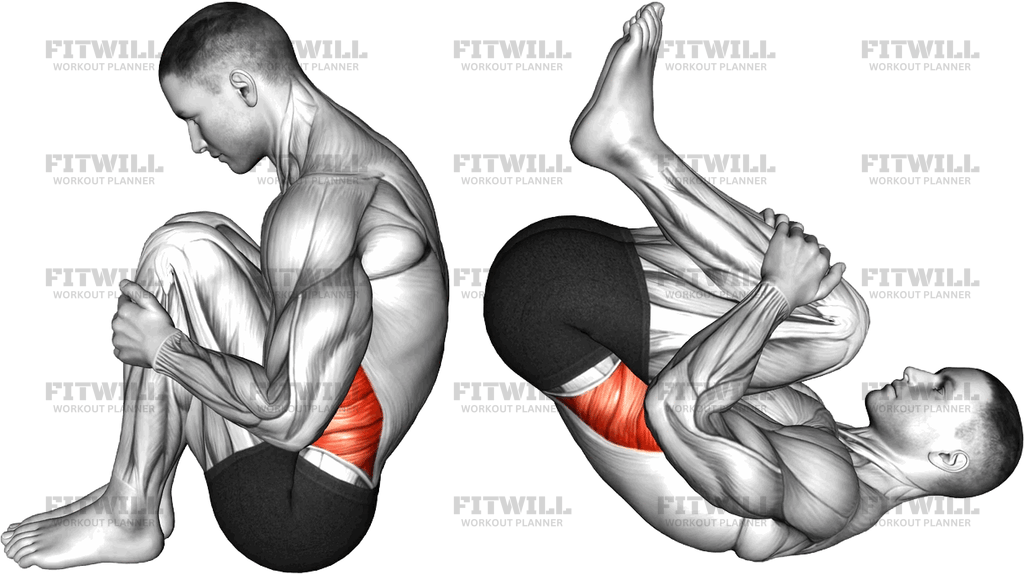
Spine Rolling is a bodyweight floor exercise in which you hug your knees to your chest, round your back into a smooth curve, and roll backward along your spine until your shoulders approach the floor, then use momentum and control to roll back up to the seated position. It comes from the Pilates tradition, where a similar movement is often called "rolling like a ball," and it blends spinal mobility with deep core work in one continuous rhythm. All you need is a soft surface such as an exercise mat, because the back of your ribcage, spine, and pelvis are in direct contact with the floor throughout the roll.
The exercise trains two things at once. First, it mobilizes the entire spine from the pelvis to the upper back, encouraging each segment to articulate evenly instead of one stiff area absorbing all the pressure. Second, it challenges the deep core — the abdominals, pelvic floor, and surrounding stabilizers — to hold a tight ball shape and control the roll in both directions. The hip flexors and glutes stay active as you keep the knees drawn in, and the erector spinae of the lower back work eccentrically as the rounded spine lengthens against the mat.
Setup matters more than most people expect. Your seated position determines whether the roll stays smooth or clunky. Sit with your knees bent and pulled close to your chest, hands wrapped around your shins or behind your thighs, and your spine curved into a C-shape with the head gently tucked. Your weight should rest just behind your sit bones, so you are balanced on the very back edge of the pelvis. If you start too far forward, you will need to lurch to begin the roll; if you start too far back, you will topple instead of articulating.
To execute the roll well, inhale to prepare, then exhale as you let your pelvis tuck under and draw your belly inward, rolling back one vertebra at a time. Keep the ball shape completely unchanged — knees pulled in, elbows relatively close, head tucked — until your shoulder blades reach down toward the mat without your head touching the floor. Pause briefly at the back of the roll, then exhale again and roll back up through each spinal segment to the balanced seated position, keeping your toes lightly hovering off the floor if you can.
Spine Rolling is commonly used as a warm-up before abdominal training, as a mobility reset after long sitting or heavy deadlifts, and as a core control drill in Pilates and general stretching routines. It suits beginners who cannot yet perform a full crunch with control, as well as advanced trainees working on segmental spinal movement. Because it is performed on the floor with no load, the main safety considerations are keeping the movement slow and rounded, avoiding the roll onto the neck or head, and stopping if the motion causes pinching or discomfort in the lower back.
[ Workout Log & Planner ]
Put your next workout in Fitwill
Keep your plan and training log ready when you are.


Instructions
- Sit on an exercise mat with your knees bent and drawn in close to your chest, feet together and lifted so only your pelvis and, initially, your toes touch the floor.
- Wrap your hands around your shins or the backs of your thighs, and curve your spine into a rounded C-shape with your chin tucked gently toward your chest.
- Shift your weight so you are balanced just behind your sit bones, on the back edge of your pelvis, without leaning backward yet.
- Inhale to set your core, then exhale as you tuck your pelvis under and draw your belly button in to begin rolling backward.
- Roll back one vertebra at a time along the spine, keeping the ball shape unchanged — knees pulled in, head tucked, back rounded.
- Stop the roll when your shoulder blades approach the mat; your head should stay off the floor and your hips should stay above your ribcage, not behind it.
- Pause for a moment at the deepest point, feeling the spine lengthen and the lower back press into its rounded curve.
- Exhale again and pull your knees in slightly harder as you roll forward through each spinal segment back to the balanced seated position.
- Breathe in as you roll back and out as you roll up, keeping one steady breath cycle per full roll.
- Complete your set of smooth, connected rolls, then release your legs, sit upright, and let your spine settle into a neutral position before standing.
Tips & Tricks
- If you clunk onto your lower back instead of rolling evenly, the ball shape is too loose — pull the knees in tighter and deepen the tuck of the pelvis before you start.
- Rolling onto the neck is the most common mistake; limit the backward range so your shoulder blades, not your skull or cervical spine, take the load.
- Do not swing your legs or kick to generate momentum; the roll should come from the tuck of the pelvis and the abdominals, with the legs moving as part of one unit.
- If your toes drop or slap the mat as you roll up, your pace is too slow for your current control — either roll with slightly more rhythm or let the toes rest down between reps.
- Avoid flattening the back at the top of the movement; sitting tall and neutral between reps defeats the purpose of the drill, so keep the rounded shape and simply rebalance on the pelvis.
- People with a stiff upper back often hinge only at one lumbar segment, which can feel pinchy — move a little slower through that spot and let the mid back share the curve.
- Place your hands behind the thighs rather than on the shins if you cannot keep the knees close without straining your shoulders.
- Use a thicker mat or a carpeted surface if your spine feels each vertebra sharply against the floor.
- Exhaling on the roll back is not optional for this drill — holding your breath usually causes the belly to push out and the ball shape to collapse.
Frequently Asked Questions
What muscles does Spine Rolling work?
The deep abdominals and core stabilizers do most of the controlling, while the erector spinae of the lower back lengthen and load through the rounded roll. The hip flexors and glutes also stay active to keep the knees drawn in and the ball shape intact.
Is Spine Rolling safe for the lower back?
For most people it is a gentle, load-free way to mobilize the spine, but the roll must stay rounded and controlled. Stop if you feel pinching or sharp discomfort in the lumbar area, and limit the range so your head and neck never take the weight.
How far back should I roll in Spine Rolling?
Roll back only until your shoulder blades approach the mat. Your head should stay off the floor and your hips should stay stacked over your ribcage, keeping the C-curve consistent.
Can beginners do Spine Rolling?
Yes, and it is often a good first core drill because it teaches spinal articulation before loaded ab work. Beginners can place the hands behind the thighs, let the toes rest on the mat between rolls, or start with a smaller half-roll to build control.
Why do I keep falling backward instead of rolling back up?
You are likely starting too far behind your sit bones or losing the ball shape at the back of the roll. Balance on the back edge of the pelvis before you begin, keep the knees hugged in, and pause briefly at the deepest point before rolling forward.
How is Spine Rolling different from a crunch?
A crunch flexes the spine against gravity from a fixed torso position, while Spine Rolling moves the whole rounded spine along the floor and back, training articulation and balance as well as abdominal control.
Should I use momentum in Spine Rolling?
A small, natural rhythm is part of the exercise, but kicking the legs or flinging the arms to force the roll removes the core work. If you need a big swing to get back up, reduce the range until you can roll up with abdominal effort alone.
What can I substitute if rolling on my spine is uncomfortable?
A bent-knee single-leg version done slowly, or simply seated pelvic tucks with knees hugged, train a similar tuck-and-curve pattern with far less spinal pressure. A knee-to-chest stretch while lying down also covers much of the mobility benefit.
How many reps of Spine Rolling should I do?
Six to ten smooth, controlled rolls is a typical dose, usually at the start of a core or stretching session. Quality matters far more than volume here — stop when the ball shape or the even roll starts to break down.