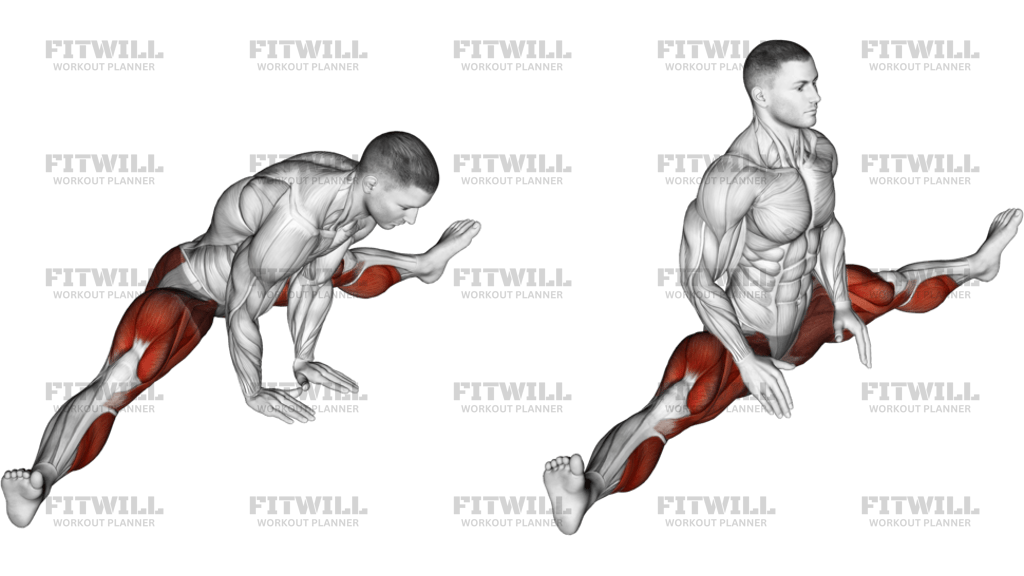
90 To 90 Hip Leans
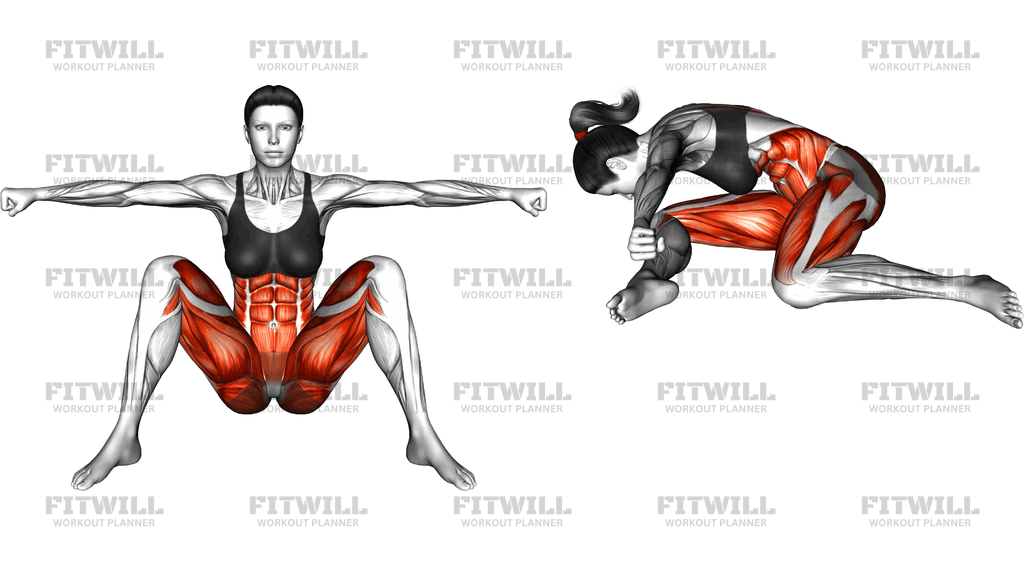
The 90 To 90 Hip Lean is a floor-based hip mobility drill that takes advantage of the 90/90 position: one leg bent to roughly 90 degrees in front of you, the other bent to roughly 90 degrees out to the side. From that seated stance, you hinge your chest forward over the front shin and let your torso travel toward the floor, then control yourself back upright. It looks simple, but it drives a deep stretch into the hip capsule, the external rotators, and the adductors on both legs at the same time.
What makes this drill valuable is that each leg is being challenged differently. The front leg works into deep external rotation while the side leg sits in internal rotation, so you train both rotational ranges in a single setup. This is a range most daily life never touches, which is exactly why it tends to be the tightest area for people who sit a lot, run, or lift.
The 90 To 90 Hip Lean is especially useful before squatting, lunging, or any lower-body session that demands rotational hip room. Runners and cyclists use it to offset the repetitive straight-line hip motion of their sports, and lifters use it as a first-line warm-up when their squat feels pinchy or narrow at the bottom. It also works well as a standalone evening reset after long days in a chair.
Setup matters more than most people expect. Your front shin should sit parallel to your chest, your back shin parallel to the wall behind you, and both sitting bones should stay as close to the floor as your body allows. If your hips are tight, elevating them on a folded mat, cushion, or low block is not cheating; it actually improves the position by letting your pelvis stay neutral instead of tucking under.
To execute the lean well, think of it as a hinge rather than a collapse. Lengthen through the spine first, then fold your chest over the front shin, leading with the ribcage and keeping the front foot, knee, and hip connected to the floor. Move slowly enough that you could stop at any point, hold the bottom position for a few breaths, and return upright with control rather than letting gravity snap you back.
Stay honest with your limits here. A deep pulling sensation through the hip or inner thigh is normal; sharp pain in the knee is not. If the front knee complains, reduce the lean angle or elevate the hips further. This drill rewards patience and frequency far more than forcing depth, so treat it as a position you visit often rather than a stretch you conquer once.
[ Workout Log & Planner ]
Put your next workout in Fitwill
Keep your plan and training log ready when you are.


Instructions
- Sit on a mat with your front leg bent to 90 degrees in front of you, shin parallel to your chest, and your back leg bent to 90 degrees out to the side, shin parallel to the wall behind you.
- Place your hands on the floor slightly behind or beside your hips to support your torso, and sit as tall as your hips allow; elevate your sitting bones on a cushion or folded mat if your lower back rounds.
- Brace your core lightly and lengthen your spine so the fold comes from your hips, not from slumping through your lower back.
- Shift your weight forward over the front shin, letting your hands slide ahead of you as your chest travels toward your front knee.
- Continue hinging until you feel a strong stretch through the outer hip and glute of the front leg and the inner thigh of the back leg, and pause there for 2-4 slow breaths.
- For a deeper hold, lower onto your forearms or rest your torso closer to the floor, keeping both sitting bones heavy and both feet relaxed.
- Press through the floor and walk your hands back to return upright with control, without letting momentum drop you back into the seat.
- Exhale as you fold forward, breathe steadily while holding the lean, and inhale as you return to the tall seated position.
- Complete your reps or hold time, then switch sides so the opposite leg is in front and repeat the entire sequence.
Tips & Tricks
- If your lower back rounds the moment you start folding, raise your hips onto a cushion; a tucked pelvis hides hip range behind a bent spine.
- Keep the front foot fully relaxed and flat against the floor. Tensing or flexing the foot usually means the knee is being twisted to fake extra depth.
- Do not let the front sitting bone float up as you lean. Pinning it down keeps the stretch in the hip instead of dumping stress into the knee.
- The most common mistake is chasing your nose to the floor. Lead with the chest over the front shin and let depth come from the hip angle.
- Move at a pace you could stop mid-rep. Dropping into the lean with gravity defeats the controlled hinge that makes this drill work.
- If the side leg's knee lifts off the floor during the lean, that is normal at first; just avoid forcing it down, which strains the inner knee.
- Spend an extra breath at your first comfortable end range and see if it opens on its own before pushing further into the fold.
- Warm the hips up briefly with leg swings or an easy squat before this drill if you are doing it first thing in the morning, when the tissue is at its stiffest.
Frequently Asked Questions
What muscles and areas does the 90 To 90 Hip Lean target?
It primarily targets the deep external rotators and glutes of the front leg while stretching the adductors and internal rotators of the side leg. The core also works to control the hinge and keep your spine long as you lean.
Is the 90 To 90 Hip Lean a stretch or a strength exercise?
It is mainly a mobility drill, but because you control the lean and the return with your own hip and core muscles, it builds active control in the range you are stretching. Slow, deliberate reps make it more of a strength-endurance drill for the hips.
Why can't I sit flat on the floor in the 90/90 position?
Tight external rotators, adductors, or hip capsules usually pull the pelvis into a tilt when both legs are bent at 90 degrees. Elevate your sitting bones on a cushion or low block so your torso can stay tall without forcing the knees down.
My front knee hurts during the 90 To 90 Hip Lean. What should I change?
Stop leaning so far and reduce the angle by elevating your hips higher or widening your front leg slightly. Knee pain in this position usually means the hip is being skipped over and the knee joint is absorbing torque it should not handle.
How long should I hold each lean?
Two to four slow breaths per rep works well, or 20-30 seconds per side if you prefer static holds. Because this is a warm-up-friendly drill, shorter repeated leans often feel better than one long forced hold.
Can beginners do the 90 To 90 Hip Lean?
Yes, and it is one of the best starting points for hip rotation work. Beginners should use a cushion under the hips, keep the hands on the floor for support, and lean only to the first noticeable stretch rather than chasing the floor.
Should I do the 90 To 90 Hip Lean before or after a workout?
It works well before lower-body training as a warm-up to open hip rotation for squats and lunges. After training or on rest days, use longer, gentler holds as part of a recovery routine.
What can I substitute if the 90/90 floor position is too uncomfortable?
A standing figure-four forward fold or a pigeon stretch on a bench can cover similar external rotation range with less knee stress. Return to the 90/90 setup gradually as your hips improve.
How often should I practice the 90 To 90 Hip Lean?
Daily or near-daily practice gives the best results, since hip rotation responds to frequent, low-intensity exposure. Five focused minutes per session beats one aggressive session per week.