Sitting Cat Cow Stretch On A Chair
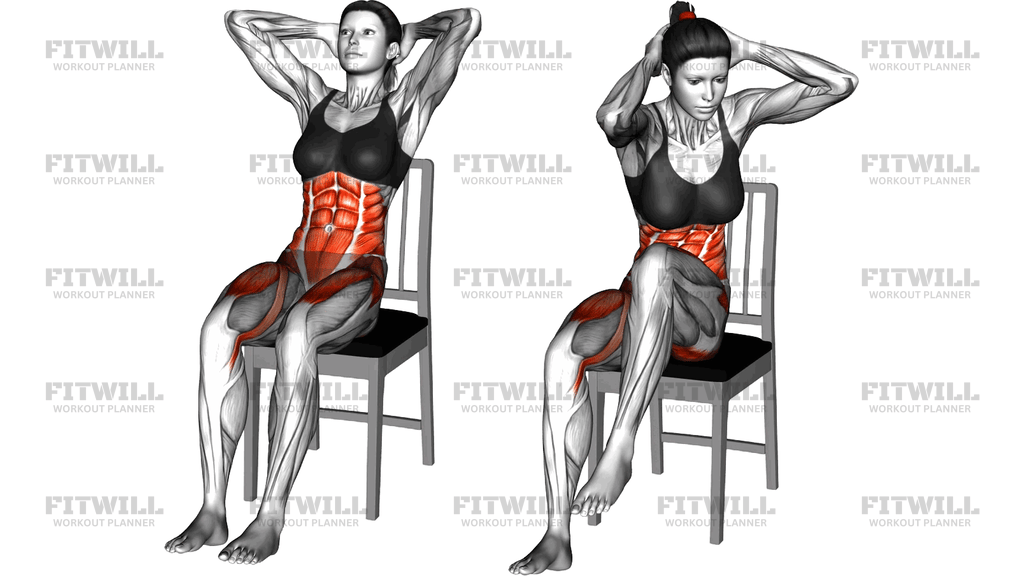
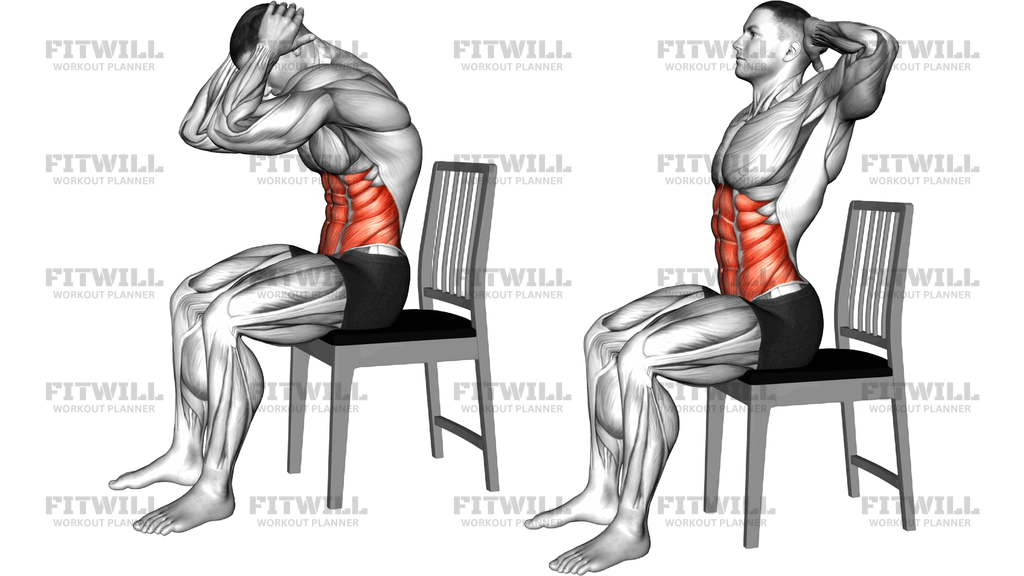
The Sitting Cat Cow Stretch On A Chair takes the classic floor-based cat cow and adapts it for a seated position, making it one of the most practical spinal mobility drills you can do at a desk, in an office, or anywhere getting down on the floor is not convenient. You sit upright on a sturdy chair with your feet flat on the floor and your hands lightly placed behind your head, then alternate between rounding your spine forward and arching it back. The front position flexes the spine and engages the abdominal wall, while the back position extends the spine and opens the chest.
This movement is especially useful for people who sit for long stretches. Prolonged sitting tends to lock the mid back into a rounded posture and leaves the lumbar spine stiff, so a gentle flexion-extension cycle helps restore movement to exactly those segments. It is a common warm-up before lower body or core training, a reset between meetings, and a comfortable option for beginners, older adults, or anyone recovering general mobility who finds floor work awkward.
The primary areas working are the abs, which contract as you round forward, and the muscles along the lower and mid back, which control the arching phase. The hip flexors and shoulders get a mild, passive stretch as well, since the extended position pushes the ribcage up and the elbows draw back. Nothing here is loaded or forceful — the value comes from smooth, segment-by-segment movement of the spine rather than muscular effort.
Setup matters more than it looks. Sit toward the front half of the chair so your sit bones, not the backrest, support you, with knees bent roughly ninety degrees and both feet planted. Your hands rest behind your head only for support; pulling on the neck is the most common mistake and turns a gentle mobility drill into an unnecessary strain on the cervical spine.
To execute it well, move one vertebra at a time rather than hinging from the hips or tilting the whole torso. On the round, think of tucking the tailbone under and drawing the navel toward the spine, letting the head drop slightly. On the arch, think of lifting the sternum and sliding the shoulder blades down and back, keeping the ribs from flaring. Each direction should feel like a stretch in the opposite side of the torso — rounding stretches the back extensors, arching stretches the abs.
Because the range is small and the pace is slow, the Sitting Cat Cow Stretch On A Chain is very safe when performed with control. Keep the movement pain-free, synchronize each phase with a full breath, and stop short of any sharp or pinching sensation in the spine.
[ Workout Log & Planner ]
Put your next workout in Fitwill
Keep your plan and training log ready when you are.


Instructions
- Sit on a sturdy chair with your sit bones on the front half of the seat, feet flat on the floor about hip-width apart, and knees bent at roughly ninety degrees.
- Place your hands lightly behind your head with fingers interlaced or cupping the base of the skull, and let your elbows point out to the sides.
- Sit tall to start: spine neutral, shoulders relaxed, gaze forward.
- Exhale and round your spine forward, tucking the tailbone under, drawing the navel in, and letting your head and elbows drift down until you feel a stretch along the back.
- Pause briefly at the rounded end position, feeling the abs engage and the spinal extensors lengthen.
- Inhale and reverse the path, arching the spine back, lifting the chest and sternum up, and drawing the elbows slightly back until you feel the front of the torso open.
- Pause at the arched position, keeping the shoulders down rather than shrugging toward the ears.
- Continue flowing between the two positions slowly, spending three to five seconds in each direction.
- Breathe steadily throughout — exhale as you round, inhale as you arch — and let the breath drive the rhythm rather than counting reps.
- Finish the set by returning to a tall, neutral seated position, then relax your arms and shake out the shoulders.
Tips & Tricks
- Never pull your head forward with your hands; the arms behind the head are there to guide the movement, and yanking the neck is the most frequent fault in this exercise.
- Keep your hips and sit bones glued to the seat — if your pelvis is rocking forward and back dramatically, you are hinging at the hips instead of articulating the spine.
- Keep both feet flat and grounded throughout; lifting the heels or letting the knees collapse inward destabilizes the base and reduces the spinal range you can access.
- Aim for segment-by-segment movement rather than one big tilt — imagine the round traveling up your spine like a wave and the arch unrolling the same way.
- Do not chase a huge range of motion; a modest, smooth arc that you can repeat fluidly beats an aggressive flexion-extension that stresses the lower back.
- If you feel pinching in the lower back during the arch phase, reduce how far you extend and focus the lift in the mid-back and chest instead.
- Let the elbows travel with the torso — they should drop forward on the round and open back on the arch — rather than holding them frozen in place.
- Pair each direction with a full breath cycle; holding your breath during the round is a sign you are moving too fast or too forcefully.
- On a chair without a stable base, position it against a wall so it cannot slide as you shift your weight between the two positions.
Frequently Asked Questions
What muscles does the Sitting Cat Cow Stretch On A Chair work?
The abs, particularly the rectus abdominis, contract as you round forward, while the erector spinae along the lower and mid back control the arching phase. The hip flexors and chest also receive a mild stretch through the cycle.
Is this exercise suitable for complete beginners?
Yes, it is one of the most accessible spinal mobility drills because it is performed seated with no load and a very small, self-selected range. Beginners should simply start with a gentle arc and prioritize smooth breathing over depth.
Why are my hands behind my head during the Sitting Cat Cow Stretch On A Chair?
The hands support and guide the head as the spine rounds and extends, helping you feel the flexion-extension pattern. They should never pull the neck — keep the pressure light and let the torso do the moving.
Should I feel this in my lower back?
A gentle stretch or movement sensation in the lower back is normal, since that region flexes and extends with each rep. If you feel sharpness or pinching, reduce the range and keep more of the motion in the mid-back.
How is this different from the floor-based cat cow?
The seated version removes the wrist and knee loading of the all-fours position and makes the movement available at a desk or on a plane. The trade-off is a slightly smaller range, since the chair limits how much the pelvis can tilt.
Can I use the Sitting Cat Cow Stretch On A Chair as a warm-up?
Absolutely — it works well before core training, lower body sessions, or any workout that involves the spine. Two to three rounds of ten slow repetitions is usually enough to loosen the trunk.
How many repetitions should I do?
Eight to fifteen slow cycles per set, one to three sets, works well for mobility. Because each rep should take several seconds, focus on quality of the flow rather than a rep count.
What kind of chair works best?
A stable, armless chair with a flat seat and no wheels is ideal so the pelvis can tilt freely and the chair cannot roll. Sit on the front half of the seat so your sit bones, not the backrest, control your position.
Is it safe if I have back issues?
Gentle seated spinal flexion and extension is generally well tolerated, but if you have a diagnosed spinal condition or current pain, get clearance from a qualified health professional first and stay well within a pain-free range.