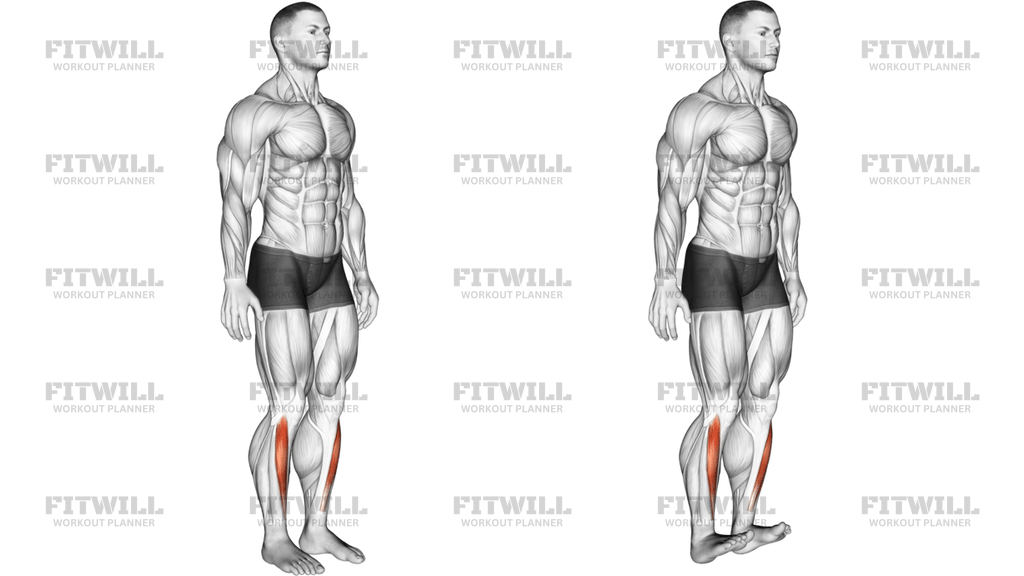
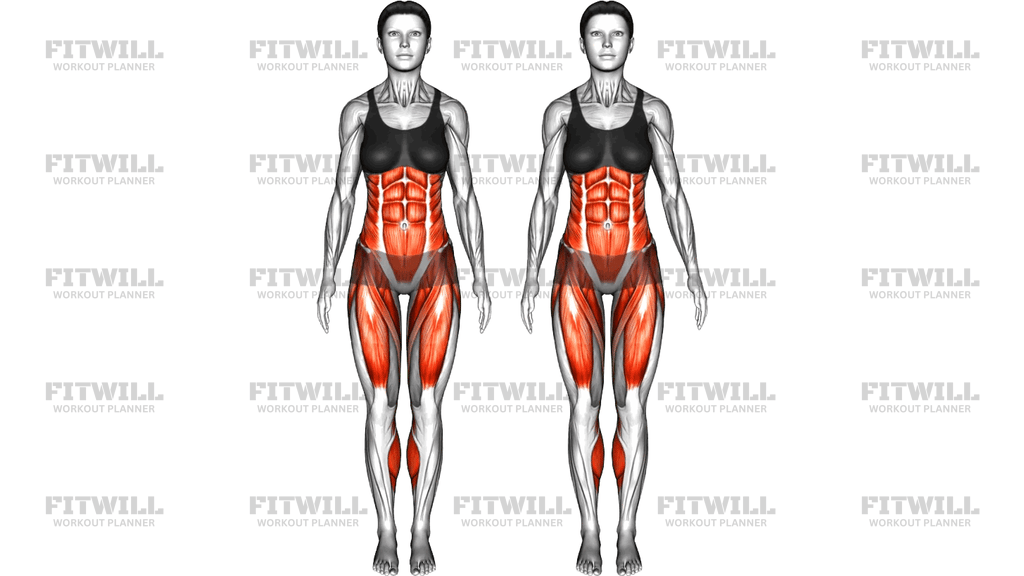
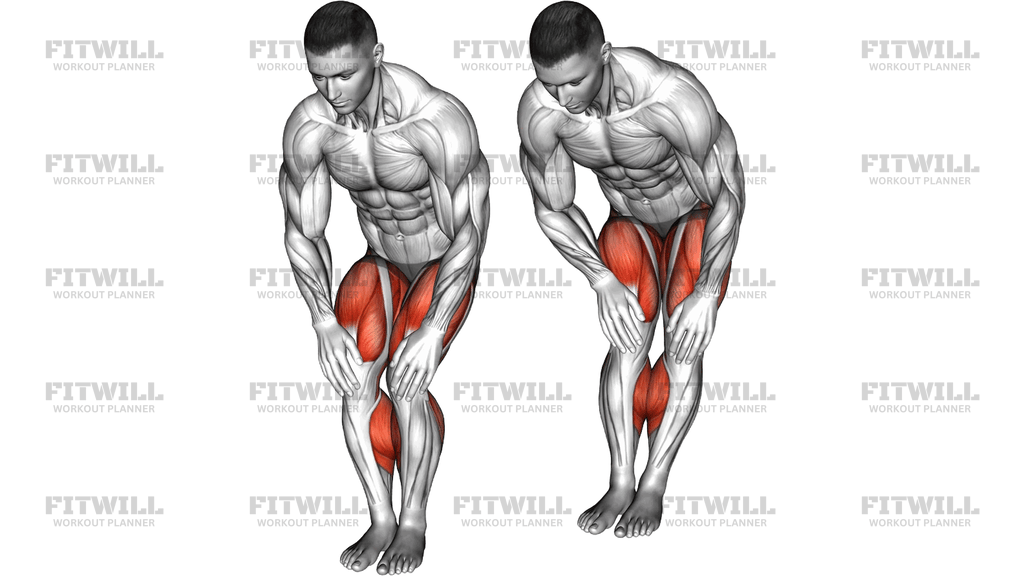
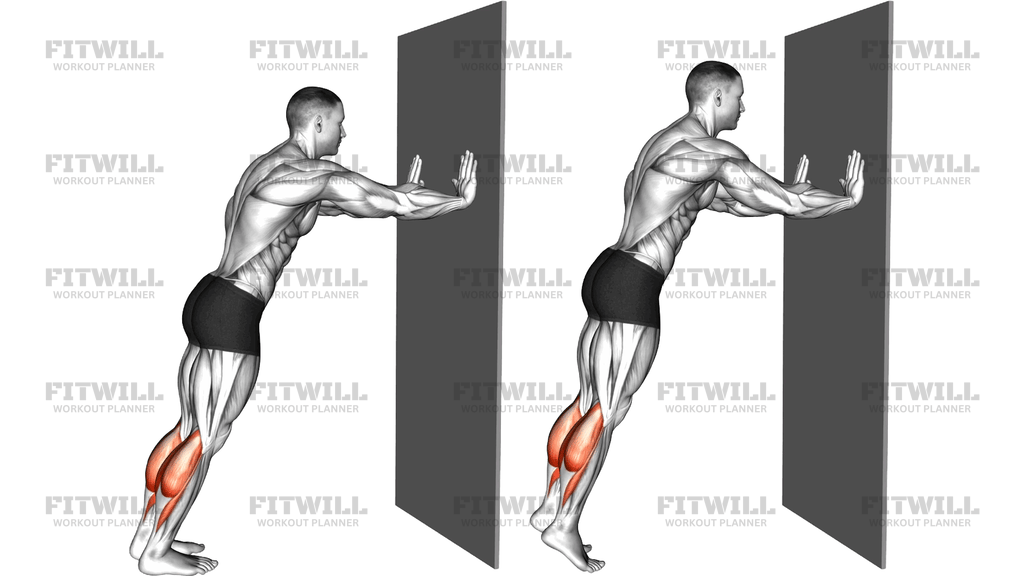
Seated Calf Rock On A Chair
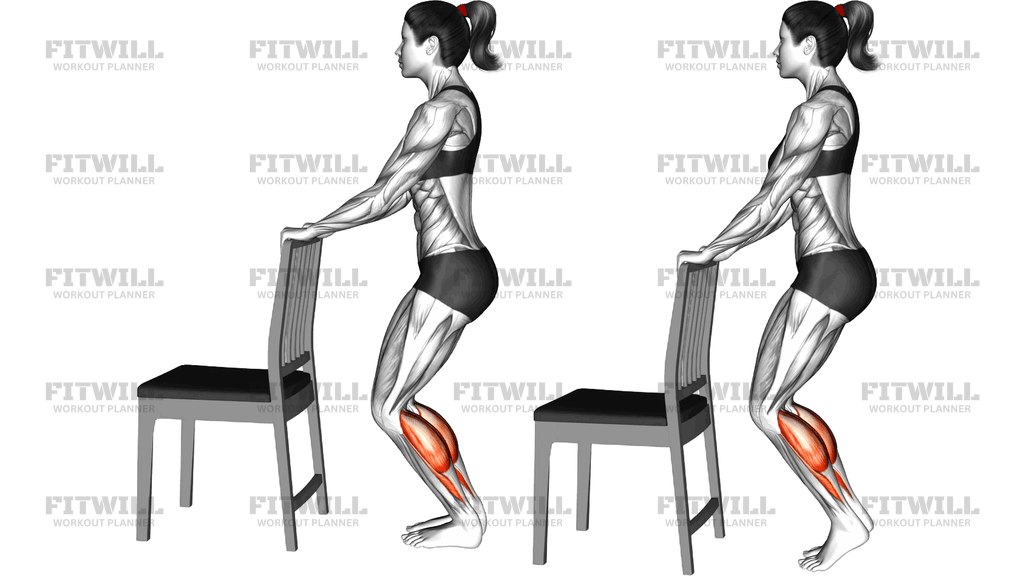
The Seated Calf Rock On A Chair is a simple body-weight calf exercise performed while sitting on a standard chair with both feet flat on the floor and your hands resting on your thighs. From this position, you rock through the foot by lifting the heels as high as possible while keeping the balls of the feet and toes in contact with the floor, then lowering the heels back down and, if you like, shifting the pressure toward the heels to wake up the muscles along the shin. Because the knees stay bent at roughly ninety degrees, the emphasis leans toward the soleus, the deeper calf muscle that sits beneath the gastrocnemius and handles most of your low-level ankle work.
This movement is a great fit for beginners, older adults, office workers, and anyone recovering general lower-leg function without loading the ankle with weight. It requires nothing more than a sturdy, stable chair, so it works well at a desk, at home, or as a warm-up before standing calf raises or leg training. People who spend long hours sitting often notice stiff ankles and poor calf blood flow, and slow, rhythmic heel rocks are an easy way to address both during the day.
The setup matters more than it looks. Sitting on the chair with upright posture, knees bent, and feet hip-width apart puts your ankle in a neutral position where the calf muscles can work through a clean up-and-down arc. Slouching, letting the knees drift inward, or allowing the whole foot to slide forward on the floor all shorten the range and turn the exercise into a small, ineffective flick of the foot. Keep the torso tall and let the hands rest lightly on the thighs for balance rather than pressing down hard.
To execute the rock well, press through the balls of your feet and lift both heels as high as your range allows, feeling the calf muscles tighten at the top. Pause there for a beat, then lower the heels under control until they touch the floor again. For the full rocking pattern, you can continue the motion by briefly easing weight onto the heels and lifting the toes slightly, then flowing back into the next heel raise. That continuous rocking keeps the ankle moving through both ends of its range, training the calves while also involving the tibialis anterior and the small stabilizing muscles around the ankle joint.
In practice, this exercise is used for high-repetition, low-load calf work, ankle mobility, and rebuilding tolerance after long periods of inactivity. Because it is seated and unloaded, it is easy to control, but it still rewards good technique: slow tempo, full heel lift, and even pressure across the ball of each foot. If a chair feels unstable, place it against a wall, and if you feel any sharp pain in the ankle or Achilles, reduce the range rather than pushing through it.
[ Workout Log & Planner ]
Put your next workout in Fitwill
Keep your plan and training log ready when you are.


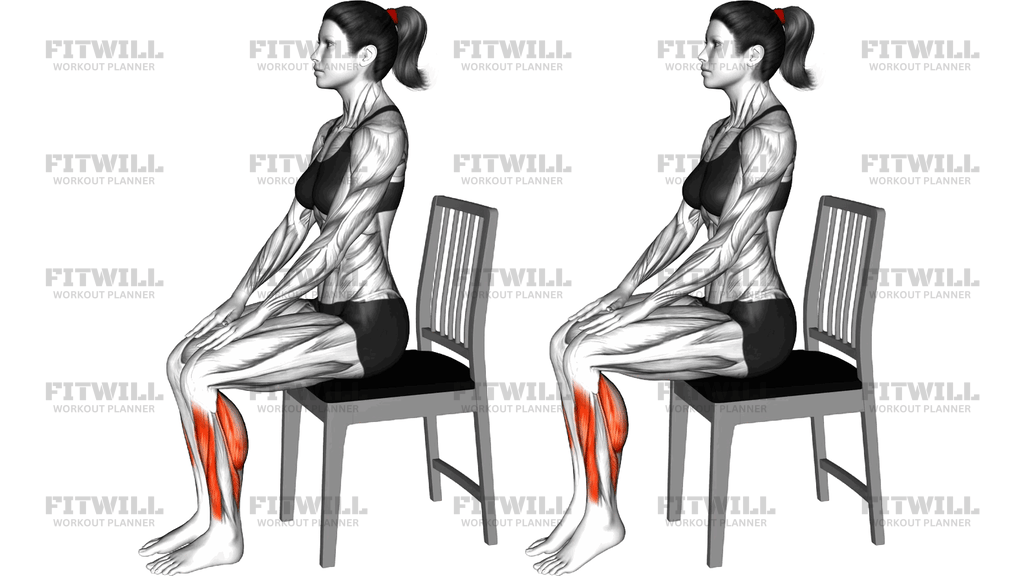
Instructions
- Sit on a sturdy chair with your back upright, knees bent to about ninety degrees, and both feet flat on the floor hip-width apart.
- Rest your hands lightly on the front of your thighs for balance and settle into a tall, relaxed posture with your shoulders down.
- Check that the balls of your feet and toes stay in full contact with the floor throughout the set.
- Press down through the balls of both feet and lift your heels as high as they will go, tightening the calf muscles at the top.
- Hold the raised position for one to two seconds, keeping the knees steady and pointing in the same direction as the toes.
- Lower your heels slowly and with control until they touch the floor again.
- For the full rock, continue by gently shifting weight onto the heels and lifting the toes slightly, then roll forward into the next heel raise.
- Breathe steadily throughout, exhaling as you lift the heels and inhaling as you lower them.
- Complete your target repetitions, then rest your feet flat on the floor and let the calf muscles relax before the next set.
Tips & Tricks
- A common mistake is bouncing quickly through small heel lifts; slow the tempo down and aim for a full lift with a short pause at the top so the calves actually do the work.
- If your heels wobble side to side at the top, spread your feet slightly wider and think about pushing evenly through the base of the big toe and little toe.
- Do not let your knees sink forward or inward as you rise onto the balls of the feet; keep the knees stacked over the ankles so the ankle joint does the moving.
- Leaning the chest forward takes tension off the calves, so sit tall and use your hands on the thighs only for light balance, not to press your body up.
- Keep the heels lifting straight up rather than rolling outward, which shifts the work away from the calf and into the outer ankle.
- If your toes grip or curl against the floor as you lift, relax the foot and imagine the whole forefoot staying glued down while only the heel rises.
- Higher repetitions in the fifteen to twenty-five range work well here, since the seated position removes body weight load and the soleus responds better to longer sets.
- Sitting toward the front edge of the chair with feet placed slightly back under the knees gives a better angle for the heel lift than sitting far back with legs stretched out.
Frequently Asked Questions
Which muscles does the Seated Calf Rock On A Chair work?
The main muscles are the calves, with the soleus taking most of the load because the knees stay bent. The gastrocnemius assists at the top of the heel lift, and the tibialis anterior helps during the toe-lift phase of the rock.
Why is this done seated instead of standing?
Bending the knees to roughly ninety degrees slackens the gastrocnemius, which crosses the knee, so the soleus has to do more of the work. The seated position also removes body-weight load, making it easier to control the movement.
Is the Seated Calf Rock On A Chair suitable for complete beginners?
Yes, it is one of the most accessible calf exercises because it needs no equipment beyond a stable chair and no added load. Beginners should focus on a slow tempo and a full, controlled heel lift rather than speed.
How many repetitions should I do?
Because the load is light, sets of fifteen to twenty-five repetitions work well, and you can do two to three sets. If your calves fatigue sooner than that, that is fine too; just stop when the heel lift becomes hard to control.
My heels barely lift off the floor. What should I change?
Move your feet slightly back under your knees and sit toward the front edge of the chair, which puts the ankle in a better angle for lifting. Also slow the movement down, as rushing often shortens the range.
Should my toes come off the floor during the rock?
No, during the heel-raise portion the balls of the feet and toes stay planted so the calves lift the heels against that fixed point. The toes only rise briefly if you choose to continue the rock back onto the heels.
Can I do this exercise every day?
For most people, yes, since it is low load and the calves are accustomed to frequent use in daily walking and standing. If your calves or Achilles feel unusually sore, take a rest day before repeating it.
What can I use if I do not have a suitable chair?
Any stable seated surface works, such as a bench or the edge of a bed, as long as your knees can bend to about ninety degrees with feet flat on the floor. Avoid chairs with wheels or anything that could slide.
When should I be cautious with this movement?
If you have a current ankle injury, Achilles pain, or recent foot surgery, check with a health professional before adding repetitive heel rocks, and use a smaller, pain-free range until cleared for fuller work.
Can I progress the Seated Calf Rock On A Chair over time?
Yes, you can add a longer pause at the top of each heel lift, slow the lowering phase, or move to single-leg versions by lifting one foot off the floor. Standing calf raises are the natural next step once body-weight seated work feels easy.