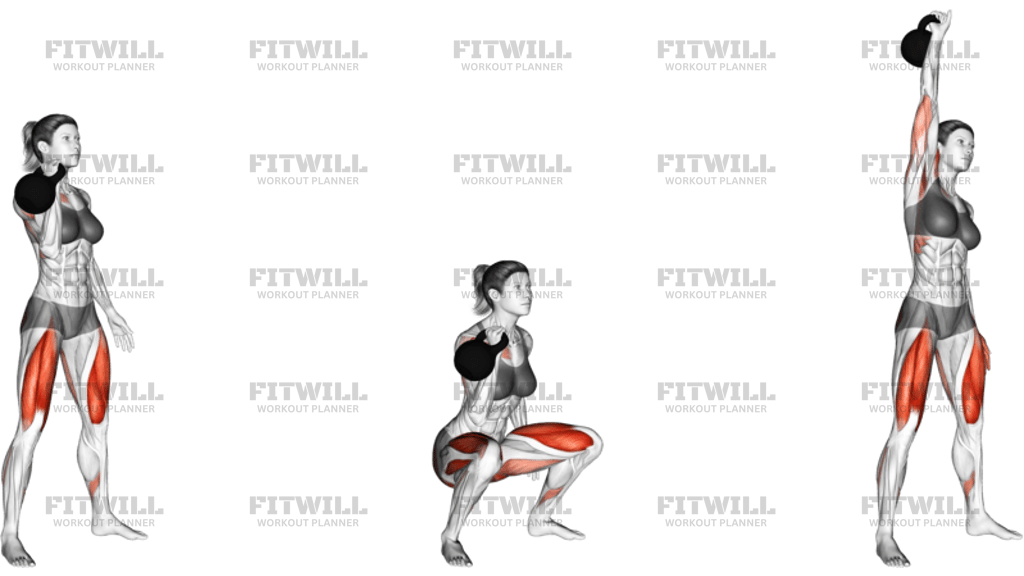
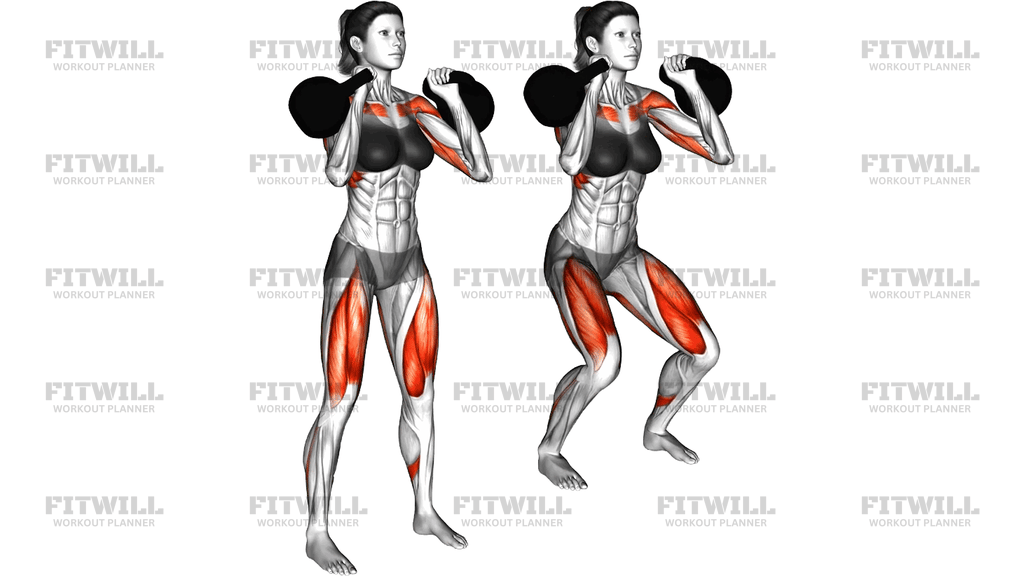
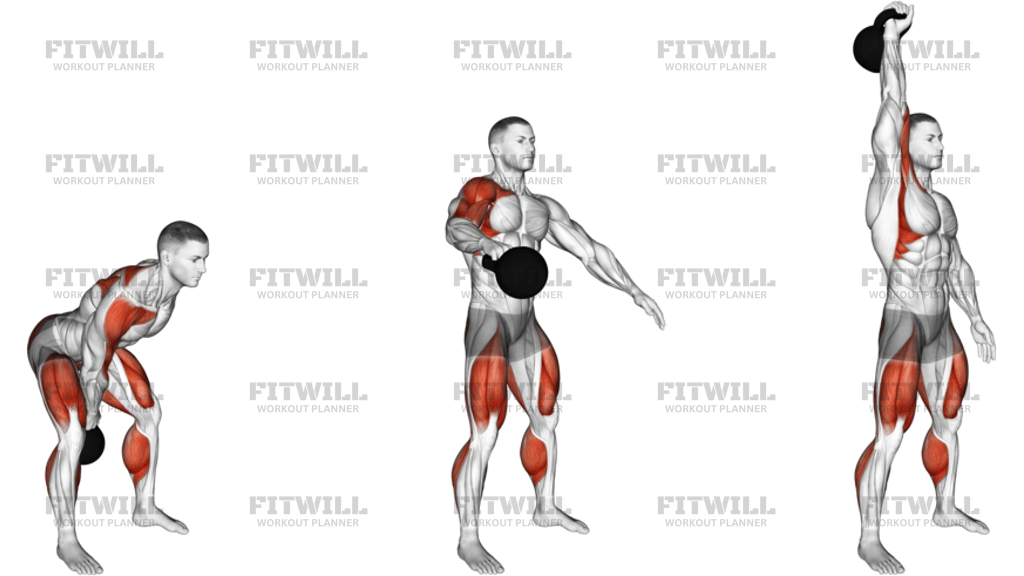
Kettlebell Atlas Swing
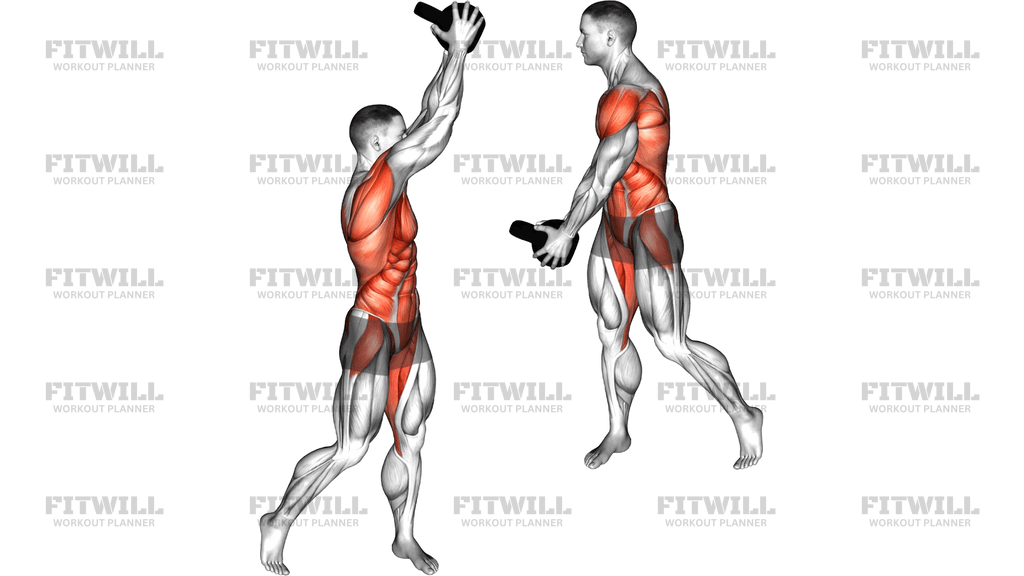
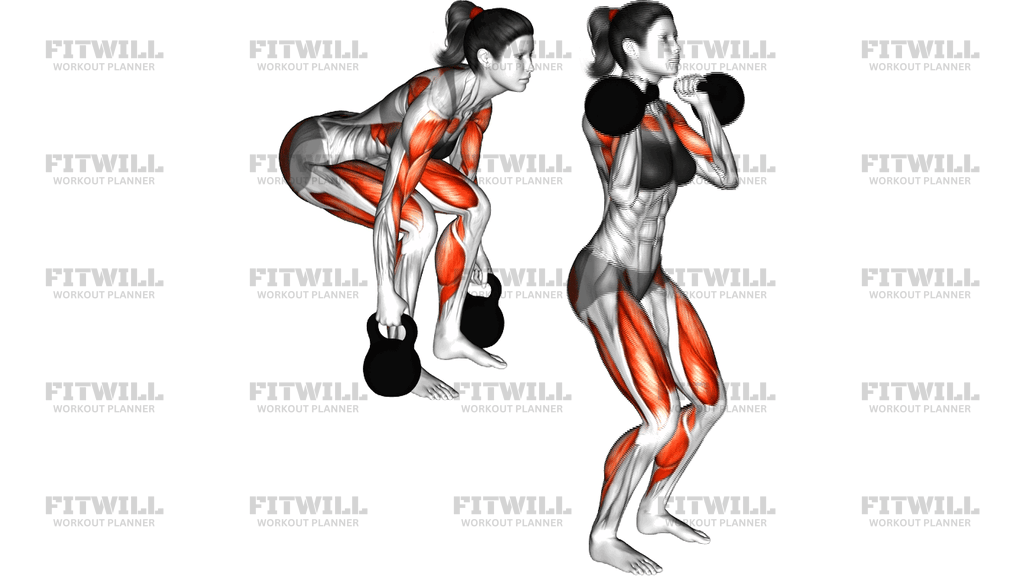
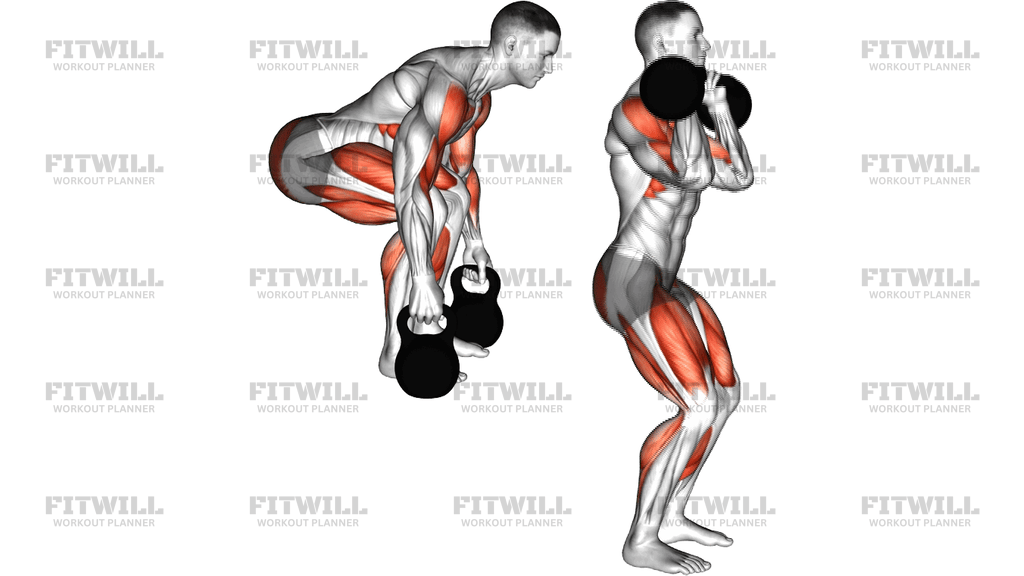
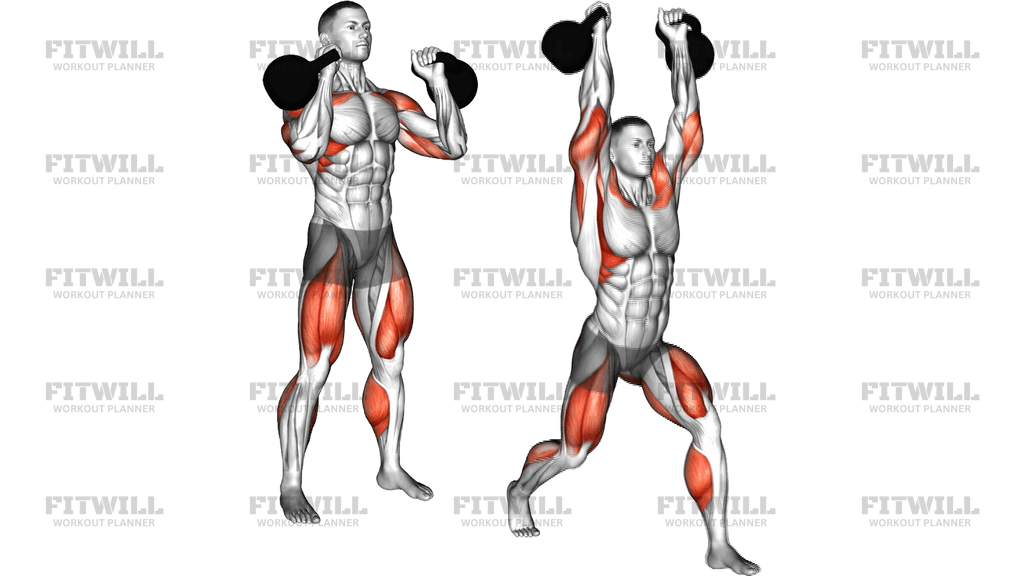
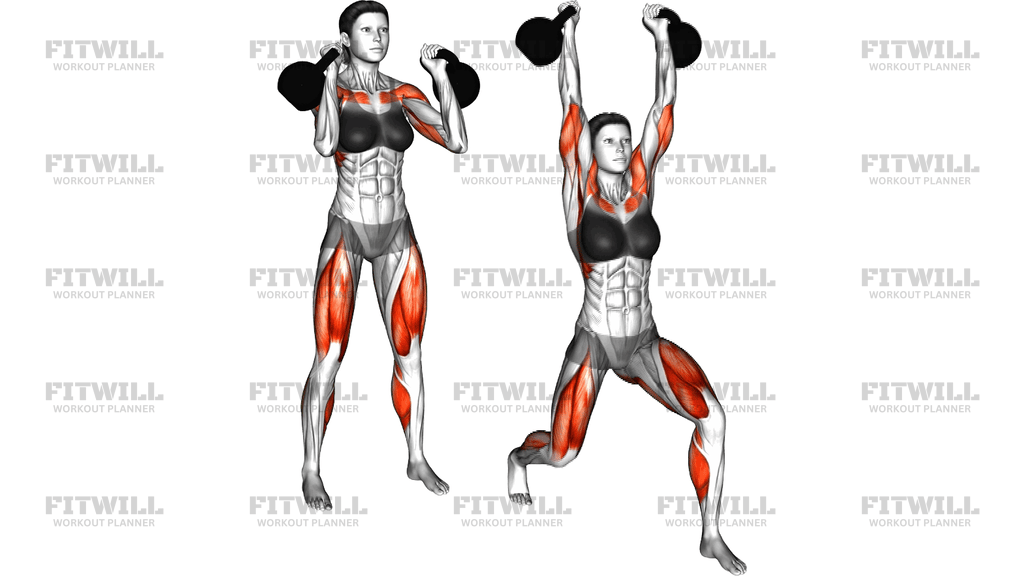
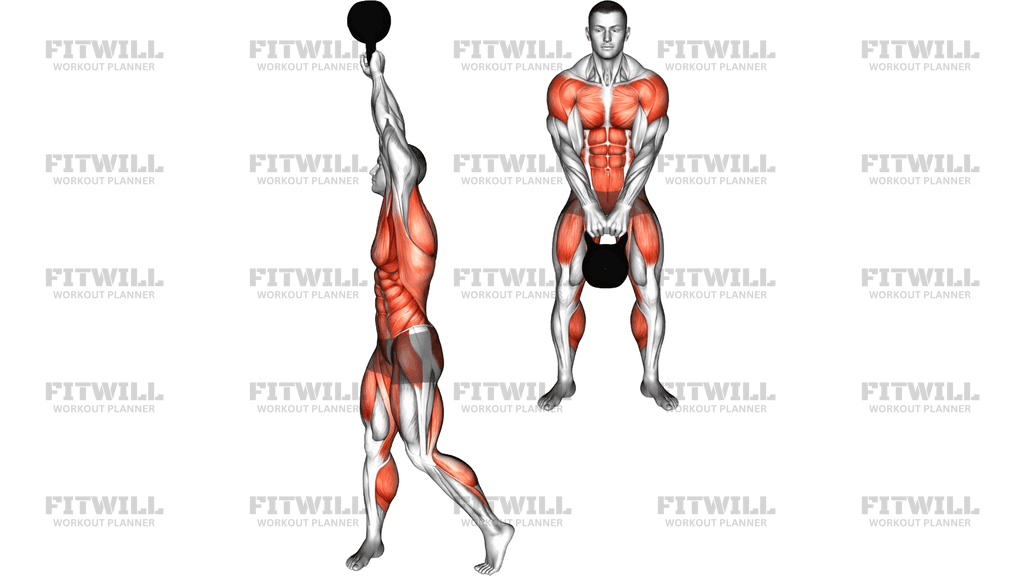
The Kettlebell Atlas Swing takes the standard two-handed kettlebell swing and adds an overhead finish with a split stance, which is exactly what you see in the movement: the bell travels from a backswing between the legs all the way to a locked-out position over the head while one foot steps back into a short lunge. Instead of stopping the bell at chest height, you let the hip drive carry it higher and finish tall with the arms in line with the ears, one leg loaded in front and the other trailing behind on the ball of the foot.
This version asks for more from the whole body than a swing to chest height. The glutes and hamstrings still supply the power, but the shoulders take on real work at the top, the core has to hold the ribcage down while the bell sits overhead, and the split stance challenges balance and hip stability on both sides. Because each rep finishes on one leg, you also train the front leg's quads and glutes to accept load in a staggered position, which carries over well to lunging, running, and change-of-direction work.
Setup matters more here than in a regular swing because you are adding a step to a ballistic movement. If the kettlebell is too far forward, you will end up lifting it with the arms instead of swinging it. If the stance is too narrow, the step back will feel wobbly and the bell will drift off line. Give yourself a clear space around you, keep the feet about hip-width to start, and make sure the step back is short enough that you stay balanced under the bell.
Execution is a rhythm problem, not a strength problem. The backswing loads the hips, the hips snap forward and launch the bell, and the step back happens as the bell rises so you arrive at the top position at the same moment the arms lock out. The bell should float at the top rather than being muscled up. If you feel the shoulders doing most of the work, the timing is off and the hips are not finishing their drive.
This movement suits people who already own the basic kettlebell swing and want a version that adds overhead demand, single-leg stability, and a bigger conditioning hit. It works well in circuit training, as a power finisher, or as a progression tool for lifters building toward one-arm overhead work.
The main safety points are simple: protect your lower back by keeping the ribs down at the overhead lockout, protect your shoulders by not forcing the bell behind your head, and protect your knees by keeping the front shin tracking over the foot in the split stance. Start with a bell you could swing to chest height for twenty clean reps, not your max bell.
[ Workout Log & Planner ]
Put your next workout in Fitwill
Keep your plan and training log ready when you are.


Instructions
- Place a kettlebell on the floor about a foot in front of you and stand over it with your feet roughly hip-width apart.
- Push your hips back, fold forward, and grip the handle with both hands, letting your shoulders sit slightly above your hips.
- Hike the kettlebell back between your legs like a football snap, keeping your forearms close to your inner thighs and your lower back flat.
- Snap your hips forward hard so the bell floats up in front of your body; as it passes chest height, step one foot back into a short split stance with the back heel lifted.
- Finish with the kettlebell locked out directly over your shoulders, arms in line with your ears, ribs pulled down, and the front shin vertical over the foot.
- Let the bell fall back down under control, guide it into the backswing, and bring the front foot back to the parallel stance as the bell drops toward your hips.
- Alternate the stepping leg on each rep so both sides get equal work.
- Exhale sharply as the bell reaches the top, then inhale into your belly as it falls into the backswing.
- Between reps, re-brace your core and re-set your stance before driving the next swing.
Tips & Tricks
- The most common mistake is turning this into a front raise with a step. If your arms burn before your glutes do, cut the weight and focus on snapping the hips so the bell floats to the top on its own momentum.
- Do not let the overhead lockout drift behind your head. The bell should sit over your shoulders and hips; if it hangs behind you, your lower back is absorbing the load.
- Keep the step back short. A long lunge at the top makes the balance problem much harder and often pulls the bell off its vertical path.
- Squeeze the glute of the front leg at the top. If the front hip sags or the torso leans back, the split stance has collapsed and the bell will pull you around.
- Avoid letting the back knee spin inward as you step back; keep the toes pointing forward and the kneecap tracking over the toes.
- If you find yourself leaning forward while holding the bell overhead, slow down and finish the hip extension first, then let the arms arrive at the top last.
- A common fault on the return is chasing the bell down with the arms and losing the hinge. Let gravity bring it down and meet it with your hips pushed back.
- Grip fatigue shows up early in this movement because the bell stays in your hands longer than in a chest-height swing. Chalk your hands or switch to a slightly lighter bell if the handle starts slipping.
- Practice the split-stance top position as a static hold with a light bell before linking it to the full swing, so the finish feels familiar under speed.
Frequently Asked Questions
What muscles does the Kettlebell Atlas Swing work?
The glutes and hamstrings produce the main power, while the front shoulders and upper traps control the bell overhead. The core stabilizes the trunk at the top, and the split stance adds quad and hip work on the front leg.
How is the Kettlebell Atlas Swing different from a regular kettlebell swing?
A regular swing stops around chest height with both feet planted. The Atlas Swing carries the bell all the way overhead while you step one foot back into a split stance, adding shoulder work, overhead core demand, and single-leg balance.
Should beginners try the Kettlebell Atlas Swing?
Beginners should first own the standard two-handed swing with a clean hip hinge and stable chest-height finish. Once you can swing consistently for fifteen to twenty reps, start practicing the overhead split-stance finish with a light bell before linking the two together.
How heavy should the kettlebell be for the Atlas Swing?
Use a bell you can swing to chest height with perfect form for at least twenty reps, because the overhead position demands more shoulder and core control than the standard swing. When your lower back or shoulders take over to lift the bell, the weight is too heavy.
Why does my lower back ache during the Kettlebell Atlas Swing?
Lower back discomfort usually means the ribs are flaring and the spine is arching as the bell goes overhead, so the back extensors absorb load instead of the core and glutes. Pull the ribs down, squeeze the front-leg glute at the top, and slightly reduce the weight.
Should I alternate the stepping leg every rep?
Alternating each rep keeps the workload even and matches the rhythm of the swing well. If balance is a challenge at first, complete all reps on one side, rest, and then repeat on the other side.
Can I substitute another exercise if I have limited shoulder mobility?
Yes. If you cannot lock the bell out comfortably overhead without arching back, use the standard swing to chest height or a single-arm swing instead. Forcing the overhead range can stress the shoulders and lower back.
How far back should the step go at the top of the Kettlebell Atlas Swing?
Keep the step short enough that you could hold the top position for a second or two without wobbling. The front shin stays roughly vertical, the back heel is lifted, and your torso remains tall under the bell.
Is the kettlebell lifted with the arms or swung with the hips in this exercise?
It is swung with the hips. The hip snap launches the bell and the arms simply guide it into the overhead lockout. If the shoulders feel like they are doing the lifting, the hips are not finishing their drive.