Cable Standing Single Arm Preacher Curl
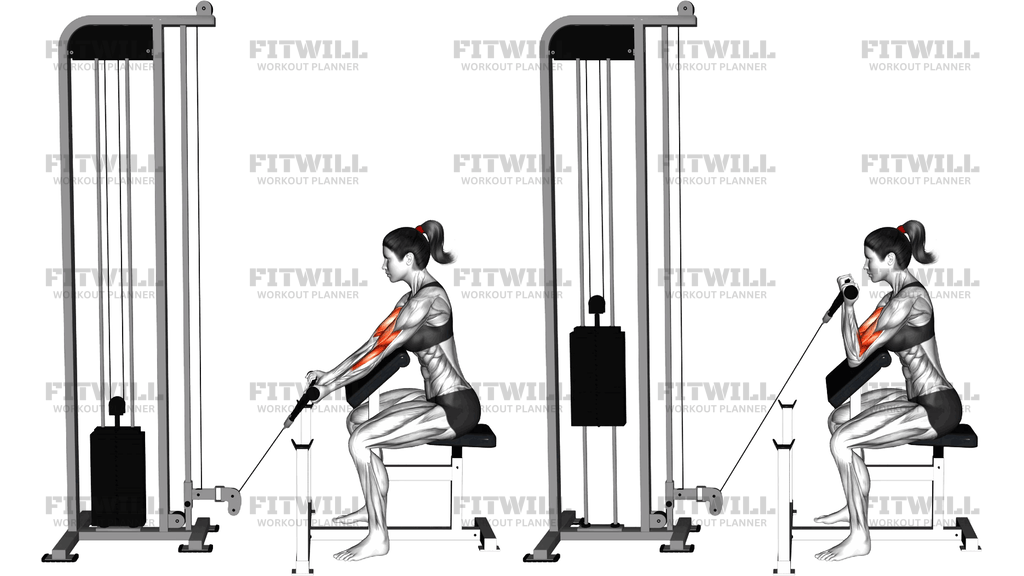
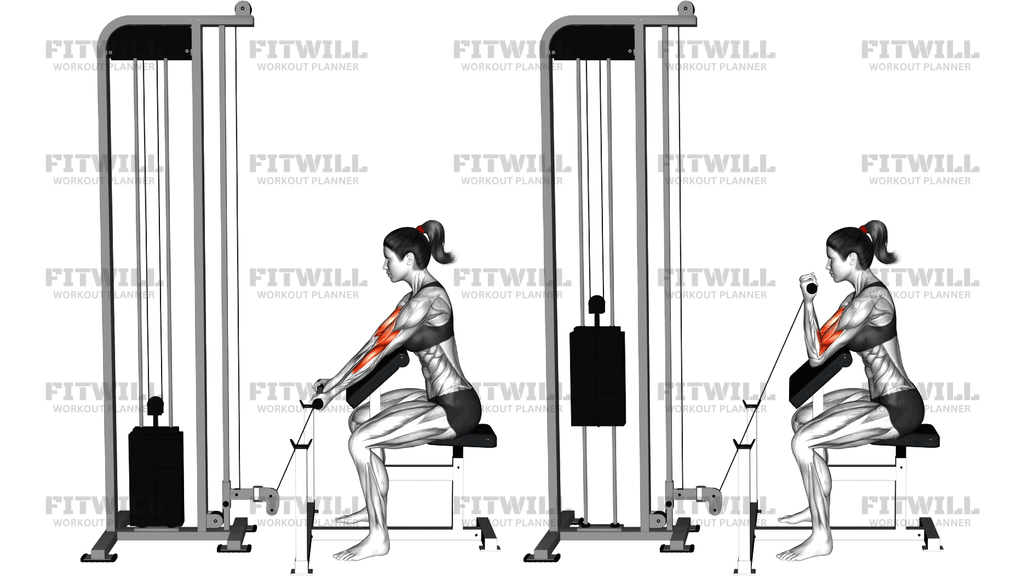
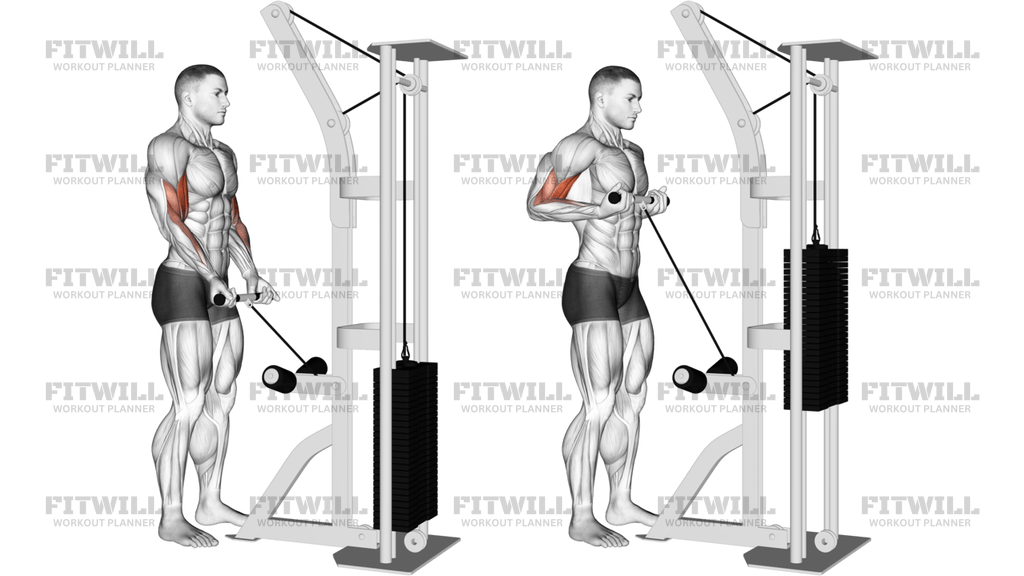
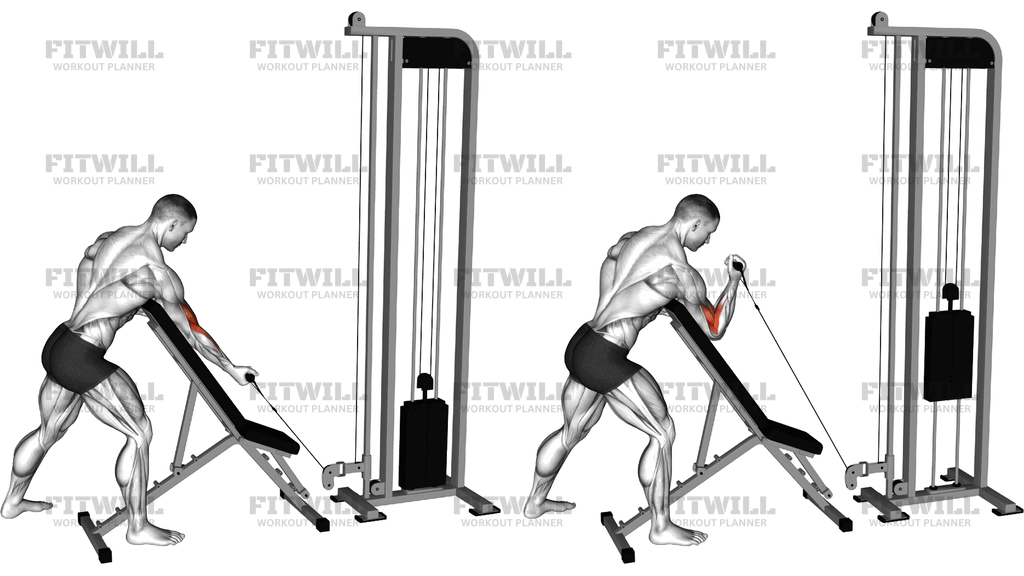
The Cable Standing Single Arm Preacher Curl is a unilateral biceps exercise that combines a low cable pulley with an angled bench used as a preacher pad. You stand facing the incline bench with your back toward the cable machine, drape one arm over the pad so the upper arm is supported at an angle, and curl the handle up through the cable's line of pull. Because the cable runs from behind and below you, the resistance stays on the biceps through the entire range, including the stretched bottom position where a dumbbell would go slack.
The bench is what makes this variation distinct. With your upper arm pinned against the incline pad, you lose the ability to swing the elbow forward or lean back to cheat the weight up. The elbow sits slightly in front of the shoulder line rather than tight to the torso, which places the biceps in a longer position at the bottom and keeps tension on them even when the arm is nearly straight. That combination of fixed arm angle and constant cable tension makes this a strict, focused movement for the biceps and brachialis.
This setup suits lifters who want to isolate one arm at a time and fix side-to-side differences in arm development. It is also a good pick for anyone whose standing dumbbell curls turn into full-body heaves — the pad removes that escape route. Because you work one side at a time while standing in a staggered stance, your trunk has to stay quiet while the working arm moves, which adds a small but real stability demand.
Execution comes down to three things: keeping the armpit and upper arm glued to the pad, curling with the forearm only, and letting the cable pull the arm back to full extension on every rep. The weight should be light enough that the shoulder never lifts off the bench and the torso never rocks. Most lifters do well with two to four sets of eight to fifteen reps per arm, placed near the end of an arm or upper-body session after heavier pressing or pulling work.
A few practical points protect the elbow and make the set productive. Set the bench at a moderate incline so the pad supports the upper arm without forcing the shoulder forward, and position yourself far enough from the machine that the cable has room to travel without scraping your legs. Start each set with the arm fully extended and tension already on the cable, exhale as you curl, and control the descent instead of letting the stack pull your arm down. If your elbow complains at the bottom, stop a few degrees short of full lockout rather than forcing the stretch.
[ Workout Log & Planner ]
Put your next workout in Fitwill
Keep your plan and training log ready when you are.


Instructions
- Set an incline bench to roughly 45 degrees and place it a step or two in front of a cable machine, with your back facing the low pulley.
- Attach a single handle to the low pulley, then stand facing the bench in a staggered stance with the working arm farthest from the machine.
- Grip the handle with an underhand grip and drape your upper arm over the top of the pad so the armpit and inner arm rest firmly on it, elbow slightly bent.
- Step forward until there is steady tension on the cable with your arm nearly straight, and brace your core with a soft bend in the knees.
- Curl the handle up toward your shoulder by bending only at the elbow, keeping the upper arm and shoulder pressed into the pad the whole time.
- Squeeze the biceps briefly at the top without letting the elbow slide forward off the pad.
- Lower the handle slowly until the arm is almost fully extended, letting the cable stretch the biceps at the bottom while tension stays on.
- Exhale as you curl up and inhale as you lower the handle back down.
- Complete all reps on one arm, re-grip and reset your stance, then switch arms and match the rep count on the other side.
Tips & Tricks
- If your shoulder lifts off the pad as you curl, the weight is too heavy — the pad should stay in full contact with your armpit and upper arm from start to finish.
- Keep a slight bend in the elbow at the bottom instead of slamming into full lockout; this keeps cable tension on the biceps and is easier on the joint.
- Watch that the elbow does not creep up the bench as you fatigue — if the pad sits under the forearm instead of the upper arm, you have turned it into a partial spinalator-style movement.
- Use a slower lowering phase than you think you need; the cable's resistance on the way down is where this setup outperforms a dumbbell preacher curl.
- Stand in a staggered stance with the same-side foot back so the cable pulls you slightly into the bench rather than away from it.
- If the cable rubs against your thigh or hip, take one more small step forward before starting the set.
- Do not rotate your wrist as you curl — keep the palm facing up throughout so the emphasis stays on the biceps rather than shifting to the forearm.
- Because the arm is fixed, this exercise exposes strength imbalances quickly; always start your sets with the weaker arm and match reps with the stronger one.
Frequently Asked Questions
Which muscles does the Cable Standing Single Arm Preacher Curl work?
The biceps brachii is the primary mover, with the brachialis and brachioradialis assisting. The forearms also work to hold the handle throughout the set.
Why use a cable instead of a dumbbell for a preacher curl?
A cable keeps tension on the biceps even when the arm is nearly straight at the bottom, where a dumbbell provides almost no resistance. It also lets you load the stretched position more smoothly and safely.
Can I use a regular flat or incline bench instead of a preacher bench?
Yes — this version is performed by setting an incline bench at roughly 45 degrees and resting the upper arm over the top of the pad, which works well when no dedicated preacher bench is available.
Why does the cable run from a low pulley behind me?
With the pulley behind and below you, the resistance pulls the arm down and back, which keeps the biceps loaded at full extension and pulls you slightly into the bench for a stable setup.
Is this exercise suitable for beginners?
Yes, as long as the weight is kept modest. The bench actually helps beginners because it locks the upper arm in place and prevents the swinging that makes standing curls sloppy.
Why should I train one arm at a time with this movement?
Working one arm exposes and helps correct side-to-side strength or size differences, and the free arm never assists the working side the way it can in a barbell curl.
My shoulder keeps lifting off the pad during the curl — what am I doing wrong?
That usually means the weight is too heavy or the elbow is drifting forward. Reduce the load and focus on bending only at the elbow while the upper arm stays pinned to the bench.
How close should I stand to the cable machine?
Stand far enough forward that the cable has a clear path beside your body and steady tension exists with your arm extended, but not so far that the handle pulls your arm forward off the pad at the start.
Is it safe to fully straighten the arm at the bottom of each rep?
Full extension is generally fine with light-to-moderate loads and a controlled descent, but stopping a few degrees short of lockout is a comfortable option if you feel strain at the elbow.
Where should this exercise fit in my workout?
Use it as an isolation movement after heavier rows, pulls, or presses, typically for two to four sets of eight to fifteen reps per arm.