Kneeling Hamstring Reach
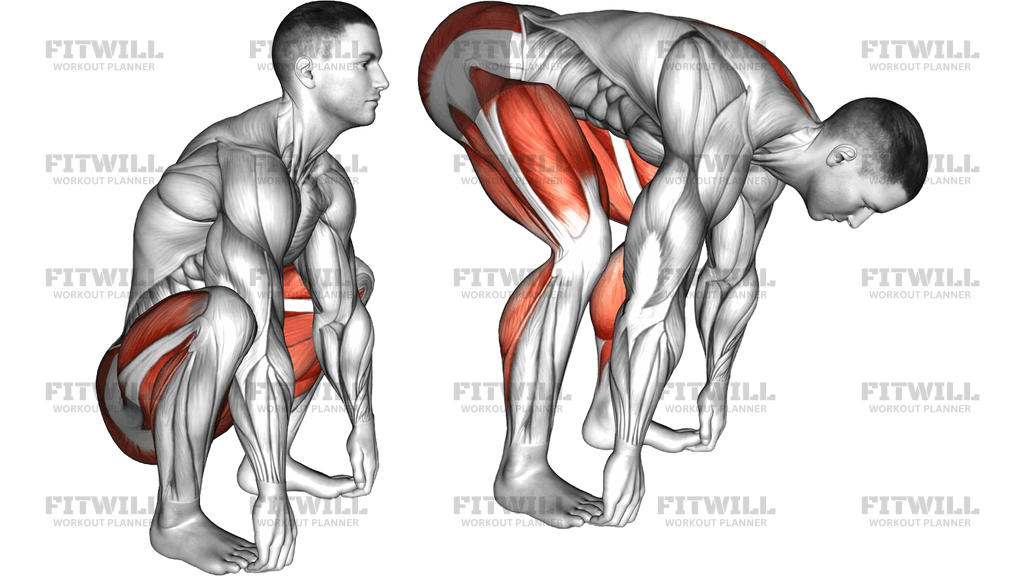
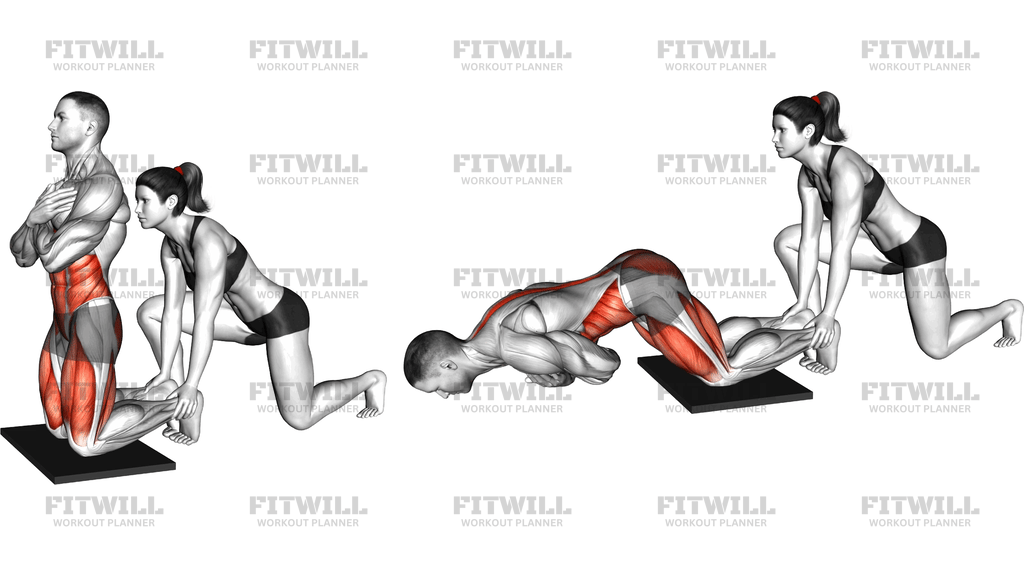
The Kneeling Hamstring Reach is a bodyweight stretch performed from a half-kneeling position, where you extend one leg forward and fold your torso over it to reach toward your foot. It targets the hamstring group of the straightened leg, with the calf and the hip of the kneeling leg also getting meaningful attention. The image shows the two key positions: an upright half-kneel, and the folded position with both hands reaching over the extended foot, back rounded into the stretch.
This stretch is especially useful for people whose hamstrings feel chronically tight from sitting, running, cycling, or heavy deadlift and squat training. Because one knee stays down, you get a stable base that lets you control exactly how deep the stretch goes — something that is harder to manage in a standing forward fold, where balance and lower-back strain often creep in. Runners and lifters commonly use it as part of a cool-down, and it works well in a general flexibility routine.
The setup matters more than it looks. The height difference between the extended heel and the kneeling knee is what creates the lengthening demand on the hamstring, so the position of your front foot and the angle of your back knee determine everything. Keep the front knee soft or very slightly bent if your hamstrings are tight — locking it hard is not the goal. Your hands do not need to touch your toes; reaching toward the foot while hinging at the hips is what produces the stretch.
To execute it well, think of folding from the hips rather than curling the spine to chase your foot. A long spine that tips forward will stretch the back of the thigh; a rounded spine that collapses will just load your lower back. Move into the fold slowly, breathe steadily, and hold the deepest comfortable position. Over several breaths you will usually be able to reach a little further as the muscle releases.
A cushion or folded mat under the kneeling knee makes this far more comfortable and lets you focus on the stretch instead of the floor. Expect to feel it along the back of the thigh and calf of the extended leg, through the hip of the kneeling leg, and mildly along the spine as it lengthens. Never bounce or force the fold — sustained, controlled stretching is both safer and more effective for this movement.
Fitwill
Log Workouts, Track Progress & Build Strength.
Achieve more with Fitwill: explore over 9600 exercises with images and videos, access built-in and custom workouts, perfect for both gym and home sessions, and see real results.
Start your journey. Download today!




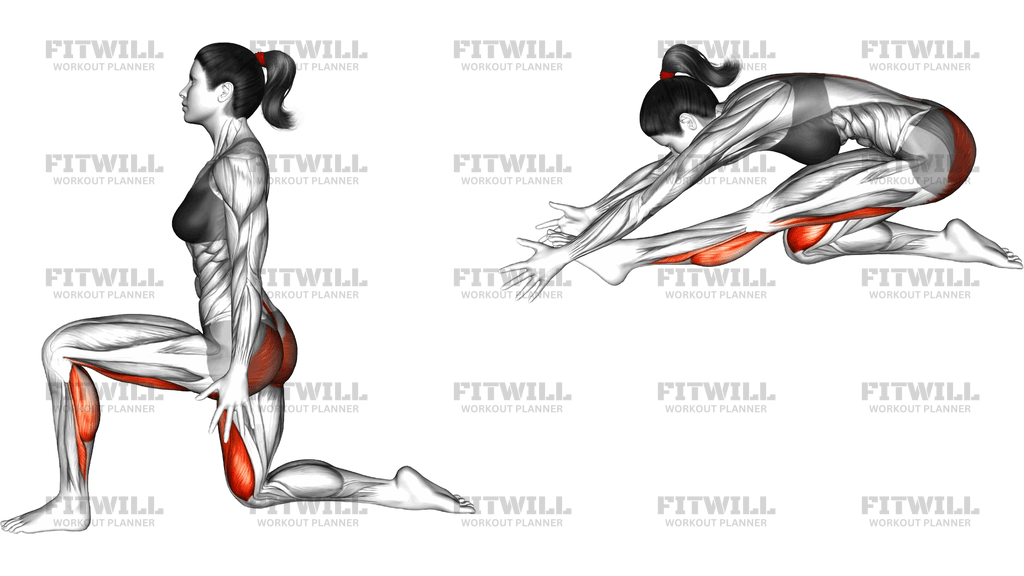
Instructions
- Kneel on one knee with a mat or padding under it, and place your other foot flat on the floor in front of you so the front knee is bent about 90 degrees.
- Slide the front foot forward until that leg is nearly straight, keeping the heel down and the toes pointing up toward the ceiling.
- Sit tall for a moment with your hands resting lightly on the front thigh, and brace your core gently to keep your torso long.
- Hinge forward from the hips, letting your chest travel toward the extended thigh while your spine stays as long as possible.
- Reach both hands toward the front foot, letting your back round slightly only after your hips have folded as far as they comfortably go.
- Lower your head between your arms and hold the folded position, feeling the stretch along the back of the extended thigh and calf.
- Breathe slowly and deeply, and with each exhale let the torso sink a little closer to the leg if the stretch allows.
- After 20-45 seconds, press through the front heel and walk your hands back up your thigh to return to the upright half-kneel.
- Reset your posture, then switch legs and repeat on the other side for the same hold.
Tips & Tricks
- If the back of your thigh cramps or the stretch feels too sharp, slide the front foot closer so the leg is less extended — depth can be built over weeks, not in one session.
- The most common mistake is yanking the chest down with a fully rounded back to touch the toes. Hinge from the hips first, then let the spine round gently at the end.
- Do not let the extended heel lift off the floor; a floating heel removes tension from the calf and shortens the hamstring angle.
- Keep the kneeling knee stacked roughly under the hip. Letting it drift wide turns this into a hip stretch and reduces the hamstring focus.
- If your knee is sensitive, use a folded towel or mat under it — discomfort in the kneeling leg will make you unconsciously tense up and shorten the stretch.
- Reach with relaxed arms and shoulders. Shrugging or straining the arms forward adds neck and shoulder tension without improving the hamstring stretch.
- Exhale as you fold rather than holding your breath; the nervous system releases the muscle more readily on the exhale.
- A very slight bend in the front knee is fine and often smarter for tight hamstrings, as long as the thigh still feels the stretch.
- Avoid bouncing at the bottom of the reach — the Kneeling Hamstring Reach works best as a slow, sustained hold rather than a rhythmic pulse.
Frequently Asked Questions
Which muscles does the Kneeling Hamstring Reach stretch?
The primary target is the hamstrings of the extended leg, especially the biceps femoris along the outside of the thigh. The calf of the straight leg, the glutes, and the muscles along the lower back also get a secondary stretch.
Why kneel instead of doing a standing hamstring stretch?
The kneeling knee gives you a stable base, so you can adjust the depth precisely and relax into the stretch instead of fighting for balance. It also reduces strain on the lower back compared with a standing forward fold.
Should my hands touch my foot in the Kneeling Hamstring Reach?
No — reaching toward the foot is enough, and many people will not reach it at first. Chasing contact by collapsing the spine shifts the load to your lower back and defeats the purpose.
How long should I hold the stretch?
Hold for 20-45 seconds per side, breathing steadily, and repeat one to two rounds if you are working on flexibility. For a post-workout cool-down, a single 30-second hold per leg is usually sufficient.
My front knee feels awkward when extended — is that normal?
A fully straight leg with the heel planted can strain the knee if the hamstring is very tight. Keep a slight bend in the knee and let the stretch come from the back of the thigh, not from forcing the joint straight.
Can beginners do the Kneeling Hamstring Reach?
Yes, it is one of the more accessible hamstring stretches because the floor supports you throughout. Beginners should use padding under the knee, slide the front foot closer, and prioritize a long spine over depth.
What can I use instead if kneeling hurts my knee?
A seated single-leg forward fold with the other leg bent offers a similar hamstring stretch, or you can use a supine hamstring stretch with a towel or strap around the foot. Both remove pressure from the knee entirely.
Why do I feel this more in my calf than my hamstring?
With the heel down and toes up, the gastrocnemius is stretched alongside the hamstring, and a tight calf can dominate the sensation. Try softening the ankle by lowering the toes slightly and refolding from the hips.
Is it safe to round my back at the bottom of the reach?
A gentle rounding after the hips have hinged fully is acceptable for most people and simply deepens the stretch along the spine. Avoid aggressively curling down to force your chest to the leg, and stop if you feel any pinching or sharp pain.
When is the best time to use this stretch — before or after training?
It fits best after training or on separate flexibility days, when the muscles are warm and long static holds are appropriate. Before heavy lifting or sprinting, favor shorter dynamic hamstring drills instead.