Seated Forward Bend Stretch On A Chair
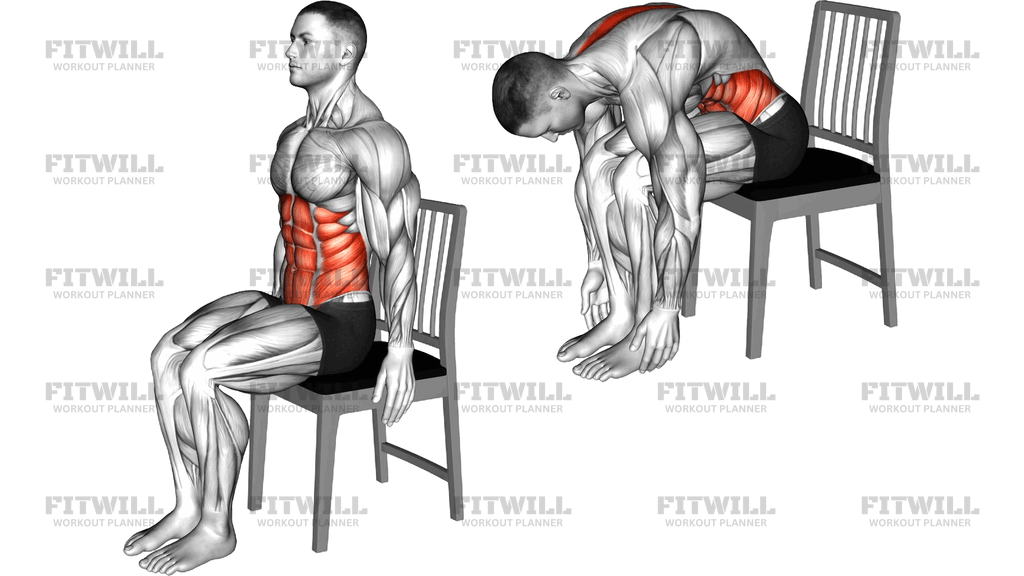
The Seated Forward Bend Stretch On A Chair is a gentle, supported flexibility drill that takes the standard forward fold off the floor and puts it in a chair. You sit tall on a stable chair with your feet flat, then hinge your torso down between or over your thighs, letting your head and arms hang toward the floor. The chair does the work of supporting your hips, so your lower back and core can release instead of fighting to hold you up.
The highlighted work in this movement happens along the erector spinae of the lower back and through the abdominal wall, which lengthen as you round over your legs. You will also feel a mild stretch through the glutes and the top of the hamstrings, since the seated position with bent knees shortens those muscles just enough to shift the focus to your spine and trunk.
This version is ideal for anyone who finds a floor-based seated forward fold uncomfortable: desk workers with stiff backs, older adults, people recovering general mobility after long periods of inactivity, or anyone at the office who needs a discreet reset between meetings. Because the chair controls the height and your knees stay bent, there is far less demand on the hamstrings and hips than in a standing or floor fold.
Setup matters more than it looks. A chair without wheels, placed so it cannot slide, gives you a stable base. Sitting on your sit bones rather than slouched into the backrest lets your pelvis rotate forward as you fold, which is what actually lengthens the lower back. If you perch too far forward on the edge, the chair stops supporting you and your hip flexors have to work to keep you from tipping.
To execute it well, hinge from the hips and let your spine round gradually, vertebra by vertebra, rather than diving down. Let your arms hang heavy toward your feet or the floor and allow your head to drop so the back of your neck lengthens. Breathe slowly into the back of your ribcage; each exhale should let you sink a little deeper without forcing. Hold the folded position, then roll back up through the spine with your head coming up last.
Keep the stretch at a mild-to-moderate sensation, never sharp pain. If you feel any pinching, tingling, or numbness in the back or legs, come up immediately and reduce the depth. Thirty seconds to a minute per hold, repeated two to three times, is plenty for most people.
Common use cases include morning warm-ups, lunchtime desk breaks, cool-downs after lower-body training, and therapeutic back-care routines for people who spend long hours seated.
[ Workout Log & Planner ]
Put your next workout in Fitwill
Keep your plan and training log ready when you are.


Instructions
- Place a stable, armless chair on a non-slip floor so it cannot slide, and sit on the middle of the seat with your sit bones firmly supported.
- Set your feet flat on the floor about hip-width apart, knees bent roughly 90 degrees, and rest your hands on your thighs.
- Sit up tall, lengthen the crown of your head toward the ceiling, and take a slow breath in through your nose.
- Exhale and begin hinging forward from the hips, letting your chest travel down toward your thighs as your spine rounds gradually.
- Continue folding until your torso rests over or between your thighs, letting your arms hang down toward your ankles, feet, or the floor.
- Allow your head to hang heavy so the back of your neck lengthens, and relax your shoulders completely away from your ears.
- Hold the folded position for 20 to 60 seconds, breathing slowly and letting each exhale soften you a little deeper.
- To come up, place your hands on your knees or thighs and roll the spine back up one section at a time, bringing your head up last.
- Sit tall again for a breath or two before repeating for a second or third hold.
Tips & Tricks
- Do not lead the fold with your chin; the most common mistake is craning the neck down first, which strains the upper back instead of lengthening the lower back. Start the hinge from the pelvis.
- Keep your knees bent and relaxed. Straightening the legs turns this into a hamstring stretch and pulls tension right back into your lower back.
- If your chest cannot drop comfortably between your knees, widen your feet a few inches; a slightly wider stance gives the torso more room to fold.
- Avoid bouncing at the bottom. The chair gives you full support, so use it: settle into the fold and let slow breathing do the deepening.
- Check that the chair back is against a wall or otherwise anchored if the seat is lightweight, since leaning forward can tip some chairs.
- If your head hangs with strain, rest your forearms on your thighs or let your hands hold opposite elbows for a supported fold.
- Come up slowly and deliberately; rising too fast from a deep fold is where most people feel a sudden pull in the lower back.
- Keep some weight in your sit bones throughout. If you feel yourself perched on the very edge of the seat, you have folded from the waist instead of hinging at the hips.
Frequently Asked Questions
Which muscles does the Seated Forward Bend Stretch On A Chair target?
It primarily lengthens the erector spinae along the lower back, with supporting stretch through the abdominals, glutes, and the upper hamstrings. The bent-knee seated position deliberately shifts the emphasis toward the spine and trunk.
Is the Seated Forward Bend Stretch On A Chair good for beginners?
Yes, it is one of the most accessible forward folds because the chair supports your hips and removes the hamstring flexibility demand of a floor version. Beginners can control the depth simply by how far they let the torso travel.
Why should my knees stay bent during this stretch?
Bent knees keep the hamstrings and calves relaxed so the fold comes from the hips and lower back rather than the back of the legs. Straightening the legs changes the exercise and often causes the lower back to over-round under tension.
How long should I hold the Seated Forward Bend Stretch On A Chair?
Aim for 20 to 60 seconds per hold, repeating two to three rounds. Longer holds are fine as long as breathing stays relaxed and there is no pain or tingling.
What kind of chair should I use?
Use a sturdy, armless chair without wheels, ideally with the backrest against a wall so it cannot tip or slide. Office swivel chairs and padded dining chairs that rock are unsafe choices for this movement.
My lower back hurts when I fold forward in the chair. What am I doing wrong?
You are most likely diving down from the head and waist instead of hinging from the hips, or folding deeper than your spine is ready for. Sit back on your sit bones, start the fold by tipping the pelvis forward, and reduce the depth until the stretch feels like mild lengthening rather than strain.
Can I use the Seated Forward Bend Stretch On A Chair as a desk break at work?
Absolutely, that is one of its best uses. It requires no floor space, no changing clothes, and takes under two minutes, making it a practical reset for a stiff back during a long sitting day.
What can I substitute if I do not have a suitable chair?
A sturdy bench, a piano stool, or the edge of a stable bed with firm support works the same way. Avoid soft couches, rolling chairs, or anything that shifts under your weight as you fold forward.
Should I feel this stretch in my neck and shoulders?
Only mildly, and it should never be uncomfortable. Let the head hang passively rather than pulling it down, and if the neck feels loaded, support your arms on your thighs so the upper body can fully relax.
Is it safe to do this stretch every day?
Yes, a gentle seated forward fold is generally fine as a daily mobility habit. Keep the intensity moderate, and if you have a known back condition or feel nerve-type symptoms such as tingling or numbness, check with a qualified professional before continuing.