Seated Side Bend Stretch On A Chair
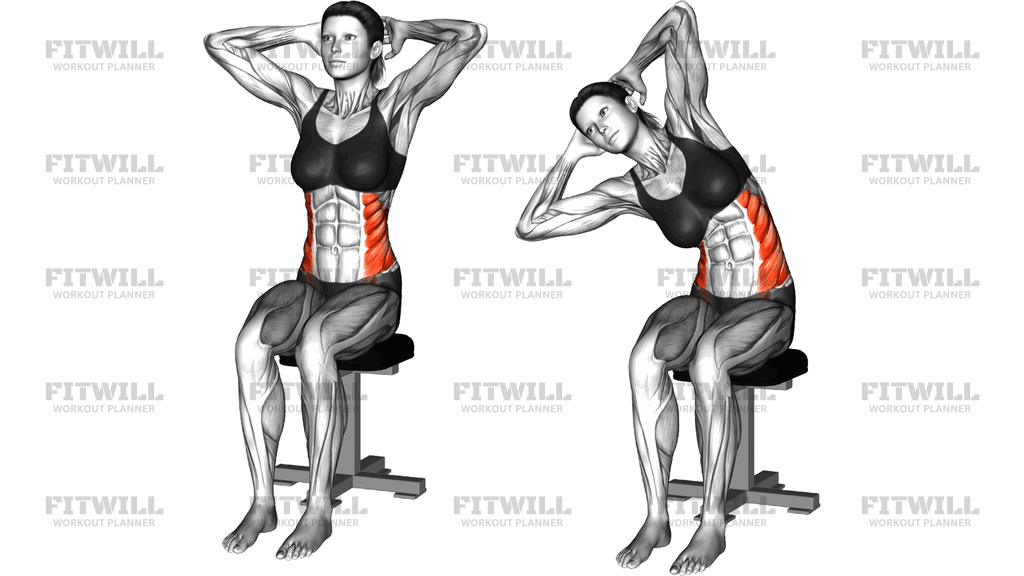
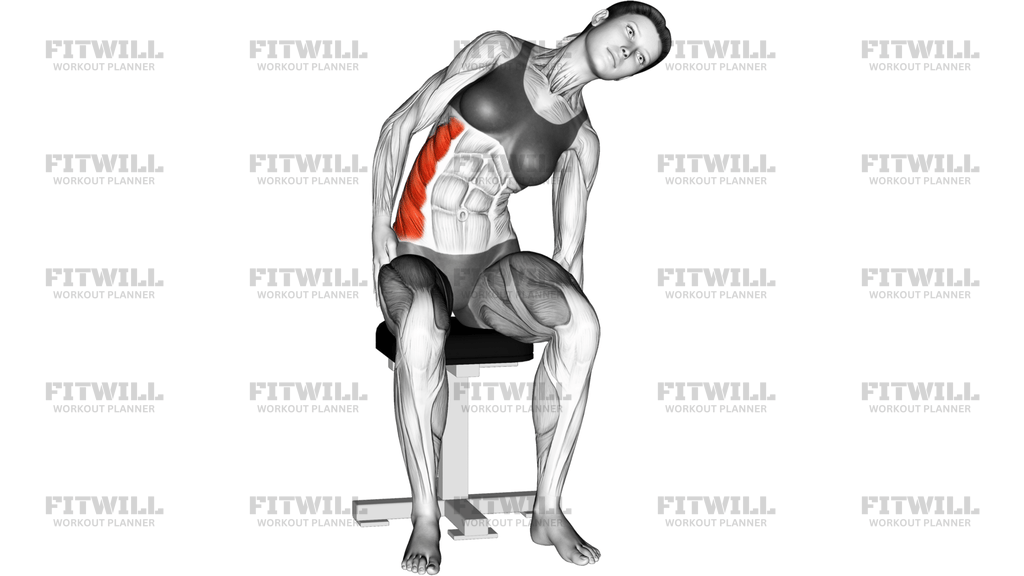
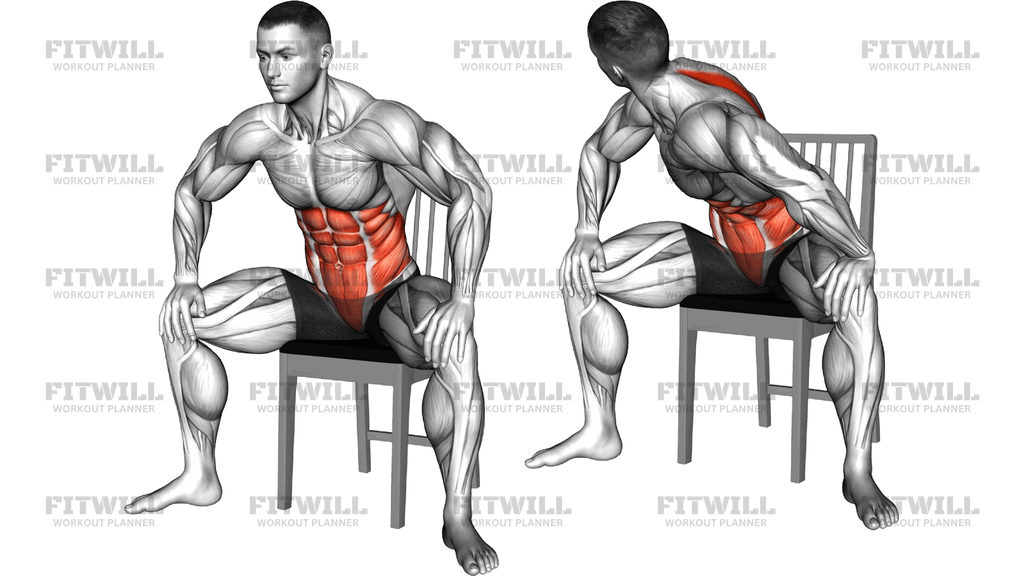
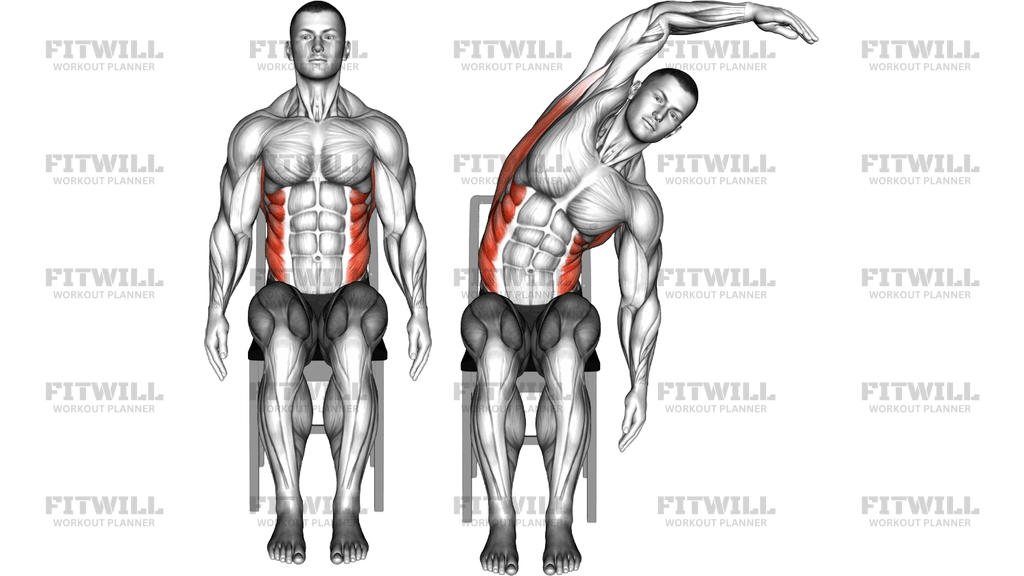
The Seated Side Bend Stretch On A Chair is a gentle lateral flexibility exercise performed from an upright seated position. You sit tall on a sturdy chair with your feet flat on the floor, then reach one arm up and overhead while leaning sideways away from the anchored side, creating a lengthening sensation along the flank of your torso. The highlighted areas in the movement are the obliques on the side being stretched, with the lower back and the lat on the reaching arm assisting the lengthening.
This stretch is especially useful for people who spend long hours sitting at a desk, since prolonged sitting tends to compress the sides of the torso and stiffen the lateral chain from hip to armpit. It is also a common warm-up or cool-down choice for lifters after heavy trunk work, for older adults who need a supported and low-load way to maintain spinal mobility, and for anyone whose side body feels tight during overhead reaching or twisting movements.
The setup matters more than it might seem. Sitting on a firm chair with both sitting bones evenly placed and feet grounded gives your pelvis a stable base, which forces the bend to come from your spine and ribcage rather than from your hips tipping sideways. Keeping the opposite side of your torso long and your shoulders square prevents you from simply rotating or collapsing forward, which is the most common way this stretch loses its effect.
To execute it well, reach the working arm straight up first, grow taller through the spine, and only then drift sideways in a smooth arc. The stretch should be felt along the ribs and waist on the opposite side, running up toward the armpit. Avoid jerking, bouncing, or forcing a deeper curve than your body offers naturally; a slow, steady reach with relaxed breathing does more for range than an aggressive pull.
Because the chair supports your weight, this is a very accessible movement with minimal injury risk when performed within a comfortable range. Still, move with control, keep the movement in the frontal plane rather than twisting, and come back to center gradually. Perform it on both sides to keep the torso balanced, spending a little extra time on whichever side feels tighter.
[ Workout Log & Planner ]
Put your next workout in Fitwill
Keep your plan and training log ready when you are.


Instructions
- Sit on a stable, armless chair with both sitting bones evenly on the seat, feet flat on the floor about hip-width apart, and your back upright.
- Rest your hands lightly on your thighs or let them hang at your sides, and square your shoulders and hips to face forward.
- Take a breath in, sit up tall, and reach your right arm straight up toward the ceiling with the palm facing inward.
- Keeping your hips level and both shoulders facing forward, lean your torso sideways to the left in a smooth arc, letting the right arm travel overhead and slightly across the top of your head.
- Let your left arm relax and slide down toward the floor or the side of the chair as you bend.
- Continue until you feel a steady stretch along the left side of your waist, ribs, and up toward the armpit.
- Hold the end position for 15-30 seconds, breathing slowly and allowing the ribs to open a little more with each exhale.
- Reverse the arc slowly, using your trunk muscles rather than dropping back, and return your arm to your side.
- Reset your posture to tall and even, then repeat the same sequence reaching the left arm overhead to stretch the right side.
Tips & Tricks
- Reach up before you reach over. Lengthening the arm toward the ceiling first creates space in the spine, so the side bend stretches the waist instead of just compressing it.
- If your torso starts twisting forward, imagine your chest pressed against an invisible wall in front of you and keep both shoulders on that plane.
- Do not let the opposite sitting bone lift off the seat. If it does, you are bending too far; ease back until your hips stay planted.
- A slight forward shift of the ribs, rather than a big sideways arc, is a sign you are losing the frontal plane. Move smaller and straighter.
- Keep the reaching arm relaxed at the elbow. Locking it hard or straining the fingers across can turn this into a shoulder-grip effort instead of a torso stretch.
- If you feel the stretch only in your neck or shoulder, lower the arm slightly and focus on drifting the ribs away from the hip instead.
- Exhale as you settle into the hold. Holding your breath tenses the trunk muscles and blunts the stretch response.
- The tighter side often benefits from one extra gentle hold after the first set, but never push into sharp or pinching sensations.
- Use a chair without armrests and on a non-slip surface so the base stays stable throughout the lean.
Frequently Asked Questions
Which muscles does the Seated Side Bend Stretch On A Chair target?
The main targets are the obliques on the side opposite your reaching arm, along with the quadratus lumborum in the lower back. The lat and the side of the ribcage on the reaching side also get lengthened as the arm travels overhead.
How long should I hold the Seated Side Bend Stretch On A Chair?
Hold each side for 15-30 seconds and repeat 2-3 times per side. For a warm-up, shorter holds of about 10 seconds work well; for improving flexibility, favor the longer holds.
Is this stretch suitable for beginners or older adults?
Yes. The chair supports your full weight, there is no load on the spine, and the range is entirely self-selected. Just keep the lean modest at first and prioritize staying tall rather than bending far.
Why do I feel the Seated Side Bend Stretch On A Chair in my shoulder instead of my waist?
This usually means the arm is doing the reaching while the torso stays upright, or the elbow is locked and pulling on the shoulder. Grow taller through the spine and let the ribs drift sideways; the shoulder sensation should fade as the waist takes over.
Should both feet stay flat on the floor during this stretch?
Yes. Flat, grounded feet keep the pelvis level, so the side bend comes from your trunk. Crossing your legs or letting one foot slide forward lets the hips tilt and reduces the stretch on the waist.
Can I do the Seated Side Bend Stretch On A Chair at my desk during the workday?
Absolutely. It is one of the most convenient desk stretches because it needs only a stable chair and about a minute. It pairs nicely with a seated twist or a chest-opening reach after long sitting periods.
What is a good substitute if I do not have a suitable chair?
You can perform a standing side bend with feet hip-width apart, or a seated version on the edge of a bench or exercise mat with legs crossed. The key in any version is keeping the hips level and the bend in a straight sideways arc.
How do I know if I am bending too far in this stretch?
If your opposite sitting bone lifts off the seat, your lower back pinches, or you have to twist forward to go deeper, you have passed a useful range. Ease back to the point where you feel a steady pull along the side of your waist without strain.
Should I bounce to get deeper into the stretch?
No. Bouncing triggers a protective tightening in the very muscles you are trying to lengthen. Hold the end position steadily and let each exhale release a little more tension instead.