Bosu Ball Balance Counterbalanced Skater Squat
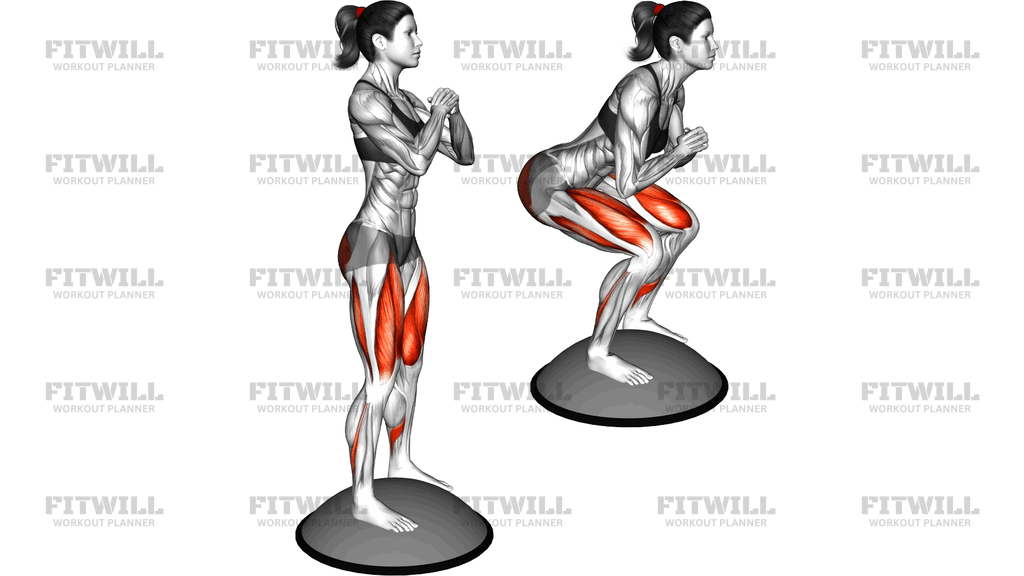
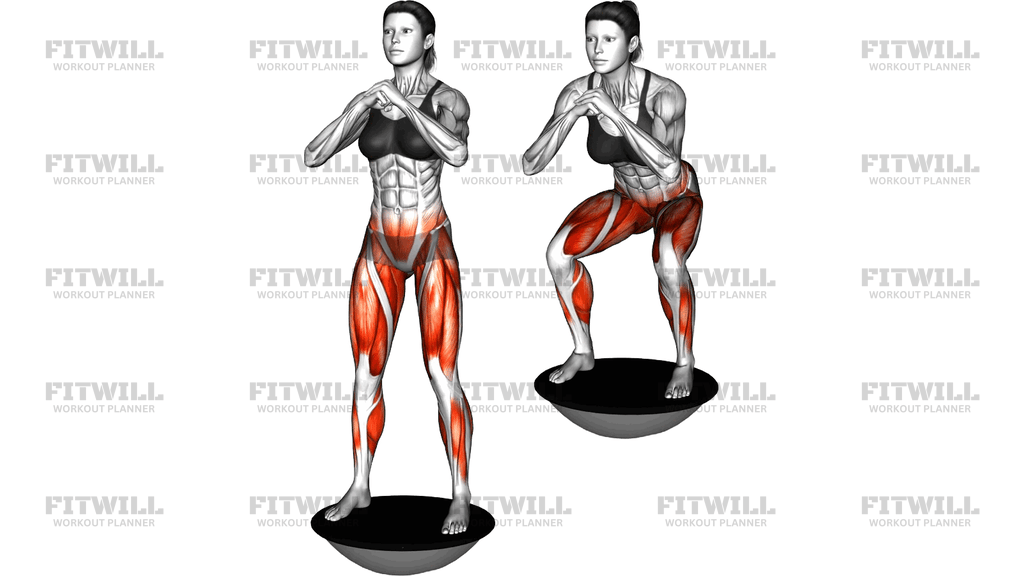
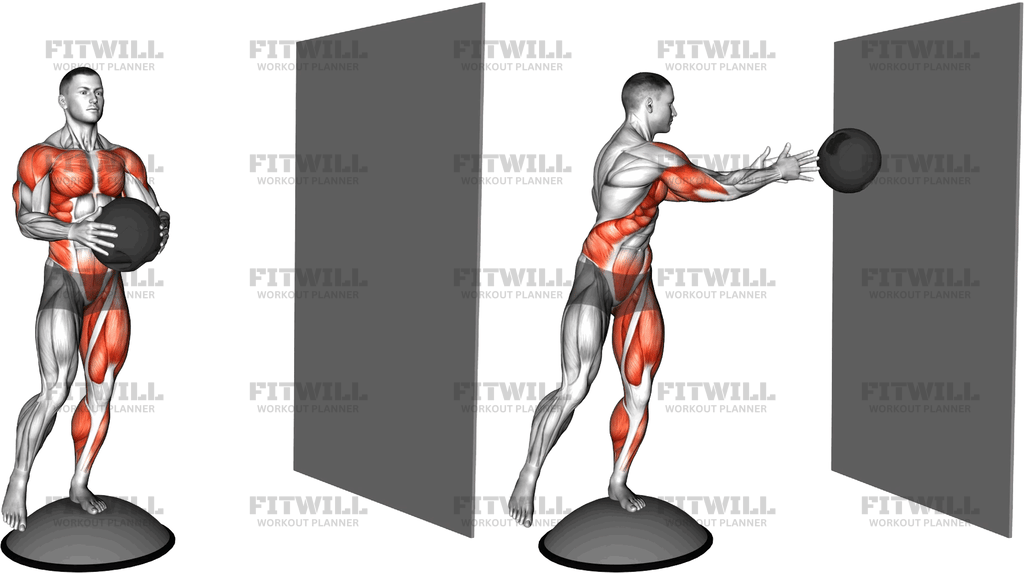
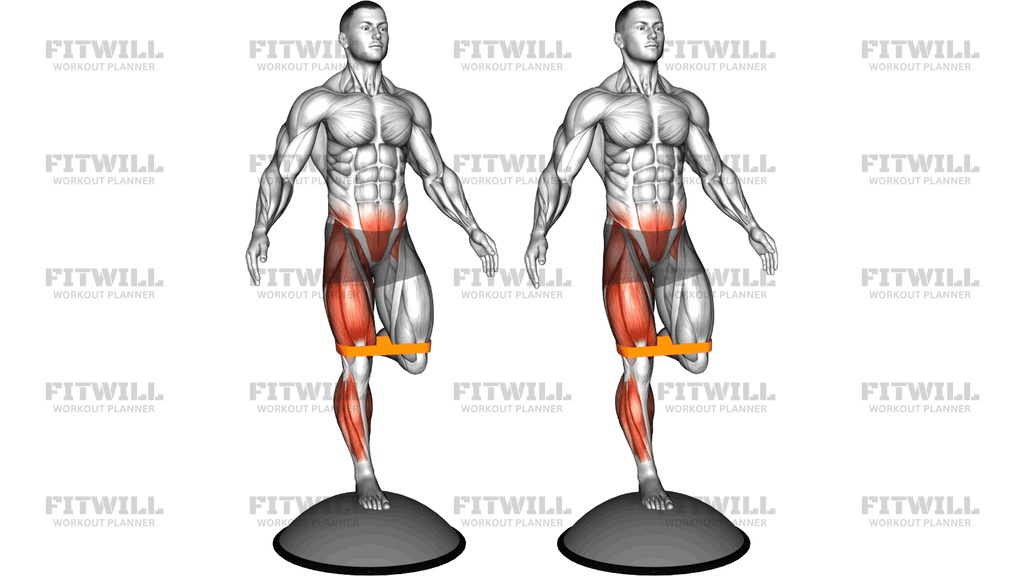
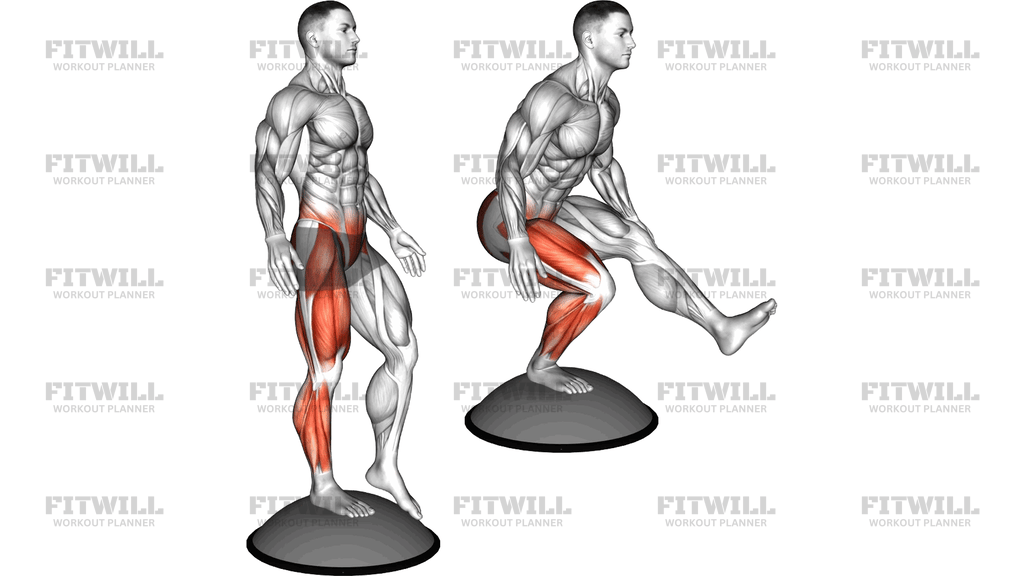
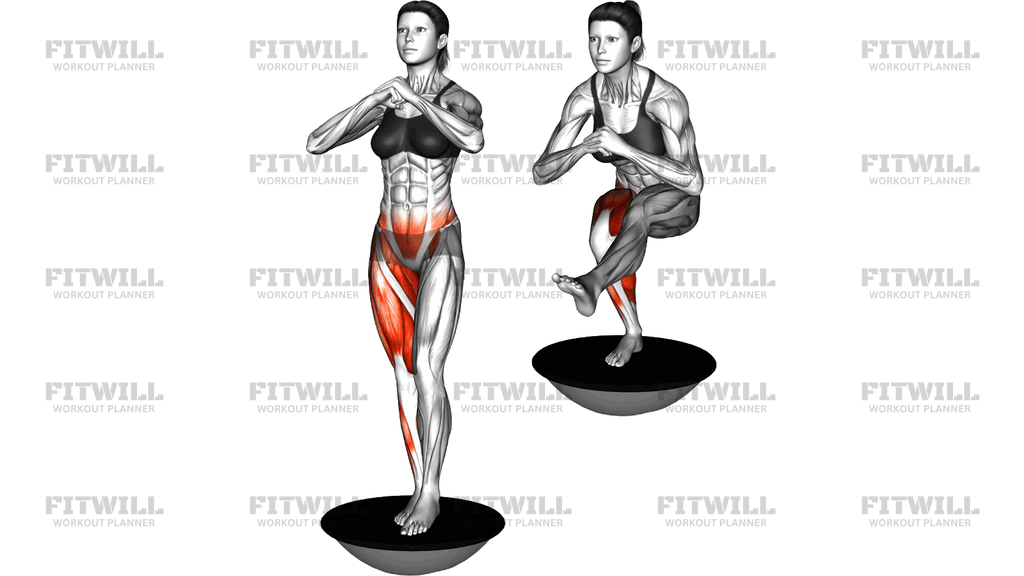
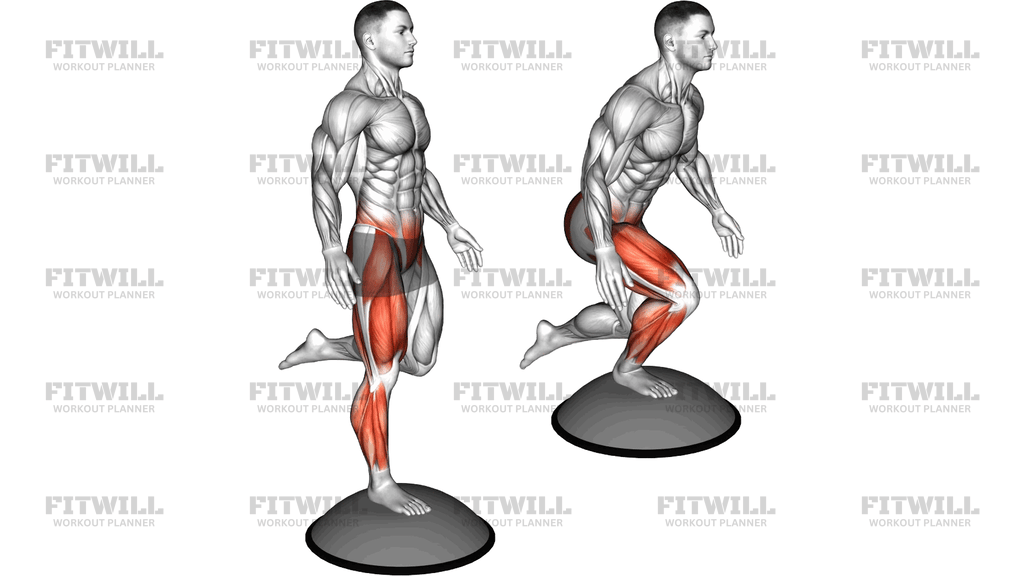
The Bosu Ball Balance Counterbalanced Skater Squat is a single-leg squat performed with your working foot planted on top of a Bosu ball, your trailing leg reaching behind you, and your arms extended forward as a counterweight. The name breaks down exactly how the movement works: the Bosu ball creates an unstable surface, the skater squat loads one leg in a deep single-leg pattern, and the counterbalance position of the arms lets you sit back into the squat without tipping backward. In the bottom position, your front knee is deeply bent while your rear leg trails behind you like a speed skater pushing off a stride.
This is an advanced balance and lower-body strength exercise. It is most useful for lifters and athletes who already own a solid two-leg squat and a stable floor-based skater squat, and who want to challenge single-leg control, ankle stability, and hip strength at the same time. Because your foot is on the domed surface of the Bosu, the smaller stabilizing muscles around the ankle and hip have to work continuously just to keep you stacked over your standing leg.
The primary work comes from the quads of the standing leg, which control the descent and drive you back up. The glutes and hamstrings extend the hip as you rise, and the glute medius on the working side fights to keep your pelvis level. The calves and the muscles along the lower leg fire constantly to correct small shifts on the unstable dome, while the core holds your torso upright against the forward reach of the arms.
Setup matters more here than in most squats. Place the Bosu ball with the dome facing up and the flat platform on the floor, and step onto the center of the dome with one foot so your whole foot, including the heel, is supported. Your trailing leg and your arm position are your steering system: the rear leg swings back as you sink, and the arms reach forward at the same time so your combined center of mass stays over the middle of the ball. If your arms stay at your sides, you will drift backward and lose the dome early.
To execute well, think of the movement as sitting down and back over the ball rather than simply bending your knee. Keep your standing knee tracking over or slightly inside your toes, hinge a little at the hip, and let the rear leg extend behind you as your torso leans forward into the counterbalance. Descend only as deep as you can control without the edge of the Bosu lifting or your heel popping, then press through the whole foot to stand back up.
Because the balance demand is high, this exercise works best early in a session when you are fresh, for low reps per side with complete focus. Use it as a stability progression for unilateral leg strength, a return-to-training tool for ankle and knee control after the basics have been rebuilt, or a challenging finisher for skaters and court-sport athletes who need to produce force on one leg over an unpredictable surface. Hold a light weight or stand near a wall at first if the balance component outruns your leg strength.
[ Workout Log & Planner ]
Put your next workout in Fitwill
Keep your plan and training log ready when you are.


Instructions
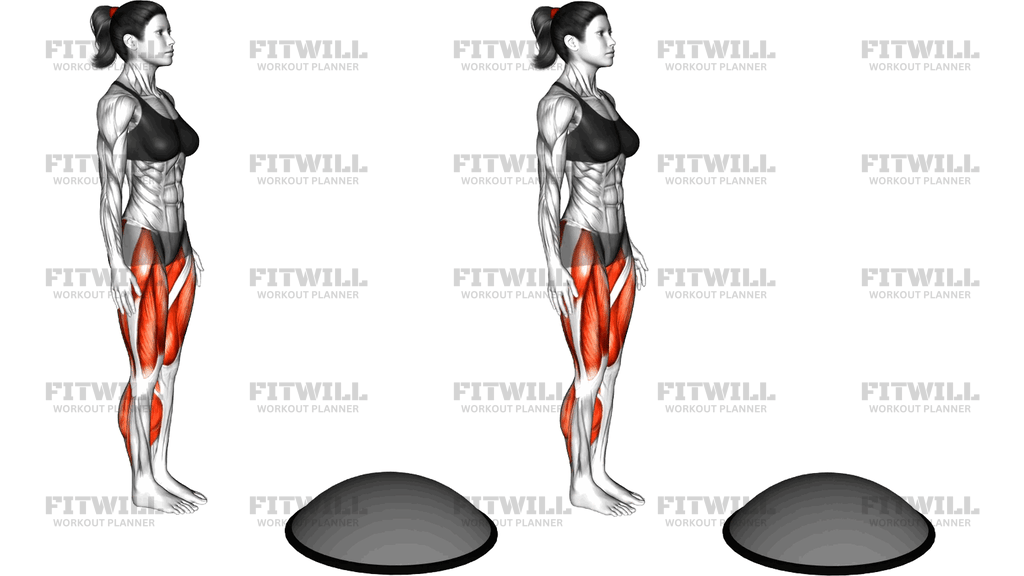
- Place a Bosu ball on a non-slip floor with the dome facing up and the flat side down, and stand facing it with a clear space behind you.
- Step one foot onto the center of the dome and find your balance with your weight spread across the whole foot, then lift the other foot off the floor so it hangs slightly behind you.
- Extend both arms straight out in front of your chest at shoulder height to act as a counterweight, keep your chest tall, and brace your core.
- Inhale, then begin the descent by sitting your hips back and down over the ball while your standing knee bends and tracks over your toes.
- As you sink, swing the trailing leg back behind you and let your torso lean slightly forward, keeping the arms extended so your weight stays centered over the dome.
- Lower until your front thigh is as close to parallel as you can control without the Bosu edge lifting, your heel rising, or your knee collapsing inward.
- Exhale and drive through your whole standing foot, pushing the floor away to straighten the knee and hip while your rear leg swings back under you.
- Return to a tall single-leg stand on the dome with your arms still forward, and pause until you are fully steady.
- Complete all reps on one side, step down carefully, reset your balance on the dome, then repeat on the other leg.
- Keep your gaze on a fixed point ahead of you throughout the set to limit wobbling on the unstable surface.
Tips & Tricks
- The most common failure is placing the foot too far forward or back on the dome; center it so the entire foot, heel included, is supported, or the ball will tip in one direction.
- If you tip backward at the bottom, you are not using the counterbalance: reach the arms forward harder and let the rear leg travel further behind you to shift your weight forward over the ball.
- When the standing knee dives inward, cue the knee toward the pinky-toe side and squeeze the glute on the working leg; the dome magnifies this error, so fix it before adding depth.
- Keep the descent slower than the ascent; dropping quickly onto an unstable surface almost always ends with the heel lifting or a step-off.
- Shorten the range first. A quarter-depth skater squat on the Bosu done cleanly builds more control than a deep rep where you wobble off the dome.
- Do not let the trailing leg touch down mid-set; it is your counterweight, and resting it on the floor resets the balance demand to zero.
- Keep the toes and knee of the standing leg pointing the same direction rather than rotating the whole leg to chase balance.
- If your ankle burns out before your thigh does, spend a few weeks on floor-based skater squats and single-leg dome stands before returning to the full combination.
- Perform this exercise first in your workout while fresh; balance quality drops sharply once your legs are fatigued, which turns the last reps into stumbles.
- A light counterweight held at chest height can substitute for the arm reach if your arms tire or you cannot stay centered with them extended.
Frequently Asked Questions
What muscles does the Bosu Ball Balance Counterbalanced Skater Squat work?
The quads of the standing leg do the main work of lowering and lifting you, supported by the glutes and hamstrings on the way up. The calves and ankle stabilizers work continuously to keep you balanced on the dome, and the core holds your torso steady against the forward arm reach.
Why do the arms reach forward during this skater squat?
In a single-leg squat your trailing leg swings behind you, which pulls your center of mass backward. Extending the arms forward counterbalances that rear leg so you can sit down into the squat without tipping off the back of the Bosu ball.
Is the Bosu Ball Balance Counterbalanced Skater Squat suitable for beginners?
It is not a good starting point. Beginners should first master regular squats, split squats, and floor-based skater squats, plus single-leg balance work, before adding the unstable dome. A beginner who jumps straight to this version will usually fight for balance instead of training the legs.
Which foot position on the Bosu ball works best?
Place the center of your working foot on the highest point of the dome with your heel fully supported. A foot placed too far forward or back makes the ball tip as you descend and forces your ankle into a compensation instead of a squat.
How deep should I squat on the Bosu ball?
Descend only to the depth where you can keep your heel down, the dome flat against the floor, and your knee tracking over your toes. For most people that starts at quarter or half depth, and range improves as balance and single-leg strength develop.
My trailing leg keeps touching the floor. Is that wrong?
Briefly tapping down is fine while you are learning, but the goal is to keep the rear leg hovering behind you for the whole rep. If you need it down constantly, reduce the depth or hold a wall or rack with one hand until your balance improves.
Can I hold a weight during the Bosu Ball Balance Counterbalanced Skater Squat?
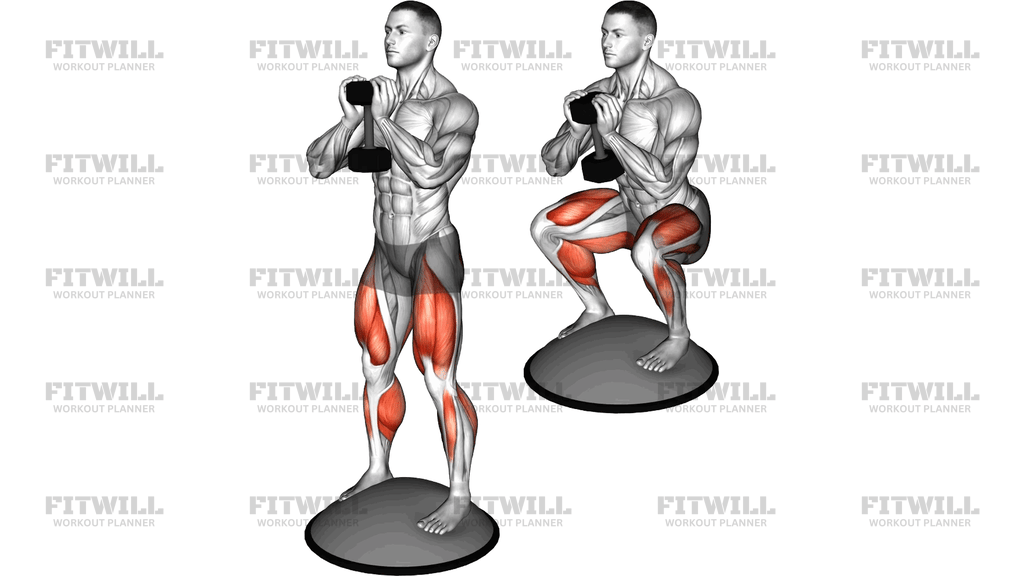
Yes, a light dumbbell or kettlebell held at chest height can replace or add to the arm reach, and it often makes the counterbalance easier to feel. Keep it light, because the limiting factor on the dome is control, not load.
What can I use instead if I do not have a Bosu ball?
A regular skater squat on the floor is the closest substitute and should be your base version. A folded exercise mat, balance pad, or stability cushion can add some instability, though none of them shifts under you the way the dome does.
How many reps and sets should I do?
Start with 2-3 sets of 5-8 controlled reps per leg while you are fresh, early in your workout. Quality matters far more than volume here, so stop the set as soon as your balance or knee position degrades.
Are there safety concerns with this exercise?
The main risks are losing balance and stepping off the dome awkwardly or letting the knee cave under fatigue. Clear the area around the Bosu ball, keep a wall or rack nearby when learning, and stop the set the moment your form on the standing leg breaks down.