Air Pillow Crunch
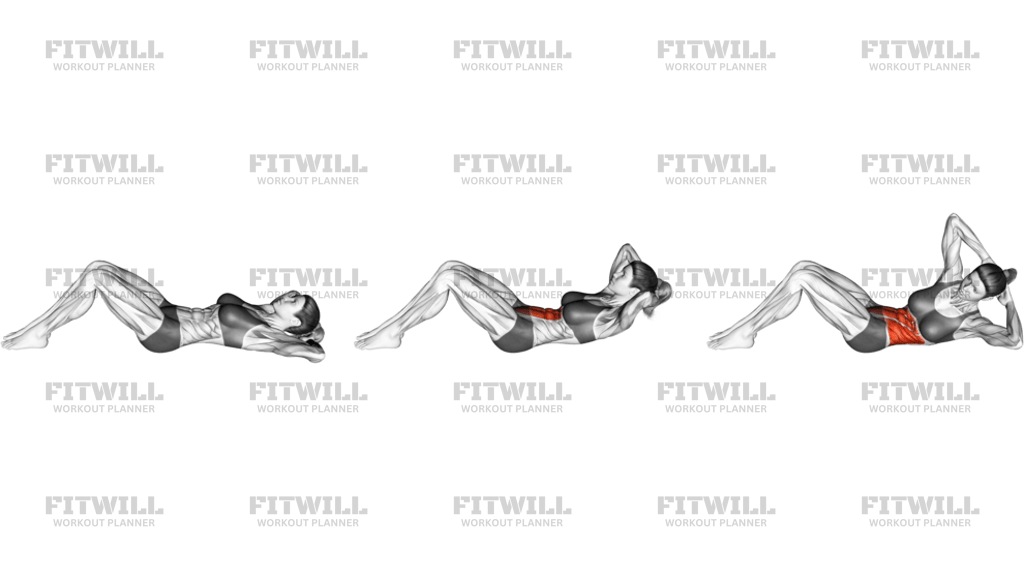
The Air Pillow Crunch is a floor-based abdominal exercise where your lower back rests on a soft, inflated pillow or air cushion instead of directly on the ground. You lie back with bent knees and feet flat on the floor, place your hands lightly behind your head, and curl your upper body toward your thighs. The pillow creates an unstable, slightly rounded surface under your lumbar spine, which forces your abs to work harder to control the movement from start to finish.
The main muscle at work is the rectus abdominis, the front wall of the abdomen that flexes the spine. Because the cushion gives slightly under you and shifts a little as you move, your obliques and deeper core muscles also pitch in to keep your torso from twisting or wobbling. The hip flexors assist, but the elevated, rounded position under the lower back keeps the emphasis on curling the ribs toward the pelvis rather than simply sitting up.
The setup matters more than it might seem. With a firm floor crunch, your lumbar spine has a stable base and your abs only work through the curl itself. On an air pillow, the surface compresses and redistributes as you move, so your abdominal muscles have to stabilize the spine before and during every rep. That added stability demand is exactly why this variation can feel harder than a standard crunch even with no extra weight.
To execute it well, think of peeling your shoulder blades off the cushion one segment at a time rather than yanking your head forward. Exhale as you curl up, pause briefly at the top where your abs are fully shortened, then lower slowly and let your upper back settle back onto the pillow without fully relaxing between reps. Keep your chin an inch or so from your chest, as if holding an apple under your jaw, and let your elbows stay wide so they do not pull your head forward.
This exercise suits beginners learning to feel their abs working, home trainers who want a low-equipment core exercise, and more experienced lifters looking for a burnout finisher after heavier compound work. It is also a reasonable option for people who find flat-floor crunches uncomfortable, since the pillow cushions the spine and reduces pressure points.
A few practical points keep it safe and effective. Move at a pace you can control in both directions, especially on the way down, because the unstable surface rewards slow lowering. Stop the set when your form breaks and your neck or lower back starts taking over. If the pillow slides on a smooth floor, place it on an exercise mat or a towel to anchor it before you begin.
[ Workout Log & Planner ]
Put your next workout in Fitwill
Keep your plan and training log ready when you are.


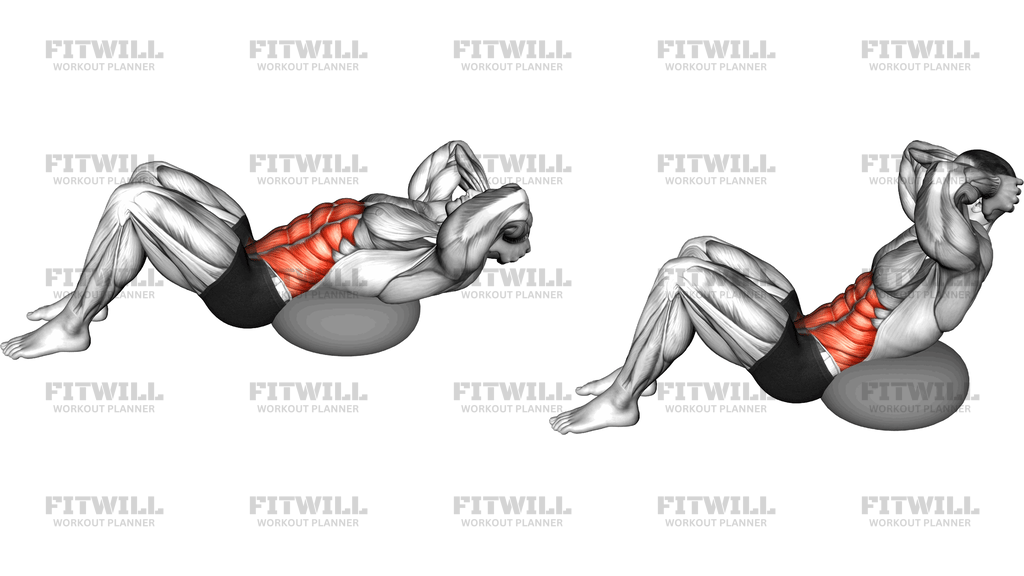
Instructions
- Place an inflated air pillow or soft cushion on the floor, ideally over an exercise mat so it does not slide.
- Lie back so the pillow sits under your lower back and hips, with your upper back and shoulders off the cushion.
- Bend your knees to roughly 90 degrees and plant your feet flat on the floor about hip-width apart.
- Place your fingertips lightly behind your ears or the back of your head with elbows flared wide, and keep your chin slightly tucked.
- Brace your abdominal muscles gently and exhale as you curl your upper back and shoulder blades up off the pillow toward your thighs.
- Pause at the top for a moment, squeezing your abs with your lower back still in contact with the cushion.
- Inhale as you lower your torso slowly, letting your spine roll back down one segment at a time until your upper back rests on the pillow again.
- Stop just short of full relaxation at the bottom, keeping light tension in your abs before starting the next curl.
- Breathe steadily throughout: exhale on the curl up, inhale on the controlled lowering.
- Complete your planned reps, then roll off the cushion carefully and reset it under your lower back if it has shifted.
Tips & Tricks
- Do not pull on your head with your hands; if your neck fatigues before your abs, cross your arms over your chest instead.
- The most common mistake is turning the crunch into a full sit-up, which shifts work to the hip flexors; stop the rep once your shoulder blades leave the pillow.
- Keep the pillow positioned under your lower back, not under your mid-back or hips, or you will lose the extended starting range the exercise is built around.
- If the cushion deflates too much, your abs get an easier, more stable base; keep it firm enough that it compresses noticeably under your weight.
- Avoid bouncing off the pillow at the bottom, since the rebound does the curling for you; lower for two to three seconds each rep.
- Your feet should stay flat and grounded; if they lift as you curl up, slow the tempo or move your feet slightly farther from your hips.
- Chin tucked, eyes roughly forward and slightly up — looking straight at your knees usually means the head is leading the rep instead of the abs.
- For more challenge, pause longer at the top or hold a light weight plate on your chest; for less, reduce the range to a partial curl.
Frequently Asked Questions
What muscles does the Air Pillow Crunch work?
The rectus abdominis, the front sheet of the abs, does most of the work as you curl your torso. The obliques and deeper core muscles contribute by keeping your torso stable on the shifting cushion, and the hip flexors assist somewhat at the top.
Why place the pillow under the lower back instead of lying flat?
The cushion rounds your lumbar spine slightly and gives your abs a greater starting stretch, and because the surface compresses and shifts, your core also has to stabilize while you curl. Both factors make the abs work harder than on a flat floor.
Is the Air Pillow Crunch good for beginners?
Yes. The range is short, the load is just your body weight, and the cushion is forgiving on the spine. Beginners should focus on a slow curl with the hands lightly touching the head rather than pulling it.
How is this different from a regular floor crunch?
On the floor, your lumbar spine sits on a firm base and the rep is a pure curl. On an air pillow, the starting position is slightly extended and the surface moves under you, which lengthens the abs' working range and adds a balance demand.
What can I use if I do not have an air pillow?
A firm, compact cushion or a folded towel thick enough to elevate your lower back a few inches works in a pinch. A stability ball is a related but harder option, since it is larger and considerably less stable.
Why does my neck hurt when I do the Air Pillow Crunch?
That usually means your hands are pulling your head forward or your chin is jutting up. Keep your fingertips behind your ears without pulling, keep the chin gently tucked, and support some of your head weight with your hands if needed.
How high should I curl up on each rep?
Lift until your shoulder blades clear the pillow and you feel your abs fully contracted, roughly a 30-degree angle from the floor. Going higher into a sit-up brings the hip flexors in and reduces the abdominal focus.
How many reps should I do?
Aim for sets of 12 to 20 controlled reps, stopping when you cannot keep your lower back on the pillow or your neck starts dominating. Since the load is light, quality of the curl matters more than the total number.
Is the Air Pillow Crunch safe for people with lower back issues?
The cushioned, supported position is gentler on the spine than many floor exercises, but anyone with a current or recurring back problem should get clearance from a qualified professional first and stop immediately if the movement causes pain.