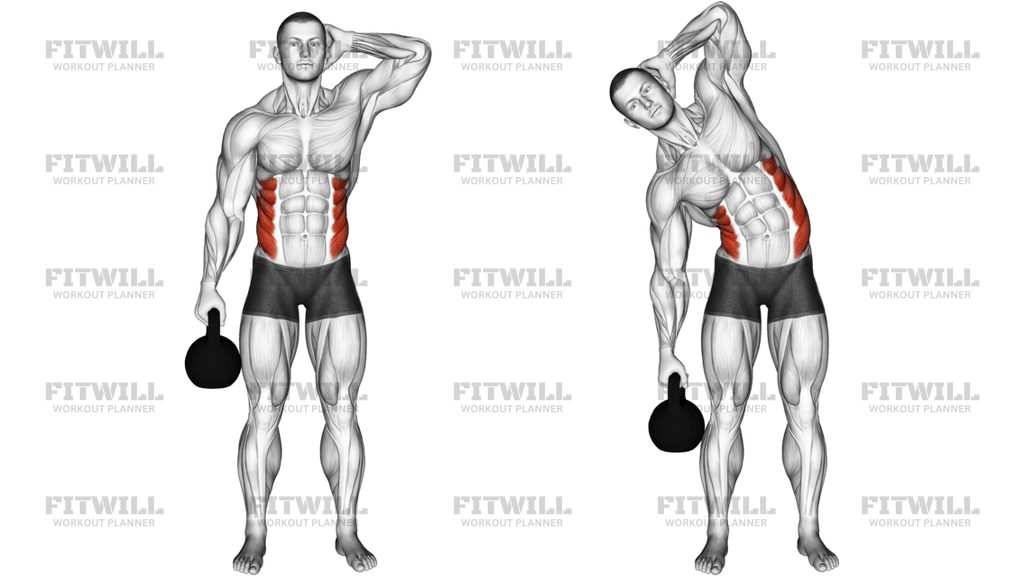
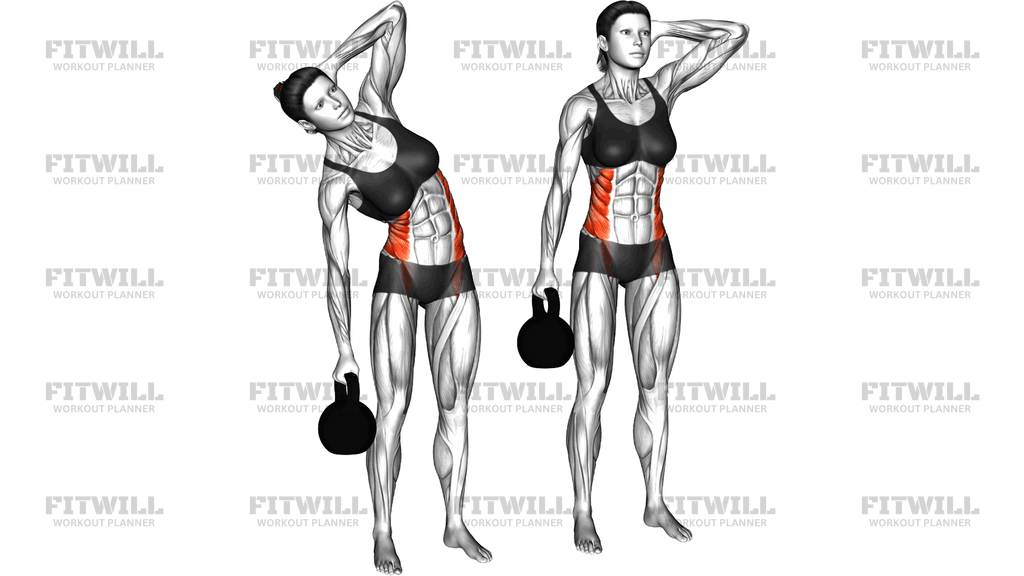
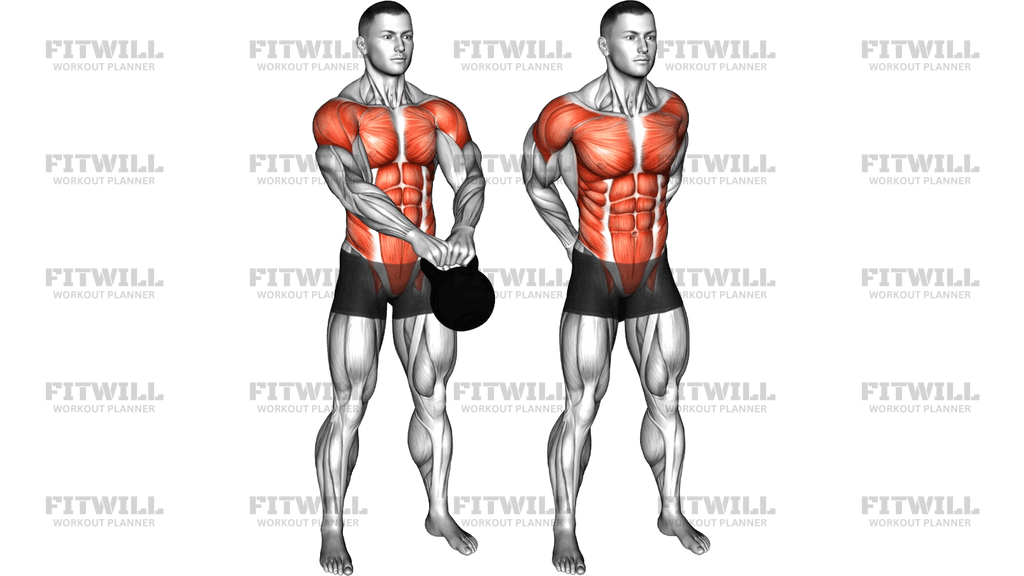
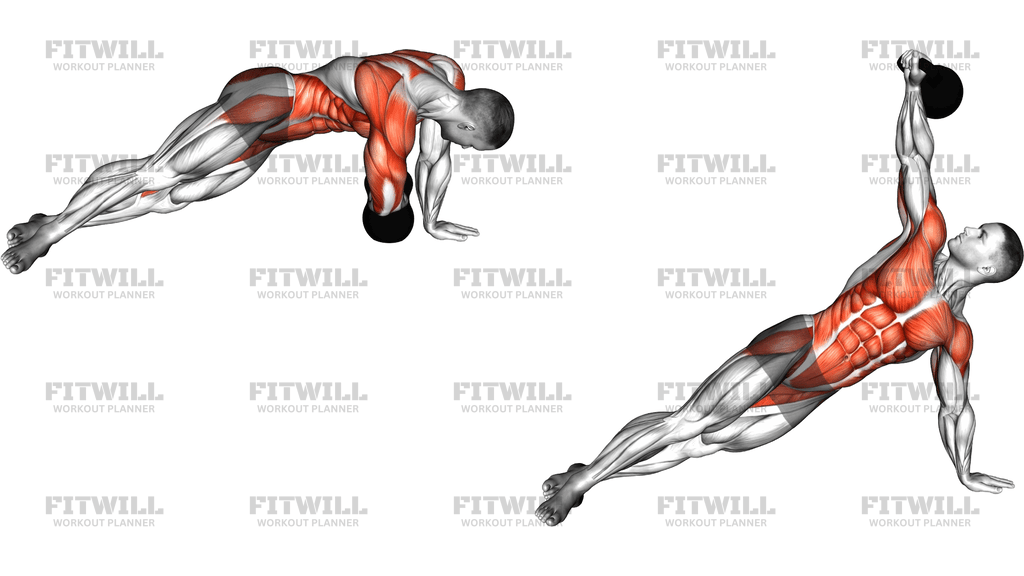
Kettlebell Advanced Windmill
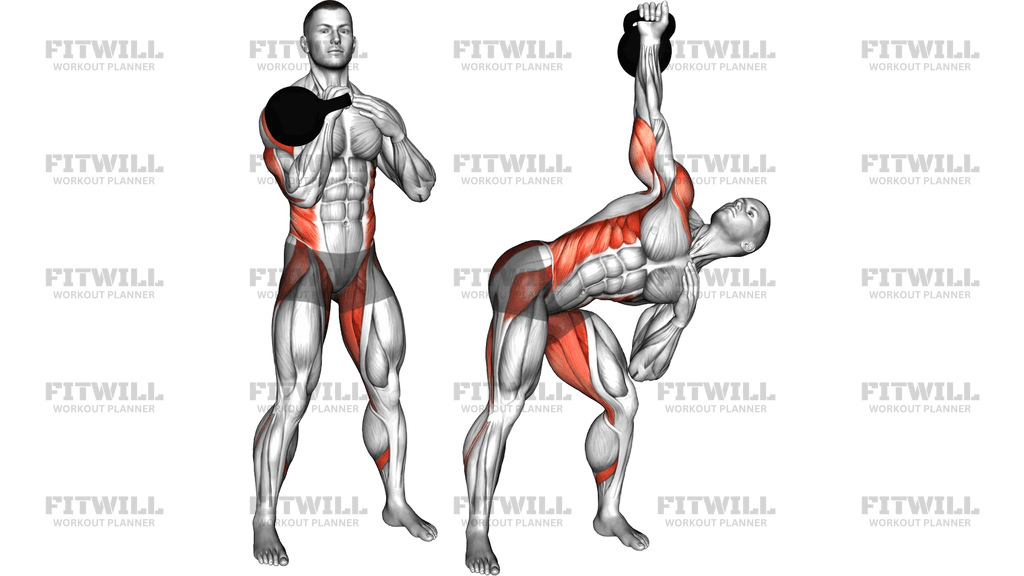
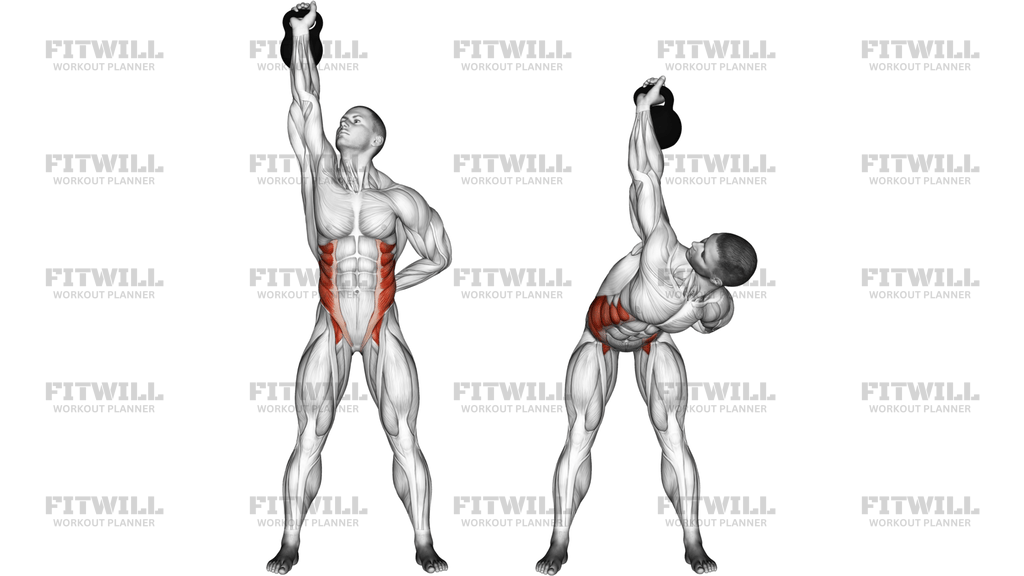
Kettlebell Advanced Windmill is an overhead strength and mobility drill built around a locked-out kettlebell, a wide stance, and a controlled hip hinge. The exercise asks you to keep the bell stacked over the shoulder while the torso rotates and folds toward one side, which makes it a direct test of shoulder stability, trunk control, and hip mobility at the same time.
The main training focus is the obliques, with the abs, deep core, lower back, and hip stabilizers helping you stay organized under load. In anatomy terms, the External obliques do most of the anti-lateral-flexion and rotation control, while the Rectus abdominis, Erector spinae, and Transversus abdominis help protect the spine and keep the rib cage from flaring. Because the arm stays overhead, the shoulder also has to stay packed and active instead of drifting forward.
The setup matters more here than in many other core exercises. Start with the feet wider than shoulder-width, turn the toes slightly out if needed, press the kettlebell overhead, and keep the wrist stacked over the elbow and shoulder. The opposite hand usually rests on the hip or slides down the thigh as you hinge, but the key is that the overhead arm stays vertical while the hips shift away from it. If the bell drifts in front of the body, the rep becomes harder to control and the shoulder loses its advantage.
Each rep should feel like a slow fold around a fixed overhead line. Push the hips toward the side that is not holding the kettlebell, let the torso rotate just enough to maintain balance, and keep the eyes on the bell so the shoulder stays organized. Lower only as far as you can while keeping the kettlebell stacked, then reverse the motion by driving the hips back under you and standing tall without shrugging the shoulder or bending the elbow. The return should be deliberate, not snappy.
Kettlebell Advanced Windmill is useful when you want core work that also exposes side-to-side asymmetry, overhead stability, and hip range of motion. It fits well in a strength session, accessory block, or warm-up for pressing and overhead work, especially if you need better control in positions where the torso is loaded off-center. Treat it as a precision exercise: clean reps, steady breathing, and a load that lets you keep the bell locked in place from start to finish.
[ Workout Log & Planner ]
Put your next workout in Fitwill
Keep your plan and training log ready when you are.


Instructions
- Stand with your feet a little wider than shoulder-width and press the kettlebell overhead so the wrist, elbow, and shoulder are stacked in one line.
- Turn the free foot slightly out and place the opposite hand on your hip or down the thigh so you can hinge without losing balance.
- Lock your eyes on the kettlebell and keep the overhead arm straight, with the shoulder packed down instead of shrugged up.
- Shift your hips toward the side without the kettlebell while you send the torso back and rotate just enough to keep the bell directly over the shoulder.
- Slide the free hand down the inside of the thigh toward the knee or shin as far as you can while the chest stays open to the ceiling.
- Pause briefly at the bottom only if the bell stays stacked and your shoulder does not wobble or bend.
- Drive the hips forward and pull the torso back to standing while keeping the kettlebell fixed overhead.
- Exhale as you stand, reset your stance if needed, and repeat for the planned reps before lowering the bell with control.
Tips & Tricks
- Keep the kettlebell slightly behind the ear line; if it drifts forward, the shoulder and obliques have to fight for control.
- A wider stance usually makes the windmill cleaner because it gives the hips room to shift without collapsing the knee.
- Let the back knee soften and the back foot pivot if needed, but do not twist the knee inward to steal range.
- The free hand should glide down the thigh, not reach straight to the floor; forcing the reach usually rounds the spine.
- Think about pushing the hip out to the side that is not loaded, rather than trying to bend sideways at the waist.
- Keep the rib cage from flaring toward the ceiling overhead; stacked ribs make the bell feel lighter and steadier.
- Choose a kettlebell you can hold locked out with a quiet shoulder for every rep, not just the first one.
- If the standing arm starts to wobble, shorten the range immediately and rebuild the pattern before adding load.
Frequently Asked Questions
What muscles does Kettlebell Advanced Windmill work most?
The obliques do the most work, with the abs, lower back, and hip stabilizers helping you keep the bell stacked overhead.
Is the kettlebell supposed to stay directly over my shoulder?
Yes. In Kettlebell Advanced Windmill, the kettlebell should stay stacked over the shoulder and wrist for the whole rep so the trunk can rotate around a stable line.
What should my free hand do during the windmill?
Most lifters slide the free hand down the inside of the thigh toward the knee or shin while hinging. It is there to help guide the torso and balance, not to force extra depth.
Can beginners do Kettlebell Advanced Windmill?
Yes, but only with a light kettlebell and a short range of motion. Beginners should earn the overhead stack and hip hinge before trying to chase depth.
Why is this exercise considered advanced?
Because you have to control overhead shoulder stability, side-to-side trunk tension, and hip hinge mechanics at the same time. Small errors in any of those positions show up immediately.
How deep should I lower in Kettlebell Advanced Windmill?
Only lower as far as you can keep the kettlebell stacked, the chest open, and the spine long. Depth is useful only if the overhead line and shoulder position stay clean.
What are the most common mistakes with this movement?
Letting the kettlebell drift forward, bending the overhead elbow, collapsing the standing knee inward, and rushing the return are the biggest form breakers.
Should I use a heavy kettlebell for this exercise?
Not usually. The best load is one you can hold overhead quietly while you rotate and hinge, because the windmill is more about control than max weight.
Can Kettlebell Advanced Windmill help with shoulder mobility?
It can reinforce better overhead position and thoracic rotation, but it should not be forced through pain. If the shoulder pinches, shorten the range and check the stack.