Bodyweight Calf Raise Wall Sit
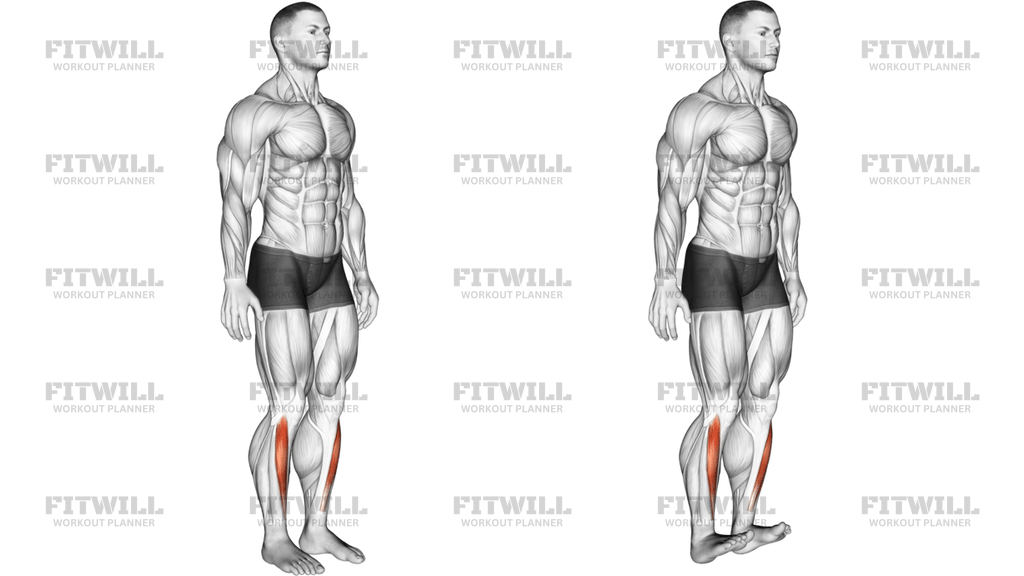
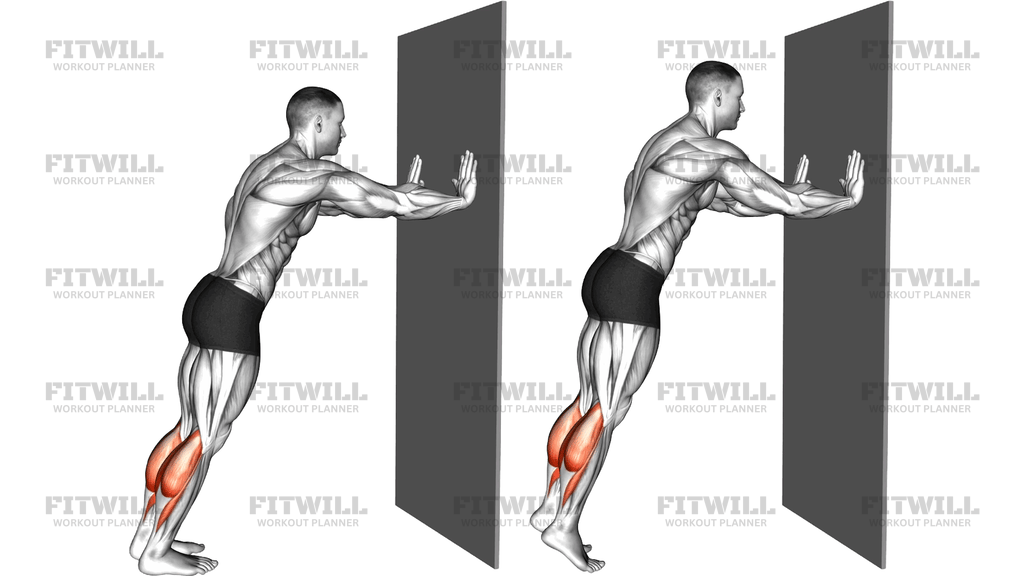
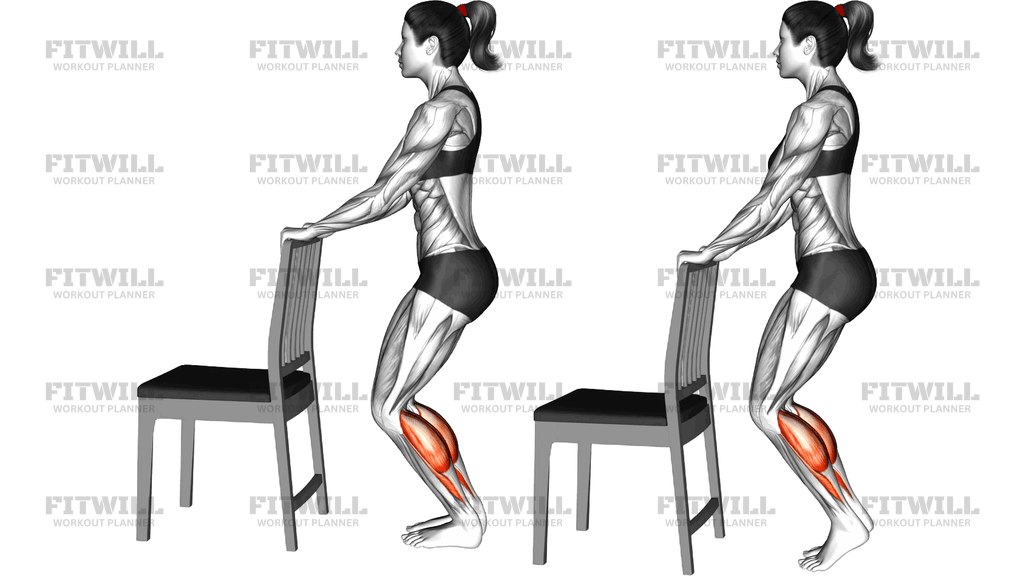
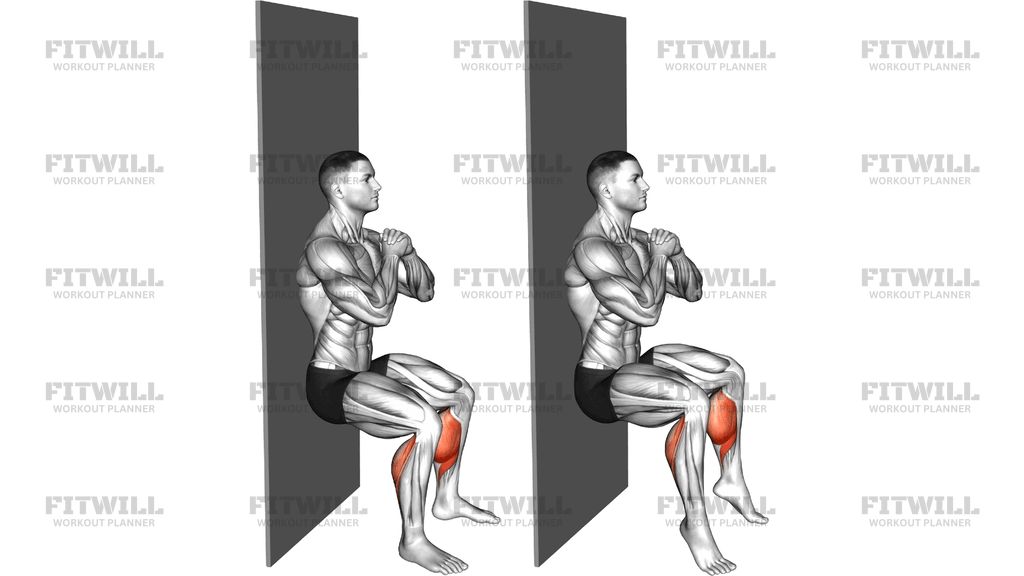
The Bodyweight Calf Raise Wall Sit combines two demanding positions into one exercise: you hold an isometric wall sit with your back flat against a wall and thighs parallel to the floor, then perform calf raises from that seated-angle stance. Because your knees stay bent at roughly 90 degrees, the calf raise mostly bypasses the gastrocnemius, which crosses the knee joint, and shifts the workload onto the soleus, the deep calf muscle that sits beneath it. The right panel of the movement shows the top position, with the heels lifted as high as possible while the thighs, torso, and head stay glued to the wall.
This is one of the most honest ways to train the soleus with no equipment. In a standing calf raise, the gastrocnemius takes the lion's share of the work because the knee is straight. Bend the knee to 90 degrees and the gastrocnemius is put on slack, leaving the soleus to do the lifting. The wall sit frame also removes momentum entirely — you cannot bounce, swing, or lean into the movement, so every rep comes from clean ankle extension.
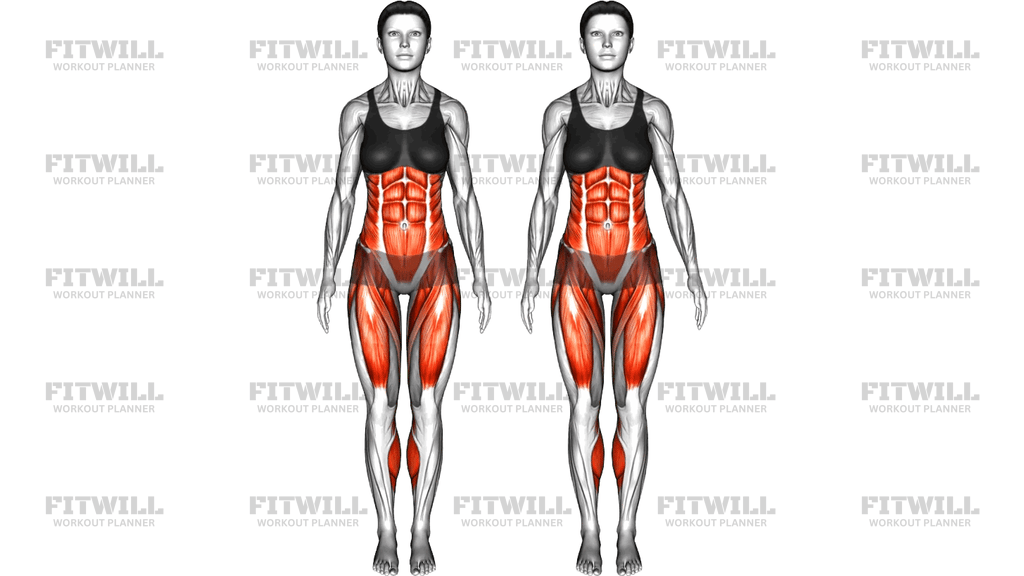
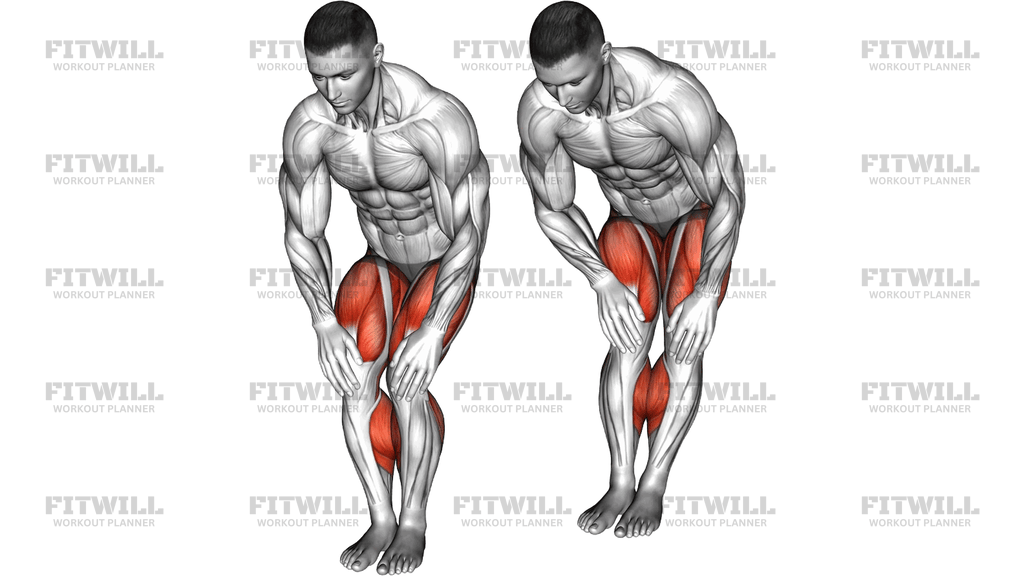
Beyond the calves, the wall sit position itself is real work. Your quads and glutes hold you in place for the entire set, your core braces to keep your back flat against the wall, and the small stabilizers around the ankle and knee get plenty of quiet stimulation. Expect a burning quadriceps hold layered under a deep, cramping sensation in the lower calf — that combination is exactly what makes this exercise effective and uncomfortable in equal measure.
It suits lifters who want bigger, more resilient lower legs without machines or weights, runners and jumpers who need soleus strength for shock absorption, and anyone rehabbing or prehabbing the Achilles region with a controlled, closed-chain movement. Because it needs only a clear stretch of wall, it fits easily into home workouts, warm-ups, or finishers.
Setup matters more here than in most calf work. Slide down until your thighs are parallel to the floor with knees stacked over ankles, plant your feet about hip-width apart, and keep your entire back and head in contact with the wall. If your feet drift too far forward or too close, either your knees ache or the calf range shortens. From there, press through the balls of your feet to lift your heels as high as your ankle allows, pause briefly at the top, and lower with control until your heels touch — or nearly touch — the floor before the next rep.
The main practical warning: the wall sit will usually fail before the calves do. If your thighs give out first, that is normal early on — either shorten the set, raise the squat depth slightly, or accumulate more total reps across shorter holds. Never sacrifice back contact with the wall or let your knees cave inward just to squeeze out extra heel height.
[ Workout Log & Planner ]
Put your next workout in Fitwill
Keep your plan and training log ready when you are.


Instructions
- Stand with your back to a clear, flat wall and walk your feet out about 12 to 18 inches, feet hip-width apart and pointing straight ahead.
- Slide your hips down the wall until your thighs are parallel to the floor, with knees bent about 90 degrees and stacked directly over your ankles — not drifting past your toes.
- Press your entire back, shoulders, and head flat against the wall and clasp your hands together at chest height for balance.
- Brace your core and keep your weight spread across the balls of your feet, heels resting on the floor to start.
- Exhale and press through the balls of both feet to lift your heels as high as possible, driving the ankles into full extension while keeping the thighs and torso locked in the wall sit.
- Hold the top position for one to two seconds and squeeze the calves hard.
- Inhale as you lower your heels slowly toward the floor, taking two to three seconds, until they lightly touch or nearly touch down.
- That controlled lowering is one rep — begin the next lift immediately without letting the heels slam down or the body slide up the wall.
- Keep your back and head in full wall contact for the whole set; if you must lean forward or drop your hips to continue, end the set and rest.
- To finish, slide your back up the wall to standing and shake out the calves and thighs before the next set.
Tips & Tricks
- If your heels will not rise much at first, shorten the range rather than letting your hips lift off the wall — partial reps with clean wall contact beat sloppy full reps.
- The most common mistake is creeping the feet too far from the wall; when the knees extend past the toes and the shins angle forward, the knees take stress and the soleus angle changes. Recheck your shin position between sets.
- If your quadriceps burn out before your calves, raise your hip position an inch or two up the wall for the first few sessions and sink deeper as your wall sit endurance improves.
- Keep the knees tracking over the middle of the foot — letting them cave inward during the heel lift shifts work away from the calves and strains the inner knee.
- A strong top-hold squeeze is where this exercise earns its keep; pausing one to two seconds with heels maximally lifted does more than rushing through extra reps.
- Do not let the heels just hover — lower until they are within an inch of the floor to get a genuine soleus stretch at the bottom of each rep.
- Expect your first few sets to end from thigh fatigue, not calf burn; that is expected, and it fades as your wall sit strength catches up.
- Bare feet or flat, flexible shoes work best — thick, soft-soled sneakers cushion the ball of the foot and shorten the ankle range.
- If the wall sit causes knee discomfort regardless of depth, switch to a seated calf raise with a weight on the knees, which trains the same soleus-biased angle without the isometric hold.
Frequently Asked Questions
What muscles does the Bodyweight Calf Raise Wall Sit work?
It primarily targets the soleus, the deep calf muscle, because the bent-knee wall sit position removes most gastrocnemius contribution. Your quads, glutes, and core also work isometrically to hold the wall sit for the duration of the set.
Why do the knees have to stay bent at 90 degrees during this exercise?
The gastrocnemius crosses the knee joint, so bending the knee to 90 degrees puts it on slack and forces the soleus to do the lifting. Straightening the legs would turn the movement into an ordinary standing calf raise.
Is the Bodyweight Calf Raise Wall Sit suitable for beginners?
Yes, but expect the wall sit hold to be the limiting factor. Beginners can slide down to a shallower squat angle — thighs closer to 45 degrees — and deepen the position over time as leg endurance improves.
How many reps and sets should I do of the Bodyweight Calf Raise Wall Sit?
Start with 2 to 3 sets of 10 to 15 slow reps, or hold each position for time if counting reps feels awkward. Since the soleus is fatigue-resistant and slow-twitch dominant, higher reps and shorter rests tend to work well.
Why do my thighs burn more than my calves during this exercise?
The wall sit is an isometric hold, so your quads and glutes are working continuously while the calves only work during each rep. If your thighs always quit first, raise your hips slightly up the wall or use shorter sets with more total volume.
Can I do the Bodyweight Calf Raise Wall Sit every day?
Daily use is possible for light, moderate-rep sets since the load is low, but treat harder sessions — long holds, slow tempos, high reps — like any strength workout and allow a day of recovery between them.
What can I use instead of a wall for the Bodyweight Calf Raise Wall Sit?
Any stable vertical surface works, including a sturdy door, a squat rack upright, or a tree outdoors. Alternatively, hold a heavy goblet-style weight at chest level in a static lunge or seated position and perform calf raises from there, though the wall gives the cleanest position feedback.
My heels barely lift during this exercise — is that a form problem?
Usually it is a strength issue, not a form error, since the soleus works hardest in exactly this bent-knee position and is often undertrained. Keep your feet directly under your knees, reduce the depth slightly if needed, and build up with partial-range reps before chasing full heel height.
Is this exercise safe for the knees and Achilles?
With knees stacked over the ankles and the back flat on the wall, the position is generally joint-friendly, and the slow tempo makes it a common choice for controlled lower-leg work. If you have an active knee or Achilles injury, clear it with a qualified professional first and start with a shallow wall sit and partial range.