Lying Stretch
The Lying Stretch is a full-body floor stretch performed on your back with the arms extended overhead and the legs reaching long along the mat. From that lengthened position, you gently elongate the entire front and side of the body, with the greatest pull felt through the lats, chest, shoulders, and hip flexors. It is one of the simplest stretches to set up, requiring nothing more than a mat or soft floor surface.
This movement is especially useful first thing in the morning, after long periods of sitting, or as a closing stretch at the end of a training session. People who spend their day at a desk often develop tightness across the chest and shortened hip flexors, and lying flat with the arms overhead directly counters that folded-forward posture. It is also a common cool-down choice after back and pulling workouts, when the lats have been heavily worked and benefit from a long, held stretch.
The setup matters more than it might seem. Because the whole body is involved, small details change where you feel the stretch: how far overhead you reach, whether your lower back presses toward the floor, and whether your legs stay relaxed or actively reach away from you. Rushing into the position with an arched back or shrugged shoulders shifts tension into the joints instead of the muscles, which reduces the benefit and can feel uncomfortable.
To perform it well, lie on your back, extend both arms overhead with the palms facing up or inward, and lengthen the legs until the whole body forms one long line. Inhale deeply, and as you exhale, reach the fingers and toes in opposite directions while letting the ribs settle down toward the floor. Hold the position with slow, steady breathing, allowing the stretch to deepen gradually rather than forcing it.
Because it is gentle and self-paced, the Lying Stretch suits nearly everyone, from beginners to experienced lifters. Keep the intensity at a level where you feel a comfortable pull rather than pain, especially through the shoulders and lower back. If reaching fully overhead bothers your shoulders, simply lower your arms slightly and work within a range that feels calm and sustainable.
[ Workout Log & Planner ]
Put your next workout in Fitwill
Keep your plan and training log ready when you are.


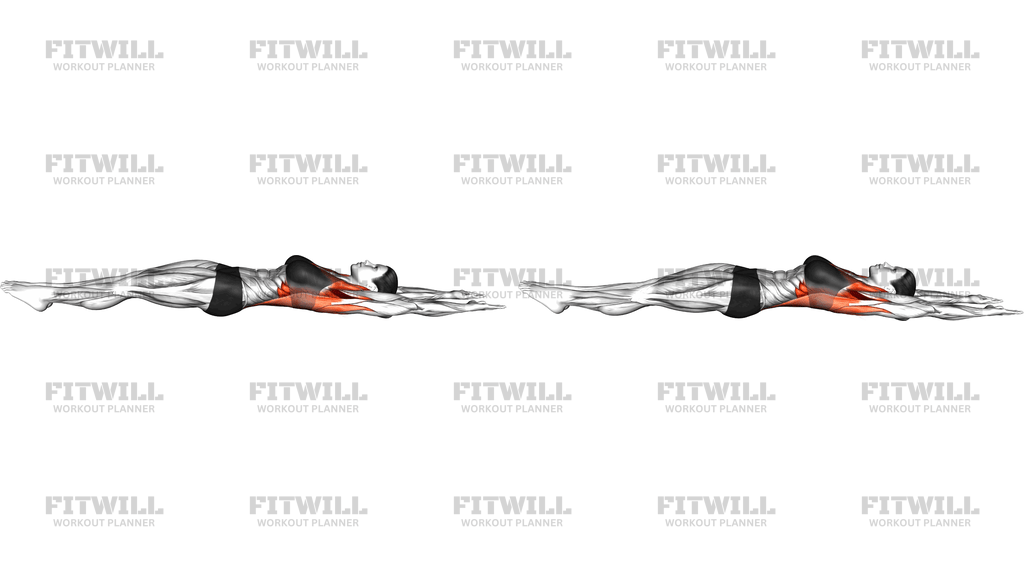
Instructions
- Lie flat on your back on an exercise mat with your legs extended and your feet relaxed.
- Extend both arms straight overhead so they rest alongside or just above your ears, palms facing up.
- Lengthen your neck by letting the back of your head rest heavy on the mat and your gaze point toward the ceiling.
- Take a slow breath in through your nose, letting your ribcage expand.
- As you exhale, reach your fingers and toes away from each other so your body elongates into one long line.
- Gently draw your lower ribs toward the floor so your lower back stays close to the mat instead of arching sharply.
- Hold the lengthened position for 20 to 40 seconds, breathing slowly and letting the stretch deepen with each exhale.
- Release the reach, let your arms settle wherever they are comfortable, and rest for a few breaths.
- Reset and repeat for 2 to 3 rounds, or move on to your next stretch while your body is still warm and relaxed.
Tips & Tricks
- If your lower back arches off the mat when your arms go overhead, lower your arms to a 45-degree angle; the stretch through the lats and chest remains strong without straining the spine.
- Avoid shrugging your shoulders up toward your ears as you reach — press the backs of your upper arms toward the floor to keep the stretch in the lats and chest rather than the neck.
- Keep the reach effort low and steady. Actively straining to lengthen makes the muscles guard and shortens the stretch instead of deepening it.
- Point your toes or pull them gently back and notice the difference — flexing the feet usually adds a line of stretch up the calves and hamstrings.
- If one side feels tighter, shift your extended arms and legs slightly toward that side to bias the stretch through the tight lat or hip.
- Breathe out fully during the hold; a complete exhale lets the ribcage drop and typically deepens the chest and lat stretch more than pulling harder with the arms.
- Do this stretch after training rather than before heavy lifting, since long-held static stretching of the lats and hips can temporarily reduce force output.
- If lying flat with arms overhead causes tingling in your hands, bend your elbows slightly or place a small cushion under your upper back to reduce shoulder extension.
Frequently Asked Questions
Which muscles does the Lying Stretch target?
The main pull is felt through the lats along the sides of the back, with supporting stretch through the chest, front shoulders, hip flexors, and abdominals. Reaching actively with the feet also adds a mild line through the calves and thighs.
Is the Lying Stretch good for beginners?
Yes, it is one of the most beginner-friendly stretches because the floor supports your whole body and you control the intensity entirely through how far you reach. Start with short 20-second holds and modest reach.
Why do I feel the Lying Stretch mostly in my shoulders instead of my back?
Your shoulders are likely shrugged toward your ears or your arms are extended further overhead than your shoulder mobility allows. Lower the arms slightly and relax the upper traps so the tension moves into the lats and chest.
Should my lower back stay flat on the floor during the Lying Stretch?
It should stay close to neutral, not pressed hard down and not sharply arched. If your ribs flare up and your back arches when reaching overhead, reduce the arm angle until you can keep the ribs settled.
How long should I hold the Lying Stretch?
Hold for 20 to 40 seconds per round and repeat 2 to 3 times. Longer holds of up to a minute are fine after workouts or before bed as long as breathing stays relaxed.
Can I do the Lying Stretch in bed?
You can, but a mattress is too soft to give you clear feedback about rib and hip position. A firm mat or floor gives a better stretch and makes it easier to notice arching or shifting.
What can I use instead if lying flat is uncomfortable?
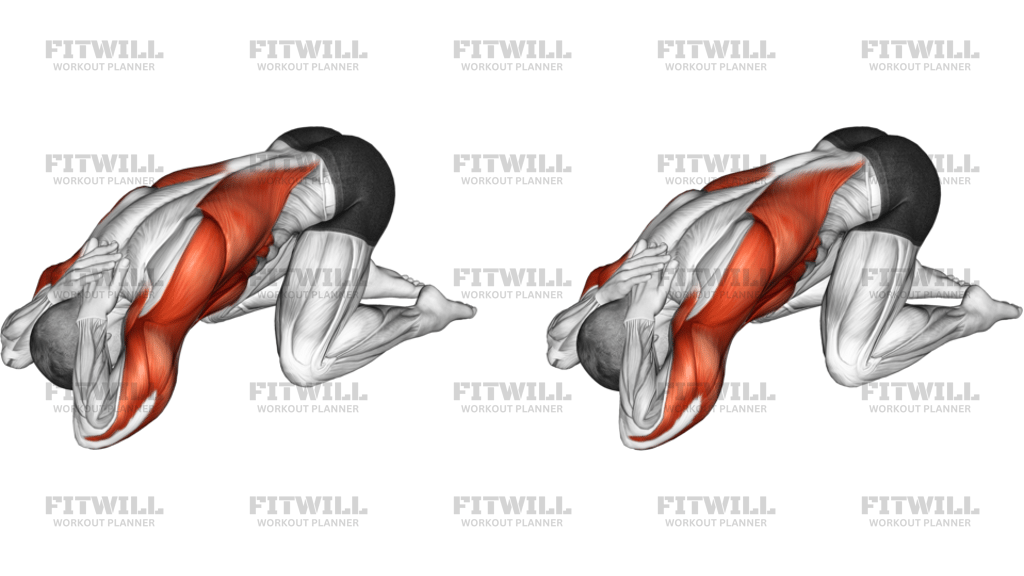
A standing overhead reach against a wall, a child's pose with arms walked to one side, or a kneeling lat stretch on a bench all target similar tissue. Choose the position where you can breathe easily and hold without discomfort.
When is the best time to do the Lying Stretch?
It works well as a morning wake-up, a desk-break reset, or a cool-down after pulling, core, or full-body sessions. Avoid long static holds immediately before heavy pressing or pulling training.
Is it normal for the Lying Stretch to feel different on each side?
Yes, side-to-side differences are common, especially if you favor one arm in training or habitually sit rotated toward one side. Bias the reach slightly toward the tighter side and keep the difference shrinking gradually rather than forcing symmetry.