Tip Toes
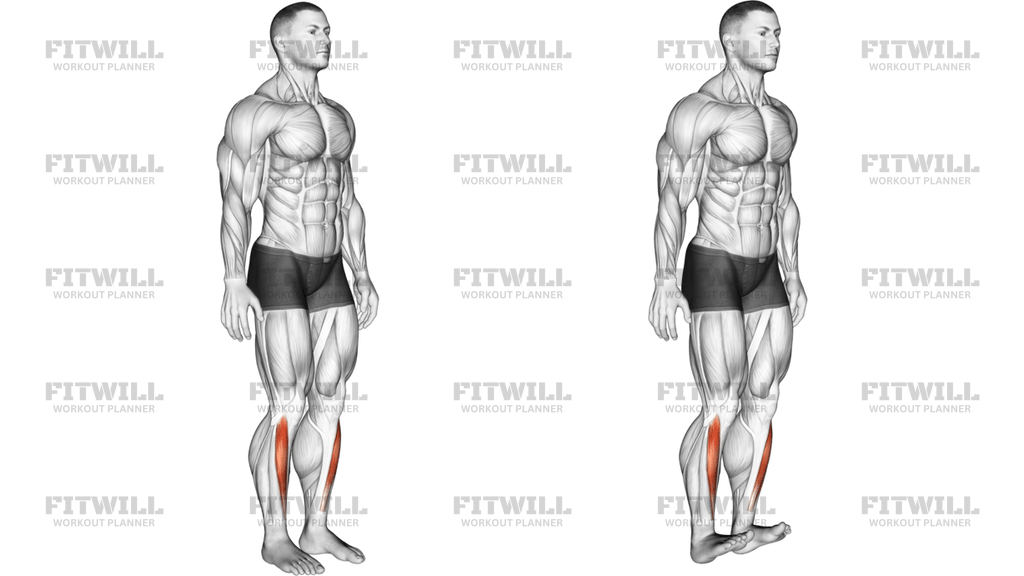
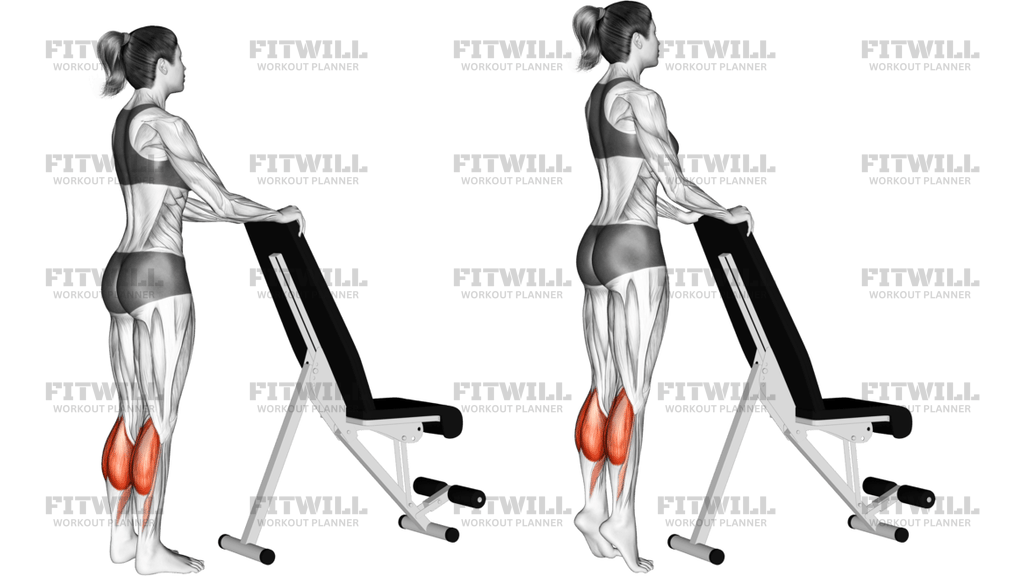
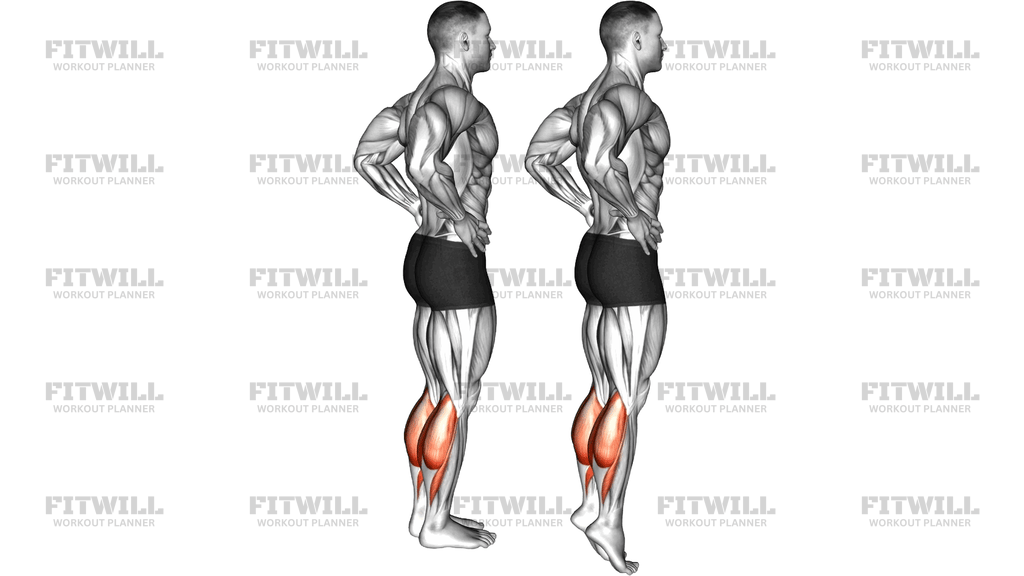
Tip Toes is the simplest calf builder there is: you stand tall, rise onto the balls of your feet as high as you can, pause at the top, and lower your heels back down under control. No equipment, no setup, no gym required. The image shows the movement from the side, with the heels lifted fully off the floor and the calf muscles doing all the work while the rest of the body stays upright and still.
This exercise primarily targets the gastrocnemius, the large visible muscle of the calf, with the soleus underneath it assisting throughout the raise. The smaller muscles around the ankle and foot, including the peroneals and the deep muscles of the lower leg, work to keep you balanced on a narrowing base of support. Because you're standing on one base with both feet, the balance demand is modest but real, especially at the top of the rep when your contact patch with the floor is smallest.
Tip Toes is useful for almost anyone. Beginners use it to build basic lower leg strength before moving to loaded calf raises. Runners, jumpers, and court-sport athletes use it to condition the calves and achilles for repeated push-off. Older adults use it because strong calves and good ankle strength directly support walking, stair climbing, and fall prevention. It also works well as a warm-up before heavier calf work or as a burnout finisher at the end of a leg session.
Execution looks easy but is easy to do sloppily. Stand with your feet about hip-width apart, weight distributed over the balls of your feet, and your posture tall. Rise by pressing through the big toe and ball of the foot, not by rocking backward onto the toes or leaning forward. The heels should travel straight up and straight down. At the top, lift as high as your range allows and hold briefly so the calf contracts fully instead of bouncing through the peak.
The main form points are keeping the knees straight but not locked, avoiding a forward or backward lean, and lowering the heels slowly rather than dropping them. Because the calves are accustomed to constant low-level work from walking, they respond best to a full range of motion and a deliberate pause at the bottom stretch, where the heel drops slightly below floor level if you're standing on a flat surface or step edge. Start with bodyweight sets of 15 to 25 reps and progress by adding reps, slowing the tempo, or moving to single-leg or weighted versions once those feel easy.
[ Workout Log & Planner ]
Put your next workout in Fitwill
Keep your plan and training log ready when you are.


Instructions
- Stand upright with your feet about hip-width apart, toes pointing forward or turned out very slightly, and let your arms hang naturally or rest your hands on your hips.
- Shift your weight so it sits over the balls of your feet, and brace your core lightly so your torso stays tall throughout the set.
- Keep your legs straight but not locked, and look straight ahead rather than down at your feet.
- Press through the balls of your feet and your big toes to lift your heels straight up off the floor as high as your range allows.
- Squeeze the calves hard at the top and hold the peak position for one to two seconds without letting your ankles wobble.
- Lower your heels slowly back to the floor over two to three seconds, resisting the drop instead of letting gravity take over.
- Let the heels touch down fully, take a brief pause, and feel a light stretch in the calves before starting the next rep.
- Exhale as you rise onto your toes and inhale as you lower your heels back down.
- Keep the movement rhythm steady, and reset your stance if you feel yourself swaying or shifting your weight between feet.
Tips & Tricks
- The most common mistake is bouncing through the reps. The elastic rebound from the achilles lets you skip the hardest part of the rep, so pause for a beat at both the top and the bottom.
- If you rock backward onto your heels as you rise, you're shifting the work away from the calves. Keep your chest stacked over your hips and drive the pressure through the big toe.
- Don't bend your knees to get extra height. That changes the mechanics and pulls the soleus into a shortened position while reducing the gastrocnemius contribution.
- A partial range robs the calves of the stretch at the bottom. Let the heels drop all the way down between reps even if it means fewer total reps.
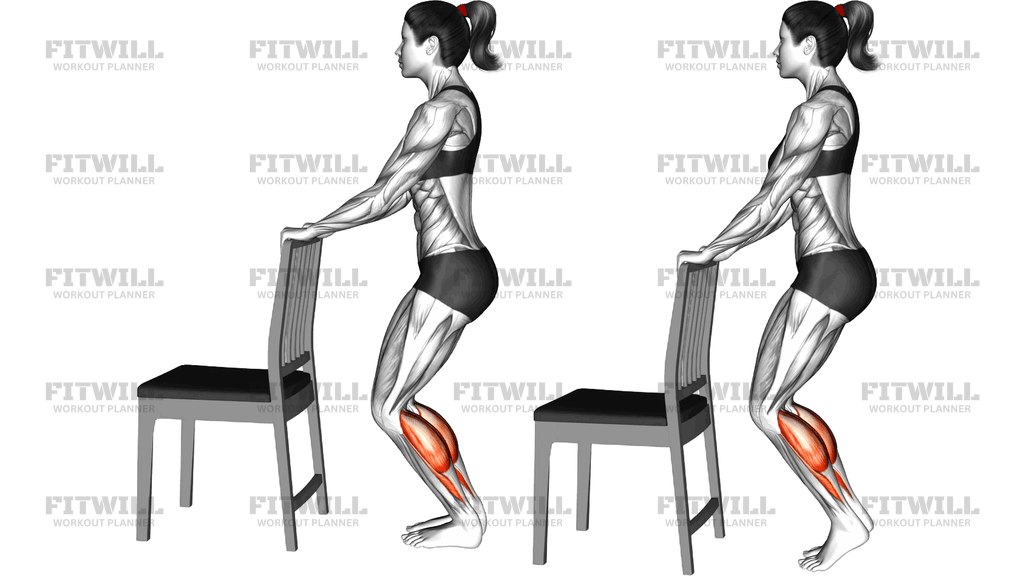
- If balance is shaky, stand next to a wall or chair and rest one or two fingertips on it for support. Avoid gripping hard, since pulling on the support changes your posture.
- Once two-footed reps feel easy, progress to single-leg Tip Toes before adding external weight. Holding one foot off the floor roughly doubles the load on each calf.
- Point your toes straight ahead rather than sharply outward. A big toe-out stance makes it easier to roll onto the outer edge of the foot and reduces peroneal involvement.
- Calf soreness tends to linger, so leave at least 48 hours between hard calf sessions and ease into higher rep ranges over the first few weeks.
Frequently Asked Questions
What muscles does Tip Toes work?
The gastrocnemius, the large superficial calf muscle, is the main mover, with the soleus underneath it assisting on every rep. The ankle stabilizers and small muscles of the foot also work to keep you balanced as your base of support narrows.
Is Tip Toes a good starting point for beginners?
Yes, it's one of the safest ways to introduce calf training because the load is only your bodyweight and the range is easy to control. Beginners should aim for smooth, full-range reps before progressing to single-leg or weighted versions.
Should my knees be straight or bent during Tip Toes?
Keep your knees straight but not locked. Straight knees put the gastrocnemius in its strongest position, while bent knees shift more of the work toward the soleus.
How many reps should I do of Tip Toes?
Most people do well with 2 to 4 sets of 15 to 25 reps using bodyweight. Once you can complete all sets at the top of that range with a full pause at the top and a slow lower, progress to single-leg reps.
Why do my calves cramp when I rise onto my toes?
Calf cramps during Tip Toes are common because the muscle works in a shortened position, especially at the top of the rep. Stay hydrated, warm up with a few easy reps first, and briefly stretch the calves between sets if cramping shows up.
Can I do Tip Toes every day?
Light, easy sets can be done most days, but challenging sets that leave the calves sore need about 48 hours of recovery. Treat hard sessions like any other strength training and rotate intensity.
How do I make Tip Toes harder without equipment?
Move to single-leg reps, slow the lowering phase to three or four seconds, or stand on a step so your heels can drop below the level of your toes for a deeper stretch. Each of these increases the demand without adding weight.
Can I hold a wall or chair for balance during Tip Toes?
Yes, resting one or two fingertips on a wall or chair is a smart way to stay steady, especially at the top of the rep. Keep the contact light so your legs, not your arms, control the movement.
Is it safe to do Tip Toes with ankle or achilles discomfort?
Mild muscle fatigue is normal, but sharp pain at the achilles or ankle is a signal to stop. Reduce the range and reps first, and if discomfort persists, have it assessed before continuing.