Seated Alternate Dynamic Chest Stretch On A Chair
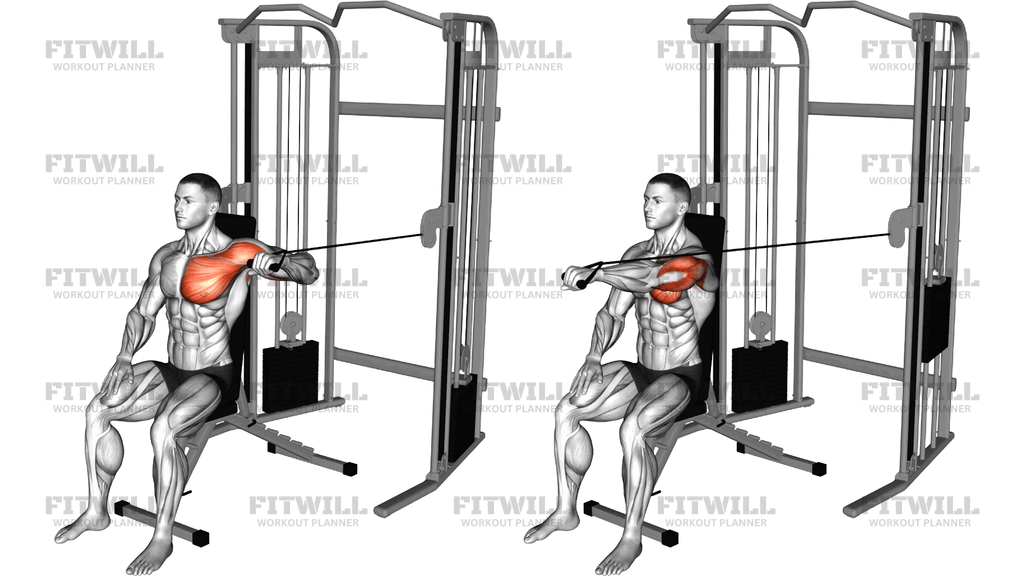
The Seated Alternate Dynamic Chest Stretch On A Chair is a mobility drill for the chest that you perform from a simple upright chair. You sit tall with your feet flat on the floor, extend both arms forward at chest height with the hands together, and then rhythmically open one arm out to the side at a time while the other stays extended in front of you. The switching, moving rhythm is what makes it dynamic, and the alternating pattern means each side of the chest gets a short, repeated stretch rather than one long static hold.
This drill is especially useful for anyone whose chest muscles sit in a shortened position for long stretches of the day. Desk workers, drivers, and people who spend hours at a keyboard tend to develop rounded shoulders and tight pectorals, and this movement gives those tissues regular motion without requiring any equipment beyond a chair. It also works well as a warm-up before pressing exercises like push-ups or bench presses, or as a reset between long work sessions.
The main muscles targeted are the pectorals, with the sternal head of the chest receiving most of the stretch as the arm opens out and back. The front of the shoulders assists the movement, and simply holding the arms straight out at chest height for the duration of the set lightly engages the muscles of the upper back and arms to maintain the position.
Setup matters more than it might seem. Sitting tall with a neutral spine lets the ribcage stay stacked over the pelvis, which allows the stretch to land in the chest instead of being absorbed by slouching or arching the lower back. Keep the chair stable and, if it has a backrest, sit forward on the seat so you are supported by your own posture rather than leaning back against it.
To execute the movement well, reach both arms straight forward at shoulder height with the palms touching or the fingers interlaced. Then open one arm out to the side, palm turning upward, until you feel a comfortable stretch across that side of the chest, and bring it back as the other arm opens. The switch should be smooth and continuous, almost like a slow, controlled swimming motion. Keep the stretch in a range that feels like a pull, never a pinch in the shoulder joint.
A practical safety point: because the arms are unsupported and moving, it is easy to let momentum take over and swing wider than the shoulder tolerates. Keep the tempo deliberate, stay below the point of discomfort, and reduce the range if you feel any catching or sharp sensation in the front of the shoulder.
[ Workout Log & Planner ]
Put your next workout in Fitwill
Keep your plan and training log ready when you are.


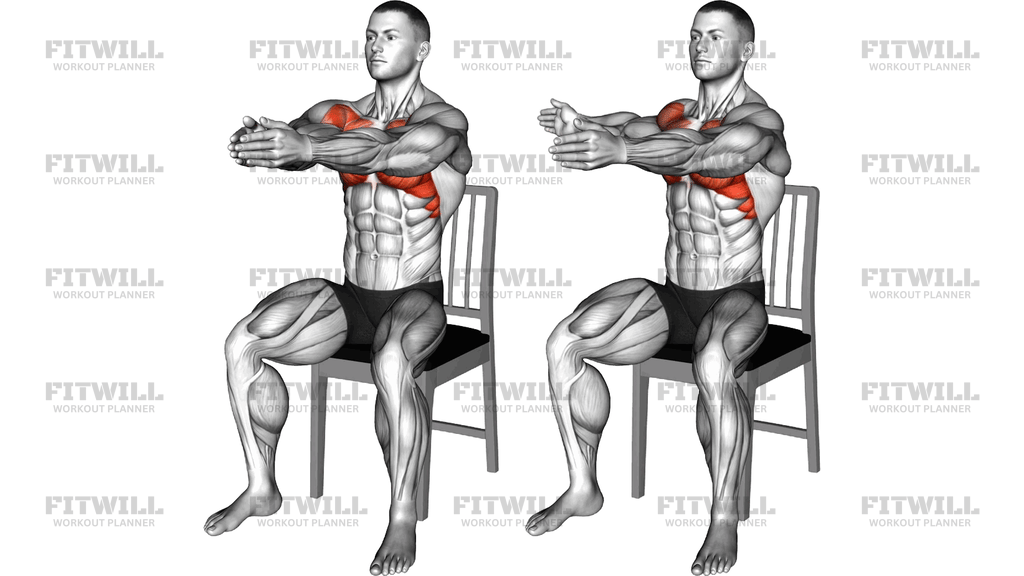
Instructions
- Sit upright on a stable chair with your feet flat on the floor, roughly hip-width apart, and sit forward enough that you are not leaning on the backrest.
- Extend both arms straight out in front of you at chest height, elbows nearly locked, with the palms pressed together or the fingers lightly interlaced.
- Roll the shoulders back and down, brace the trunk lightly, and keep the ribs stacked over the hips so the lower back does not arch.
- Inhale, then exhale as you open the right arm out to the side at chest height, turning the palm to face upward until you feel a stretch across the right chest.
- Bring the right arm back to center and immediately open the left arm out to the side in the same way, keeping the right arm extended forward.
- Continue alternating sides in a smooth, continuous rhythm, spending about two to three seconds on each side.
- Exhale as each arm opens outward and inhale as it returns to center, keeping the breath steady throughout.
- Maintain the same chest-height arm path on every rep, avoiding any drift upward toward the shoulders or downward toward the lap.
- Complete your desired number of alternations per side, then lower the arms slowly and roll the shoulders once or twice before the next set.
Tips & Tricks
- The most common mistake is letting the lower back arch as the arm opens outward. This steals the stretch from the chest, so keep the trunk braced and imagine the movement starting from the shoulder, not the spine.
- Keep the open arm at chest height, not above it. Reaching too high shifts the tension into the shoulder joint and neck instead of the pectorals.
- If the front of the shoulder pinches when the arm opens back, shorten the range slightly. A productive chest stretch feels like a pull across the pec, not a sharp pinch in the joint.
- Press the palms together in the starting position to wake up the chest before the first opening. This small squeeze makes the stretch on each side easier to feel.
- Do not rush the alternation. The dynamic quality comes from smooth continuous switching, not from speed, and rushing usually causes the shoulders to ride up toward the ears.
- If your arms fatigue from holding them straight out, shorten the set rather than letting the elbows bend, since bent elbows dramatically reduce the chest stretch.
- Check that your chin stays level. Jutting the head forward as the arms work is a common habit when sitting on a soft or low chair.
- A firm dining-style chair works better than a deep or cushioned armchair, which makes it hard to sit tall with the feet planted.
- Use this as a pre-pressing warm-up with about ten alternations per side, or as a mid-day desk reset with two or three short sets.
Frequently Asked Questions
Which muscles does the Seated Alternate Dynamic Chest Stretch On A Chair target?
It primarily stretches the pectorals across the sternal head, with some involvement of the upper chest when the arm opens. The front of the shoulders moves along with the chest, so it also gets a light stretch.
Is the alternate arm opening better than holding a static chest stretch?
They serve different purposes. The alternating rhythm repeatedly takes the chest into and out of the stretch, which makes it a good warm-up choice, while static holds are better suited for post-workout or evening mobility work.
How high should my arms be during the Seated Alternate Dynamic Chest Stretch On A Chair?
Keep both the extended and opening arm at chest height throughout the entire set. This keeps the tension on the pectorals and protects the shoulder from unnecessary stress.
Can beginners do this stretch safely?
Yes, it is very beginner friendly because it requires no equipment beyond a chair and no load on the joints. Beginners should simply use a smaller opening range and a slower tempo until the movement feels familiar.
Why do I feel this more in my shoulder than my chest?
This usually means the arm is opening too far back or drifting above chest height, which loads the shoulder joint instead of the pec. Pull the range in slightly and keep the palm turning upward as the arm opens to refocus the stretch on the chest.
What kind of chair works best for this exercise?
A stable, firm chair without armrests is ideal, because armrests block the outward arm path. Sit forward on the seat with your feet flat so your own posture, not the backrest, holds you upright.
How many repetitions should I do per side?
Around eight to twelve smooth alternations per side works well for a warm-up, and you can repeat that for two to three rounds. Since it is a low-load mobility drill, doing more volume carries little benefit if the range stays small and controlled.
Can I substitute this stretch if I do not have a chair available?
Yes, the same alternating arm-opening pattern works standing with a tall posture or kneeling on the floor. The seated version simply makes it easier to keep the trunk stable and the arms at a fixed height.
When is the best time to use the Seated Alternate Dynamic Chest Stretch On A Chair?
It fits well before pushing workouts, between long bouts of sitting, or any time the chest feels tight and restricted. Because it is dynamic and gentle, it is less ideal as a long-duration cool-down stretch.
Is it normal to hear or feel clicking in the shoulder during this stretch?
An occasional pain-free click is common and usually harmless, but if it comes with discomfort, reduce the opening range or slow the tempo. Persistent pain with the movement is a reason to skip the drill and seek professional advice.