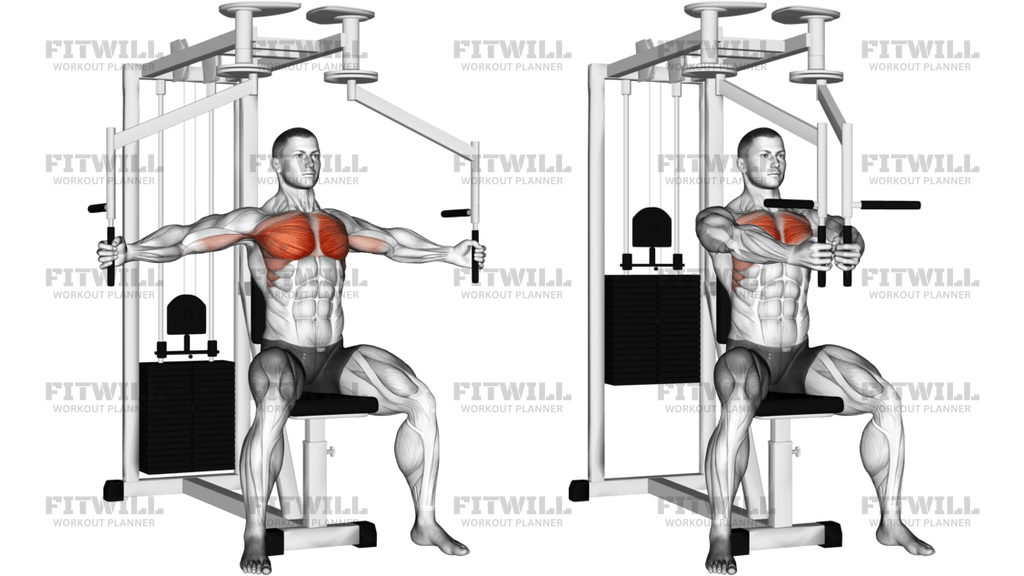
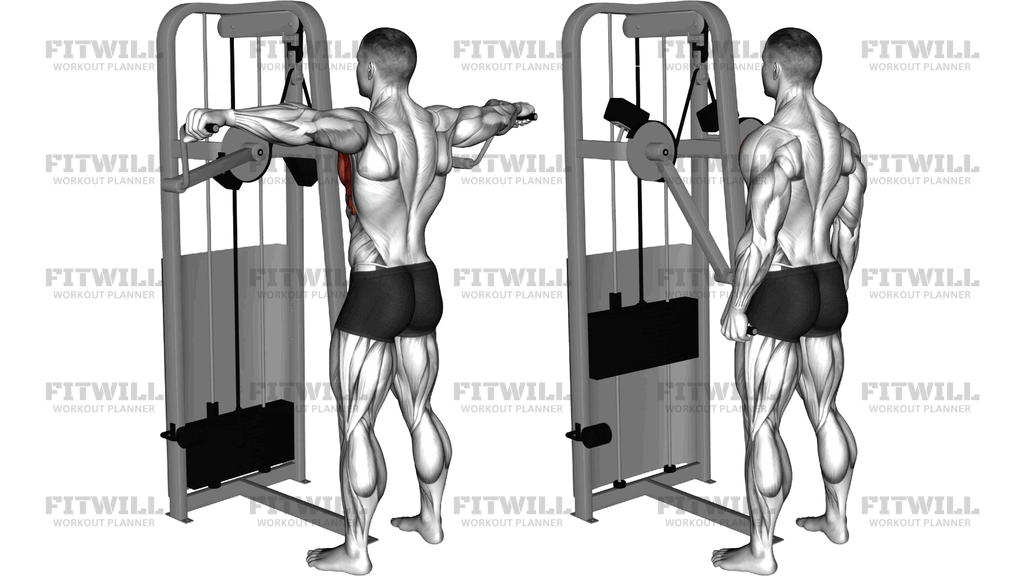
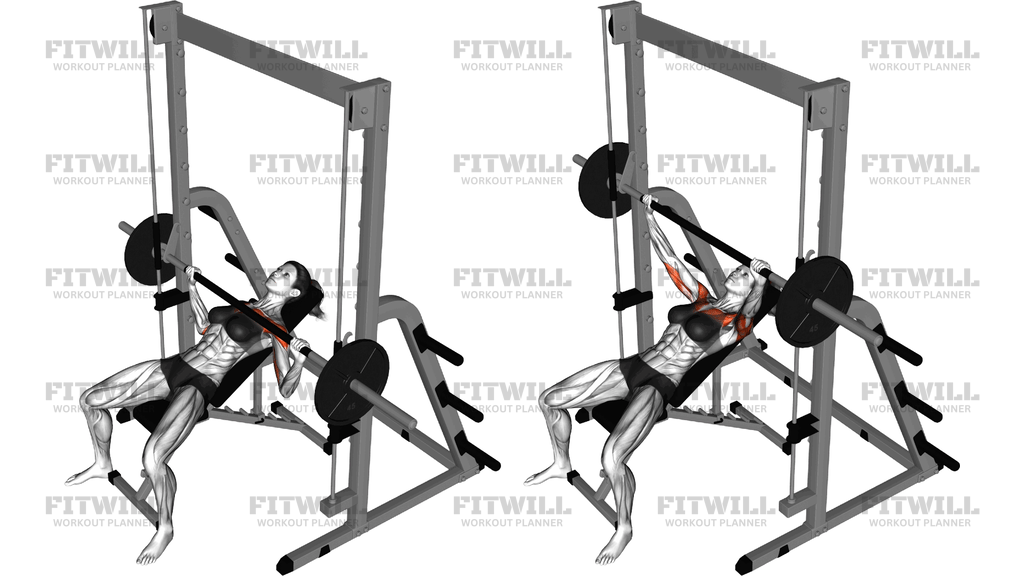
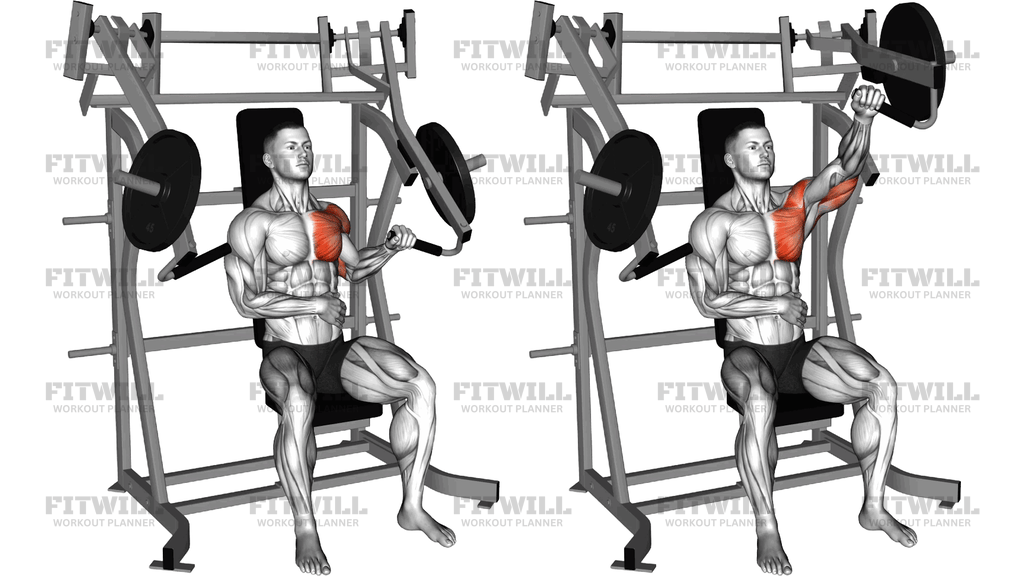
Lever Lying Chest Press Plate Loaded
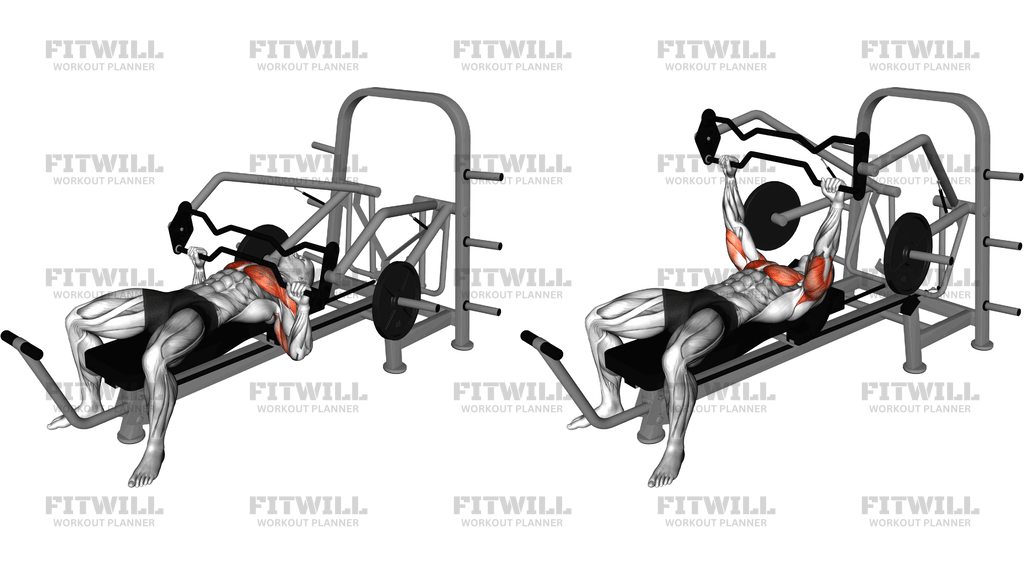
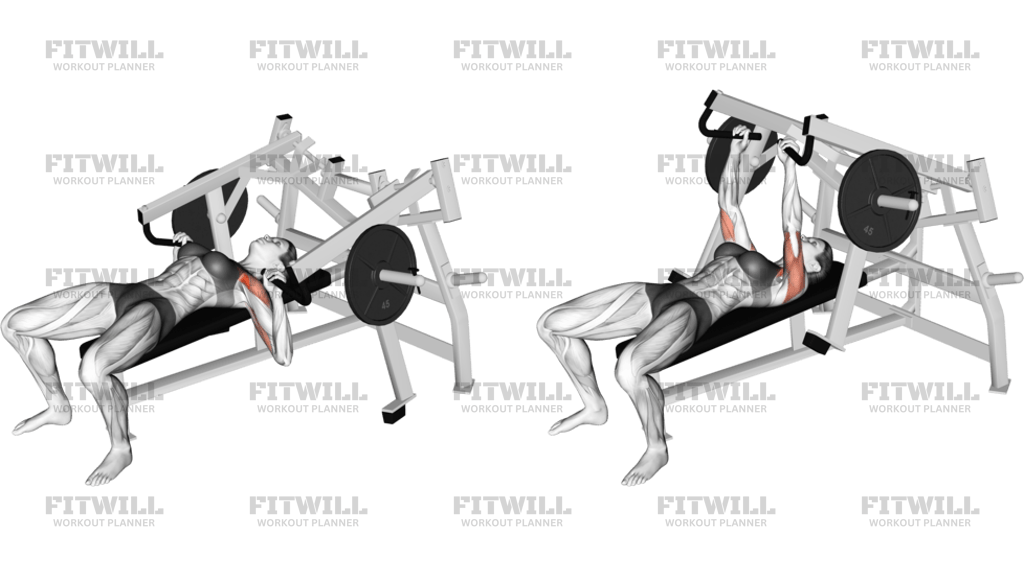
Lever Lying Chest Press Plate Loaded is a machine-based horizontal press done while lying back on a padded bench and driving plate-loaded lever arms away from the chest. The guided path makes it easier to focus on pressing force through the pecs while the shoulders and triceps assist, so the exercise is useful for building chest strength and size without the balance demands of a free-weight press.
The setup is the main determinant of how well this movement feels. Adjust the seat or bench so the handles line up with mid-chest, then lie back with the head, upper back, and hips supported by the pad. Plant both feet firmly, keep the ribcage stacked without over-arching, and set the shoulder blades back and down before you unrack or start the first rep. That position gives the chest a stable base to press from and keeps the front of the shoulders from taking over too early.
Each repetition should travel on the machine's natural arc, not in a straight line forced by the hands. Press the handles up and slightly forward until the arms are almost straight, but do not slam into a hard lockout or shrug the shoulders toward the ears. On the way down, let the handles return under control until the chest gets a strong but comfortable stretch and the elbows are below shoulder level only as far as your shoulders tolerate cleanly. Breathing should stay rhythmic: exhale through the press, inhale on the return.
Because this is a fixed-path press, small setup changes matter more than they do on a barbell bench. A seat that is too high usually turns the press into more shoulder work, while a seat that is too low can shorten the chest range and make the wrists bend back. Match both sides of the machine before loading heavier plates, keep the wrists stacked over the forearms, and use a tempo that lets you own the bottom position instead of bouncing out of it.
This exercise fits well in chest-focused sessions, upper-body hypertrophy work, or as an accessory after heavier presses. It is also a practical option for beginners who need a more controlled pressing pattern, provided the load stays light enough to keep the scapulae, elbows, and wrists organized. If the shoulders feel pinchy, shorten the range slightly, lighten the load, and recheck the seat height rather than forcing more depth.
[ Workout Log & Planner ]
Put your next workout in Fitwill
Keep your plan and training log ready when you are.


Instructions
- Set the seat or bench height so the handles line up with mid-chest, then lie back with your head, upper back, and hips supported by the pad.
- Plant both feet flat on the floor and keep your ribs stacked over your pelvis instead of over-arching your lower back.
- Grip the handles with straight wrists, then pull your shoulder blades back and down to set the chest before you press.
- Start with your elbows slightly below shoulder level and your forearms angled so the handles feel balanced in your hands.
- Exhale as you press the handles up and slightly forward in a smooth arc, following the machine's lever path.
- Stop just short of a hard lockout so the shoulders stay down and the elbows do not snap straight.
- Inhale as you lower the handles slowly until your chest gets a strong stretch without the shoulders rolling forward.
- Reset each rep with the same shoulder position and foot pressure, then repeat for the planned number of repetitions.
Tips & Tricks
- If the handles start too high on the chest, lower the seat; if they start too low, raise it until the press line feels like a natural mid-chest push.
- Keep the wrists stacked over the knuckles instead of bending them back, especially when the load gets heavy.
- A slight elbow tuck usually keeps the front of the shoulders happier than a wide flare.
- Lower the arms slowly enough that you can feel the pecs lengthen, but not so deep that the shoulders tip forward off the pad.
- Do not chase a hard lockout if it pushes the shoulders up; a controlled near-lockout is usually the better finish point on this machine.
- Press the two lever arms evenly so one side does not drift ahead of the other.
- If your hips lift or your ribcage pops up, the load is too heavy or the seat is set badly.
- Use plates that let you own the bottom position instead of bouncing out of the stretch.
- Keep the neck long and relaxed so the press effort stays in the chest and triceps instead of creeping into the upper traps.
Frequently Asked Questions
What muscles does the Lever Lying Chest Press Plate Loaded work most?
The chest is the main mover, with the front shoulders and triceps helping through the press.
Can beginners perform this exercise?
Yes. The guided lever path makes it a good beginner press as long as the seat height and load are set correctly.
Where should the handles start before each rep?
They should line up around mid-chest so you can press without shrugging or reaching too high.
Should my elbows flare out on the lever press?
No. A moderate tuck usually keeps the shoulders in a better position and keeps more tension on the chest.
How low should I lower the handles?
Lower them until you feel a solid chest stretch, but stop before the shoulders roll forward or the front of the joint feels pinched.
Why do my shoulders take over on this machine?
The seat is often too high, the elbows are flared too wide, or the range is deeper than your shoulders can control.
Is this better than a barbell bench press?
It is not better, just different. The machine gives more stability and a fixed path, which can make chest-focused work easier to isolate.
How should I progress the exercise?
Add reps or load only if the seat position, wrist alignment, and shoulder position stay the same from set to set.