Pendulum Leg Plus
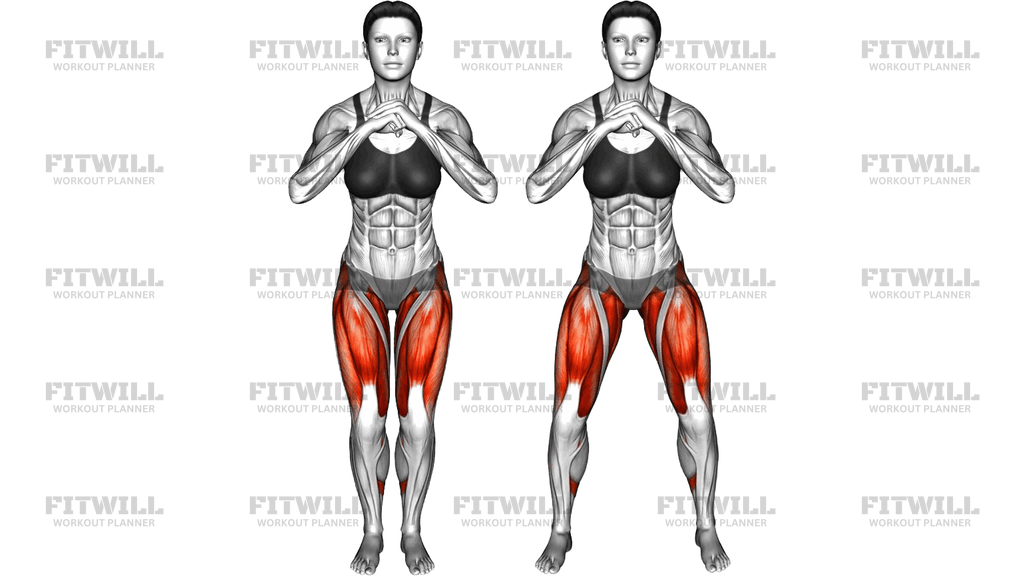
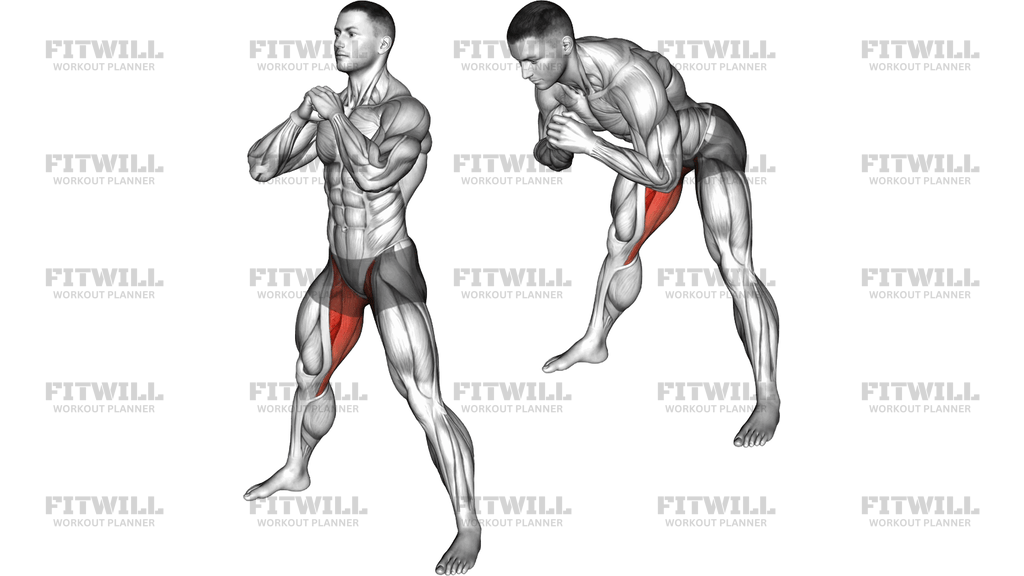
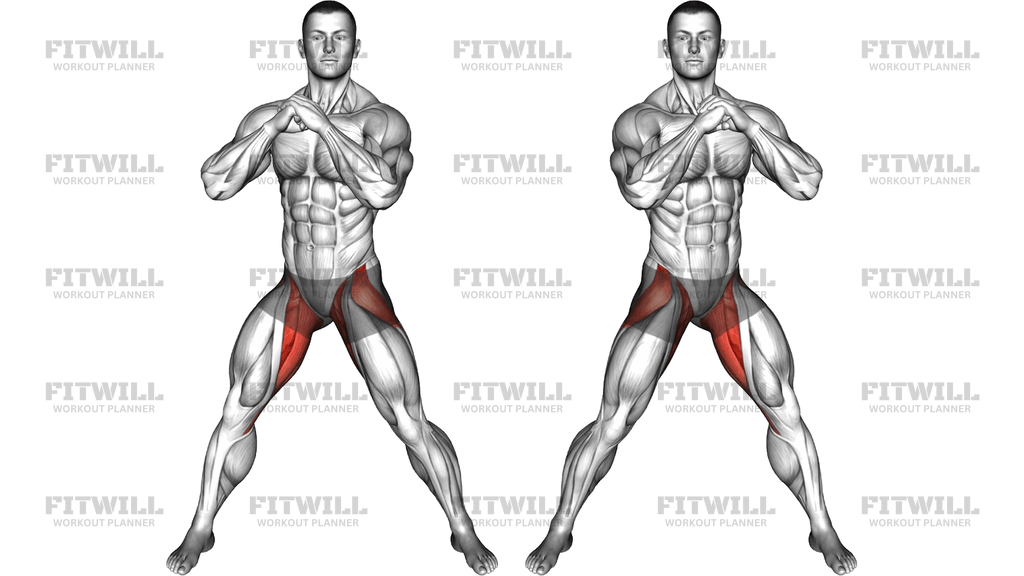
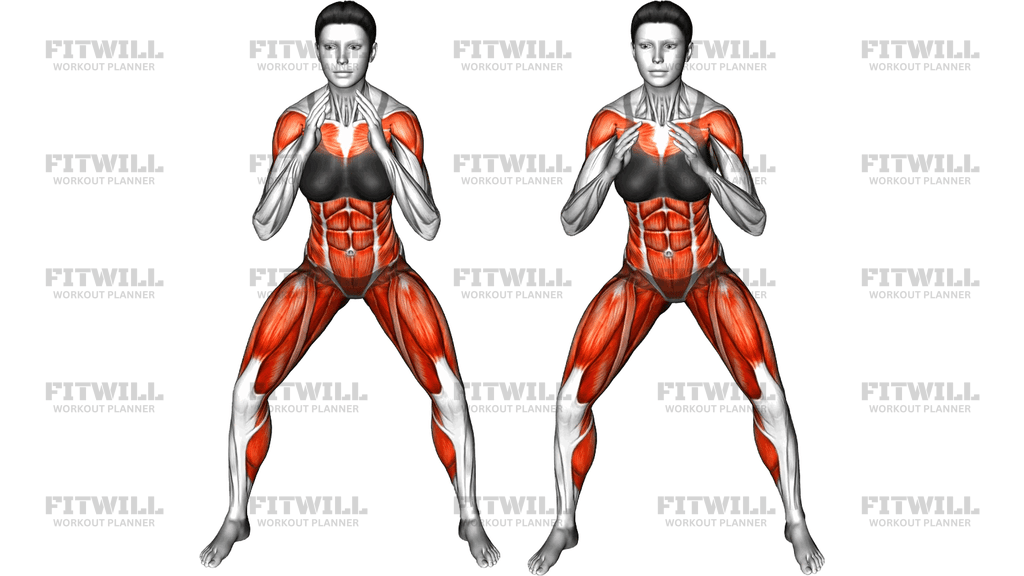
Pendulum Leg Plus is a body-weight standing exercise where you hold a wide, bent-knee stance and rhythmically shift your weight from one leg to the other in a smooth, swinging arc, like the bob of a pendulum. The hands stay lifted at chest height, which raises the center of gravity and forces the trunk and hip stabilizers to work harder as the load swings from side to side. Because both feet stay planted the entire time, it is a lateral weight-shift drill rather than a step-out side lunge, and the emphasis sits squarely on the inner thighs, outer hips, and quads.
This movement is especially useful for anyone who wants to build hip adductor strength and lateral control without equipment or heavy loading. The adductors on the inner thigh work eccentrically as the weight travels away from the working leg and concentrically to pull the body back across the midline, while the glute medius on the standing side keeps the pelvis level. The quads hold a constant isometric squat position, and the obliques brace against the side-to-side sway, so the trunk gets real work despite the legs doing most of the driving.
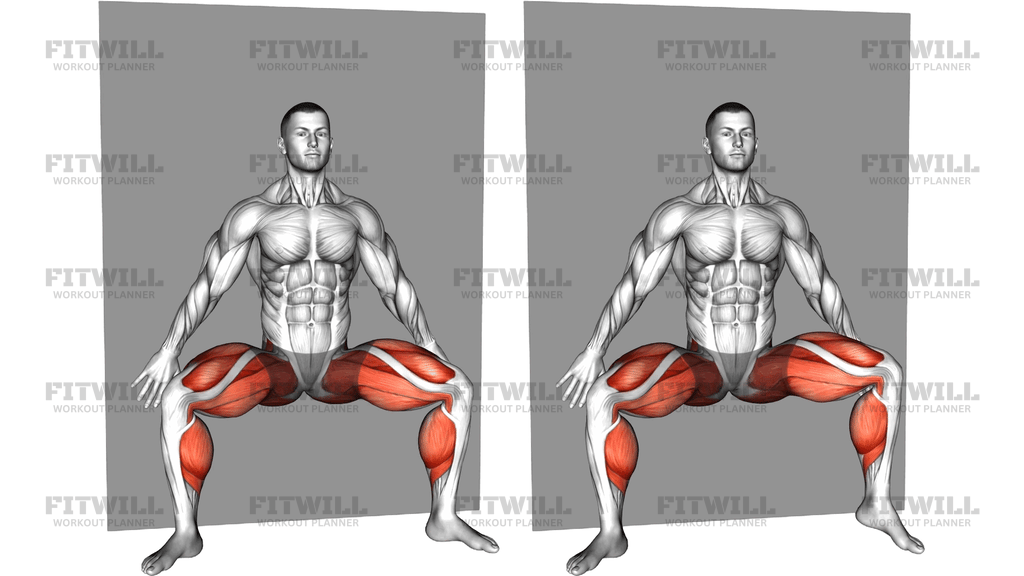
The setup matters more than it looks. A stance that is too narrow turns the drill into a shallow squat with a small sway, and a stance so wide that the heels lift or the knees collapse inward robs the adductors of their role and dumps stress into the knee joints. Aim for roughly one and a half to two shoulder widths apart, toes turned out slightly, and let the knees track over the toes as you settle into the hold.
To perform it well, drop into a comfortable quarter-squat and keep that depth constant throughout the set. Push deliberately through one foot so the hips slide sideways over that leg, feeling the inner thigh of the opposite leg lengthen, then reverse the push and glide across to the other side. The motion should be continuous and controlled, not bouncy — think of pouring water slowly from one hip to the other.
Common use cases include warm-ups for lower-body training, accessory work for squats and lateral movements, home routines with no equipment, and rehab-style reconditioning of hip stability, provided a professional has cleared the movement. It also doubles as a low-impact conditioning drill when performed for longer sets.
For safety, keep the knees bent and tracking outward for the whole set, never let them dive inward as the weight shifts, and stop short of any depth where the heels rise or the low back rounds. If balance is a challenge, hover one hand near a wall until the footwork feels secure.
[ Workout Log & Planner ]
Put your next workout in Fitwill
Keep your plan and training log ready when you are.


Instructions
- Stand with your feet roughly one and a half to two shoulder widths apart, toes turned out about 15 to 30 degrees.
- Raise both hands to chest height in front of your body with elbows bent, keeping the shoulders relaxed and down.
- Hinge slightly at the hips and bend both knees to settle into a quarter-squat, keeping the chest tall and the knees stacked over the toes.
- Brace the abs as if bracing for a light push, and keep the pelvis in a neutral position before starting the swing.
- Press through the whole left foot and shift the hips sideways until most of your weight sits over the left leg while the right leg stays long and the right foot stays flat.
- Without pausing or bouncing, push through the left foot and glide the hips across the midline until the weight settles over the right leg.
- Continue this side-to-side arc at a steady, controlled tempo, keeping the squat depth constant on every swing.
- Breathe continuously throughout the set — inhale through the nose on one half of the swing, exhale through the mouth on the other — rather than holding your breath.
- Complete the desired number of shifts, then straighten both legs together and step the feet back in to finish.
- Reset the stance and brace before the next set, and shake out the inner thighs if tension has built up.
Tips & Tricks
- The most common mistake is letting the squat depth creep shallower as fatigue builds — the legs straighten and the drill becomes a simple sway. Pick a depth you can hold for every rep, even if the set is short.
- If the heels lift as the weight travels to one side, the stance is too wide. Narrow it slightly so both feet stay fully planted through the whole arc.
- Watch for the knees diving inward as the load arrives over one leg. Cue the working knee to press out over the pinky toe so the adductors, not the knee joint, absorb the shift.
- Do not let the torso collapse forward and turn this into a good-morning. Keep the chest lifted and the hands high so the trunk has to stabilize against the side-to-side momentum.
- Control the turnaround at each end of the swing. Dropping and bouncing off the working leg removes the eccentric work from the inner thigh where most of the benefit lives.
- If your balance wobbles, hold the hands lightly against a wall or doorframe for the first few sessions and reduce the support as stability improves.
- A slow tempo of about two seconds per side works better here than speed — the pendulum should feel smooth and continuous, not rushed or jerky.
- If the inner thighs cramp, shorten the range of the shift slightly and stay at a consistent depth for a week before widening the stance again.
- To increase the challenge without equipment, hold the low position longer between shifts or slow each swing to three seconds per side.
Frequently Asked Questions
What muscles does the Pendulum Leg Plus work?
The inner thighs (adductors) do the primary work as the weight shifts across the midline, with the glute medius stabilizing the pelvis and the quads holding the bent-knee position. The obliques and deep core brace against the constant side-to-side sway.
Is the Pendulum Leg Plus suitable for beginners?
Yes. It is low-impact, needs no equipment, and the range of motion is easily adjustable. Beginners should start with a narrower stance and a shallower knee bend, then progress to a wider stance and deeper hold as control improves.
How wide should my stance be for the Pendulum Leg Plus?
Roughly one and a half to two shoulder widths, wide enough that the hips can travel clearly over each foot, but narrow enough that both heels stay flat the entire time. If a heel lifts, bring the feet in slightly.
Why do I keep rising out of the bent-knee position during the exercise?
The legs usually straighten when the adductors and quads fatigue, because a tall stance makes the sway easier. Fix it by counting your depth — knees should stay bent to the same angle on every shift — and stopping the set the moment you cannot maintain it.
How is the Pendulum Leg Plus different from side lunges?
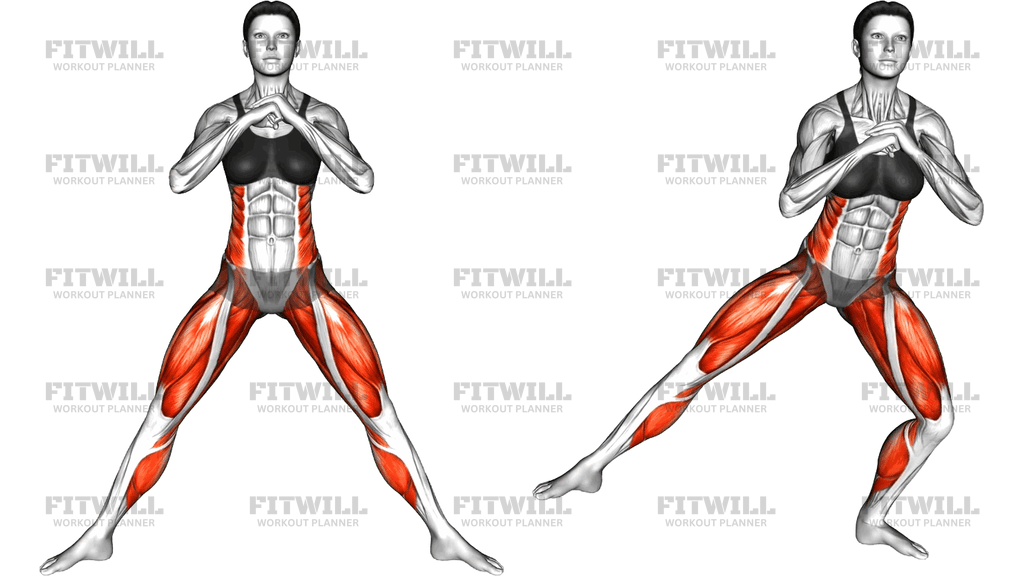
In side lunges one foot steps out and the body lowers toward that leg. In the Pendulum Leg Plus both feet stay planted and the hips swing side to side at a constant squat depth, which keeps continuous tension on the inner thighs instead of loading one leg at a time.
Should my hands stay up at chest height the whole time?
Yes, keeping the hands raised raises the center of gravity and makes the trunk and hip stabilizers work harder to control the swing. Lowering the hands toward the thighs is a fine regression if balance is difficult.
Can I use the Pendulum Leg Plus as a warm-up?
It works well as a warm-up before squats, lunges, or any lateral activity, since it raises blood flow to the hips and groins while rehearsing side-to-side weight transfer. Use a shallower depth and a moderate tempo for warm-up sets.
Is it safe if I have knee problems?
The feet stay planted and the load is light, which makes it gentler than many lower-body drills, but knee comfort depends on tracking. Keep the knees moving in line with the toes, never caving inward, and scale the depth down or consult a professional if any position causes discomfort.
How many reps and sets should I do?
For strength and control, aim for 10 to 16 full side-to-side shifts per set for 2 to 3 sets. For a conditioning effect, extend the sets to 30 to 45 seconds of continuous swinging while keeping the same depth and tempo.
What can I substitute if the wide stance is uncomfortable for my hips?
Try a narrower stance with a smaller shift range, or use alternating side lunges with a short step to train the same inner-thigh and outer-hip pattern with less sustained adductor tension.