Alternating Side Lunge And Kick
The Alternating Side Lunge And Kick is a body weight lower-body exercise that combines a lateral lunge with an explosive leg kick, performed one side at a time. You step out wide to one side, sink into a side lunge with the hip pushed back and the opposite leg straight, then drive back up and kick that lunging leg out to the side with control before switching sides. Because you move in the frontal plane — side to side rather than forward and back — it trains patterns that most standard squat and lunge variations miss.
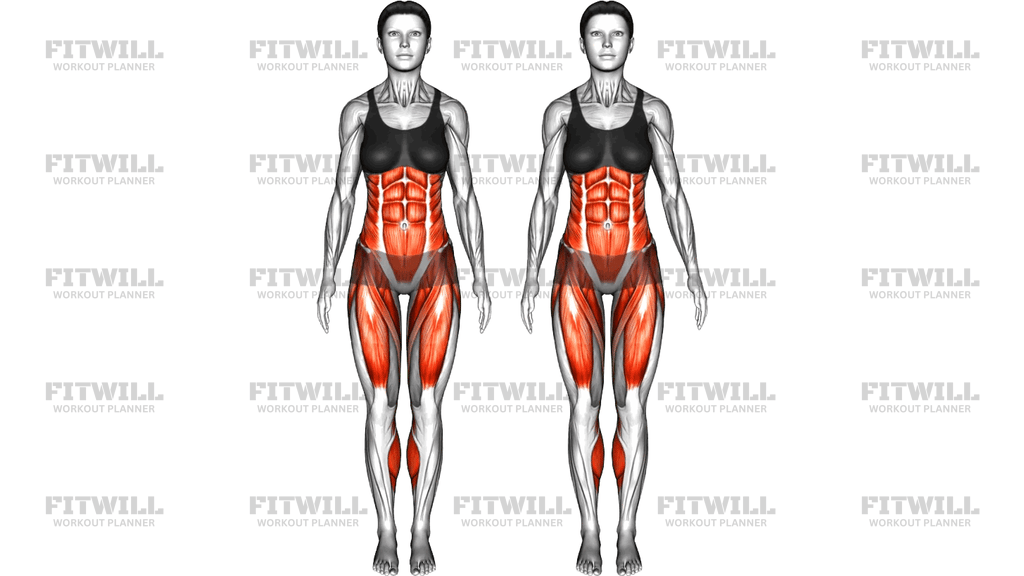
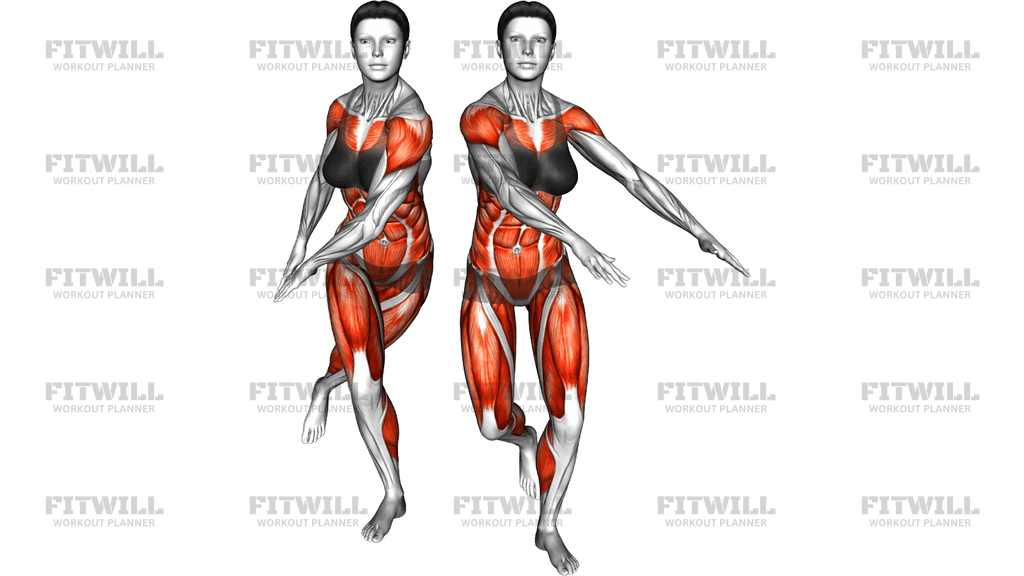
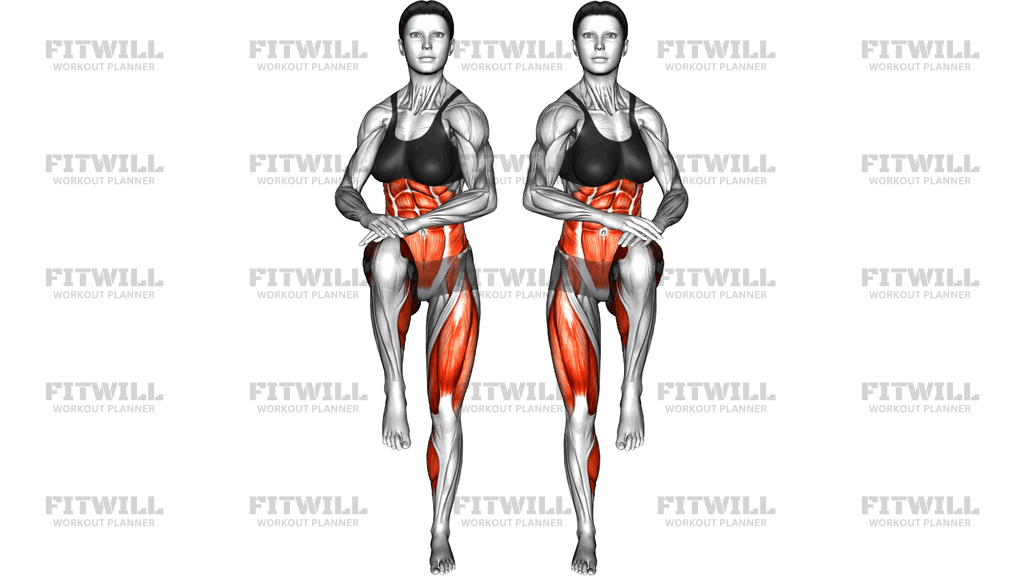
The movement primarily works the glutes and quads of the lunging leg, while the straight leg's inner thighs work hard to control the stretch as you lower. The kick at the top adds hip abductor and glute work, and your core — especially the obliques — has to brace continuously to keep your torso upright as your weight shifts from side to side. It also raises your heart rate quickly, so it doubles as light conditioning when performed at a steady tempo.
This exercise suits a wide range of people. Beginners can use it to learn lateral movement mechanics with no equipment, while more advanced lifters and athletes use it as a warm-up, a mobility drill for tight hips, or a higher-rep finisher. It is especially useful for runners, court-sport players, and anyone whose training is dominated by forward-and-backward movement, since side-to-side patterns build resilience in the hips, knees, and ankles.
The setup matters because the side lunge position is easy to cheat. Your feet should stay wide and roughly parallel, your lunging knee must track over your toes, and your chest stays tall with hands clasped in front of your chest for balance. If your torso collapses forward or your heels lift, the load shifts away from the glutes and into the knee joint, which defeats the purpose of the exercise.
To execute it well, think of sitting your hips diagonally back and down over the working leg rather than simply bending sideways at the waist. Keep the straight leg extended with the heel grounded and toes pointing up, feeling the inner-thigh stretch. Push the floor away with the whole foot to stand back up, then kick the leg out to the side at about hip height without leaning your torso away to fake the height. Alternate sides for equal reps.
For safety, keep the range honest: only lunge as deep as you can while keeping the working heel down and the knee aligned, and skip the explosive part of the kick if your hips or groin feel tight that day — a controlled leg lift is a perfectly good substitute.
[ Workout Log & Planner ]
Put your next workout in Fitwill
Keep your plan and training log ready when you are.


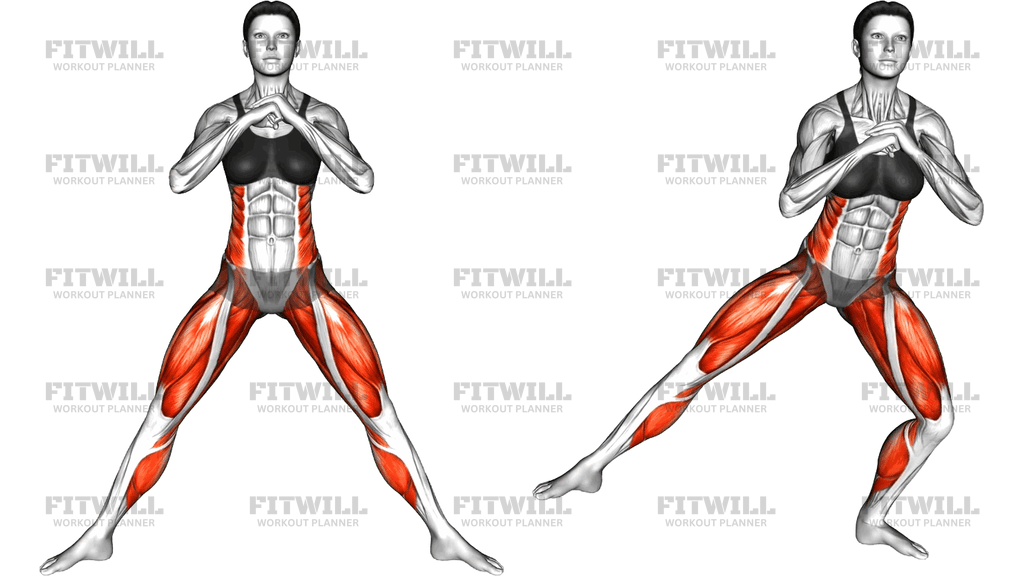
Instructions
- Stand tall with your feet together and your hands clasped in front of your chest, elbows relaxed, to counterbalance the movement.
- Take a wide step to the right — roughly one and a half to two shoulder widths — keeping both feet parallel and flat on the floor.
- Brace your core and keep your chest lifted as you shift your hips back and to the right, bending the right knee over your toes while the left leg stays straight with its heel planted.
- Lower until your right thigh is close to parallel with the floor or as deep as your mobility allows without the right heel lifting.
- Pause briefly at the bottom, feeling the stretch along the straight left leg's inner thigh.
- Push through the entire right foot to stand back up, driving the hips forward rather than pulling with the chest.
- As you return to standing, kick the right leg out to the side to roughly hip height in a controlled motion, keeping the torso upright and the standing knee soft.
- Lower the right foot back to the floor and immediately repeat the side lunge and kick on the left side.
- Breathe in as you lower into the lunge and exhale as you drive up into the kick.
- Continue alternating sides until you complete the target reps on each leg, resetting your stance whenever your feet drift too narrow.
Tips & Tricks
- If your knee caves inward during the side lunge, think about spreading the floor with your foot and tracking the knee over your second and third toes.
- A common mistake is turning the side lunge into a sideways trunk bend — the movement comes from the hips sitting back, not from leaning your upper body toward the bent knee.
- Keep the kick at a height you can reach without your torso tipping away; a low controlled kick with a tall spine beats a high kick achieved by collapsing sideways.
- If your heels lift at the bottom of the lunge, your stance is likely too narrow or too deep for your ankle mobility — step slightly wider or reduce the depth before forcing the range.
- Keep the straight leg genuinely straight and its heel down; letting that knee bend turns the stretch into a second squat and reduces the inner-thigh benefit.
- Do not rush the transition between the lunge and the kick — push all the way up first, then kick, rather than throwing the leg up from a half-standing position.
- Softer surfaces like thick carpet make the kick harder to balance; practice on firm flooring until your stability improves.
- If you feel the work only in the knee and not the hips, you are probably bending the knee straight down instead of sending the hips back and to the side — exaggerate the backward hip shift for a few reps.
- Warm up the hips with a few body weight leg swings or shallow lunges first, as cold adductors are the most common reason this movement feels pinchy at the bottom.
Frequently Asked Questions
What muscles does the Alternating Side Lunge And Kick work?
The glutes and quads of the lunging leg do most of the work, with the inner thighs of the straight leg controlling the stretch. The kick adds hip abductor and glute involvement, and the obliques and deep core stabilize your torso throughout.
Is the Alternating Side Lunge And Kick good for beginners?
Yes, because it needs no equipment and the depth is fully self-selected. Beginners should start with a shallow lunge and a low kick, focusing on keeping the heel down and the knee tracking over the toes.
How high should I kick during the Alternating Side Lunge And Kick?
Kick only as high as you can while keeping your torso upright and your standing leg stable — for most people that is between knee and hip height. Height should come from hip mobility, not from leaning your body away from the leg.
Why does my groin feel tight during this exercise?
The straight leg is under a strong inner-thigh stretch at the bottom of the side lunge, which is expected as mild tension. If it feels sharp or pinching, shorten your stance, reduce the depth, or warm up with gentle hip swings before training.
Can I add weight to the Alternating Side Lunge And Kick?
Yes, once your form is solid you can hold a dumbbell or kettlebell at your chest for the lunge portion, though most people drop or lighten the load for the kick to stay balanced. Body weight with higher reps works well for conditioning.
How is the Alternating Side Lunge And Kick different from a regular side lunge?
The kick adds an explosive concentric action for the hip abductors and turns the exercise into more of a dynamic, balance-challenging pattern. It also increases the demand on the standing leg as you transition between the lunge and the kick.
What can I substitute if side lunges bother my knees?
Try a supported side-leg lift paired with a shallow curtsy or a glute bridge to load the hips without deep knee flexion. Reducing lunge depth and widening the stance also shifts work toward the hips and often resolves knee discomfort.
Should both feet stay pointing forward in the Alternating Side Lunge And Kick?
Keep the feet close to parallel, with at most a slight natural outward angle of the lunging foot. Turning the straight leg out reduces the inner-thigh stretch and lets the hips rotate instead of staying square.
How many reps and sets should I do?
For strength and hip mobility, 3 sets of 8-10 lunges and kicks per side works well; for conditioning, perform continuous alternating reps for 30-45 seconds per round. Rest as needed to keep the kick controlled rather than sloppy.
Can I do the Alternating Side Lunge And Kick as a warm-up?
Yes, it is an excellent warm-up drill because it opens the adductors, activates the glutes, and rehearses lateral movement before squatting, running, or sport. Use 1-2 easy sets of 5-6 reps per side with shallow depth.