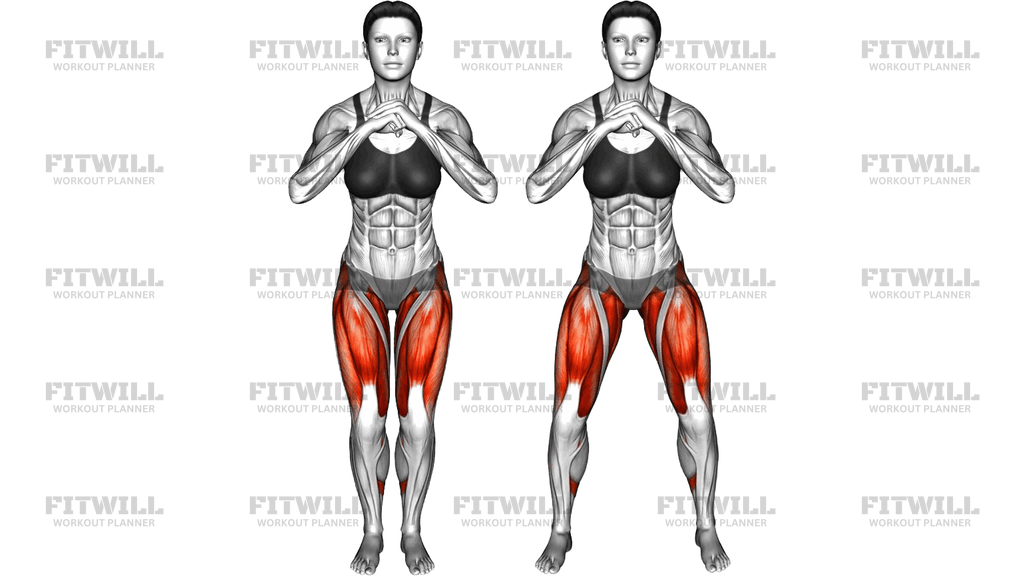
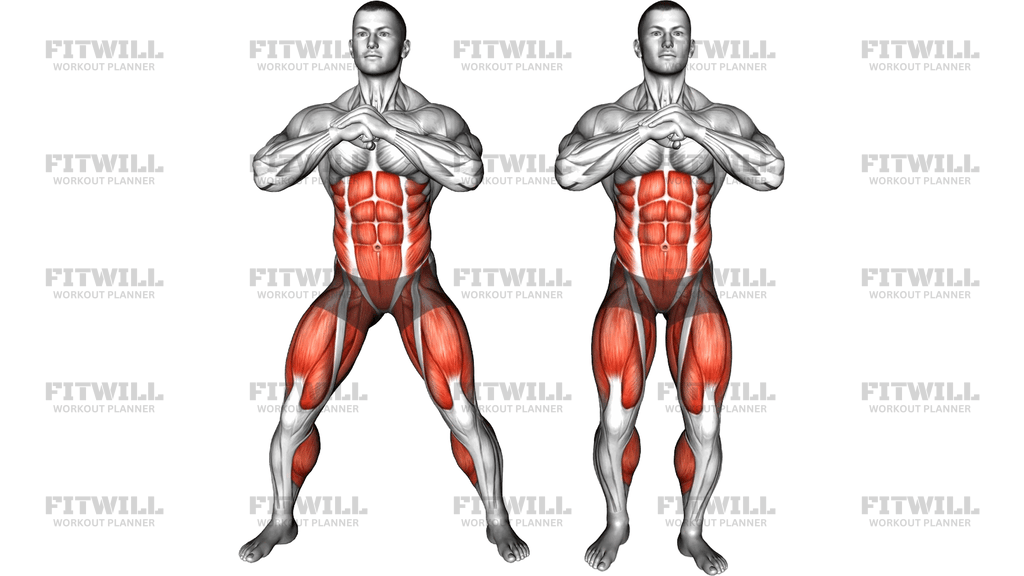
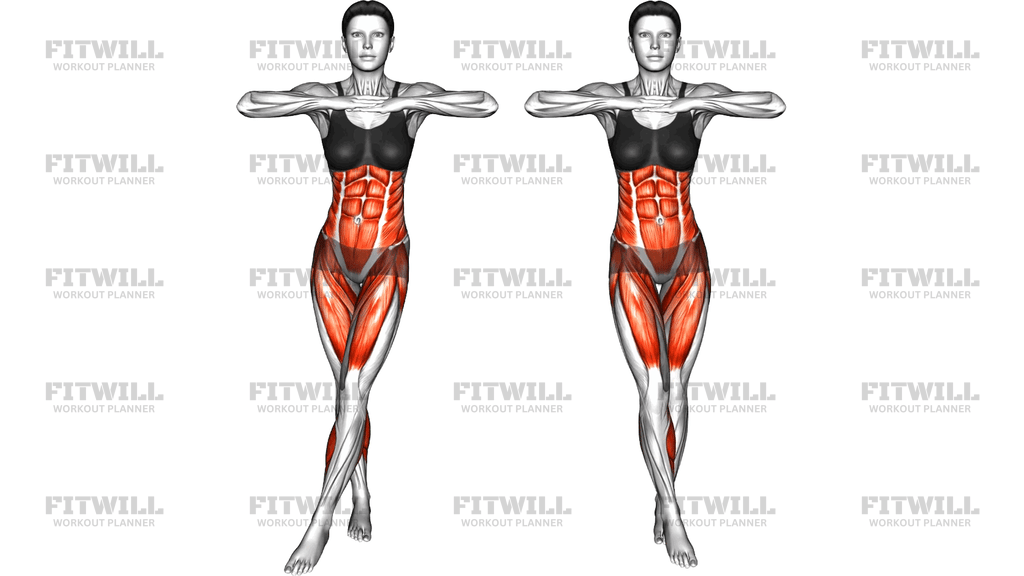
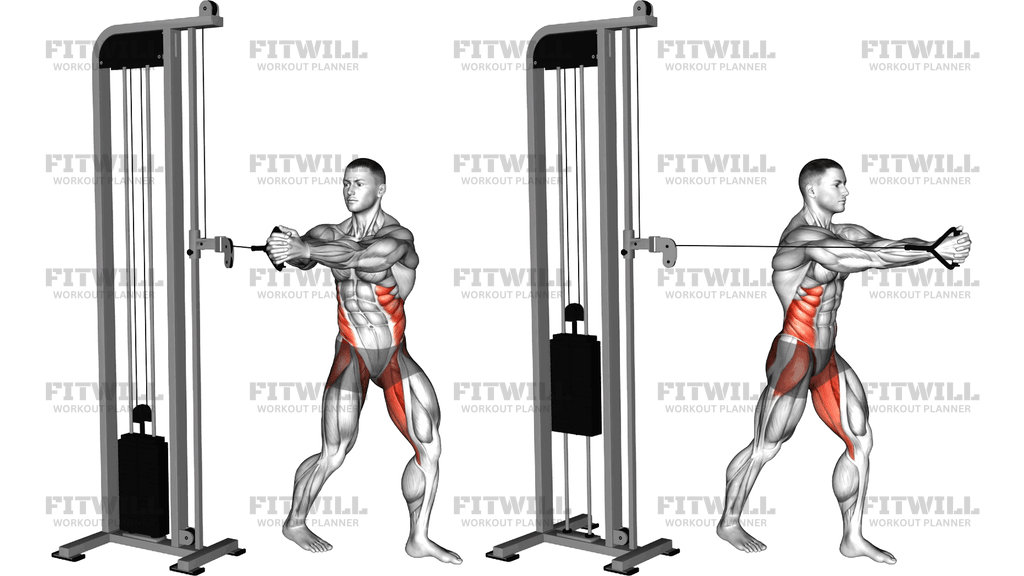
Wide Stance Side Lunge Against Wall
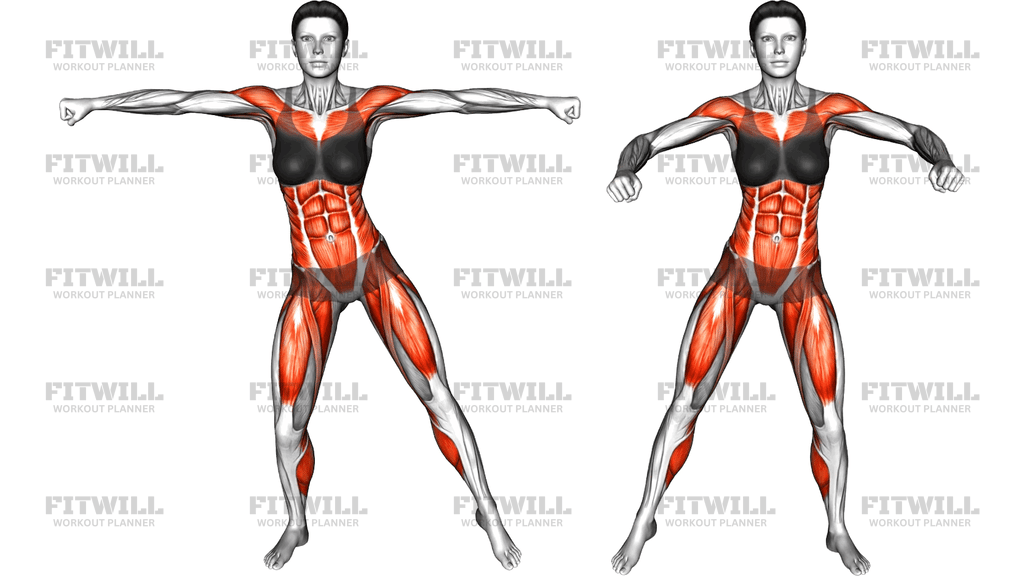
The Wide Stance Side Lunge Against Wall is a body weight lower-body exercise performed from an extremely wide stance with the arms reaching overhead. Instead of stepping out to one side as in a standard lunge, you keep both feet planted far apart and shift your hips sideways, bending one knee while the opposite leg stays straight. The wall behind you acts as a reference point for your back and hips, making it easier to sit into the movement without leaning forward or losing your balance.
The primary work comes from the adductors on the inner thigh, which lengthen on the straight leg and then pull you back to center. The glutes and quadriceps of the bent leg handle most of the pushing, while the hamstrings and hip stabilizers control the transition from side to side. Because the arms stay raised in a wide V, the shoulders and upper back also work to hold posture, which is why the highlighted muscle map of this movement concentrates on the glutes and inner thighs from hip to knee.
The wide, fixed stance is what separates this version from a walking side lunge. With both feet locked in place, every repetition loads the inner thigh through a long range, and switching sides simply means shifting your hips the other way. This makes the exercise efficient: you can flow left-center-right-center without resetting your feet, keeping the adductors under continuous tension.
Standing against a wall is especially useful if you tend to pitch your chest forward or collapse your knees inward during side lunges. The wall gives you instant feedback: your hips and shoulders should stay stacked over your heels as you sink sideways. It also makes the movement accessible for beginners, older adults, or anyone returning from time off, since balance demands are reduced and you can control depth precisely.
To execute it well, keep the bent knee tracking over or slightly inside the toes, press the straight leg's foot fully into the floor, and think about pushing the floor away to return upright. Move slowly enough that you feel a definite stretch along the inner thigh of the straight leg at the bottom. If the stretch becomes sharp or your heel lifts, reduce the depth rather than forcing the range.
This exercise fits well into warm-ups, mobility-focused sessions, and lower-body strength circuits. It is a common choice for people who sit for long hours and feel tight through the groin, for runners and field-sport athletes who need side-to-side strength, and for anyone building toward deeper squatting patterns with better hip control.
[ Workout Log & Planner ]
Put your next workout in Fitwill
Keep your plan and training log ready when you are.


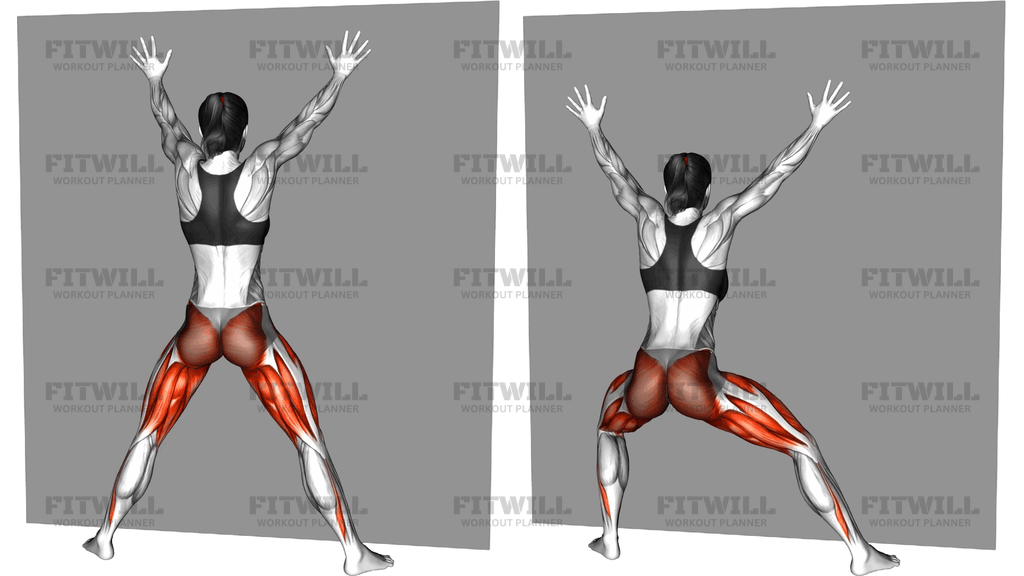
Instructions
- Stand with your back close to a wall, feet spread roughly two to three shoulder-widths apart so both legs stay nearly straight at the start.
- Turn your toes out slightly, about 15 to 30 degrees, and raise both arms overhead into a wide V, palms facing forward.
- Brace your core, gently draw your shoulder blades down away from your ears, and keep the backs of your hips lightly brushing the wall.
- Shift your hips to the right, bending the right knee while the left leg stays straight and both feet remain flat on the floor.
- Lower until you feel a firm stretch along the inner thigh of the straight left leg, with the right knee stacked over or slightly inside the right ankle.
- Press through the whole right foot, especially the heel, and drive back up to the tall standing position with arms still overhead.
- Without moving your feet, pause briefly in the middle, then repeat the shift to the left side.
- Exhale as you sink sideways and inhale as you press back up, keeping the breath steady throughout the set.
- Complete equal repetitions on each side, then step your feet back to a normal stance and lower your arms to finish.
Tips & Tricks
- If your heels lift off the floor at the bottom, your stance is too wide for your current hip mobility; narrow it an inch or two rather than rising onto the balls of your feet.
- A common mistake is bending the straight leg as you sink — check that the inner thigh of that leg stays visibly long and loaded with a stretch.
- Keep your ribs stacked over your pelvis; arching the lower back to get deeper reduces the inner-thigh stretch and strains the spine.
- Use the wall as a depth gauge, not a crutch — light contact with the hips is enough, and leaning your weight into it takes load off the legs.
- Let the knee of the bent leg travel in line with the toes; if it dives inward, slow the tempo and think about spreading the floor with that foot.
- If holding your arms overhead fatigues your shoulders before your legs feel worked, lower them to chest height or place your hands on your hips and keep the torso tall.
- Shift your hips back and sideways rather than dropping straight down — this version is a lateral hinge-squat, not a front squat.
- Start with shallow reps and gradually increase the range over several sessions; forcing a deep groin stretch from day one is the most common cause of lingering soreness here.
Frequently Asked Questions
Which muscles does the Wide Stance Side Lunge Against Wall work the most?
The adductors of the inner thigh are the main movers, especially on the straight leg, while the glutes and quadriceps of the bent leg drive you back up. The hamstrings and hip stabilizers assist with control, and the shoulders work isometrically to keep the arms overhead.
Why is this side lunge done against a wall instead of in open space?
The wall prevents your hips from drifting backward and gives feedback that your torso stays upright as you shift sideways. It also removes most balance demands, so you can focus on depth and inner-thigh loading.
Is the Wide Stance Side Lunge Against Wall suitable for beginners?
Yes, and the wall support makes it one of the more beginner-friendly lunge variations. Start with a shorter stance and shallow depth, and widen or deepen gradually as your hip mobility improves.
Should both feet stay flat and planted the whole time?
Yes — unlike a stepping side lunge, this version keeps both feet fixed in the wide stance for the entire set. Lifting a heel or pivoting a foot shifts work away from the adductors and can strain the knee.
How deep should I sink into each side lunge?
Lower until you feel a strong but comfortable stretch along the inner thigh of the straight leg, with the bent knee still tracking over its foot. Depth will vary with your mobility, so let the stretch quality guide you rather than chasing a target depth.
What is the most common mistake with this exercise?
Bending the straight leg or letting the bent knee collapse inward as you sink. Both reduce inner-thigh involvement — correct them by keeping the straight leg long and thinking about spreading the floor with the bent-leg foot.
Can I add weight to the Wide Stance Side Lunge Against Wall?
You can hold a light dumbbell or kettlebell at your chest once your form is solid, though the wall limits forward lean. Most people progress by increasing depth, reps, or tempo before adding load.
What can I substitute if I don't have a clear wall space?
A plain Wide Stance Side Lunge or Cossack-style shift works the same muscles without support — just move more slowly to manage balance. A sturdy chair or doorframe touched lightly with one hand offers similar feedback.
Is a sharp pulling feeling in the groin normal?
A firm stretch sensation along the inner thigh is expected, but sharp or pinpoint pain is not. Reduce your stance width and depth, and if discomfort persists, stop and have it assessed before continuing.
How should I place this exercise in my routine?
It works well as a warm-up before squats or lunges, or as a higher-rep strength finisher for the inner thighs and glutes. Two to four sets of 8 to 12 shifts per side covers most goals.