Sumo Squat With Heel Raise
The Sumo Squat With Heel Raise takes the wide-stance sumo squat and adds a calf raise at the top of every rep, so you train the lower body through two movements in one. You settle into a deep squat with the feet turned out and knees pressed wide, then stand up and continue rising onto the balls of your feet before lowering the heels again. Because no equipment is needed beyond a little floor space, it slots easily into warm-ups, home workouts, and bodyweight leg circuits.
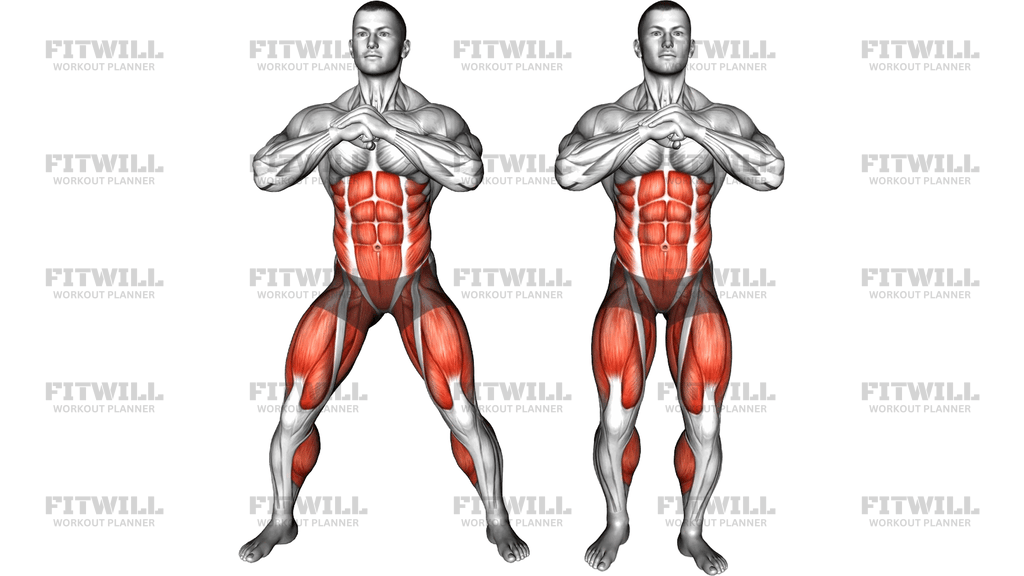
The wide stance changes the emphasis of the squat considerably compared to a conventional version. With the knees tracking out over the toes, the inner thighs work hard to control the legs and pull you back up, while the glutes and quads handle much of the lifting. The heel raise at the finish then loads the calves through their natural range, particularly when you press up slowly rather than bouncing.
This combination makes the exercise a good pick for anyone who wants stronger, more mobile hips without loading a barbell. Dancers, runners, and lifters who sit a lot often find that the wide-stance position improves how comfortably they can squat, while the added heel raise builds ankle and calf strength that carries over to jumping, walking uphill, and standing work.
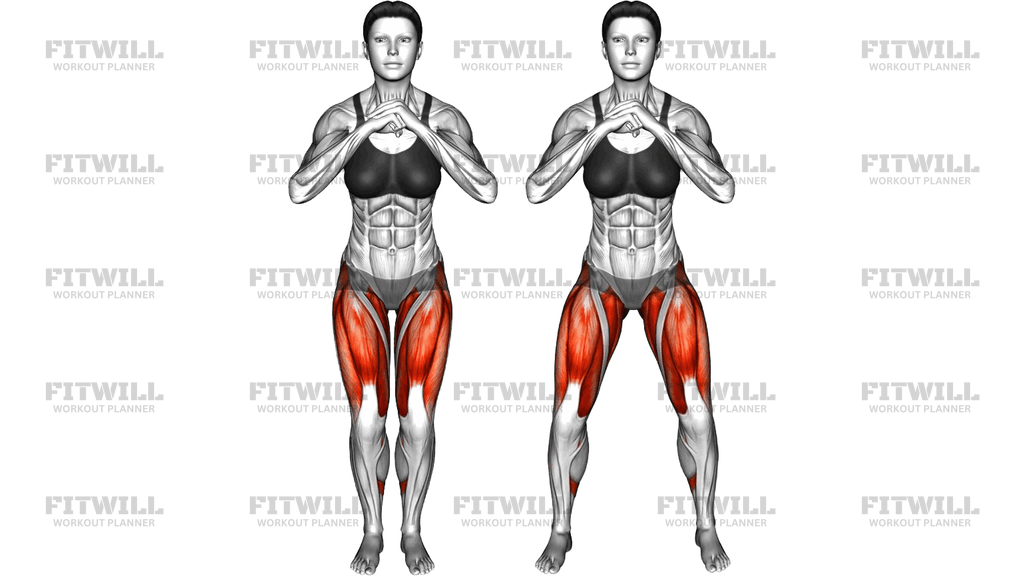
Setup matters more than it looks. The feet should be noticeably wider than the shoulders with the toes angled out, and the hands can be clasped in front of the chest for balance, as shown in the standard version of this movement. If the stance is too narrow, the knees drift inward and the inner-thigh benefit shrinks; if the torso pitches too far forward, the hips take over and the squat shortens.
To execute it well, sit straight down between the feet rather than pushing the hips back behind you, keeping the chest tall and the knees pushing outward the whole time. Descend until the thighs are at least parallel to the floor or as deep as your hips allow with a flat back, then drive up through the whole foot. As you reach standing, press up through the balls of the feet and lift the heels as high as they will go, pause briefly, and lower the heels with control before starting the next rep.
The most common errors are rushing the heel raise, letting the knees cave in at the bottom, and losing heel contact too early on the way up. Treat the tempo as part of the exercise: a controlled squat, a deliberate press onto the toes, and a smooth return. If balance feels shaky at first, hold a wall or sturdy chair with one hand until the movement feels stable, then progress to hands-free reps.
[ Workout Log & Planner ]
Put your next workout in Fitwill
Keep your plan and training log ready when you are.


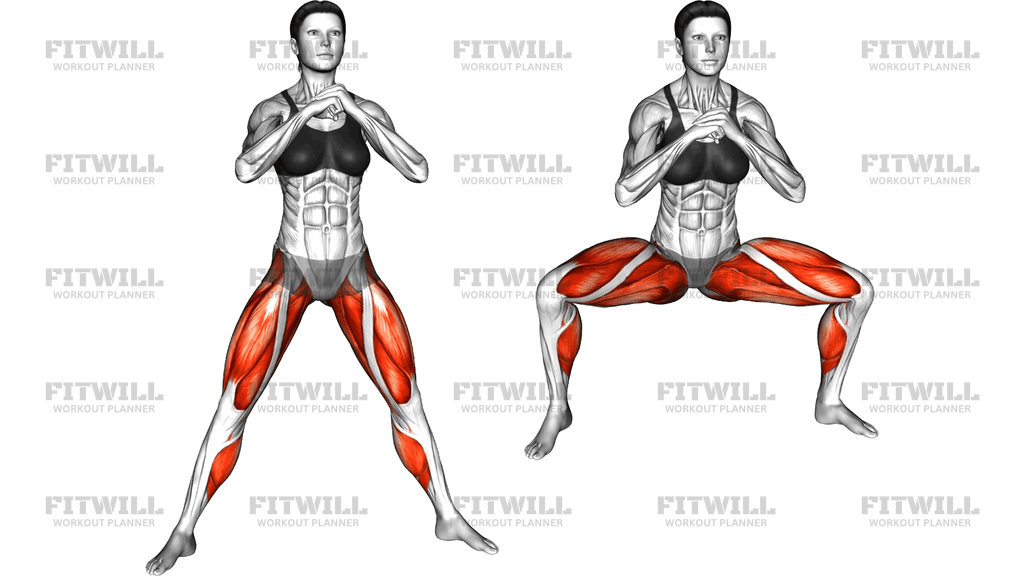
Instructions
- Stand with the feet roughly one and a half shoulder-widths apart and turn the toes out at about 45 degrees.
- Clasp the hands together in front of the chest with the elbows tucked down, and pull the shoulders back so the chest stays tall.
- Brace the abdominal muscles lightly and shift a little weight toward the outer edges of the feet so the arches feel active.
- Inhale, then bend the knees and sit the hips straight down between the feet, letting the knees travel out over the toes.
- Lower until the thighs are parallel to the floor or to your deepest comfortable depth, keeping the torso upright and the knees wide.
- Exhale and press through the whole foot to stand, then continue the push through the balls of the feet and lift the heels as high as possible at the top.
- Hold the raised-heel position for a brief moment and squeeze the calves and glutes before lowering.
- Lower the heels slowly back to the floor with control rather than dropping them.
- Take a breath at the top, re-brace, and repeat for the desired number of repetitions.
- Step the feet in and shake out the legs once the set is finished to reset before the next exercise.
Tips & Tricks
- Widen the stance until the inner thighs genuinely feel loaded at the bottom; a stance only slightly wider than the shoulders turns this into a plain squat and removes most of the adductor work.
- Keep the heels down for the entire descent and squat portion. Lifting them early shifts weight to the toes and makes the knees drift forward and inward.
- If the heels lift off the floor before you finish standing, the calves may be tight or the tempo too quick — slow the stand-up phase and raise the heels only after the legs are straight.
- Actively push the knees out toward the pinky-toe side as you descend. This is the single most common fix for knees caving inward in a wide-stance squat.
- Keep the chest and clasped hands lifted rather than dropping the arms toward the knees; leaning forward shortens the squat and rounds the lower back.
- Lower the heels under control at the top of each rep. Dropping them quickly slams the ankles and wastes half the calf work.
- Point the knees in the same direction as the toes throughout. If the toes are turned out 45 degrees but the knees face forward, the hip rotation is happening at the knee joint instead.
- Turn the feet out only as far as you can keep the knees tracking over them; a more extreme toe angle is not better if the arches collapse.
- For extra challenge, add a two-second hold at the deepest point of the squat before rising, or perform the heel raise on a slightly slower count.
- If balance is the limiting factor, face a wall and hover the fingertips on it for support while you build stability, then remove it within a few sessions.
Frequently Asked Questions
Which muscles does the Sumo Squat With Heel Raise work?
The inner thighs, glutes, and quads do most of the squatting work, with the inner thighs especially active because of the wide stance. The heel raise at the top then targets the calves, mainly the gastrocnemius and soleus.
Why raise the heels only at the top instead of during the whole squat?
Keeping the heels down while squatting lets you sit deep with a stable base and protects the knee position. Raising the heels at the end isolates the calf raise so both the squat and the calf work get their full range.
Is the Sumo Squat With Heel Raise suitable for beginners?
Yes, it is bodyweight-only and easy to scale. Beginners can reduce the depth, hold a wall or chair for balance, and separate the squat and heel raise before combining them.
How wide should my stance be for this exercise?
Start with the feet about one and a half shoulder-widths apart with the toes turned out roughly 45 degrees. Adjust from there until you can sit between the feet with the knees tracking over the toes and a tall chest.
My knees cave inward at the bottom of the squat. How do I fix that?
This usually means the stance is too wide or the adductors and glutes need more cueing. Narrow the stance slightly and consciously push the knees out toward the pinky-toe side on every rep, especially during the descent.
Can I hold a weight during the Sumo Squat With Heel Raise?
Yes, a single dumbbell or kettlebell held vertically at the chest works well once the bodyweight version feels easy. Keep the weight close to the body so it does not pull the chest forward.
How deep should I squat in this exercise?
Aim for thighs at least parallel to the floor, but only go as deep as you can keep the heels down, the chest upright, and the knees wide. Depth can improve gradually as hip mobility increases.
What can I substitute if the heel raise bothers my calves or ankles?
Perform the same wide-stance sumo squat with the heels staying flat, and do the calf raise as a separate, shorter set. You can also reduce the heel height rather than skipping the raise entirely.
Where should this exercise fit into a workout?
It works well as a warm-up before lower-body strength training or as a main bodyweight movement in home and circuit sessions. Because it combines a squat and a calf raise, it can replace two exercises when time is short.
How many repetitions should I do?
For strength and muscle, work in the range of 8 to 15 controlled reps, and for a warm-up or endurance focus, 15 to 20 lighter-paced reps. The last few reps should feel challenging without losing the knee and heel positions.