Kettlebell Double Swing
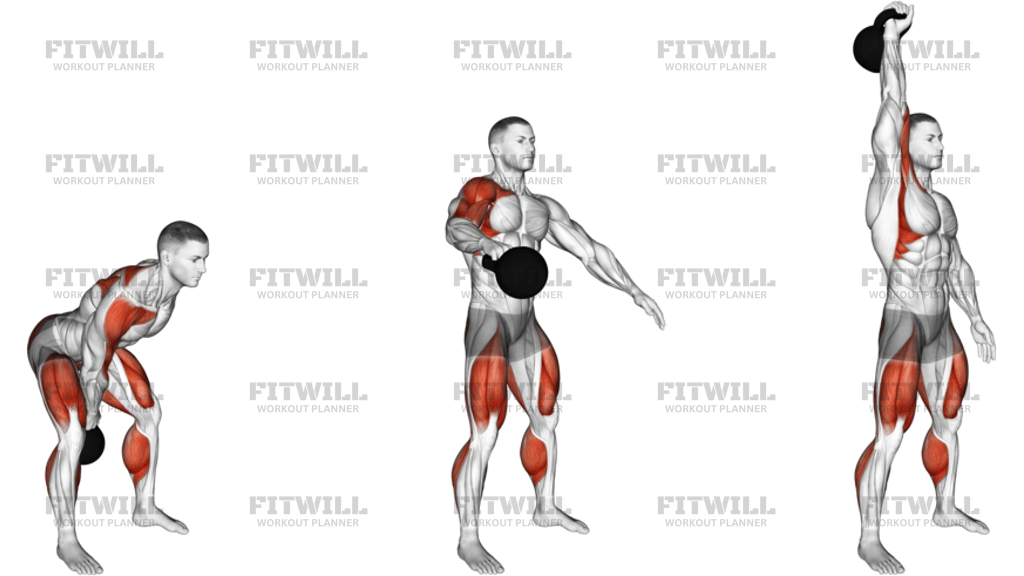
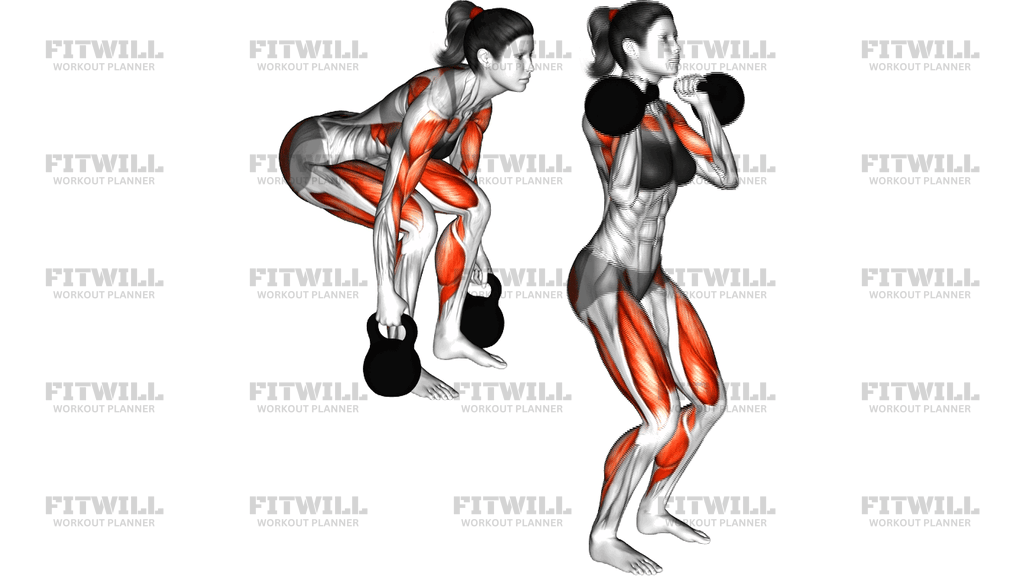
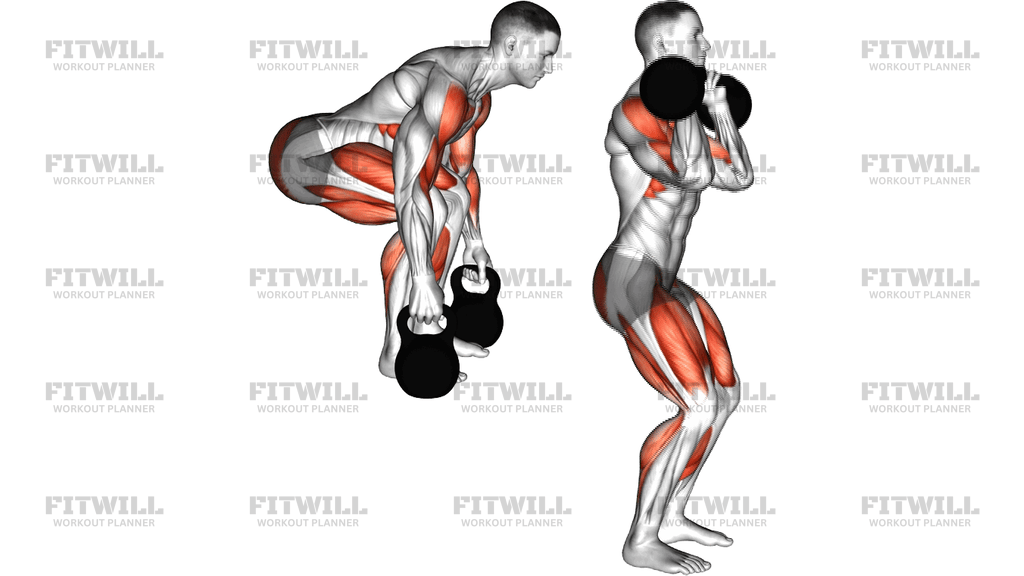
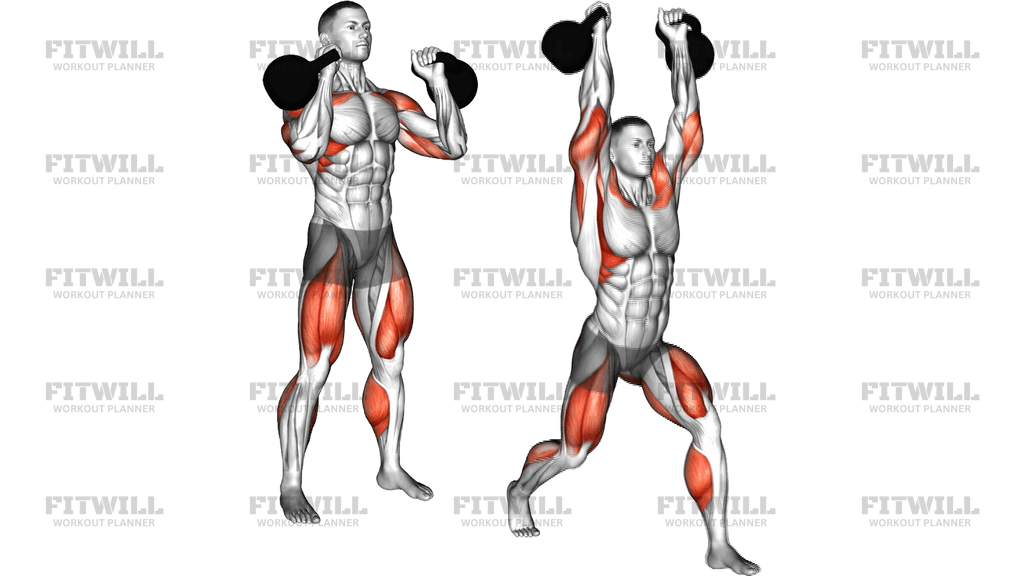
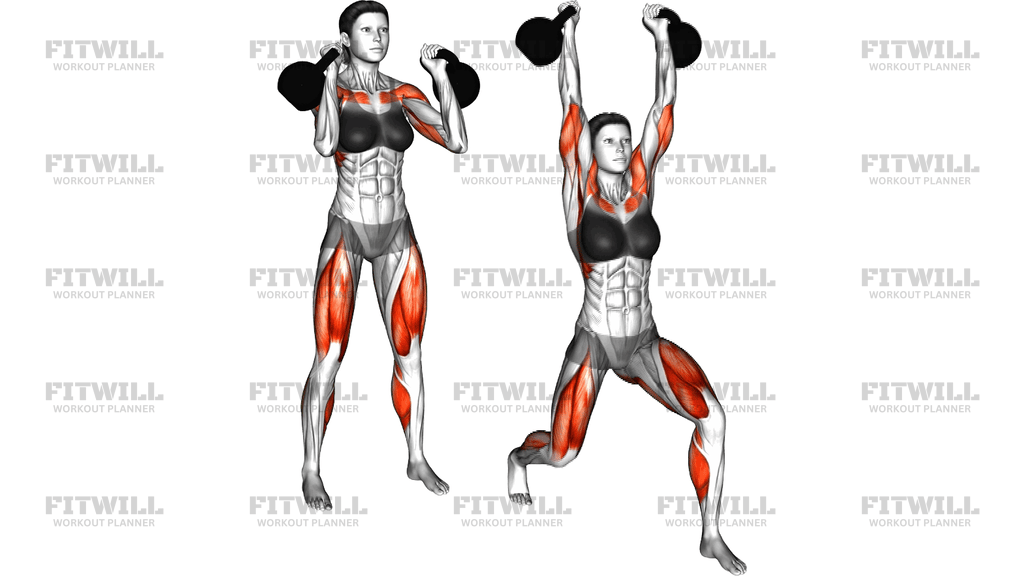
The Kettlebell Double Swing is a hip-hinge power exercise performed with a kettlebell in each hand instead of the usual single-bell setup. From a shoulder-width stance, you hike both kettlebells back between your legs and drive your hips forward to swing them up to chest height in one continuous, explosive motion. Because you are loading both sides of the body equally, the movement demands more from your grip, your lats, and your ability to keep your torso organized under twice the load.
This version suits lifters who have already built a solid single-arm or two-handed swing and want a bigger training effect without swinging one bell so heavy that their grip gives out first. It is a staple for people training power and conditioning at the same time: the posterior chain does the explosive work, the shoulders and upper back control the bells at the top, and the heart and lungs get taxed hard over repeated sets. Athletes in sports that reward hip extension, such as sprinting, jumping, and throwing, get a lot of carryover from it.
The main muscles driving the movement are the glutes and hamstrings, which fire to snap the hips open. The lower back and core work isometrically to keep your spine from folding as the bells load and unload, while the traps, shoulders, and forearms steer the kettlebells and absorb them at the top and back down. The double setup also demands symmetric hip drive, so a weaker or lazier side gets exposed quickly.
Setup matters more here than in the single-bell swing because two handles change your balance point. Keep both bells close together, hinge deeply so the kettlebells pass back between and behind your legs rather than dropping toward your knees, and let the forearms brush the inner thighs on the backswing. If the bells drift out in front of your shins, the swing turns into a squat-and-lift, and your lower back picks up work it should not have.
Executed well, the movement is a sharp hinge, not a squat: shins near vertical, weight on the mid-foot, hips snap forward and stand tall while the arms stay relaxed and simply connect you to the bells. Exhale sharply at the top, let the bells fall back into the hinge, and reload before the next rep. Common use cases include conditioning finishers, warm-up power blocks, and dedicated ballistic days. Start lighter than you think, because two moderate kettlebells are far harder to control than one heavy one, and stop the set as soon as the hinge pattern starts to deteriorate.
[ Workout Log & Planner ]
Put your next workout in Fitwill
Keep your plan and training log ready when you are.


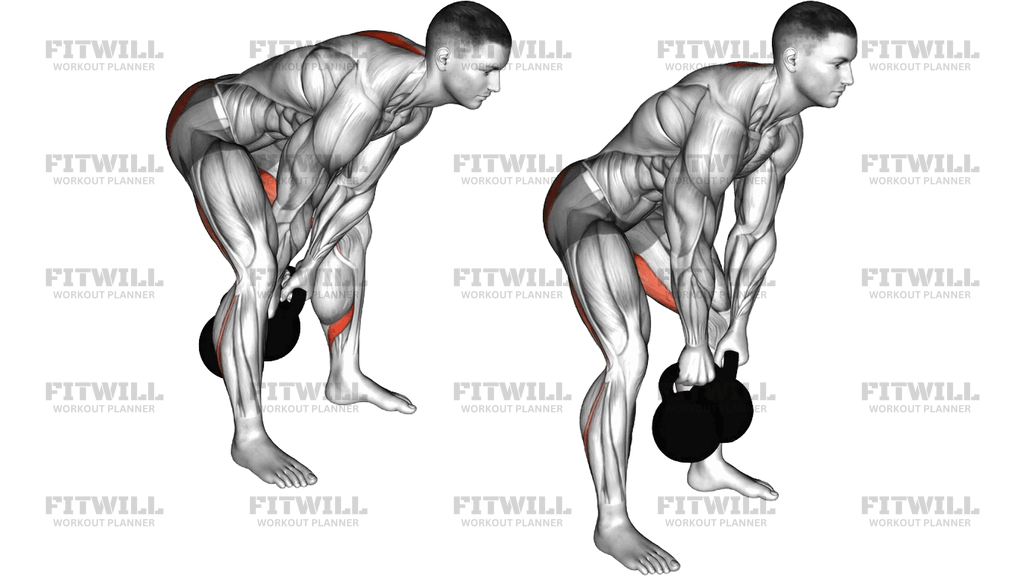
Instructions
- Place two kettlebells of matched weight on the floor about a foot in front of you, handles angled so both grips feel identical, and stand over them with feet shoulder-width apart, toes turned slightly out.
- Push your hips back and bend your knees just enough to grip both handles with a firm overhand grip, then hike the kettlebells back between your legs so your forearms brush your inner thighs and your weight sits on your mid-foot.
- Brace your core as if bracing for a light punch, pull your shoulder blades down and back, and keep a long, neutral spine with your chest angled at the floor rather than rounded.
- Snap your hips forward explosively, driving through the floor and squeezing your glutes until your body forms a straight line from head to heels; the power comes from the hips, not from lifting with the arms.
- Let the kettlebells float up to roughly chest height, arms extended but relaxed, elbows soft, with the handles staying close together in front of your body.
- Guide the bells back down by hinging sharply, throwing your hips back so the kettlebells reload behind you between your legs instead of dropping in front of your knees.
- Inhale through your nose on the backswing and exhale sharply through your mouth as the hips snap forward at the top.
- Chain reps together by keeping the backswing loaded and continuous, rather than resetting the bells on the floor between every rep.
- Finish the set by swinging the bells forward one last time, sitting back into a small hinge, and lowering both kettlebells to the floor under control before standing up and shaking out your grip.
Tips & Tricks
- Match the kettlebell weights exactly; two slightly different bells will pull you into a twist on every rep and quietly work one side of your lower back harder than the other.
- If the bells bang against each other at the top, you are letting the handles drift inward; keep each forearm tracking its own thigh and let the bells rise side by side, a few inches apart.
- The most common fault in the double setup is turning the swing into a squat: if your knees travel forward and the bells drop in front of your shins, push your hips further back and let the torso come closer to horizontal on the backswing.
- Keep your arms as loose ropes. If you feel the effort in your shoulders or biceps at the top, the hips are finishing late; drive them through harder and let the bells float.
- Scale the load down before scaling reps up. Double swings double the load instantly, so a weight that feels easy for one arm can wreck your hinge timing with two.
- Keep the backswing short enough that the bells pass behind your knees, not so deep that your lower back rounds; depth comes from the hips, not from reaching the bells back with your arms.
- Breathe in patterns rather than holding your breath; a sharp exhale at the top of every rep helps you stay tight without spiking tension in your neck.
- If your grip fatigues before your hips do, use chalk or switch to slightly lighter bells; a slipping handle mid-rep is the biggest safety risk in this movement.
- Stop the set the moment your hinge gets sloppy or the bells start pulling you onto your toes, because double swings punish breakdown in form faster than single-bell work.
Frequently Asked Questions
Which muscles does the Kettlebell Double Swing work the most?
The glutes and hamstrings produce the explosive hip extension, while the lower back and core stabilize your spine under load. Your traps, shoulders, and forearms work hard to control two kettlebells at the top and through the backswing.
Is the Kettlebell Double Swing suitable for beginners?
It is best learned after you can perform a clean two-handed single kettlebell swing with a consistent hinge. Starting with two bells doubles the load and makes timing errors more punishing, so beginners should build the pattern with one bell first.
Should the kettlebells touch each other during the Kettlebell Double Swing?
A light touch is harmless, but repeated clanging means the handles are drifting toward each other, which usually signals rounded shoulders or a lazy hinge. Keep each forearm close to its own thigh and let the bells rise side by side.
How high should the kettlebells swing in the Kettlebell Double Swing?
Chest height is the standard target for a hardstyle Russian swing, with arms extended and the body standing tall. Swinging overhead is a separate skill and should only be added once your hinge and shoulder control are solid.
Why does my lower back ache after Double Swings?
Soreness usually means your hinge is too shallow and your spine is absorbing the load instead of your hips. Film yourself from the side: if your knees shoot forward and the bells drop in front of your shins, push your hips back more and lighten the weight.
Can I substitute the Kettlebell Double Swing with dumbbells?
You can swing two dumbbells, but the offset center of mass of a kettlebell is what teaches the hike-back and float. Dumbbells tend to swing like a pendulum, so keep the range shorter and expect a different feel.
How heavy should the kettlebells be for this exercise?
Pick a pair you could swing confidently for one-handed sets, then start a step lighter. Most people need to drop below their usual single-bell weight because the total load and the demands on grip and timing both double.
How many reps and sets of the Kettlebell Double Swing should I do?
For power and conditioning, sets of 8 to 15 crisp reps with full recovery between rounds work well. Quality of the hinge matters more than volume, so end the set when the snap at the top starts to fade.
Do I reset the kettlebells on the floor between reps?
No, the swing is meant to flow continuously: the bells stay loaded behind you between reps and only return to the floor at the end of the set. Dead-stopping every rep turns it into a repeated hinge lift and kills the rhythm.