Wide Legged Forward Fold
The Wide Legged Forward Fold is a body weight stretch that targets the back of the body in one long line. You set your feet much wider than your shoulders, hinge forward from the hips, and walk your hands out onto the floor until you feel a deep pull through the hamstrings and inner thighs. Because both legs work at the same time in a wide, open stance, this stretch reaches tissue that a standard straight-legged forward fold simply cannot access.
It is especially useful for anyone who spends long hours sitting, since tight hamstrings and shortened hip adductors are two of the most common casualties of a chair-based day. It is also a staple for runners, lifters, and martial artists who need open hips for deep squats, striding, and lateral movement. Yoga practitioners know it as Prasarita Padottanasana, and it appears in nearly every serious mobility routine for a reason.
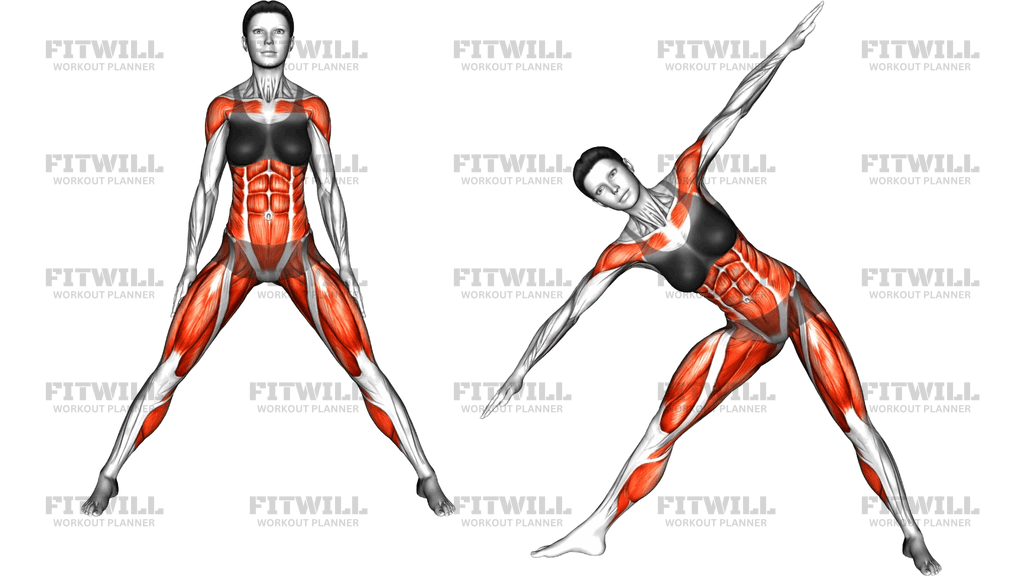
The main emphasis falls on the hamstrings along the back of each thigh, with strong involvement from the inner thigh muscles as they lengthen across the wide stance. The glutes and lower back also get a gentle stretch, and the calves join in once you fold deep enough. Keeping the spine long as you hinge is what separates a clean hamstring stretch from a rounded-back hang.
Setup matters more than depth here. Your feet should point slightly inward or straight ahead, your knees should stay soft rather than locked, and the fold should come from the hips, not from curling the spine. Walking the hands forward lets you control the intensity inch by inch, so there is never a reason to force the position or bounce at your limit.
In practice, the Wide Legged Forward Fold works well as a cooldown after leg training, a standalone mobility break during the workday, or a standing prep before squats and deadlifts when held for shorter periods. Aim for slow, steady breathing and hold the position for 30 to 60 seconds. If you feel sharp pulling, numbness, or pinching in the back of the thigh or lower back, back off the depth immediately and shorten the stance until the stretch feels broad and tolerable rather than aggressive.
[ Workout Log & Planner ]
Put your next workout in Fitwill
Keep your plan and training log ready when you are.


Instructions
- Stand tall with your feet roughly three to four feet apart, or about twice shoulder width, with toes pointing slightly inward or straight ahead.
- Place your hands on your hips, engage your core lightly, and keep a small bend in both knees so they are not locked back.
- Inhale to lengthen the spine, then exhale and hinge forward from the hips, leading with your chest rather than rounding your shoulders.
- Reach your hands to the floor under your shoulders and walk them forward as your range allows, keeping your fingertips or palms flat with fingers spread for support.
- Let your head hang relaxed between your arms so the back of your neck stays long, and shift your weight slightly toward the balls of your feet to deepen the hamstring stretch.
- Hold the end position for 30 to 60 seconds, breathing slowly and letting the hips sink a little further with each exhale.
- To come out, walk the hands back under the shoulders, press into the palms, and rise slowly to standing one vertebra at a time, keeping the knees soft.
- Bring the feet back together with a small step rather than a sudden movement, and pause upright for a breath before repeating if desired.
Tips & Tricks
- A rounded back is the most common fault in this stretch. If your spine curls like a cat, bend the knees more and shorten the range until you can hinge with a long, neutral spine.
- Locking the knees turns the stretch harsh and stresses the joint. Keep a soft bend in the legs, especially if your hamstrings feel like they are straining right behind the knee.
- Do not chase a wider stance too early. An overly wide position forces the inner thighs to fight the stretch and often makes the fold shallower, not deeper.
- Numb or tingling toes usually mean you have locked the knees or compressed the back of the leg. Bend the knees, reduce the depth, and re-hinge from the hips.
- If your hands cannot reach the floor comfortably, rest them on yoga blocks, a low stool, or the edges of the mat instead of hanging on by rounding your back.
- Keep your weight balanced across the whole foot. Dumping weight into the heels or letting the arches collapse inward reduces the inner thigh stretch and strains the knees.
- Avoid bouncing at your end range. The Wide Legged Forward Fold rewards long, steady holds with slow exhales far more than pulsing.
- Coming up too fast can leave you lightheaded, especially in a deep fold. Walk the hands in and roll up slowly with the head coming up last.
- Treat the stretch as symmetrical work: check that both hips are stacking evenly over the heels rather than drifting toward one side, which is easy to do without noticing.
Frequently Asked Questions
Which muscles does the Wide Legged Forward Fold stretch?
It primarily lengthens the hamstrings along the back of the thighs, with a strong stretch through the inner thighs due to the wide stance. The glutes, lower back, and calves also receive a milder stretch as you fold deeper.
Can beginners do the Wide Legged Forward Fold?
Yes, as long as they reduce the depth. Beginners can shorten the stance, bend the knees generously, and rest the hands on blocks or a chair until the hamstrings allow a fuller fold.
Why do my knees need to stay slightly bent during the Wide Legged Forward Fold?
A soft knee keeps tension on the hamstring muscle belly instead of yanking directly on the tendons behind the knee and the joint itself. As flexibility improves, you can gradually reduce the bend.
How wide should my stance be in the Wide Legged Forward Fold?
Start with your feet about twice shoulder width apart, roughly three to four feet, and adjust from there. The stance is wide enough when you feel the inner thighs engaging, but not so wide that your hips cannot hinge forward comfortably.
How long should I hold the Wide Legged Forward Fold?
Hold it for 30 to 60 seconds, breathing slowly and allowing a small amount of extra depth on each exhale. Two to three rounds after leg training or before bed works well for most people.
My lower back rounds when I fold forward. How do I fix it?
That usually means the hamstrings are not long enough to let you hinge that far yet. Bend the knees more, place your hands on blocks or your shins, and focus on tilting the pelvis forward while keeping the chest lifted.
Can I do the Wide Legged Forward Fold before a workout?
Short holds of 15 to 20 seconds are fine as part of a dynamic warm-up, but long holds of a minute or more are better saved for after training, since extended static stretching right before heavy lifting can temporarily reduce strength output.
What can I use instead of the Wide Legged Forward Fold if I cannot get my hands to the floor?
Rest your hands on yoga blocks, a sturdy chair, or the back of a sofa at whatever height keeps your spine long. A seated wide-legged forward fold is another good substitute that removes the balance and reach demands.
Is it normal to feel the Wide Legged Forward Fold behind the knees?
A mild pull there can happen, but sharp or pinpoint sensation behind the knee is a warning sign. Bend the knees, reduce the depth, and shift the stretch so it sits in the middle of the thigh rather than at the joint.