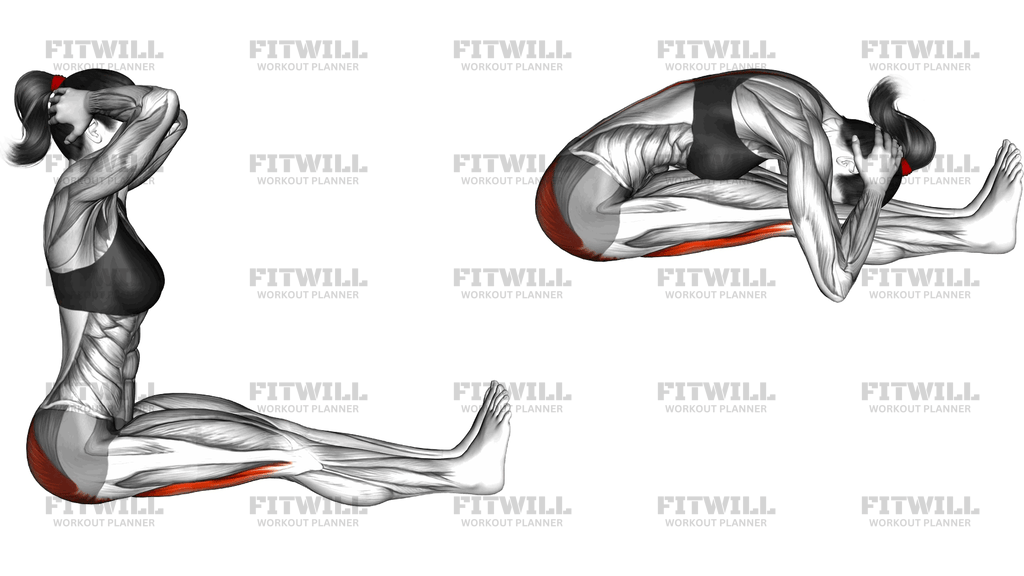
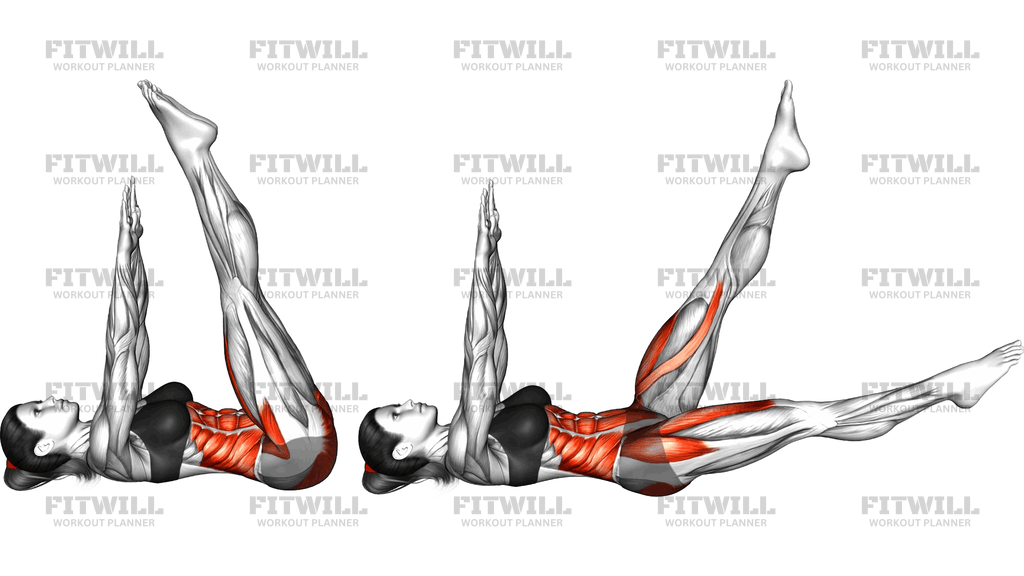
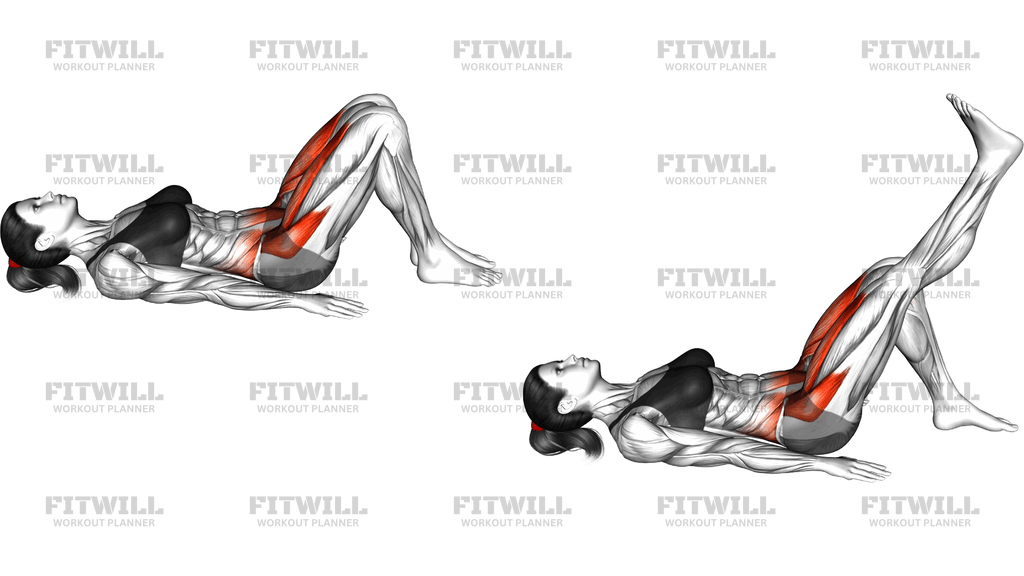
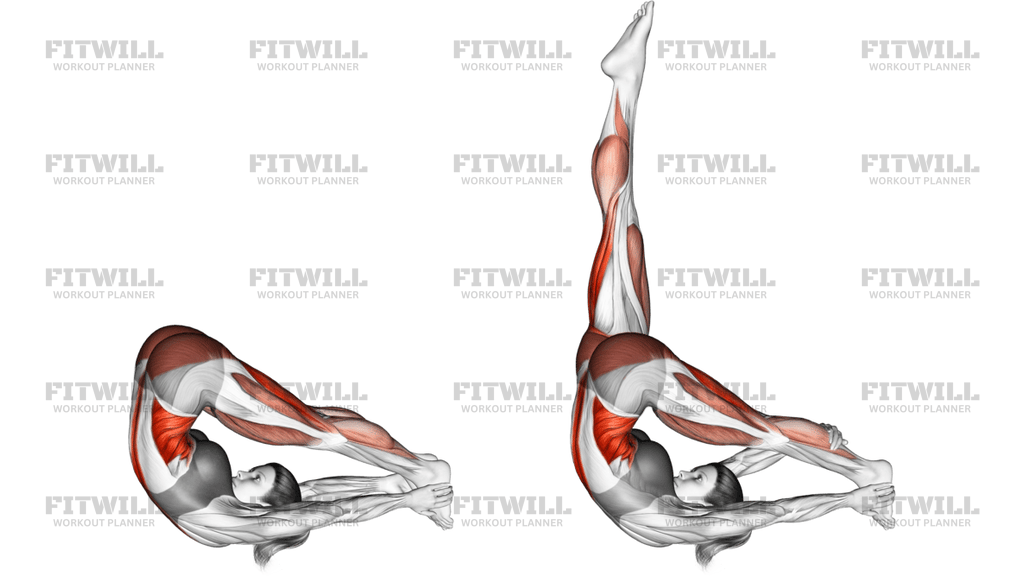
Teaser Pilates Stretching
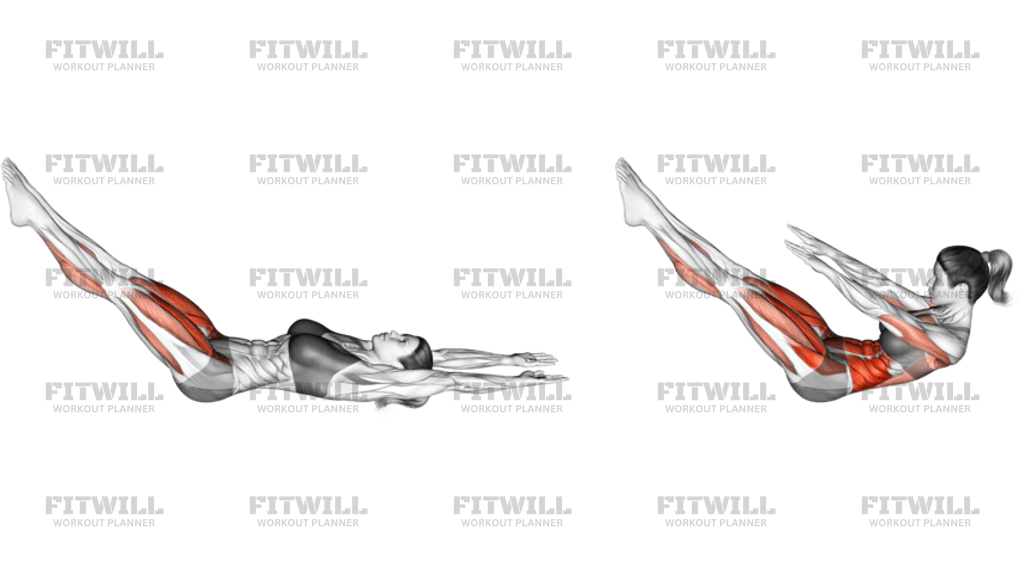
Teaser Pilates Stretching is the signature Pilates mat exercise that combines a rolling abdominal curl with a straight-leg lift, ending in a balanced V-sit position. You begin seated or lying back on the mat with legs extended, then peel your spine off the floor as your legs rise together, so that your torso and thighs form two sides of a wide V. Arms reach forward parallel to the legs, which gives the shape its classic long, diagonal line.
This movement is one of the most demanding bodyweight exercises in the Pilates repertoire, and it trains far more than the surface abdominals. The deep core and lower abs control the spinal articulation, the hip flexors raise and hold the legs, the inner thighs and adductors keep the legs drawing together, and the back extensors and shoulders work to hold the lifted chest and reaching arms. Because the whole body is balanced on the sit bones at the top, you also develop real control and body awareness rather than just strength.
The setup matters more than in most core exercises. Because there is no equipment and no support other than the mat, the length of your levers - your legs and arms - determines the difficulty. Keeping the knees slightly bent or placing the hands behind the thighs shortens the levers and makes the exercise manageable; fully extended legs and reaching arms make it the challenge it is known for. A stable, imprinted lower back before you lift is what keeps the work in the abdominals instead of straining the lumbar spine.
To execute it well, move through the spine rather than hauling yourself up in one piece. Exhale as you nod the chin, sequentially curl the head, ribs, and waist off the mat, and let the legs float up at the same pace so your torso and thighs meet in the middle. At the top, your weight should rest behind the sit bones, chest lifted, shoulders relaxed away from the ears, gaze on the toes. The return is just as important: lower the legs and spine back down with control, vertebra by vertebra, instead of dropping.
Teaser Pilates Stretching suits intermediate to advanced practitioners, dancers, and anyone with a solid mat-work foundation who wants to test integrated core control. Beginners can absolutely work toward it using bent knees, a band around the feet, or hands behind the thighs. Go slowly, keep the breath continuous, and stop the set as soon as the lower back starts to arch or the neck starts to strain - those are the two most common signs that control has left the movement.
[ Workout Log & Planner ]
Put your next workout in Fitwill
Keep your plan and training log ready when you are.


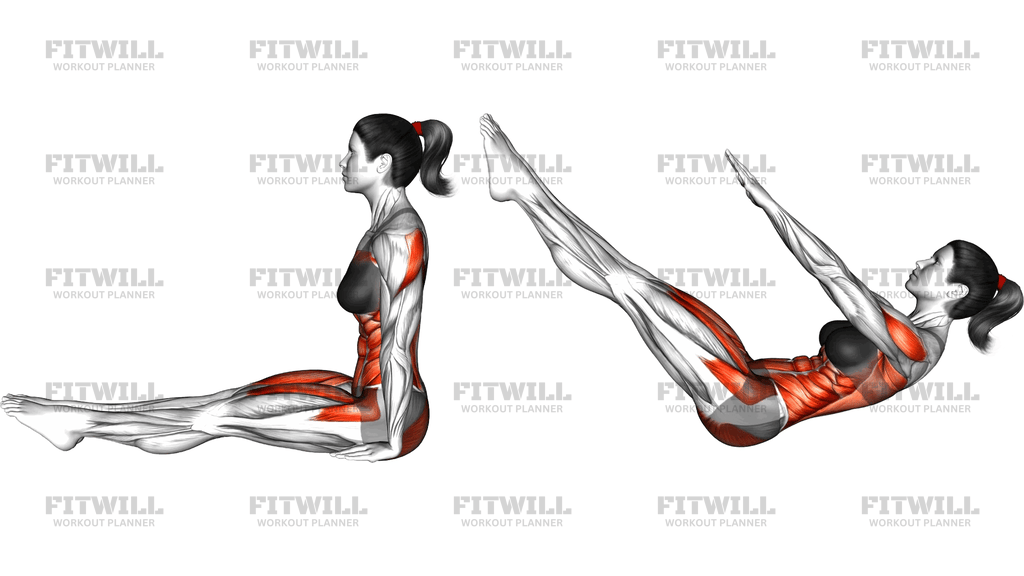
Instructions
- Sit on an exercise mat with your legs extended straight in front of you and your hands resting on the mat beside your hips, sitting tall on your sit bones.
- Gently draw your lower back into a slight imprint by engaging the deep core, and let your shoulders drop away from your ears.
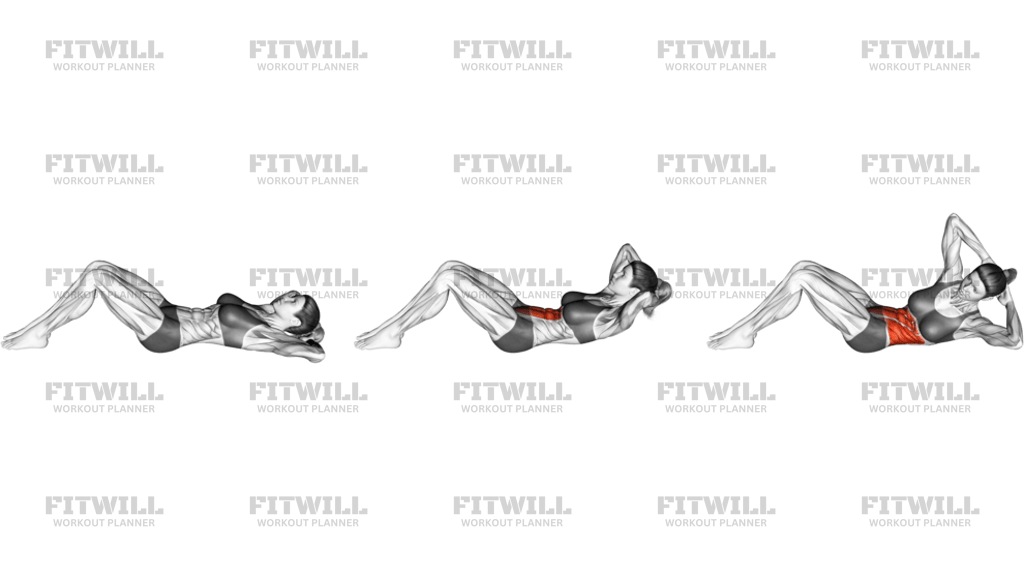
- Exhale and begin rolling your spine down onto the mat one vertebra at a time, keeping the legs long or softly bending the knees if that suits your current level.
- As your upper back settles down, inhale to prepare, keeping the ribs knit together and the arms resting by your sides or reaching overhead along the floor.
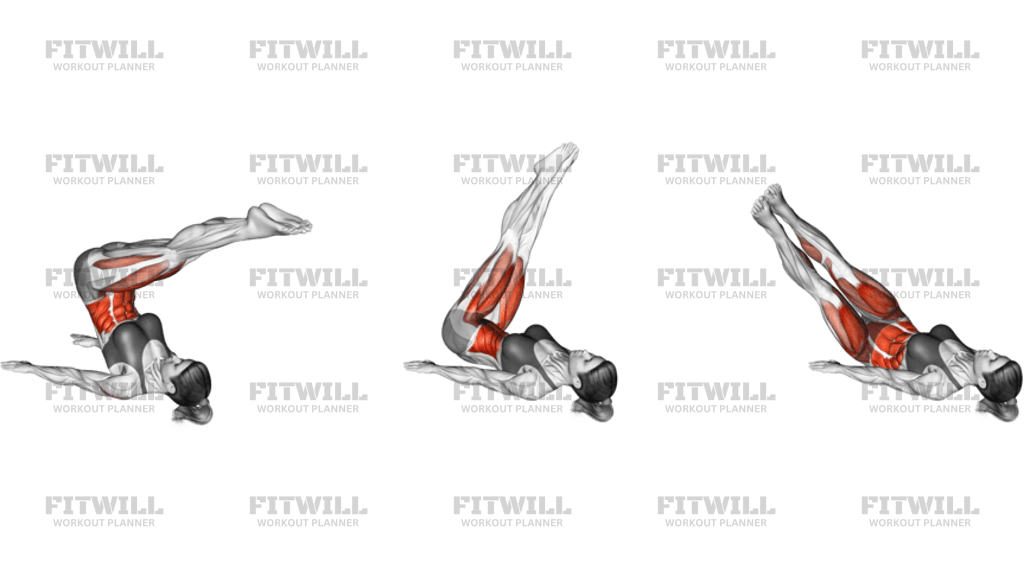
- Exhale again and simultaneously curl the head, shoulders, and upper spine up off the mat while the legs lift to roughly a 45-degree angle, arms sweeping forward to reach alongside the legs.
- Find the top position balanced behind the sit bones, forming a wide V with your torso and thighs, chest lifted, gaze toward the toes, and hold for one to three breaths.
- Inhale at the top, then exhale as you lower the legs and roll the spine back down with the same slow, segment-by-segment control.
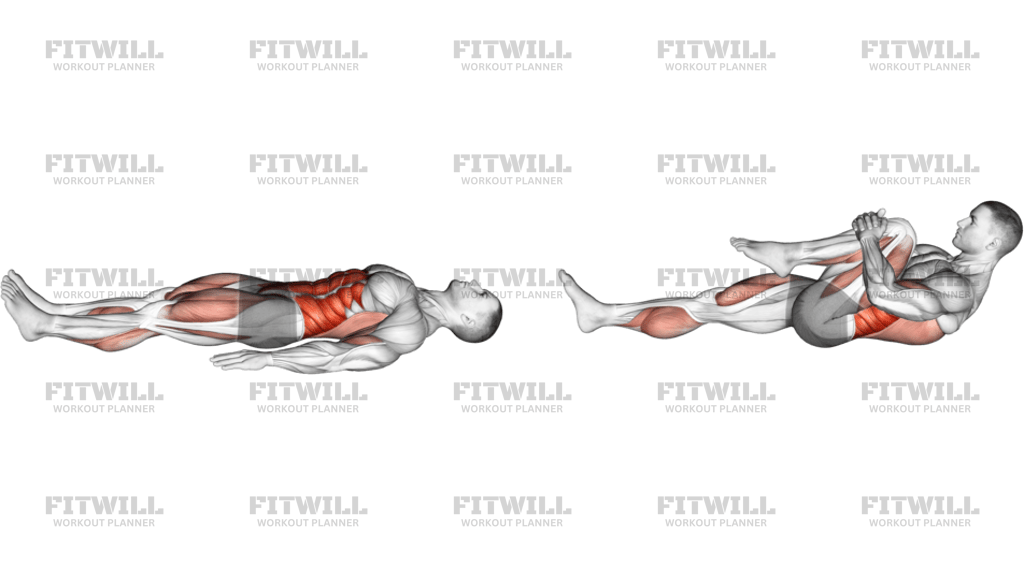
- Complete your repetitions, then reset by hugging the knees into the chest for a breath before the next rep or the next set.
Tips & Tricks
- If your feet shoot up faster than your torso, the hip flexors are doing all the work - slow the legs down and emphasize the spinal curl starting from the breastbone.
- A lower back that pops off the mat during the descent usually means the legs are too heavy for your current control; bend the knees or lower the legs to a higher angle until the imprint holds.
- Avoid yanking on the neck with the hands if you clasp behind your thighs - press the hands gently into the thighs for assistance instead of pulling the head forward.
- Stop the roll-down just above the lower ribs on the way down so the abdominal wall stays under tension; fully releasing onto the floor turns the rep into a dead stop and makes the next curl harder.
- Squeeze the inner thighs lightly together as the legs lift - this keeps the legs from drifting apart and helps the hip flexors work from a stable base.
- Keep the arms reaching toward the toes rather than the thighs; reaching low collapses the chest and rounds the upper back.
- Breathe out on the hardest part, the lift, and in on the return - holding the breath is a common sign the effort is too high.
- Practice the top position alone by lifting into the V with hands behind the thighs and holding there before adding the full rolling entry and exit.
Frequently Asked Questions
Which muscles does Teaser Pilates Stretching work the most?
The abdominals, especially the deep core and lower abs, are the primary movers, with strong support from the hip flexors that raise the legs. The inner thighs, back extensors, and shoulders contribute to holding the balanced V position.
Is Teaser Pilates Stretching suitable for beginners?
It is generally an intermediate to advanced exercise, but beginners can build toward it with bent knees, hands behind the thighs, or a resistance band looped around the feet. Start with a smaller range and only add the full version once the lower back stays imprinted throughout.
Why do my hip flexors cramp during the Teaser?
Cramping usually means the hip flexors are compensating for abdominals that are not fully engaged. Bend the knees slightly, slow the leg lift, and focus on curling the torso up first so the abs share the load.
How high should my legs be at the top of Teaser Pilates Stretching?
Around 45 degrees is the classic position, which balances the torso and thighs in a V. The lower the legs, the harder the core has to work, so keep them higher until you can hold the position without the back arching.
Can I do the Teaser without an exercise mat?
A mat is strongly recommended because the exercise rolls directly over the spine and the sit bones carry your full weight at the top. A carpeted floor works in a pinch, but hard surfaces make the spinal articulation uncomfortable and can lead to bracing instead of control.
What is the most common mistake in Teaser Pilates Stretching?
Hauling the chest up in one rigid piece while the legs float independently, which shifts the work to the hip flexors and neck. The fix is moving one vertebra at a time and coordinating the leg lift with the spinal curl so they finish together.
What can I use instead of the full Teaser if it is too difficult?
Single-leg teaser with one foot anchored on the mat, teaser with bent knees, or the roll-up alone all train the same spinal articulation and abdominal control. A band around the feet also reduces the load while keeping the movement pattern intact.
Is it safe for my lower back?
When the deep core stays engaged and the spine rolls segment by segment, the movement is well tolerated by healthy practitioners. If you feel pinching or arching in the lumbar spine, reduce the range, bend the knees, or consult a qualified instructor before continuing.
How many repetitions of Teaser Pilates Stretching should I do?
Three to six slow, high-quality repetitions per set is typical in Pilates practice. Because control is the goal, stop as soon as form slips rather than pushing to a higher rep count.