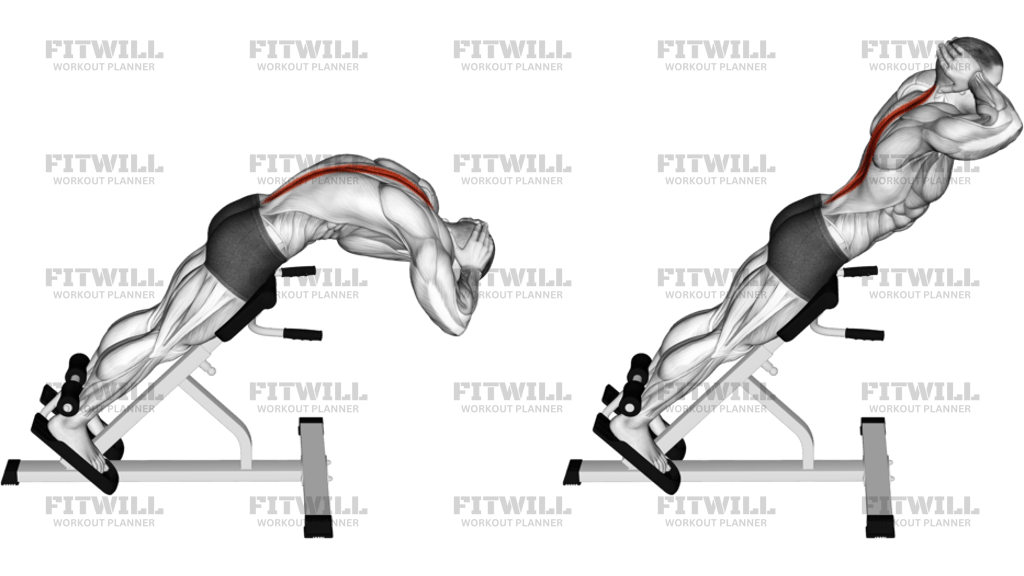
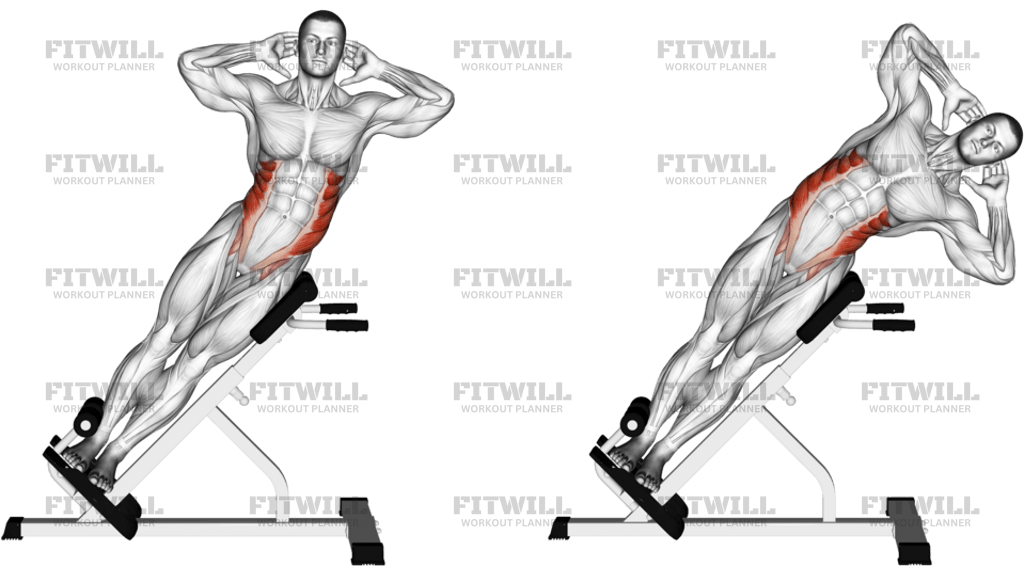
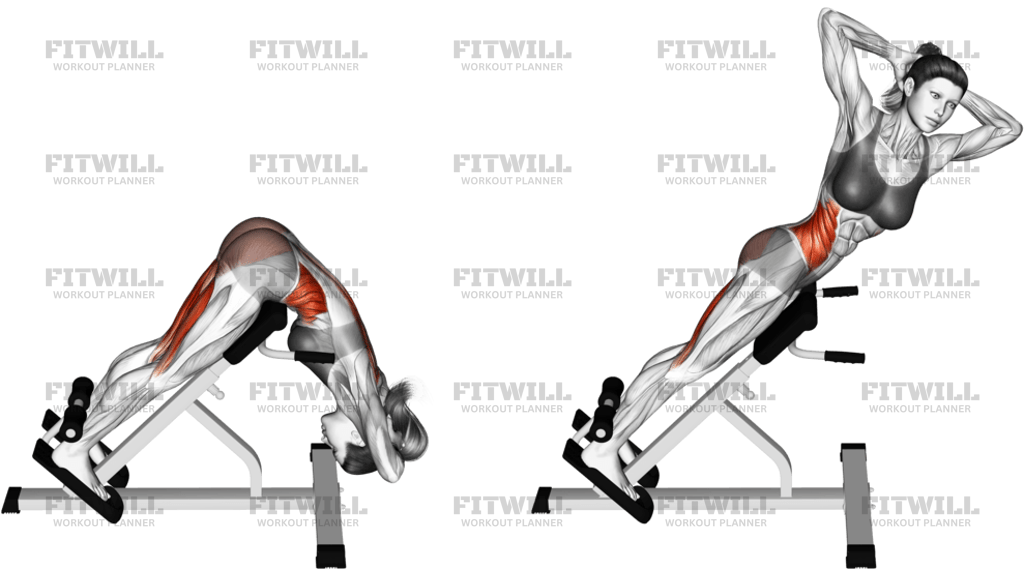
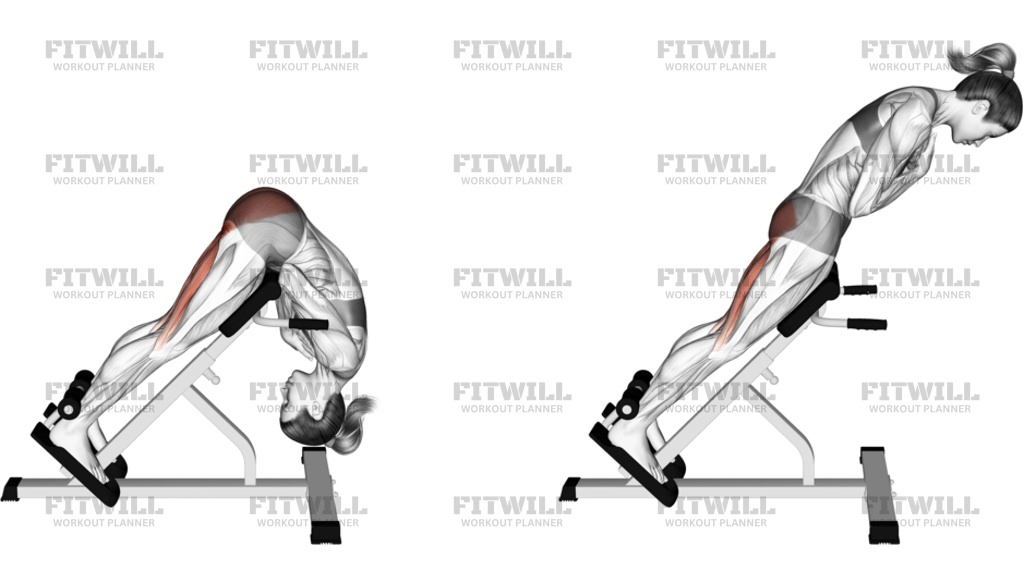
Dumbbell Hyperextension (Version 2)
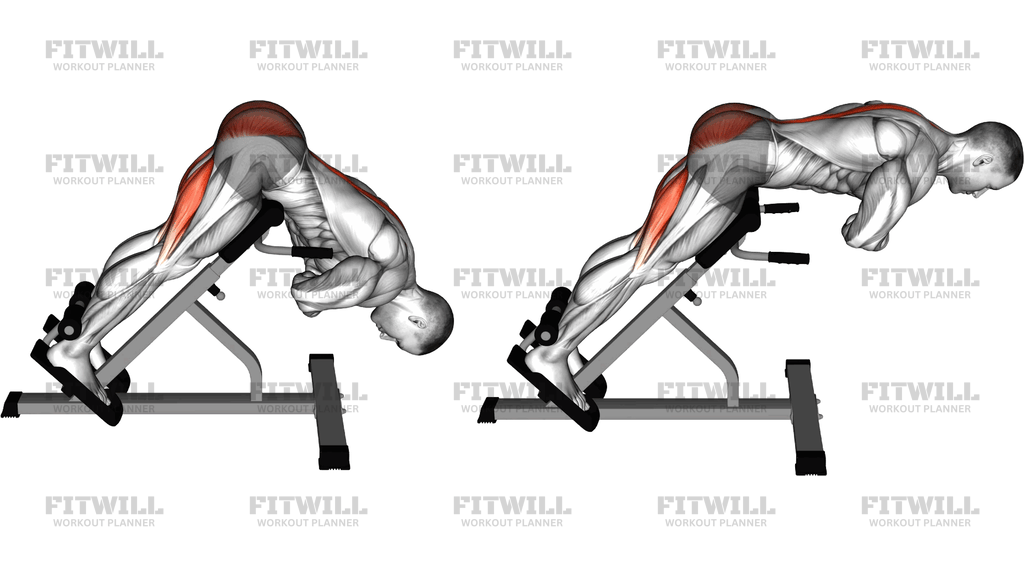
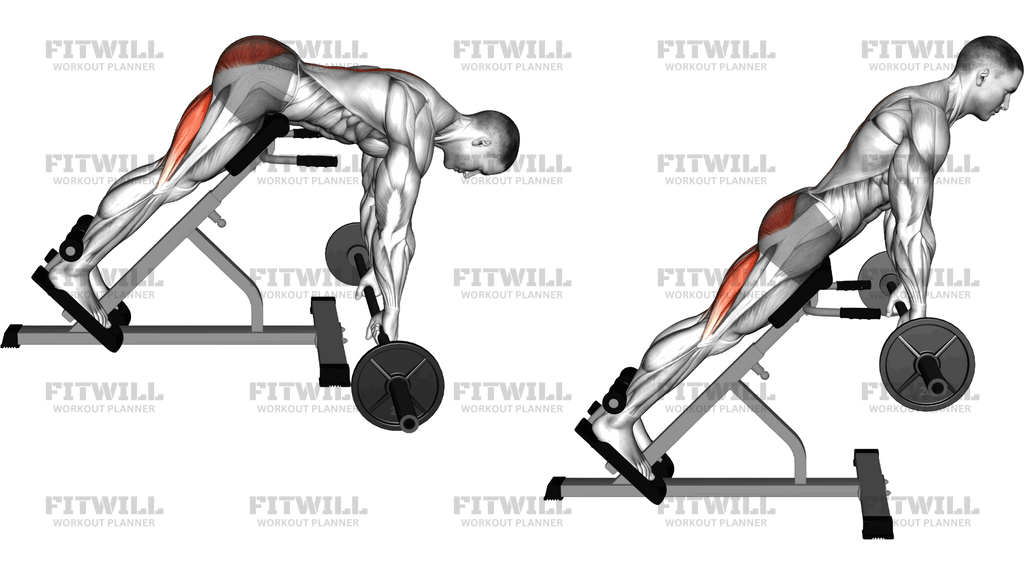
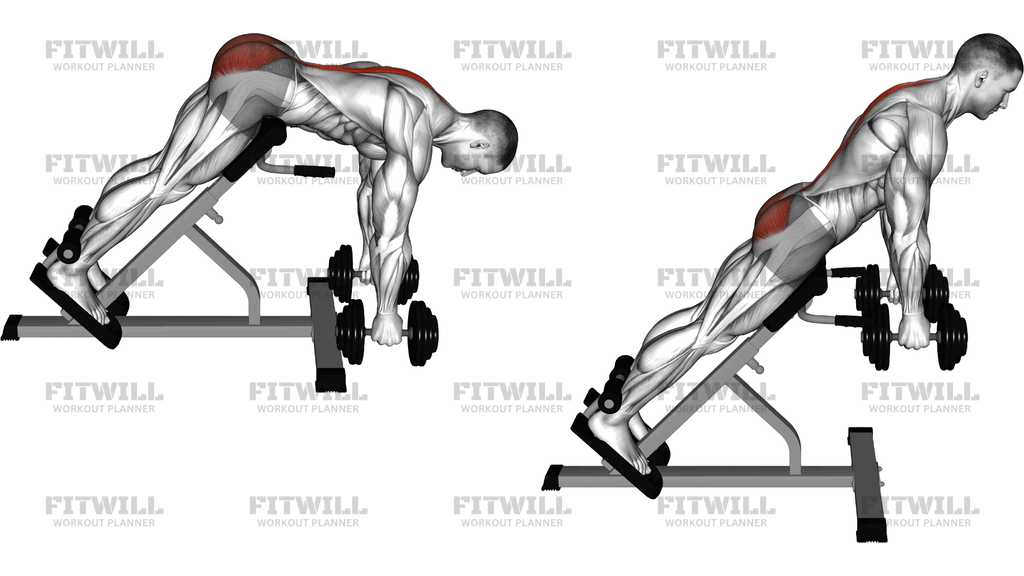
The Dumbbell Hyperextension (Version 2) is a weighted back extension performed on a Roman chair or 45-degree hyperextension bench. Unlike the bodyweight version, you hold a dumbbell in each hand so the weight hangs from your arms and travels with your torso through every rep. This turns a classic posterior-chain builder into a loaded strength exercise for the lower back, glutes, and hamstrings.
This movement suits lifters who have already mastered the unweighted hyperextension and want progressive overload without standing under a barbell. It is a common accessory for deadlift and squat training, since it strengthens hip extension and trunk stability in positions that transfer directly to those lifts. Because the dumbbells hang below the shoulders at the bottom, the exercise is actually easier to load gradually than a weighted back extension with a plate hugged to the chest — you can start with light dumbbells and add weight in small increments.
Setup matters more here than in most assistance work. Anchor your feet firmly under the ankle pads, position your upper thighs across the main pad so your hips can hinge freely, and make sure the dumbbells hang straight down with your arms relaxed. If the pad sits too high on your thighs, your range shortens; too low, and you lose the pivot point and strain the hip flexors at the bottom. Take a moment to get this right before adding load.
Execution comes down to hinging at the hips rather than rounding and lifting with the spine. Lower your torso toward the floor under control while the dumbbells hang vertically from your shoulders, then drive your hips into the pad and raise your trunk until your body forms a straight line from head to heels. Squeeze the glutes briefly at the top, but do not hyperextend past neutral or fling the weight up with momentum.
Keep the weights conservative at first. A loaded hyperextension places direct stress on the erector spinae, and the demands rise quickly as the dumbbells get heavier. Stop the set if you feel the work shifting into sharp spinal discomfort, and always control the lowering phase — dropping the torso with heavy dumbbells in hand is the most common way this exercise goes wrong.
[ Workout Log & Planner ]
Put your next workout in Fitwill
Keep your plan and training log ready when you are.


Instructions
- Set a dumbbell of your chosen weight on each side of the hyperextension bench within easy reach.
- Mount the Roman chair facing the large pad, hook your ankles under the rear ankle rollers, and rest your upper thighs against the pad so your hips sit just behind its edge.
- Bend down to pick up both dumbbells and let your arms hang straight toward the floor, palms facing in, with a neutral head position looking slightly ahead of your torso.
- Cross your arms loosely over your chest or hold the dumbbells so they cannot swing, then brace your abdominal wall as if preparing for a light punch.
- Hinge at the hips and lower your torso toward the floor until you feel a mild stretch across the hamstrings, keeping the dumbbells hanging vertically and your back flat rather than rounded.
- Drive your hips down into the pad and raise your trunk by squeezing the glutes and hamstrings until your head, hips, and heels form one straight line.
- Pause for a beat at the top without arching past neutral, holding the dumbbells steady so they do not swing forward.
- Lower yourself back down over two to three seconds, exhaling as you rise and inhaling as you descend.
- Complete all reps, then carefully sit back on the bench, set the dumbbells on the floor, and unhook your ankles from the rollers.
Tips & Tricks
- Start lighter than you think you need — a weight that feels easy for ten reps can feel doubled by rep six because the dumbbells lengthen the lever arm on your lower back.
- If your torso keeps rounding at the bottom, the dumbbells are likely too heavy; reduce the load until you can keep a neutral spine through the full range.
- Do not chase extra height at the top. Lifting past a straight line pushes the load into spinal extension instead of hip extension, which is where strain creeps in.
- Keep your neck in line with your spine. Craning the head up as you rise is a common habit on hyperextensions and adds unnecessary tension to the upper back.
- If the dumbbells want to drift forward at the top, your hips are sliding off the pad. Reset so the pad contacts your upper thighs and the hip crease sits just past its edge.
- Warm up with ten to fifteen bodyweight reps first; the pattern should feel automatic before you add load to the hands.
- Holding the dumbbells at the same spot on each rep keeps the resistance consistent — if they swing, the rep quality drops even if the weight moves.
- Place the dumbbells far enough back that your torso can descend without clanging into the bench frame, and pick a spot you can reach again when the set ends fatigued.
- Pair this with hip hinge work like Romanian deadlifts on different days, not back-to-back, so your lower back gets recovery between heavy sessions.
Frequently Asked Questions
Which muscles does the Dumbbell Hyperextension (Version 2) work?
The erector spinae of the lower back work isometrically and dynamically to control and raise the trunk, while the glutes and hamstrings drive hip extension. The added dumbbells also lightly challenge grip and shoulder stabilizers as the arms hang.
How is holding dumbbells different from the bodyweight hyperextension?
The dumbbells add external load that scales with your strength, so the exercise can keep progressing long after bodyweight reps stop being challenging. The weight also pulls slightly differently than a chest plate, since it hangs from your hands below the shoulders.
Is the Dumbbell Hyperextension (Version 2) safe for beginners?
Beginners should first learn the unweighted hyperextension and own the hip hinge pattern with a neutral spine. Once fifteen or more clean bodyweight reps feel easy, adding light dumbbells is a reasonable next step.
How heavy should the dumbbells be?
Choose a weight you can lower under control for ten to fifteen reps with a flat back. If your torso rounds at the bottom or you have to heave up at the top, the dumbbells are too heavy.
Should I go as high as possible at the top of each rep?
No — stop when your trunk lines up with your legs. Extending beyond neutral adds stress to the lumbar spine without giving the glutes or hamstrings extra work.
Why do my hamstrings ache more than my lower back?
That is normal. The hamstrings cross the hip and work hard through the stretch at the bottom, so they often feel this movement first, especially with limited hip flexibility.
What can I use instead of a Roman chair for this exercise?
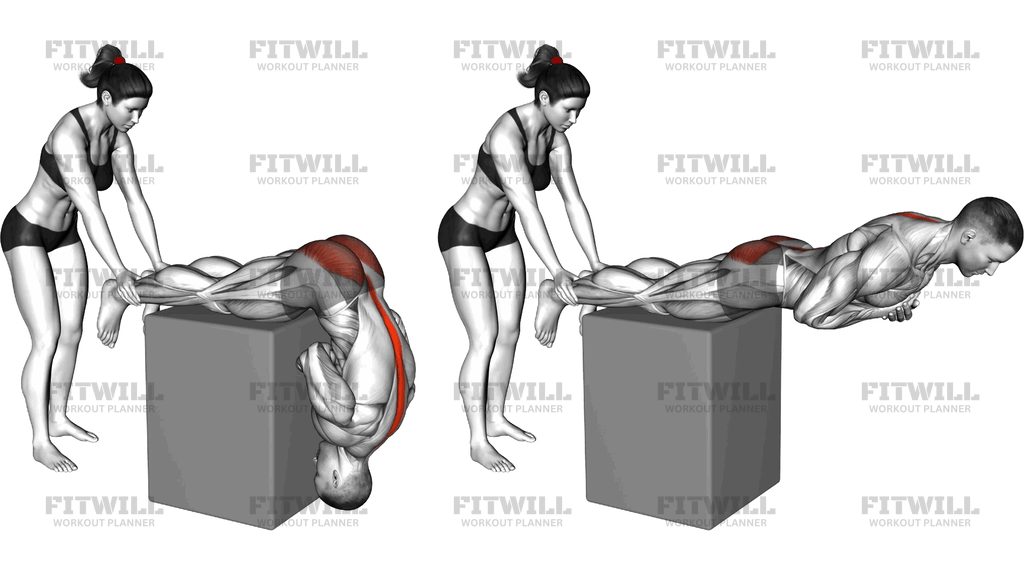
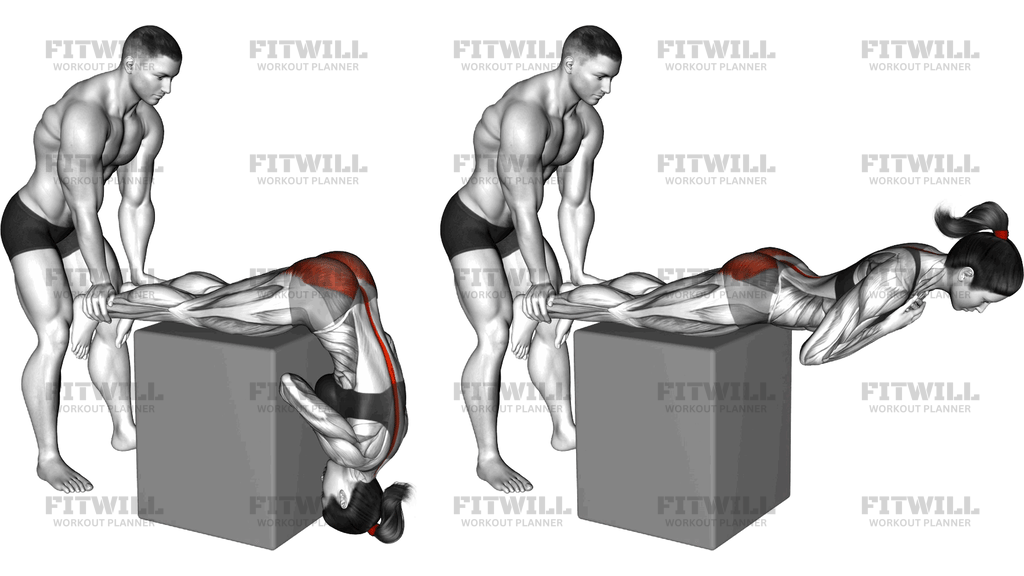
A flat bench with your hips at the edge and your ankles anchored by a partner works in a pinch, or you can hold a single dumbbell or plate against the chest on a standard 45-degree back extension bench.
Where exactly should my hips sit on the pad?
Place the pad across your upper thighs with the hip crease just past its edge, so your pelvis can tip forward freely. If your hips rest on the pad itself, the movement turns into pushing the pad instead of hinging at the joint.
Can I do the Dumbbell Hyperextension (Version 2) if my lower back gets sore after deadlifts?
Mild muscular soreness is common, but if deadlifts leave your lower back aggravated, talk to a qualified professional before loading spinal-extension work. When cleared, keep the dumbbells light and prioritize slow, controlled tempo over load.