Seated Back Press
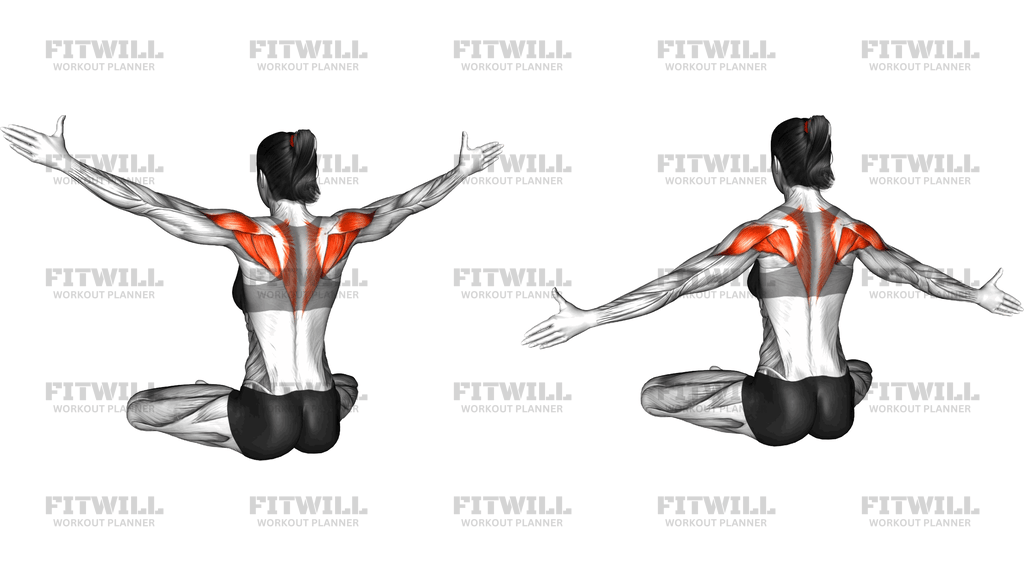
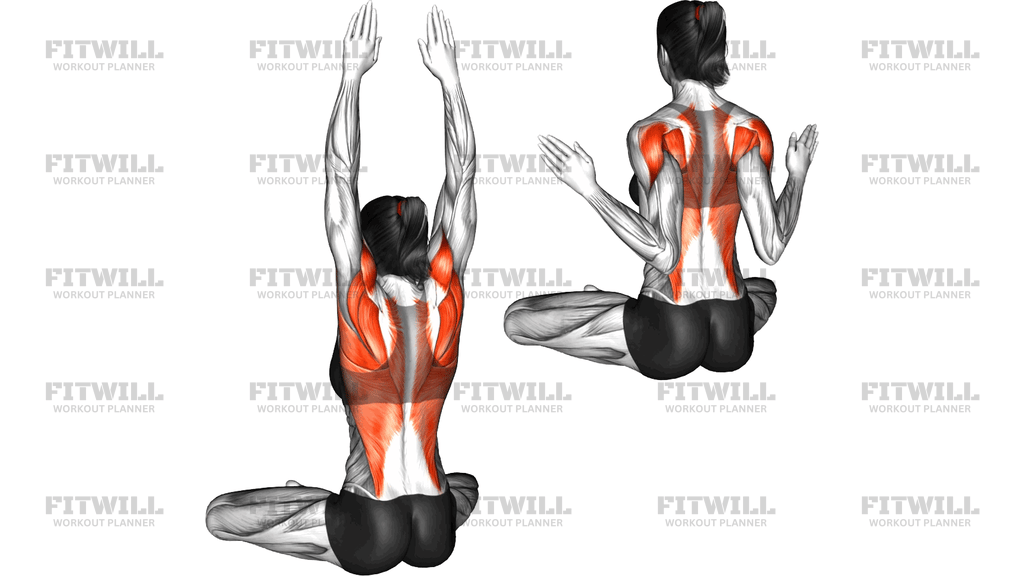
The Seated Back Press is a bodyweight movement performed sitting on the floor, usually cross-legged, that trains the muscles responsible for pulling your shoulder blades together and down. From a tall seated position with your arms reaching overhead, you bend your elbows and press them back and down until your upper back is fully engaged, then reverse the motion. It looks simple, but that sweeping arc of the arms is exactly what makes it effective for the often-neglected back of the shoulder and the mid-back.
The main work is done by the rear deltoids, rhomboids, and the middle and lower fibers of the traps, with the lats assisting as the arms travel down and the erector spinae working isometrically to keep your spine upright. Because you are seated cross-legged, your hips and core also contribute quietly to the movement by holding your posture steady while your arms move.
This exercise suits almost anyone, but it is especially useful if you spend long hours at a desk or notice your shoulders rounding forward. The overhead-to-back arm path takes the shoulder blades through a full cycle of elevation, retraction, and depression, which helps restore the shoulder mechanics that everyday posture tends to erode. It is also a low-load option for warming up before pressing or pulling workouts, since it activates the rear shoulder and mid-back without stressing the joints.
Setup matters more than it appears. Sitting tall with your sit bones grounded and your spine long gives your shoulder blades a stable base to move from. If you slouch, the shoulder blades tilt forward and the press turns into a partial, less effective motion. If your hips are tight and sitting cross-legged is uncomfortable, elevate your hips on a folded mat or cushion so your knees can drop below your hips.
To execute the movement well, think of leading with your elbows rather than your hands. As the arms come down from overhead, the elbows bend and drive back and slightly out, as if you were trying to touch your shoulder blades together behind you. The end position resembles a wide letter W with your forearms vertical and palms facing forward. Squeeze briefly there, then extend the arms back up with the same control.
Common use cases include posture routines, shoulder health circuits, and warm-ups for back day. Because there is no external load, the exercise is gentle on the joints, but that also means the value comes from quality of the squeeze rather than speed or reps. Move deliberately, keep your ribs from flaring, and treat each rep as a chance to feel the upper back switch on.
[ Workout Log & Planner ]
Put your next workout in Fitwill
Keep your plan and training log ready when you are.


Instructions
- Sit on the floor with your legs crossed and your sit bones planted evenly, resting your hands on your knees for a moment to settle into a tall, upright spine.
- Reach both arms straight overhead with your palms facing each other, shoulders drawn slightly away from your ears.
- Brace your core lightly and keep your ribs stacked over your pelvis so your lower back does not arch as the arms move.
- Begin lowering your arms by bending your elbows out to the sides, letting the upper arms rotate back as they descend.
- Press your elbows back and down until your forearms are roughly vertical, palms facing forward, in a wide W shape behind your body.
- At the bottom, squeeze your shoulder blades together and down toward your spine, and hold the contraction for one to two seconds.
- Reverse the path by extending your elbows and reaching your arms back overhead without letting your lower back arch or your shoulders shrug.
- Exhale as you press the elbows back and inhale as you return the arms overhead.
- Complete your reps in a smooth, controlled rhythm, then release your arms, shake out your shoulders, and reset your seated posture before the next set if needed.
Tips & Tricks
- If your knees ride high and tip you backward, sit on a folded mat or low cushion so your hips sit above your knees; the press works far better from a neutral pelvis.
- The most common mistake is letting the shoulders creep up toward the ears at the top of the movement. Start each rep by settling the shoulder blades down before the arms travel.
- Do not let your hands lead the descent. If your elbows stay close to your ribs, the rear shoulders stop doing the work; drive the elbows wide and back instead.
- Watch for rib flare as the arms come overhead, a sign your lower back is arching to compensate. Tighten your abs slightly and reduce the overhead reach until your ribs stay down.
- The squeeze is the point of this exercise. A one-second hold at the W position builds far more awareness in the rhomboids than rushing through reps.
- Keep your neck long and your gaze forward. Pushing your chin forward during the press is a common habit that shifts tension into the upper traps.
- If one side feels tighter, slow down the descent on that side for a few reps rather than adding repetitions to the looser side.
- Because the load is light, this movement pairs well before rows or pulldowns as a warm-up; two sets of ten to fifteen controlled reps is usually enough.
Frequently Asked Questions
Which muscles does the Seated Back Press work?
The rear deltoids, rhomboids, and middle and lower traps do the primary work, while the lats assist as the arms travel down and the erector spinae holds your spine upright. Your core and hips contribute by keeping the cross-legged seat stable.
Is the Seated Back Press suitable for beginners?
Yes. Because it uses only your body weight, the resistance is low and the movement is easy to learn. Beginners should focus on the elbow-back path and the shoulder blade squeeze rather than the number of reps.
Why is the exercise done sitting cross-legged instead of standing?
Sitting removes momentum from the legs and forces your trunk to hold you upright, which isolates the upper back and rear shoulders. It also makes it easier to notice if your spine is slouching during the press.
What should the end position of the press look like?
Your elbows should be bent out to the sides and pressed back, with forearms roughly vertical and palms facing forward, forming a wide W shape. Your shoulder blades should feel drawn together and down toward your spine.
I feel this mostly in my neck and upper traps. What am I doing wrong?
Your shoulders are likely shrugging as the arms move, or your chin is pushing forward. Reset by lengthening your neck, settling the shoulder blades down first, and reducing the overhead range until the tension stays in the mid-back.
Can I do the Seated Back Press if sitting cross-legged hurts my hips or knees?
Yes. Sit on a cushion, folded mat, or low bench with your hips elevated so your knees can relax downward, or sit with your legs extended in front of you. The arm movement stays identical as long as your spine is tall.
How many reps and sets should I do?
Two to three sets of ten to fifteen slow reps works well for activation and posture work. Because the load is light, prioritize the quality of the squeeze at the W position over adding volume.
Can the Seated Back Press replace rows or pulldowns in my routine?
No. It is a low-load activation and mobility exercise, not a substitute for weighted pulling work. Use it as a warm-up or accessory before rows, pulldowns, or pressing sessions.
Should I hold the squeeze at the bottom of the press?
A brief one to two second hold is recommended because it reinforces shoulder blade retraction, which is the main skill this exercise teaches. Keep the hold comfortable and avoid tensing your neck while you pause.
Is it safe to do every day?
For most people, yes. The movement is gentle and load-free, so daily use as a posture break or warm-up is generally fine. Stop if you feel sharp pain in the shoulder joint and reduce your range of motion.