Cable Pulldown
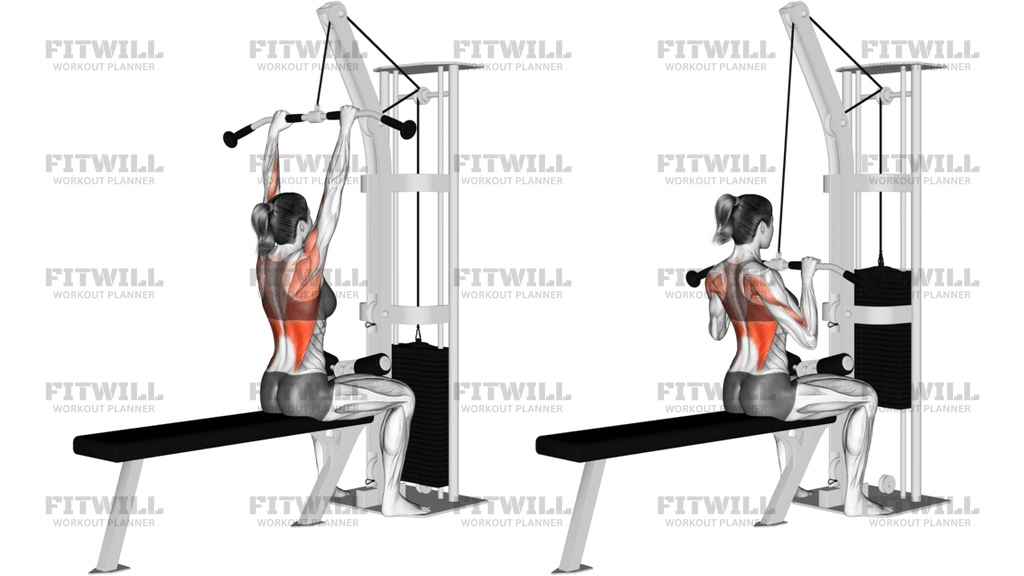
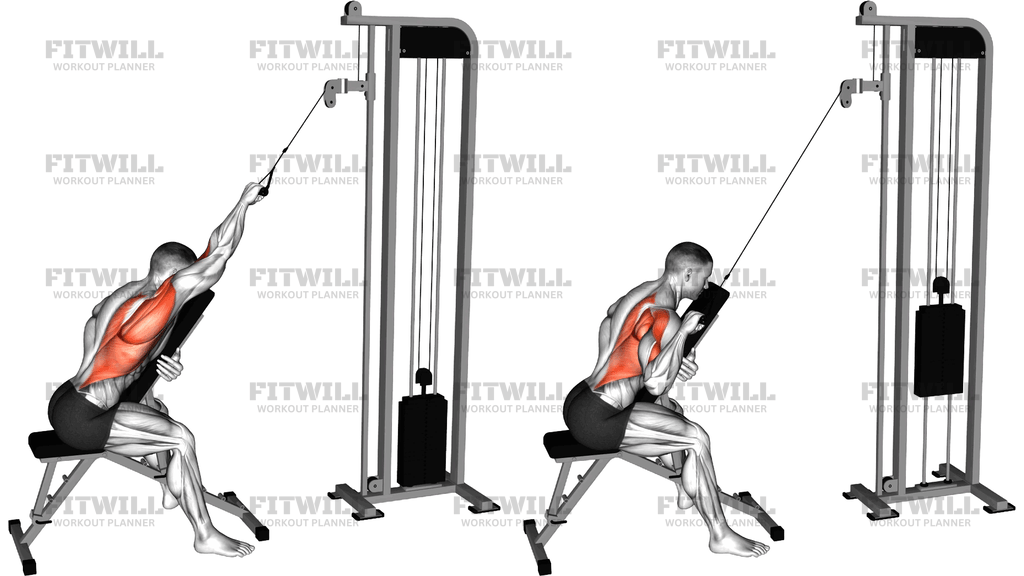
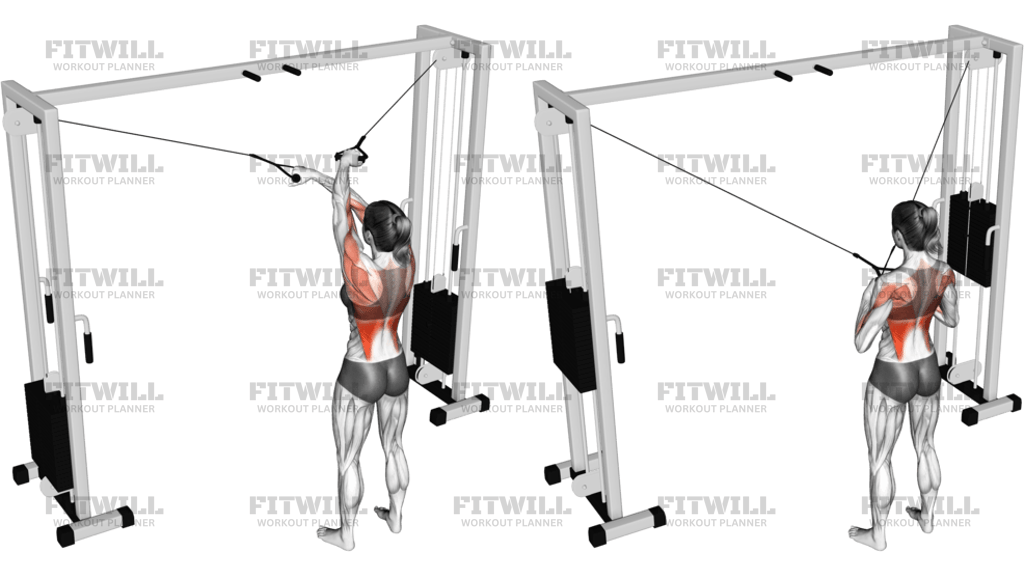
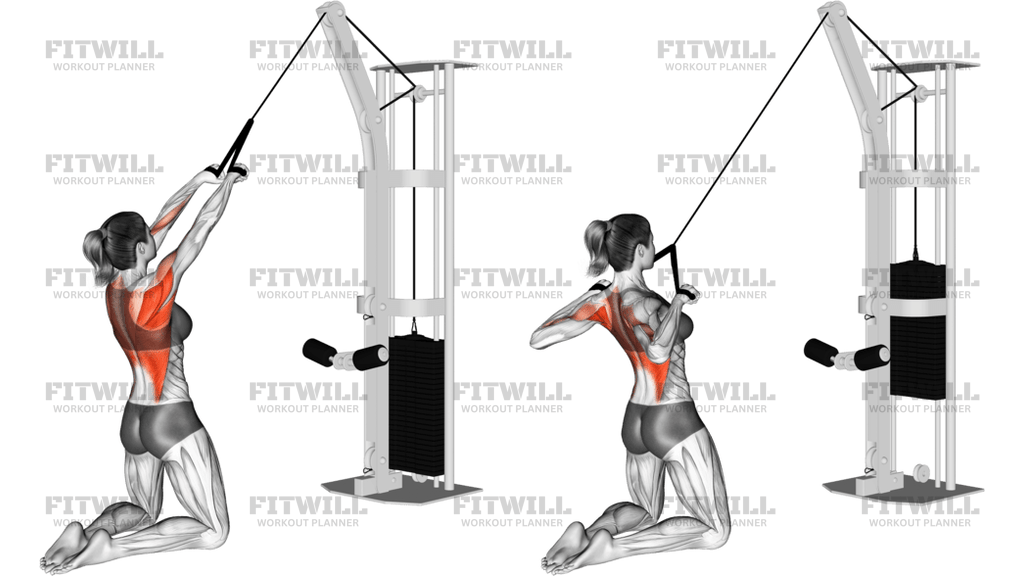
Cable Pulldown here is a seated high-cable pulldown performed on a bench under a pulley with a straight or slightly angled bar attachment. The movement is built around drawing the bar from full overhead extension down to the upper chest while keeping the torso tall and the shoulders packed. It is a useful pulling exercise for building the lats, upper back, rear shoulders, and elbow flexors without the free-body instability of a barbell pull.
The setup matters because the cable line, bench distance, and grip width determine whether the pull feels clean or cramped. When you sit far enough forward, the cable should travel almost straight up and down through the rep, and the bar should arrive at the upper chest without forcing you to lean back aggressively. That makes it easier to keep tension on the back muscles instead of turning the movement into a body swing or a shrugging motion.
A good rep begins with the ribs stacked over the pelvis, a light arch through the upper back, and the arms reaching long overhead. From there, drive the elbows down and slightly back while keeping the chest lifted and the neck relaxed. The bar should travel in a smooth arc to the top of the chest or collarbone area, depending on your grip and shoulder mobility. On the way back up, let the shoulders rise only enough to restore the overhead stretch, then stop before losing control of the torso.
This exercise is especially useful when you want a controlled vertical pull, a back-focused accessory lift, or a machine-supported option that still allows a strong range of motion. It fits well in hypertrophy work, technique practice, or as a lower-fatigue alternative to heavier lat pulldown variations. Beginners can use it as long as the load is light enough to keep the elbows tracking cleanly and the spine quiet.
The most important form goal is to make the back do the work without turning the set into a half-rep shrug or a leaning row. If the shoulders creep toward the ears, the chest collapses, or the bar has to be yanked downward, the load is too heavy or the bench position is off. Smooth control at both ends of the rep matters more than chasing extra weight.
[ Workout Log & Planner ]
Put your next workout in Fitwill
Keep your plan and training log ready when you are.


Instructions
- Set a bench under the high pulley so you can sit upright with the cable running just in front of your face and down toward the upper chest.
- Choose a straight or slightly angled bar attachment and take a shoulder-width overhand grip unless your shoulder mobility requires a slightly wider hold.
- Sit tall with your feet flat, thighs anchored on the bench, and your torso stacked over your pelvis before the first rep.
- Reach both arms overhead until the elbows are straight and the shoulders are elevated only as much as needed for a full start position.
- Brace your midsection and keep the chest lifted as you begin the pull, avoiding any lean-back to start the rep.
- Drive the elbows down and slightly back while pulling the bar to the top of the chest or collarbone area.
- Squeeze the back for a brief pause at the bottom without letting the wrists curl or the shoulders shrug upward.
- Return the bar slowly to full overhead extension, keeping the cable under control and the torso still.
- Reset your shoulders at the top, breathe, and repeat for the planned number of reps.
Tips & Tricks
- If the bar stops high on the chest because your grip is too wide, narrow the grip slightly and let the elbows track closer to the ribcage.
- Keep the sternum lifted, but do not turn the rep into a big lean-back; the torso should stay nearly vertical.
- Think about pulling the elbows into your back pockets instead of curling the bar with the hands.
- A controlled top stretch is useful, but do not let the cable yank your shoulders into a loose, hanging position.
- Stop the descent if the bar starts drifting behind the head; this version of the pulldown should finish in front of the face and chest.
- Use a load that lets you pause for a second at the bottom without jerking your torso backward.
- Exhale as the bar comes down and inhale as you let the arms travel back overhead.
- If your neck tightens, lower the load and keep the shoulders away from the ears throughout the set.
Frequently Asked Questions
What muscles does this seated cable pulldown work?
It mainly trains the lats and upper back, with help from the rear shoulders, biceps, and the muscles that stabilize your trunk and shoulder blades.
Should I pull the bar to my chest or behind my neck?
Pull it to the upper chest or collarbone area. Behind-the-neck pulldowns usually force more shoulder stress and are not necessary for this version.
Why am I sitting on a bench instead of using the usual pulldown seat?
The bench changes the body angle and makes the exercise more of a controlled seated cable pulldown. It can be useful when you want strict torso position and a strong overhead stretch.
How wide should my grip be on the bar?
A shoulder-width or slightly wider overhand grip is usually the best starting point. Too wide can shorten the range and make it harder to bring the bar to the chest.
What should I feel working during the pull?
You should feel the lats and upper back doing most of the work, with your biceps assisting and your shoulders staying packed down.
Can beginners use this exercise safely?
Yes, if they use a light load and keep the torso still. The key is to control the bar path and avoid leaning back to finish the rep.
What is the most common mistake with this movement?
The usual mistake is turning it into a body swing or shrug, which shifts tension away from the back and onto the shoulders and lower back.
How far should I let the arms go on the way up?
Let the arms return to full overhead extension, but keep control so the shoulders do not collapse or lose their position under the cable.