Chair Squat Calf Rock
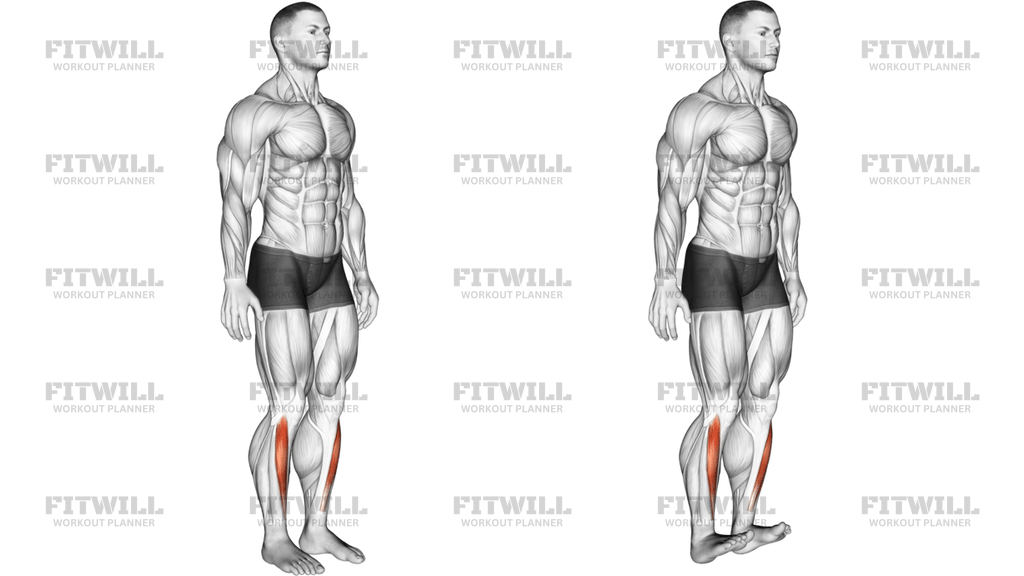
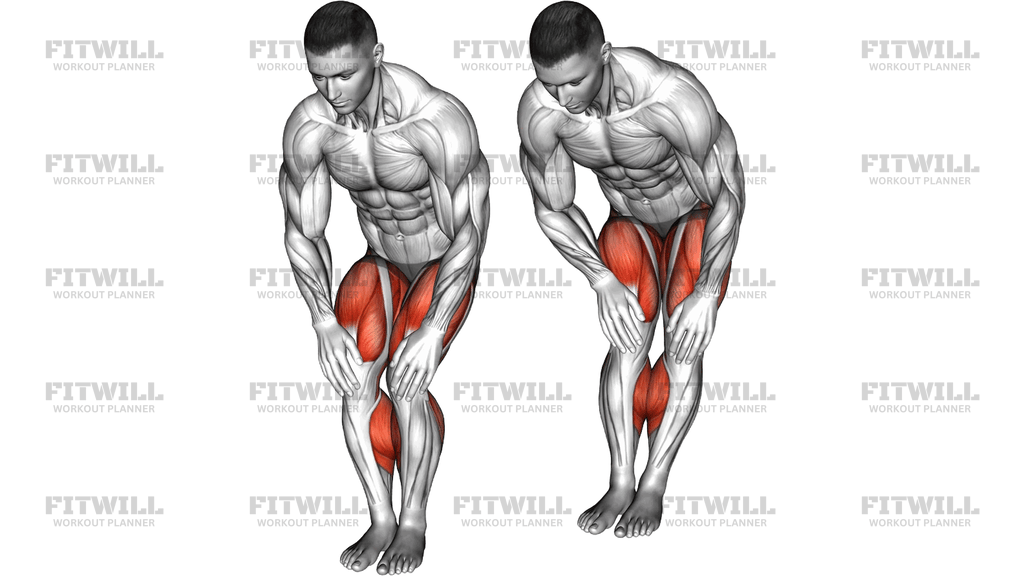
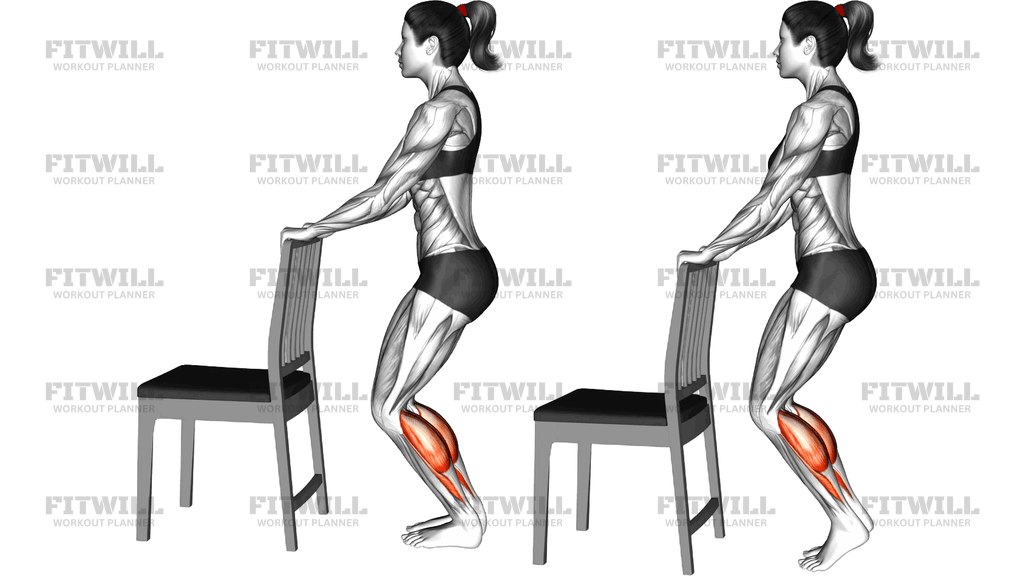
The Chair Squat Calf Rock combines a deep bodyweight squat hold with slow heel raises, so you hold a bottom-position squat while rocking your heels up onto the balls of your feet and lowering them back down. The name comes from the shape of the hold: hips sit back as if reaching for a chair, knees are deeply bent, and the elbows press gently against the inner knees to keep the chest tall. From that stationary base, the only moving joints are the ankles, which makes this one of the most direct ways to train the calves and ankles while the thighs and glutes work isometrically to hold you down there.
The calves are the obvious target, and the movement hits both of their main layers. Rising onto the balls of the feet loads the gastrocnemius, while holding the rock with the knee deeply bent places more emphasis on the soleus underneath. Just as valuable is what happens around the ankle joint itself: the rock trains dorsiflexion as the heels lower and plantarflexion as they lift, which is exactly the range a squat needs. People with stiff ankles who struggle to keep their heels down in a regular squat often find this exercise exposes and gradually improves that limitation.
The setup matters more than it looks. Because you are seated low on nothing but your own structure, your balance depends on keeping your weight distributed through the whole foot as it rocks. Let the chest drift forward or dump weight into the toes and the hold becomes wobbly and much harder on the knees. A shoulder-width stance with toes turned out slightly, elbows braced inside the knees, and a braced torso gives you a stable tripod of support through the ball of each foot while the heels move.
This exercise suits a wide range of lifters. Beginners use it to build the ankle mobility and squat comfort needed for full-depth squatting. More experienced lifters use it as a warm-up primer before squats or as a finisher that burns the calves and soleus without any equipment. It is also a practical option for home training, hotel rooms, or physical-education settings because it needs nothing but floor space and a few square feet.
Keep the movement slow and controlled rather than bouncy. Rock up, pause briefly at the top of the heel raise, lower the heels with intent, and let them settle fully before the next rep. If holding the deep squat is the limiting factor at first, shorten the sets rather than letting your lower back round or your knees cave inward. Stop if you feel pinching in the knees or ankles, and build depth over time instead of forcing it on day one.
[ Workout Log & Planner ]
Put your next workout in Fitwill
Keep your plan and training log ready when you are.


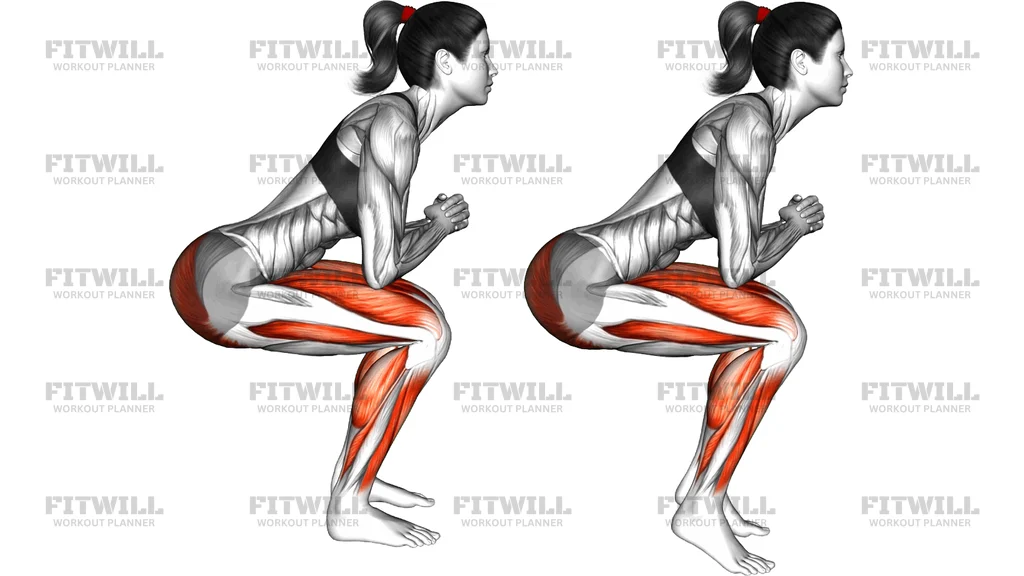
Instructions
- Stand with your feet about shoulder-width apart and turn your toes out slightly, roughly 15 to 30 degrees.
- Push your hips back and bend your knees to lower into a deep squat, sitting as if reaching back for a low chair, with your heels flat on the floor.
- Bring your elbows to the insides of your knees and press them gently outward so the knees track over the toes, and clasp your hands together in front of your chest.
- Brace your core and lift your chest so your back stays long and your weight sits evenly across both feet.
- From the deep hold, press through the balls of your feet and rock your heels upward as high as they will go, keeping your torso angle unchanged.
- Pause for a beat at the top of the heel raise, feeling the calves work under load.
- Lower your heels back down slowly until they touch the floor and settle flat, without dropping or bouncing.
- Continue rocking the heels up and down for your target reps while holding the squat depth the entire time.
- Exhale as you lift the heels and inhale as you lower them, keeping your breathing steady through the set.
- To finish, rock the heels down one final time, plant both feet flat, and drive through the floor to stand back up before resting.
Tips & Tricks
- If your heels refuse to lower fully between reps, your ankles are the limiting factor — reduce the depth of the squat a few inches until the heels can settle flat, then deepen over the following weeks.
- Do not let the chest collapse forward as the heels rise; if your torso pitches down onto your thighs, re-brace and press the elbows outward against the knees before continuing.
- Watch for the knees caving inward when you rock up, since the calf raise shifts your balance point; actively keep the knees stacked over the toes throughout.
- The most common mistake is bouncing the heels off the floor — the stretch reflex makes it easier but robs the soleus of the work, so lower the heels under control every rep.
- If holding the bottom position fatigues your thighs before your calves finish, hold a doorway frame or the back of a sturdy chair with one hand for light balance support.
- Spread the floor slightly with your feet as you hold the squat; this keeps the glutes engaged and stops the hips from sinking into a passive hang at the bottom.
- Warm the ankles first with a few slow bodyweight ankle circles or straight-leg calf raises, since cold, stiff ankles make the bottom-position rock uncomfortable.
- Aim for a consistent rhythm rather than speed — roughly two seconds up, one-second pause, two seconds down keeps tension on the calves the whole set.
- If your heels lift but your weight spills onto the outer edges of the feet, consciously press through the base of the big toes as you rise.
Frequently Asked Questions
What muscles does the Chair Squat Calf Rock work?
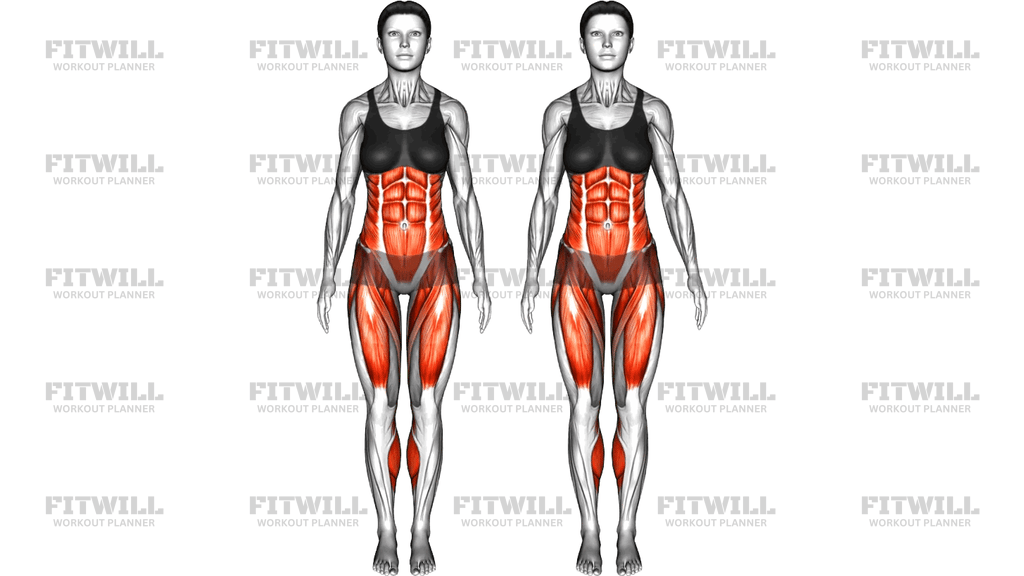
The calves are the prime movers, with the gastrocnemius working as the heels rise and the soleus taking on more load because the knees stay deeply bent. The quads and glutes work isometrically to hold the deep squat position.
Why do the knees need to stay bent during the calf rock instead of doing a standing calf raise?
A bent-knee position places the gastrocnemius on slack, which shifts the emphasis toward the soleus and also trains dorsiflexion as the heels lower. That combination makes it a useful drill for building squat-specific ankle mobility.
Is the Chair Squat Calf Rock suitable for beginners?
Yes, and it is actually one of the better introductory squat drills because it teaches bottom-position comfort and ankle range at the same time. Beginners can reduce the depth or lightly hold a sturdy support until the full hold feels stable.
Why do my heels not go all the way back down between reps?
That usually points to limited ankle dorsiflexion rather than a form flaw. Lower your squat depth slightly so the heels can settle flat, and gradually sit deeper over several weeks as the ankle range improves.
Can I use the Chair Squat Calf Rock as a warm-up before squatting?
It works well as a warm-up because it opens the ankles, wakes up the calves, and rehearses the bottom position of the squat with no load. Two or three sets of eight to ten slow rocks are enough before a lower-body session.
How is this different from a regular squat?
There is no up-and-down hip movement — you hold the bottom of the squat statically and only the ankles move. The squat portion is an isometric hold for the thighs and glutes, while the rocking targets the lower legs.
My knees feel uncomfortable at the bottom of the Chair Squat Calf Rock. What should I change?
Reduce the depth until the hold is pain-free, make sure the knees are tracking over the toes rather than caving in, and avoid rocking the heels down forcefully. If discomfort persists, have a professional assess the movement before continuing.
Can I hold a counterweight or kettlebell during this exercise?
You can hold a light counterbalance, such as a small plate at chest height, if balance is the issue, but most people get better ankle results with the hands clasped and elbows braced inside the knees. Keep any added load light since the calves are doing precise, controlled work.
How many reps and sets should I do?
Two to four sets of eight to fifteen slow heel rocks work well, with the time under tension in the squat hold doing much of the training. Start with shorter holds and add reps as the calves and squat endurance improve.
What can I substitute if the deep squat hold is too difficult?
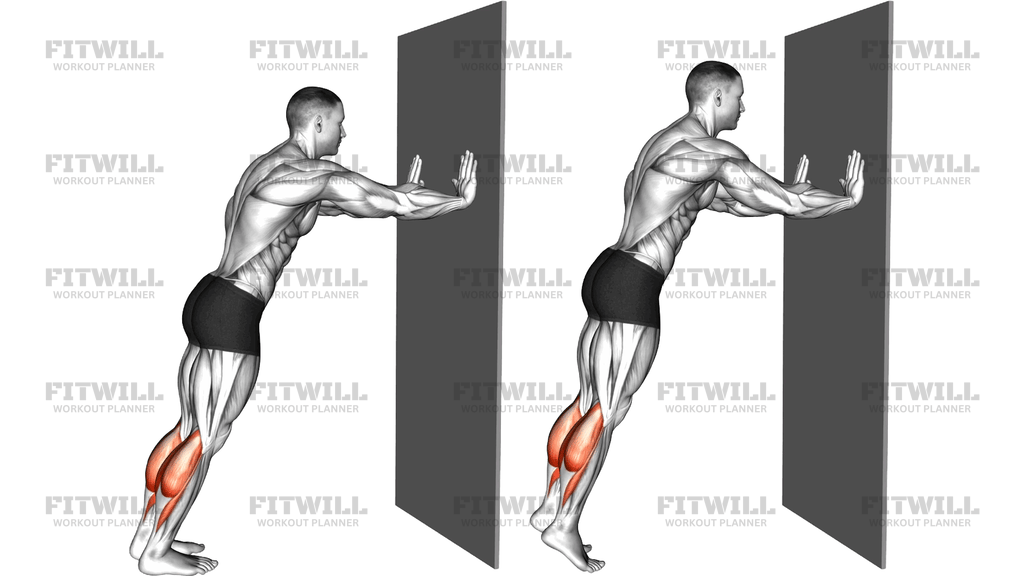
Hold the back of a sturdy chair or a door frame for support, or perform straight-leg calf raises with your hands on a wall while you build ankle range. Return to the Chair Squat Calf Rock once you can sit in a comfortable deep squat with heels flat.