Half Kneeling Side Lunge
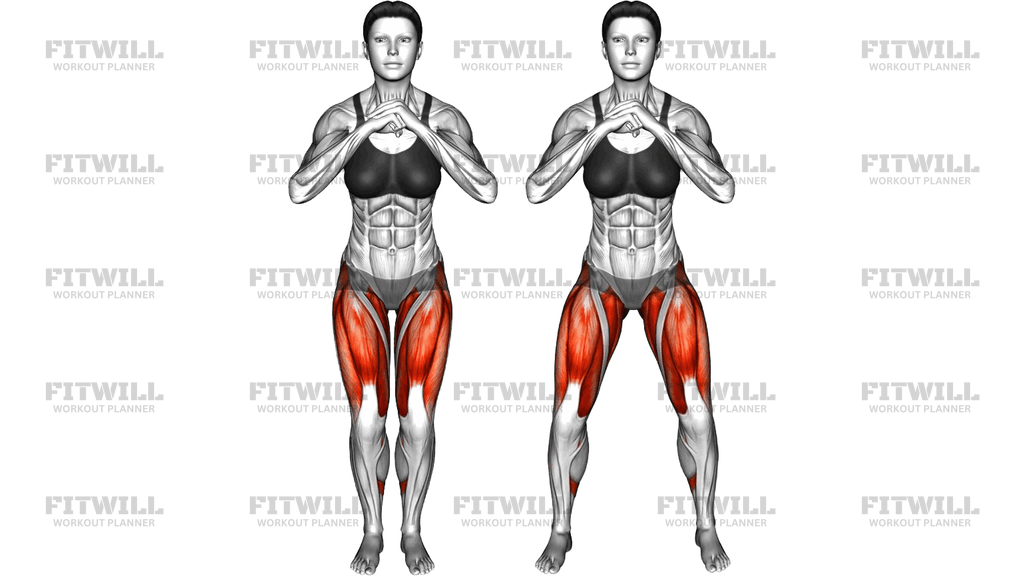
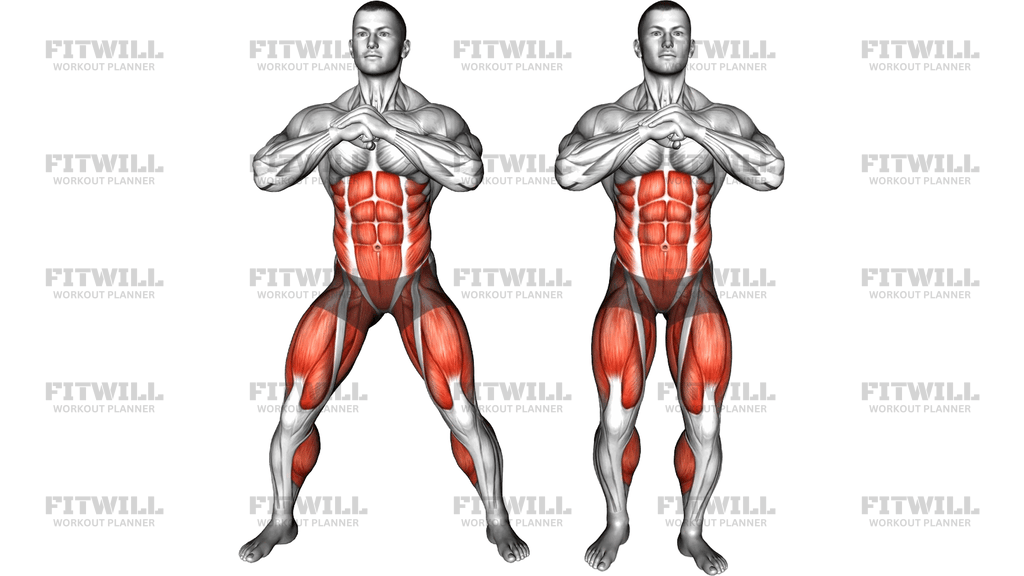
The Half Kneeling Side Lunge is a bodyweight lateral lunge variation performed from a half-kneeling base: one knee rests on the floor while the other leg is extended straight out to the side. From there, you shift your hips sideways over the extended leg, letting that knee bend so you sink into a deep lateral lunge, then press back up to the tall kneeling start. The image shows exactly this arc — the straight, wide-tracked leg on one side, the kneeling support leg on the other, and the hips traveling from center out over the bending knee.
This setup is what makes the exercise special. Taking the rear leg out of the equation removes the sagittal-plane push you get from a normal lunge and forces the working hip, inner thigh, and glute to handle the lateral shift almost on their own. The adductors on the bending leg work hard to control the descent and pull you back up, while the glutes and quadriceps manage the load of your bodyweight through a wide range. The kneeling side also gets a genuine stretch at the hip flexor and quad of the down leg, so you are training one side and mobilizing the other at the same time.
It suits lifters who want to build frontal-plane leg strength without weight, people whose side lunges fall apart because the trailing leg keeps cheating, and anyone working on hip mobility, squat asymmetries, or the lateral strength needed for cutting, skating, and racket sports. Because the range is fixed by where your foot is planted, it is easy to scale: set the foot closer for a shorter arc, wider for a deeper, more demanding rep.
To execute it well, think about staying tall and long through the torso rather than pitching forward. The knee of the working leg should travel out over or slightly inside the toes, tracking in the same direction the foot points, while the kneeling knee stays planted and the hips stay square-ish to the front — a small rotation is natural, but a full collapse sideways defeats the purpose.
Keep the extended foot flat and heavy on the floor the whole time; the whole rep is driven through that foot. Push the floor away to come back, exhale as you return to center, and complete all reps on one side before switching. Move slowly at first — the control requirement at the bottom of the lunge is higher than most people expect, and that is precisely the point of doing it from the floor.
Use the Half Kneeling Side Lunge as a warm-up activation drill before lower-body sessions, as a main movement in bodyweight or minimal-equipment leg workouts, or as a rehabilitative-style groove for hips that struggle with deeper side-to-side work. It pairs naturally with forward lunges or squats to cover all planes of motion.
[ Workout Log & Planner ]
Put your next workout in Fitwill
Keep your plan and training log ready when you are.


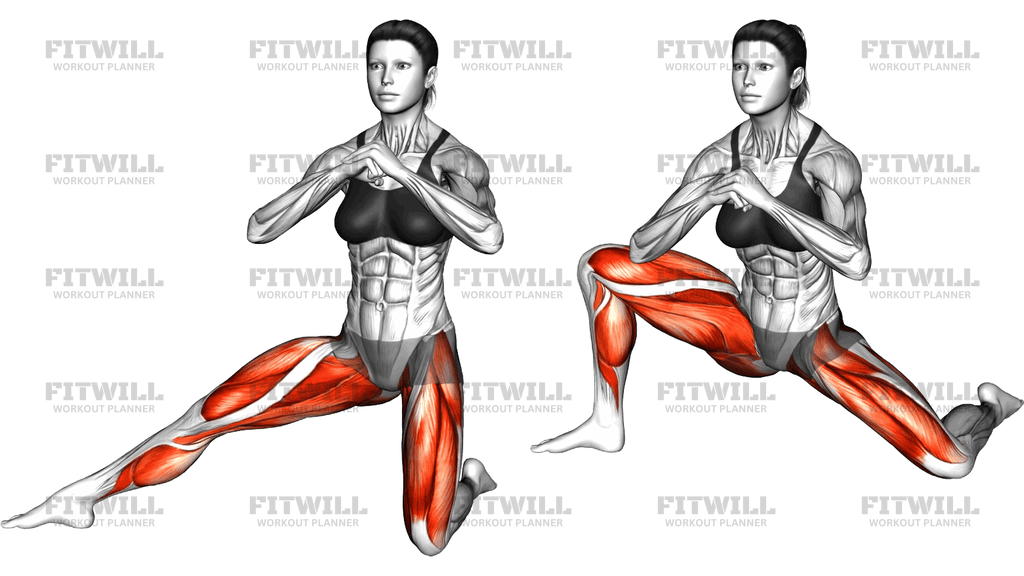
Instructions
- Kneel on a mat or soft surface with your right knee down directly under your right hip and your left leg extended straight out to your left side, foot flat and toes pointing forward.
- Set your left foot far enough out that when you shift sideways, your knee can bend deeply without your heel lifting — roughly a leg-plus-foot width from the kneeling knee.
- Clasp your hands together in front of your chest with elbows down; this keeps your upper body quiet and gives you a small counterbalance.
- Brace your abs, lift your chest, and stack your shoulders over your hips so the kneeling thigh and torso form one tall line.
- Shift your hips directly to the left over your extended foot, letting the left knee bend while the right knee stays planted and your hips press back and down slightly.
- Sink until the left knee tracks out over the foot and you feel a strong contraction through the inner thigh and glute, keeping the left heel glued to the floor.
- Pause briefly in the bottom position, then drive through the whole left foot — especially the heel and mid-foot — to pull your hips back to center.
- Exhale on the return to the tall half-kneeling position and inhale as you shift into the next rep.
- Complete all reps on the left side, then reposition with the left knee down and the right leg extended to train the other side.
Tips & Tricks
- If your extended heel keeps lifting at the bottom, the foot is set too wide — bring it in a few inches and rebuild the depth gradually.
- Watch for the kneeling knee drifting sideways to chase the movement; pin it in place and let the hips do the traveling instead.
- Do not let the working knee cave inward as you sink — actively press it toward the outside of the foot, which is where most of the adductor control happens.
- Keep your chest up and ribs stacked over the pelvis; collapsing forward over the working thigh turns a lateral strength drill into a passive hip hang.
- Slow the lowering phase down deliberately — a two-second shift builds far more control than dropping into the bottom and bouncing out.
- If the floor hurts the down knee, use a folded mat or pad; discomfort there makes people unconsciously tilt their hips and twist the whole rep.
- Start with a shorter range and only deepen the lunge as your hips allow — forcing depth with a rounded back or lifted heel teaches bad positions.
- Keep your clasped hands at chest height rather than resting them on the working thigh, which can silently offload the leg you are trying to train.
Frequently Asked Questions
What muscles does the Half Kneeling Side Lunge work?
The adductors of the inner thigh are the primary movers, supported by the glutes and quadriceps of the bending leg. The hip flexors of the kneeling leg get a sustained stretch, and the core works to keep the torso upright as the hips shift sideways.
How is the Half Kneeling Side Lunge different from a regular side lunge?
In a regular side lunge both legs are standing and the trailing leg can share or steal the work. With one knee on the floor, the extended leg and its hip handle the entire shift alone, which exposes and strengthens side-to-side asymmetries more directly.
Is the Half Kneeling Side Lunge good for beginners?
Yes, as long as the range starts modest. Beginners should set the foot closer, use a shallow lunge, and prioritize a flat extended foot and an upright torso before chasing depth.
Why does my extended heel lift at the bottom of the lunge?
That usually means the stance is too wide for your current hip mobility, or you are leaning your torso too far forward. Narrow the foot position slightly and sit back and down over the heel rather than over the toes.
Should my hips face forward or rotate toward the working leg?
Aim to keep the hips roughly squared to the front with only a small natural rotation toward the bending knee. Fully rotating collapses the lateral loading that makes this exercise worth doing.
Can I add weight to the Half Kneeling Side Lunge?
Yes — holding a dumbbell, kettlebell, or weight plate at the chest works well once you own the bodyweight version. Add load only when you can keep the heel down and the knee tracking out through every rep.
What can I substitute if kneeling hurts my knee?
Use a thicker pad under the down knee first. If kneeling itself is the problem, a supported lateral lunge with a hand on a rack or wall, or a standing lateral leg slide against a smooth floor, trains a similar pattern without knee contact.
How many reps and sets should I do of the Half Kneeling Side Lunge?
For strength and control, 8 to 12 controlled reps per side for 2 to 3 sets works well. As a warm-up, 5 to 8 slower reps per side is enough to wake up the hips.
Why do one side at a time instead of alternating?
Finishing all reps on one leg before switching keeps the setup stable and makes it easier to notice and correct differences between sides, rather than letting momentum blur the comparison.