Dumbbell Prone Incline Twist Curl
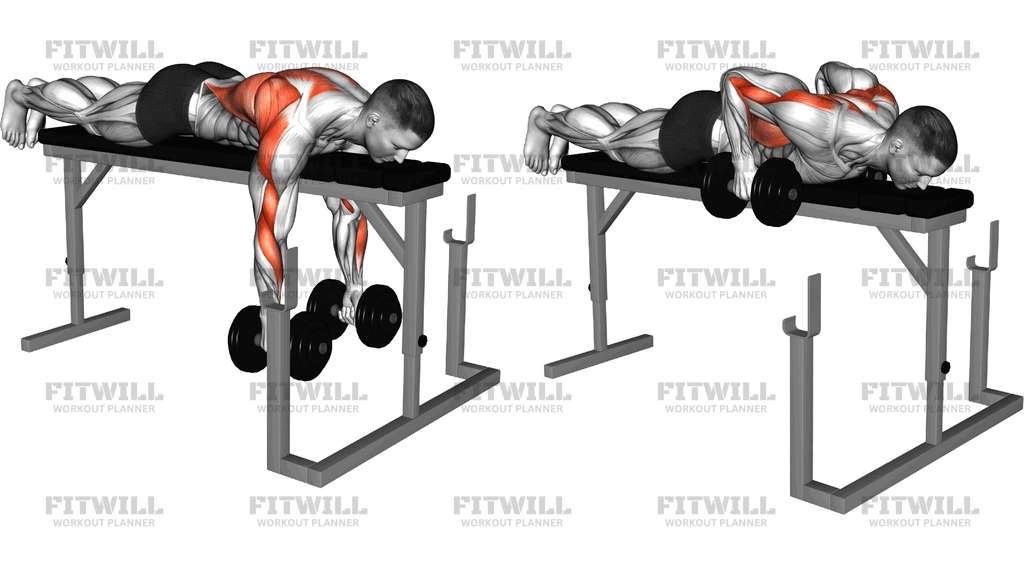
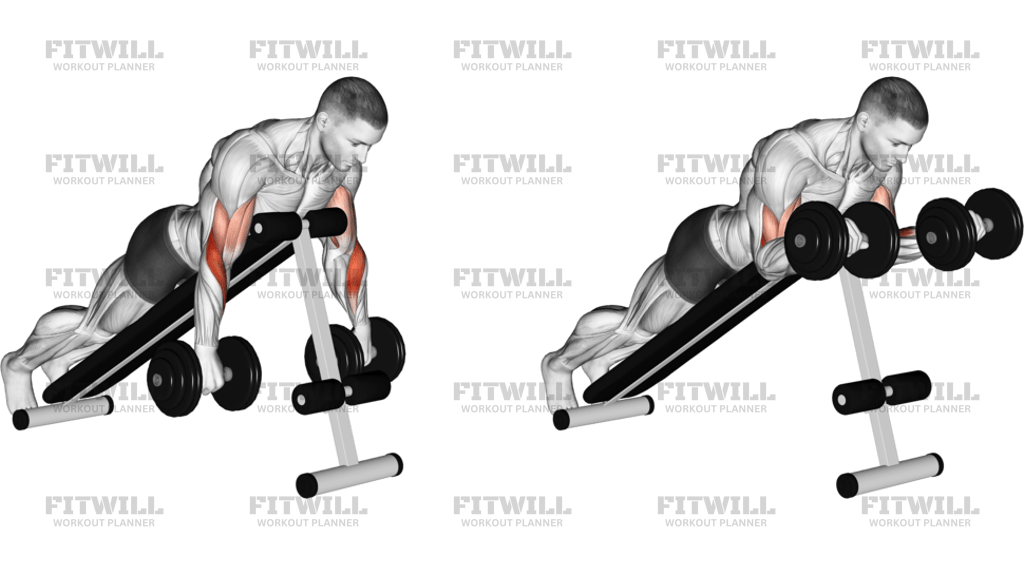
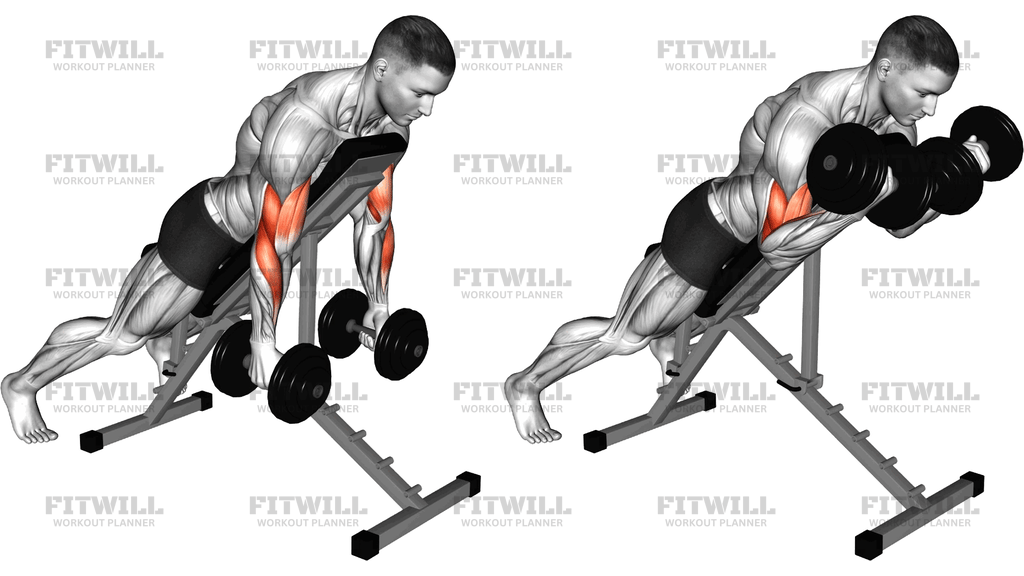
The Dumbbell Prone Incline Twist Curl is a strict biceps builder performed lying chest-down on an incline bench with a dumbbell in each hand. Because your torso is supported and your arms hang straight toward the floor, the movement removes almost every opportunity to cheat with body English or shoulder drive. The twist component — rotating the palm from a neutral or pronated position to supinated as you curl — trains the biceps through its two jobs at once: elbow flexion and forearm rotation.
This setup is especially useful for lifters who tend to swing their weights during standing curls. When you are pinned chest-down against the pad, momentum from the hips and lower back is taken off the table, so the elbow flexors have to do all the work. The hanging-arm position also creates a long stretch at the bottom of each rep, which many lifters find harder to feel in conventional curl variations.
The primary muscles worked are the biceps brachii, with strong contributions from the brachialis underneath and the brachioradialis of the forearm, particularly in the rotated portion of the rep. Because the forearms stay active through the twist, this variation also builds forearm strength and grip endurance as a secondary effect. The rear delts and upper back work lightly to keep the shoulder girdle stable against the pad, but they should not take over the movement.
Setup matters more here than in most curls. The bench angle should be steep enough that your arms hang vertically and clear the frame, but not so steep that your chest lifts off the pad as you curl. Keep your chin just above the top of the bench, chest in contact with the pad, and knees tucked for balance. If the angle is wrong, you will feel it in your shoulders or neck before you feel it in your arms.
To execute the movement well, let the dumbbells hang fully at the bottom, then curl by bending the elbows and rotating the palms so they finish facing up near the top. Pause briefly at the top, squeeze the biceps, then lower under control through the full range. The lowering phase is where this exercise earns its keep — a fast descent turns a precise arm exercise into a sloppy swing.
Use the Dumbbell Prone Incline Twist Curl as an accessory movement after your heavier pulling or pressing work, typically for 2 to 4 sets of 8 to 15 reps. It suits intermediate lifters focusing on arm development, anyone rehabilitating their curl technique, and lifters who want a variation that keeps tension constant without needing a preacher bench or cable station.
[ Workout Log & Planner ]
Put your next workout in Fitwill
Keep your plan and training log ready when you are.


Instructions
- Set an adjustable bench to an incline of roughly 45 to 60 degrees and place a dumbbell of your chosen weight on each side of the bench.
- Lie face down on the bench with your chest and stomach in contact with the pad, your chin just above the top edge, and your knees bent with toes on the floor for stability.
- Grip a dumbbell in each hand with a neutral grip, palms facing each other, and let your arms hang straight down toward the floor with a small bend in the elbows.
- Draw your shoulder blades back and down so your shoulders stay stable, and brace your core lightly against the pad.
- Curl both dumbbells up by bending your elbows, rotating your palms from neutral to fully supinated as the weights rise so they finish facing the ceiling near the top.
- At the top, bring the dumbbells close to the bench without letting your elbows drift forward or your chest lift off the pad, and squeeze the biceps for a moment.
- Lower the dumbbells slowly under control, reversing the rotation so the palms return to neutral by the time your arms are fully extended.
- Exhale as you curl up and inhale as you lower the weights, keeping your breathing steady throughout the set.
- Complete all reps without letting the dumbbells swing or the elbows straighten explosively at the bottom, then rack the dumbbells on the floor before standing up off the bench.
Tips & Tricks
- If your shoulders pinch or your neck strains, the bench is likely too steep — lower the angle until your arms hang freely and your chest stays glued to the pad.
- The most common mistake is turning this into a partial rep by swinging the dumbbells up from the shoulder; the elbows must stay pinned roughly under or slightly behind your shoulders for the whole set.
- Do not rush the twist. Start the forearm rotation as soon as the elbow begins to bend so the supination happens through the range, not as a flick at the top.
- Choose a lighter weight than you would use for standing dumbbell curls — the prone position isolates the arms, and ego weights will drag your chest off the bench.
- Let the dumbbells pull your arms to a full hang at the bottom of every rep; cutting the stretch short is the easiest way to turn a hard variation into an easy one.
- Keep your wrists firm and neutral at the wrist joint itself — the rotation comes from the forearm, not from bending the wrists backward under the load.
- If you feel it more in the forearms than the biceps, slow the tempo and use a two-second squeeze at the top to shift tension back to the upper arm.
- Alternate single-arm reps if both dumbbells together pull you off balance on the pad, keeping the non-working hand lightly gripping the bench edge for stability.
- Rest about 60 to 90 seconds between sets, since the small muscle groups involved recover quickly and a rushed next set usually shows up as a shortened range.
Frequently Asked Questions
Which muscles does the Dumbbell Prone Incline Twist Curl work?
The biceps brachii is the primary muscle, with the brachialis and brachioradialis of the forearm assisting through elbow flexion and the palm rotation. The rear shoulders and upper back only stabilize the position and should not feel like the main workers.
What makes the twist different from a regular incline curl?
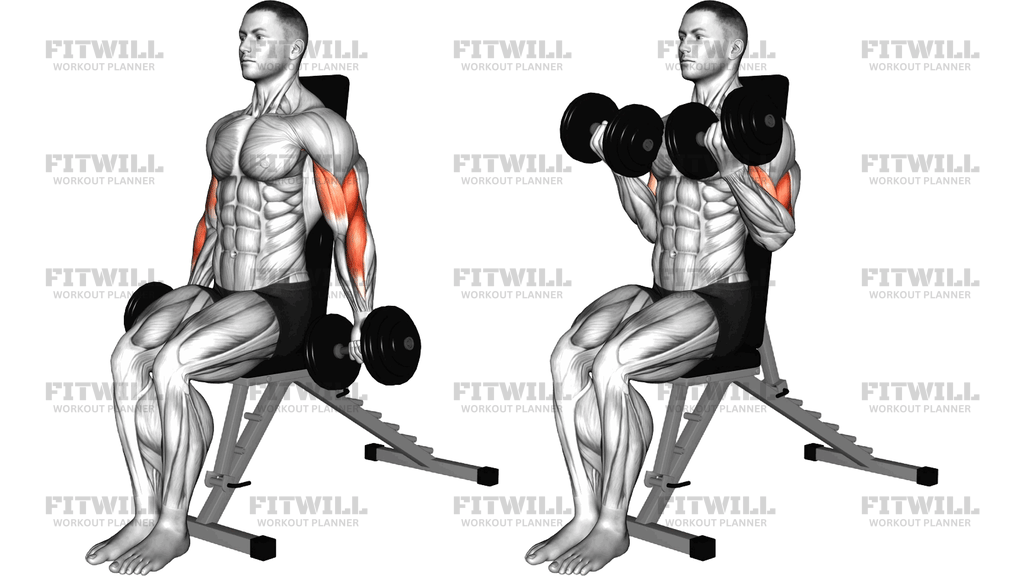
In a standard incline curl the palms stay supinated or fixed throughout, while the twist version starts with palms facing each other and rotates them to face up during the curl. This trains both functions of the biceps — elbow flexion and forearm supination — in one rep.
Is the Dumbbell Prone Incline Twist Curl suitable for beginners?
Yes, provided a light weight is used and the bench angle is set so the arms hang comfortably. It is actually a good learning exercise because the bench prevents the swinging that beginners often develop with standing curls.
Why do my shoulders lift off the bench when I curl?
This usually means the weight is too heavy or the elbows are drifting forward to help finish the rep. Reduce the load, keep the elbows directly under the shoulders, and focus on moving only the forearms.
Can I substitute this exercise if I do not have an incline bench?
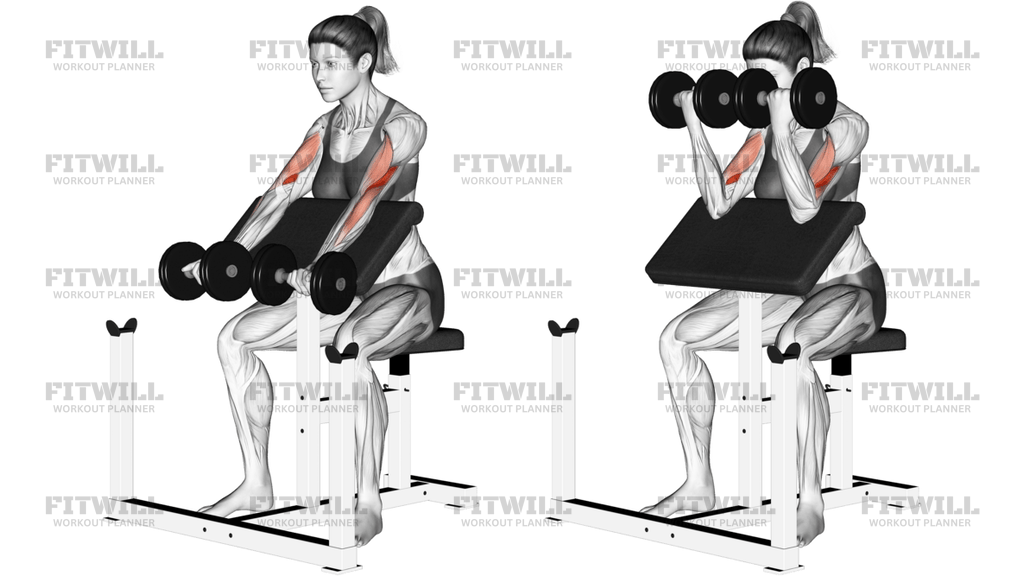
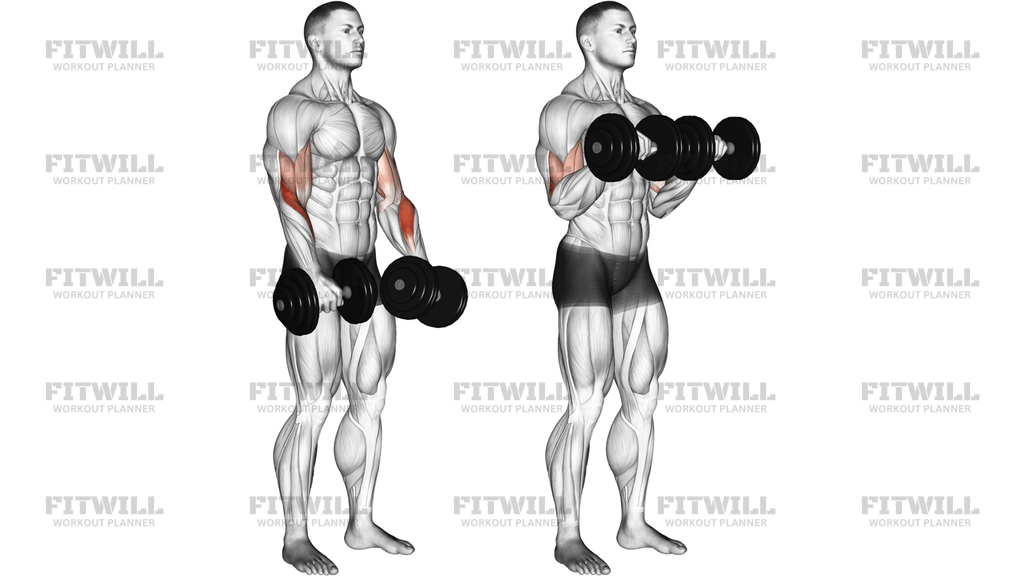
A preacher bench curl is the closest substitute for eliminating momentum, and a standing alternating dumbbell curl with deliberate supination trains a similar twisting pattern, though with less strictness.
How should my arms hang at the start of each rep?
Your arms should hang straight down from your shoulders toward the floor with the dumbbells clear of the bench frame and floor. If the dumbbells touch the floor or you have to hold them forward, adjust the bench angle or your position on the pad.
How many sets and reps should I do?
Two to four sets of 8 to 15 reps works well as an arm accessory after your main lifts. Use a weight you can lower slowly for every rep, since the eccentric portion drives most of the difficulty in this position.
Is it safe for the elbows to curl with the arms behind the torso?
For most lifters the position is comfortable because it stretches the biceps through a long range, but start light and stop if you feel pinching at the front of the shoulder or sharp elbow discomfort. Anyone with a history of shoulder or elbow irritation should ease in gradually.
Should both arms curl together or one at a time?
Both together is standard and keeps the body square on the bench, but alternating works well if the combined weight pulls you off balance or if you want to focus on one arm's contraction at a time.