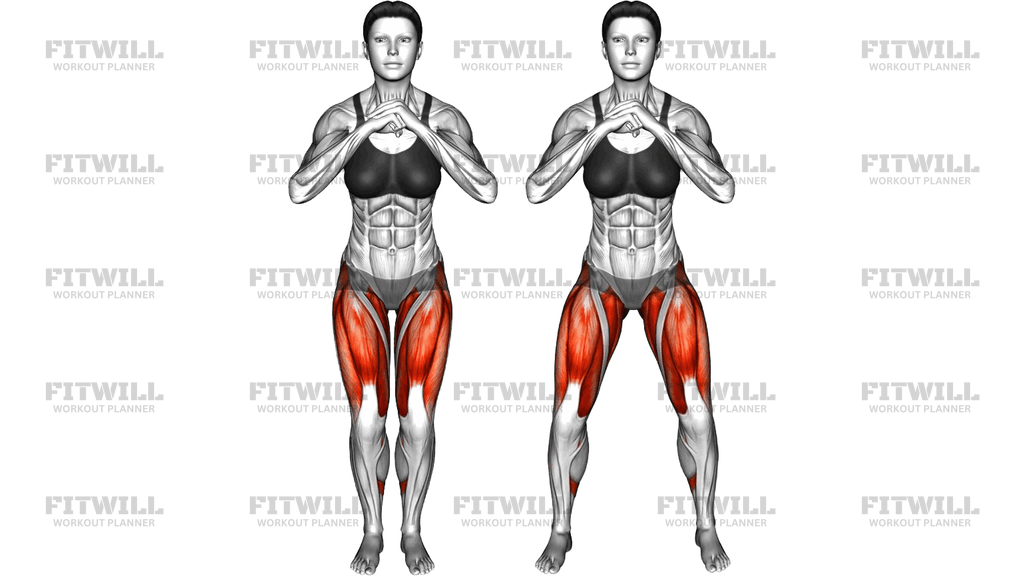
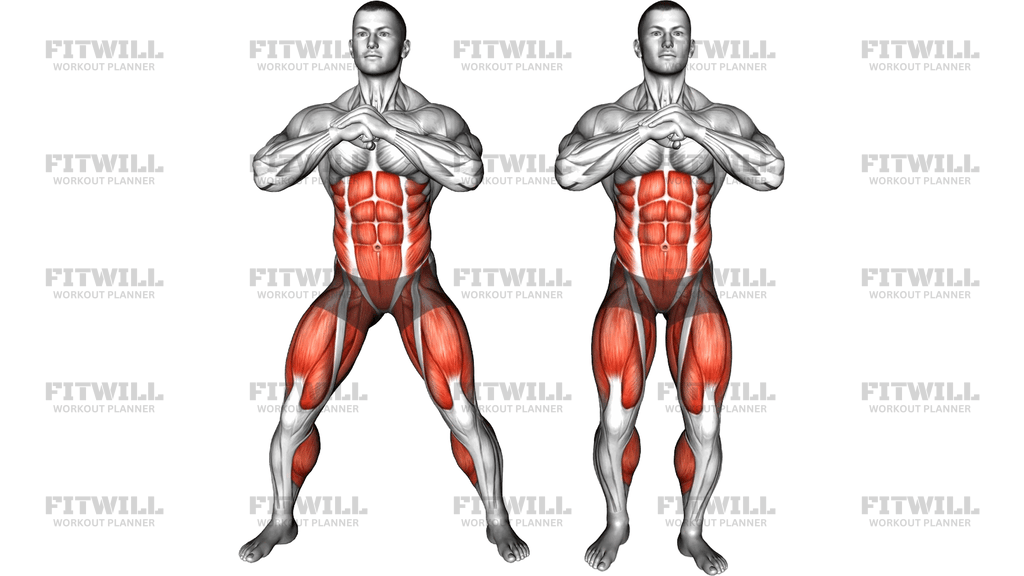
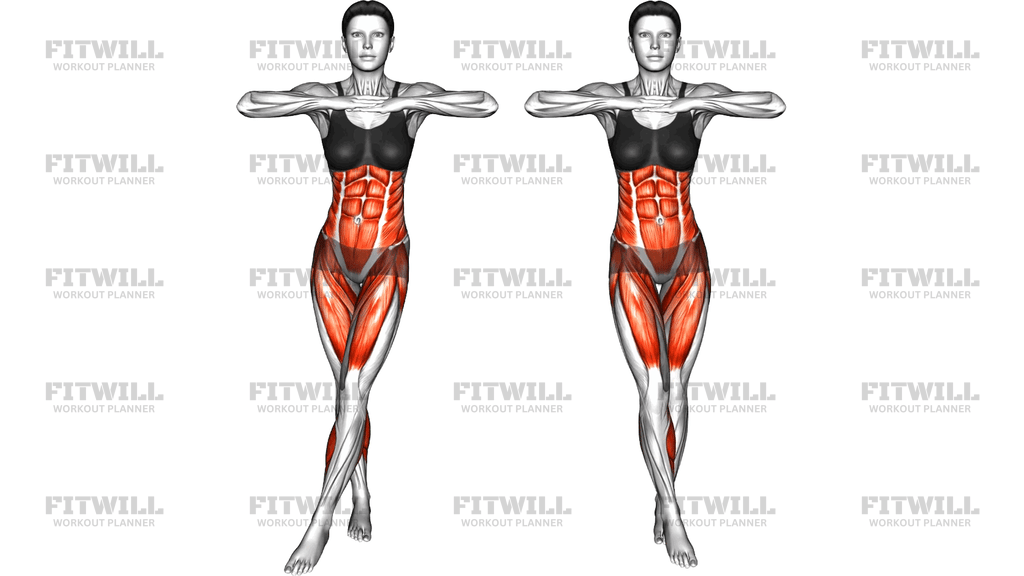
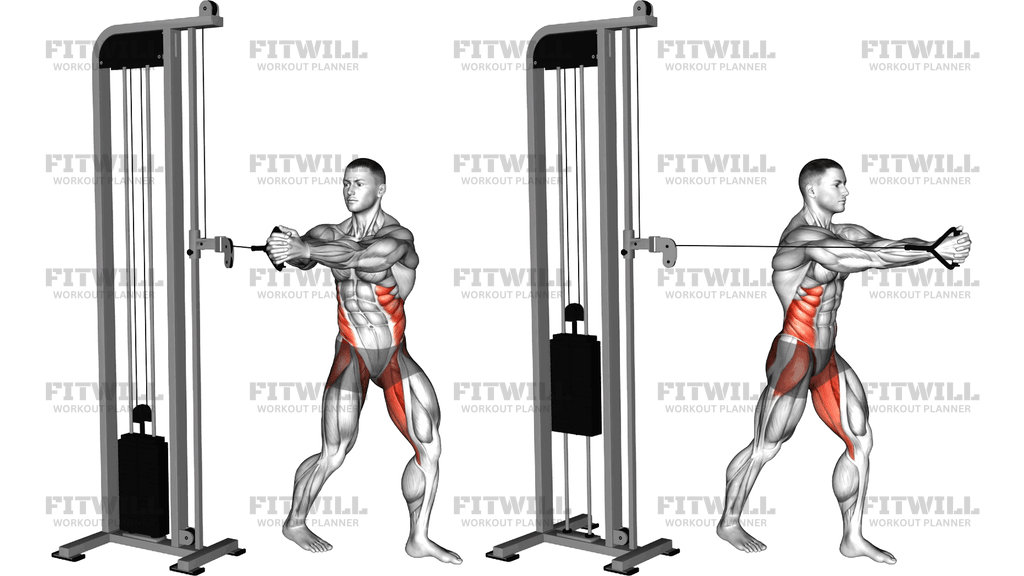
Half Side Split Lunge Twisting Inner Thigh Tap
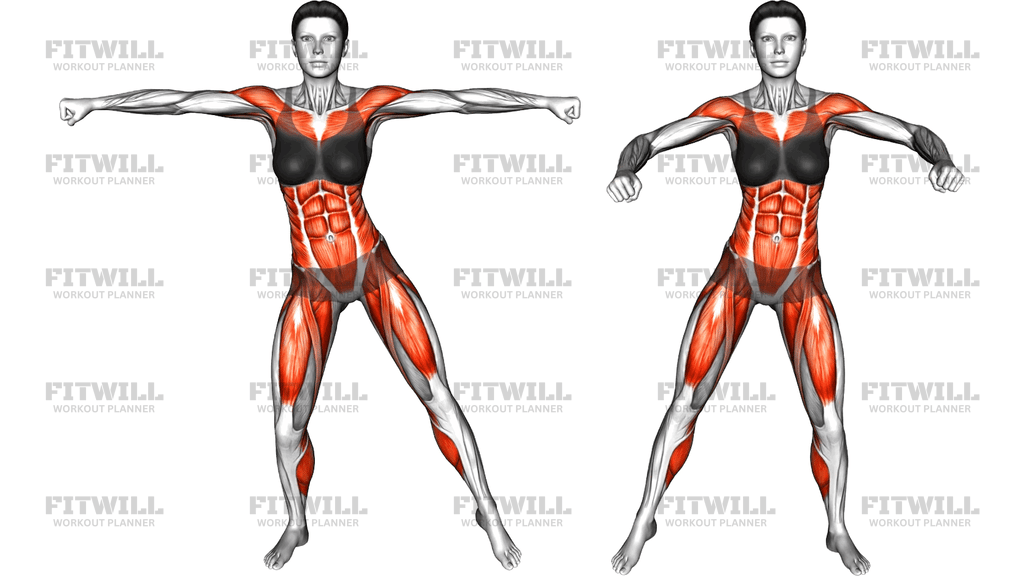
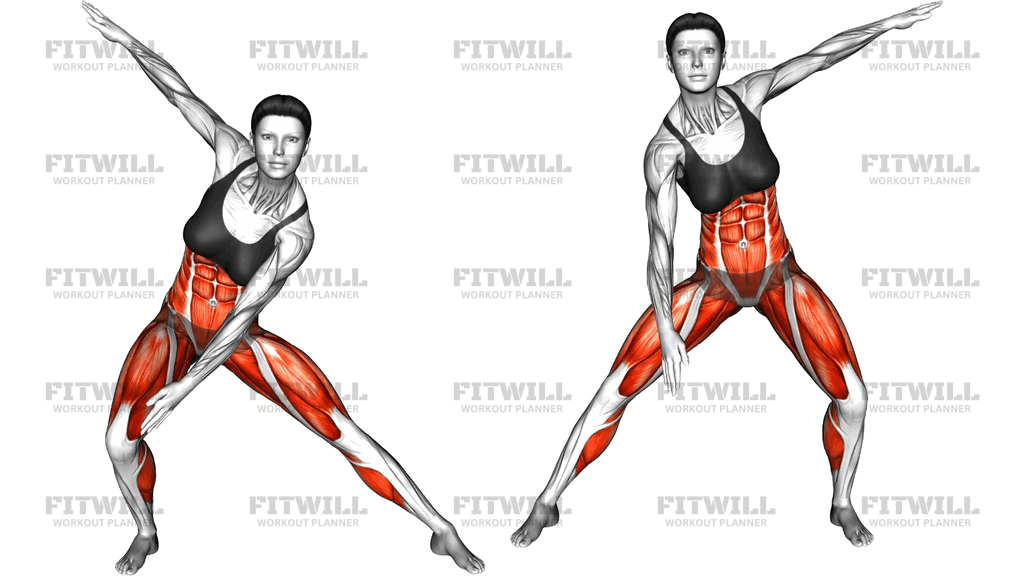
The Half Side Split Lunge Twisting Inner Thigh Tap is a body weight movement that combines a wide-stance side lunge with a rotation of the torso toward the bent leg. From a straddle-style stance, you shift your weight over one leg, bend that knee while the other leg stays long, then reach the opposite hand down to tap along the inner thigh of the working leg as the same-side arm sweeps up and overhead. The result is a single movement that loads the inner thighs, challenges the hips, and trains rotation through the waist at the same time.
The main workload lands on the adductors of the bent leg, which control the depth of the shift and push you back to center, along with the quads and glutes on that side. Because the straight leg stays planted and long, its inner thigh works in a lengthened position, which is exactly what many people are missing when they only train squats and forward lunges. The twist adds the obliques and deep core, as they must control the rotation of your ribcage while your lower body holds a stable base.
This exercise suits anyone who wants better hip mobility and side-to-side strength without equipment: desk workers with stiff inner thighs, runners and field-sport athletes who change direction, and lifters who want to warm up their hips before heavier lower body work. It also works well as a standalone mobility-strength hybrid on days when you want to move but not load a barbell.
The setup matters more than it looks. A stance that is too narrow turns this into a shallow lunge and takes the inner thighs out of the picture, while a stance so wide that your pelvis cannot stay level forces your lower back to round to reach the tap. Aim for roughly one and a half to two shoulder widths between your feet, toes turned out slightly, and keep both heels free to adjust so your knees can track over your toes.
To execute it well, shift sideways rather than down. Picture sliding your hips over the bending leg, letting that knee travel in line with your toes while the opposite leg stays straight with the whole foot or heel in contact with the floor. The reach down to the inner thigh should come from rotating your ribcage toward the bent leg, not from collapsing your chest. Move with control in both directions, since the return to center is where the adductors do much of their work.
A few practical points keep this safe. Stop the range where you can keep your torso long and your front knee quiet, and if the wide position bothers your hips or groin, narrow your stance slightly rather than forcing depth. The tap itself should be light contact, not a reach that drags your shoulders out of position.
[ Workout Log & Planner ]
Put your next workout in Fitwill
Keep your plan and training log ready when you are.


Instructions
- Stand with your feet roughly one and a half to two shoulder widths apart, toes turned out about 15 to 30 degrees, and your weight spread evenly across both feet.
- Brace your midsection gently, lengthen your spine, and let your arms hang or hold them out slightly for balance before you start.
- Shift your hips sideways over your right leg, bending the right knee and sitting back into a half side split position while the left leg stays straight.
- Keep your left foot flat or grounded through the heel and let the left toes turn up slightly if that helps the leg stay long.
- Rotate your torso toward the bent right leg and reach your left hand down the inside of the right thigh to tap the inner thigh or just above the knee.
- At the same time, sweep your right arm up and back overhead so both arms form one long diagonal line from the tapping hand to the raised fingers.
- Press through the right foot, engage the inner thigh and glute, and rotate your torso back to face forward as you drive yourself up to the straddle position.
- Exhale as you shift and twist into the tap, and inhale as you return to center.
- Reset your stance and brace, then repeat on the left side, reaching your right hand to tap the left inner thigh with the left arm overhead.
- Alternate sides for your target reps, keeping the depth of each lunge consistent from side to side.
Tips & Tricks
- If your straight leg's heel lifts off the floor during the shift, narrow the stance an inch or two at a time until the foot stays grounded.
- A common mistake is rounding the lower back to make the tap happen. Keep the ribs stacked over the pelvis and stop the rotation before your spine buckles.
- Watch the bending knee: if it caves inward toward your midline, cue yourself to spread the floor with that foot and track the knee over the toes.
- The tap should feel like a destination your rotation reaches, not a stretch you force. If your shoulders slump to touch the thigh, shorten the reach instead.
- Keep some tension in the straight leg the whole time. Letting it go limp turns the movement into a passive stretch and removes the lengthened adductor work.
- Move slower on the return than on the way in. Most people shift down under control and then fall back to center, which wastes half the exercise.
- If your groin feels pinched at the bottom, reduce depth and turn your toes out a little more rather than pushing through discomfort.
- Warm the hips first with a few narrower side-to-side weight shifts before committing to the full half side split depth.
- Keep your gaze on the raised hand to help the rotation come from the ribcage and waist instead of just cranking the neck.
- On hard floors, a mat underfoot helps both heels stay planted without slipping as you shift weight laterally.
Frequently Asked Questions
Which muscles does the Half Side Split Lunge Twisting Inner Thigh Tap work the most?
The inner thighs of both legs do the primary work, especially the adductors of the bent leg as you shift and return. The quads and glutes on the bending side support the lunge, and the obliques and deep core control the twist toward the tapping hand.
Why does the hand tap the inner thigh instead of reaching to the floor?
Tapping the inner thigh keeps the target close, so the rotation comes from your ribcage and waist rather than from rounding your spine or dumping your shoulders down. It gives a clear end point without demanding more flexibility than the hips can control.
Is the Half Side Split Lunge Twisting Inner Thigh Tap suitable for beginners?
Yes, as long as the stance is adjusted to a width where the pelvis stays level and the straight heel stays down. Beginners can reduce depth, tap higher on the thigh, and build range gradually.
How wide should my stance be for this exercise?
Start around one and a half to two shoulder widths with toes turned out slightly. If your hips feel pinched or your straight foot slides, bring the feet closer; if the lunge feels too shallow, widen gradually.
Should the straight leg stay completely straight during the lunge?
Keep it long with the knee soft but not bent, and press the whole foot or the heel into the floor. This keeps the inner thigh of that leg working in a lengthened position, which is one of the main benefits of the movement.
What is the most common mistake in the Half Side Split Lunge Twisting Inner Thigh Tap?
Collapsing the torso and rounding the lower back to force the tap. Fix it by stopping the rotation at the point where your ribs still sit over your pelvis, even if that means the tap happens higher on the thigh.
Can I use this as a warm-up before squats or deadlifts?
Yes, it works well as a pre-lift drill because it opens the hips and addsuctor length while also waking up the glutes and obliques. Use body weight only, slower tempo, and a moderate number of reps per side.
What can I substitute if the wide stance feels uncomfortable?
Try a narrower lateral lunge with a smaller twist, or perform side-to-side weight shifts in a partial straddle until your adductors tolerate more width. A yoga-style warrior II hold with a gentle side bend is another option.
How do I breathe during this exercise?
Exhale as you shift into the lunge and rotate toward the tap, and inhale as you unwind and press back to center. Keeping the breath rhythmic helps you avoid holding tension in the shoulders.
Is it safe to do the Half Side Split Lunge Twisting Inner Thigh Tap with a groin strain?
Not while the strain is acute, since the movement lengthens and loads the adductors directly. Wait until the area is calm and pain-free in daily movement, then reintroduce it with a narrow stance and shallow depth.