Suspender Power Pull
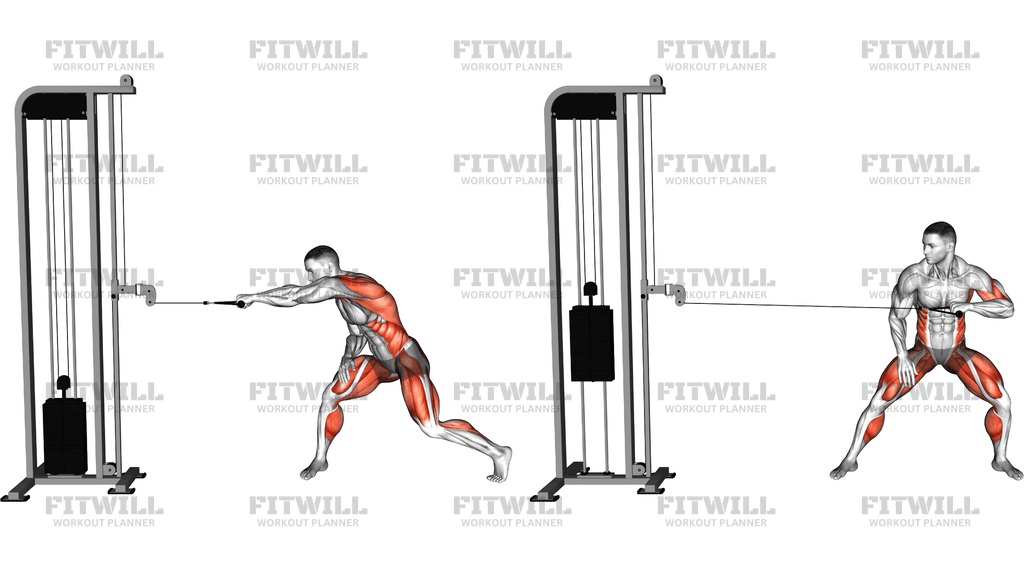
The Suspender Power Pull is a standing, single-arm cable pull performed from a high pulley with your body set at a diagonal to the line of resistance. You grip a single handle with one hand, lean away from the machine until the working arm is stretched overhead and across, then drive the handle down and across your torso toward the opposite hip. Because the anchor sits high and to one side, the pull travels along a diagonal path rather than straight down, which forces the lats, chest, and trunk rotators to work together instead of in isolation.
This movement earns its place in a program for the way it blends pulling strength with anti-rotation and trunk control. The lats do the bulk of the work as the shoulder extends, but the pectorals assist as the arm sweeps across the body, the obliques and deep core resist the sideways lean, and the traps and smaller shoulder stabilizers control the arm overhead. Athletes who rotate, reach, climb, or throw will recognize the pattern immediately, since it mirrors the diagonals the body actually uses in sport.
The setup matters more here than in most rowing or pulldown variations. Your stance width, your distance from the machine, and how far you lean away all change the resistance angle and the range you can pull through. Stand too close and the tension is soft at the top; too far and the sideways strain on your lower back takes over. A staggered stance with your outside foot forward gives you a stable base, and leaning away from the anchor loads the lats in a long, stretched position that straight-line pulldowns never reach.
Execution is simple in outline: start with the arm extended overhead at a diagonal, pull the handle down and across until your hand finishes near the opposite hip or lower ribs, then return under control to the full stretch. The elbow leads downward and back, the wrist stays neutral, and the torso rotates slightly with the pull rather than staying rigid. A common error is turning it into a biceps-driven row, so think about pulling from the armpit, not the hand.
The Suspender Power Pull works well as a second pulling exercise on upper body days, as a core-integrated finisher, or as the main pulling pattern in minimalist sessions where you want one exercise to cover back, chest, and trunk at once. Start with a weight you can slow down on the way back, because the eccentric from hip to overhead is where control either holds or falls apart.
A few practical points keep it safe and productive. Keep the knee of your lead leg softly bent and your weight balanced across both feet so your hips, not your spine, handle the sideways load. If you feel it grinding in the shoulder joint at the top, reduce the lean or lower the pulley one notch. Switch sides every set, and treat the weaker side as the standard for load selection.
[ Workout Log & Planner ]
Put your next workout in Fitwill
Keep your plan and training log ready when you are.


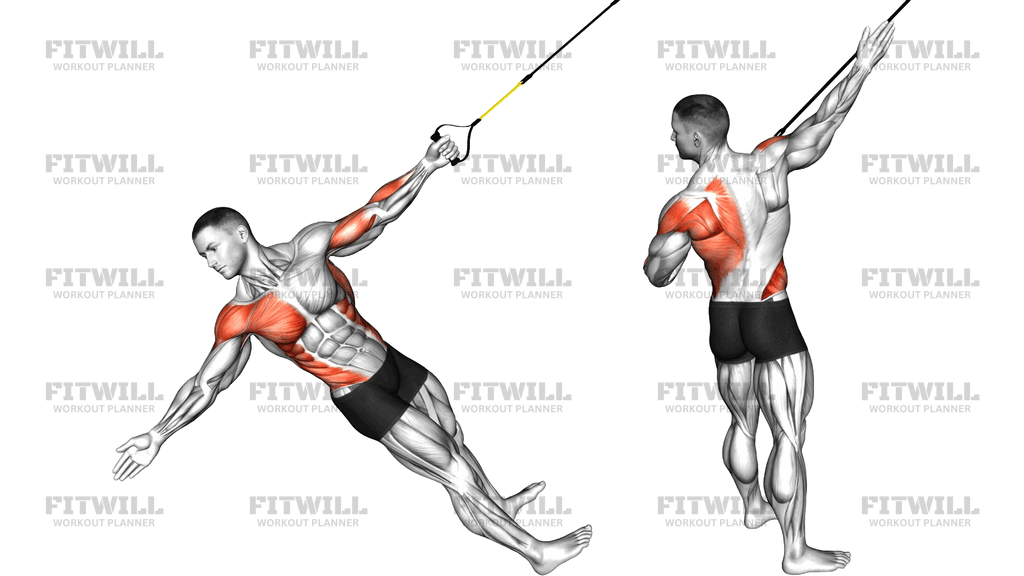
Instructions
- Set the pulley of a cable machine to its highest position and attach a single handle.
- Stand sideways to the machine with your feet in a staggered stance, outside foot forward and knees softly bent, far enough away that the cable pulls your arm up and across at a diagonal.
- Grip the handle with the hand closer to the pulley and lean your torso away from the machine until the working arm is extended overhead and slightly across your body, feeling a stretch through the lat and side of the trunk.
- Reach your free arm down and slightly behind you for balance, and brace your core as if bracing for a light punch.
- Exhale and pull the handle down and across your body toward the opposite hip, leading with the elbow and letting the torso rotate a few degrees with the pull.
- Finish the rep with your hand near the lower ribs or hip, elbow bent and drawn down beside you, and squeeze the lat and glute on the lead-leg side for a beat.
- Reverse the path slowly, letting the arm travel back up to the overhead diagonal without letting the shoulder shrug or the torso collapse toward the anchor.
- Keep breathing steady on the way back, inhaling as the arm returns to the stretched position.
- Complete all reps on one side, reset your stance, and repeat on the other side.
Tips & Tricks
- If your shoulder rises toward your ear as you pull, the upper traps are taking over; drop the weight and start each rep by consciously settling the shoulder blade down before the arm moves.
- A sharp elbow bend early in the pull turns the exercise into a single-arm row. Keep the arm long through the first half of the movement so the lat, not the biceps, initiates.
- Resist the urge to twist from the lower back. The rotation should come from the mid-back and hips over a stable pelvis; if your lumbar spine wrings out under load, narrow your stance or lighten the weight.
- Let the torso lean away at the top, but do not hang passive on the cable. Stay braced so the stretch comes from the lat, not from slack in the trunk.
- The eccentric is half the exercise. If the handle yanks your arm back overhead, you are either too heavy or rushing, and you lose the chest and core work on the way out.
- Keep the wrist neutral and the grip relaxed enough that your forearm does not fatigue before your back does; a death grip shifts tension into the elbow flexors.
- Press the outside foot into the floor on the pull, as if driving slightly away from the machine, to keep the hips square and the obliques engaged.
- If the top position pinches the front of the shoulder, reduce how far you lean away, or bring the pulley down one setting and work within a pain-free diagonal.
- Match load to your weaker side. Because each side leans and pulls independently, a strong side can easily mask a mobile or stable deficit on the other.
Frequently Asked Questions
Which muscles does the Suspender Power Pull target most?
The lats do the primary work as the arm extends down and across, with the pectorals assisting on the diagonal sweep. The obliques and deep core stabilize the sideways lean, and the traps and shoulder stabilizers control the arm in the overhead position.
Why does the setup use a high pulley and a lean away from the machine?
The high anchor and sideways lean put the lat into a long, diagonally loaded stretch that straight pulldowns and rows do not create. The lean also forces the trunk to resist lateral collapse, which is what makes the exercise a core-integrated pull rather than an arm exercise.
Is the Suspender Power Pull suitable for beginners?
Yes, provided the weight is light enough to control on the return. Beginners should master the staggered stance and braced lean first, then add load only when the handle can travel the full diagonal without the lower back twisting.
What is the most common mistake in this movement?
Pulling primarily with the arm and elbow, which turns it into a biceps-heavy row and takes the lats and chest out of the pattern. Cue yourself to lead with the elbow driving down toward the opposite hip and to finish with the hand near the hip, not curled toward the shoulder.
How far should I stand from the cable machine?
Far enough that the working arm is stretched overhead at a diagonal with clear tension at the top, but not so far that you feel yourself being dragged sideways. Adjust your distance before adjusting the weight, since position changes the resistance angle more than load does.
Can I do the Suspender Power Pull without a cable machine?
A resistance band anchored overhead and to the side is the closest substitute, though the tension profile differs. Single-arm high-cable pulldowns or lat pulldowns cover the lat work but lose the trunk rotation and lateral lean component.
Should I rotate my torso during the pull?
A small, controlled rotation from the mid-back as the handle travels across the body is natural and matches the diagonal path. The rotation should not come from hinging or wringing at the lower back; the pelvis stays facing forward over the staggered stance.
How many sets and reps work best for this exercise?
Two to four sets of eight to twelve reps per side suits strength and hypertrophy, while twelve to fifteen per side with lighter load works well for endurance and core control. Always start with the weaker side and match it with the stronger one.
Is it safe if my shoulders are sensitive overhead?
If overhead reaching causes discomfort, reduce the lean, lower the pulley one setting, or shorten the range so the arm stays below full overhead extension. Stop the exercise entirely if you feel sharp pain, and work within a range that feels secure.
Where should the free arm be during the pull?
Reach it down and slightly behind your body to counterbalance the sideways lean and help you keep the chest open. Avoid swinging it forward, which usually signals you are losing trunk stability and using momentum to finish the rep.