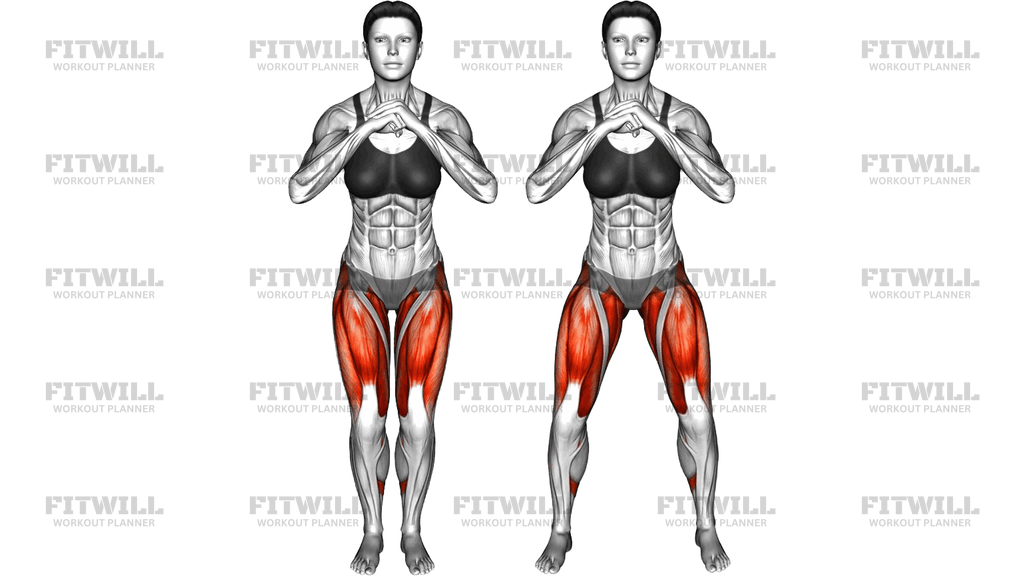
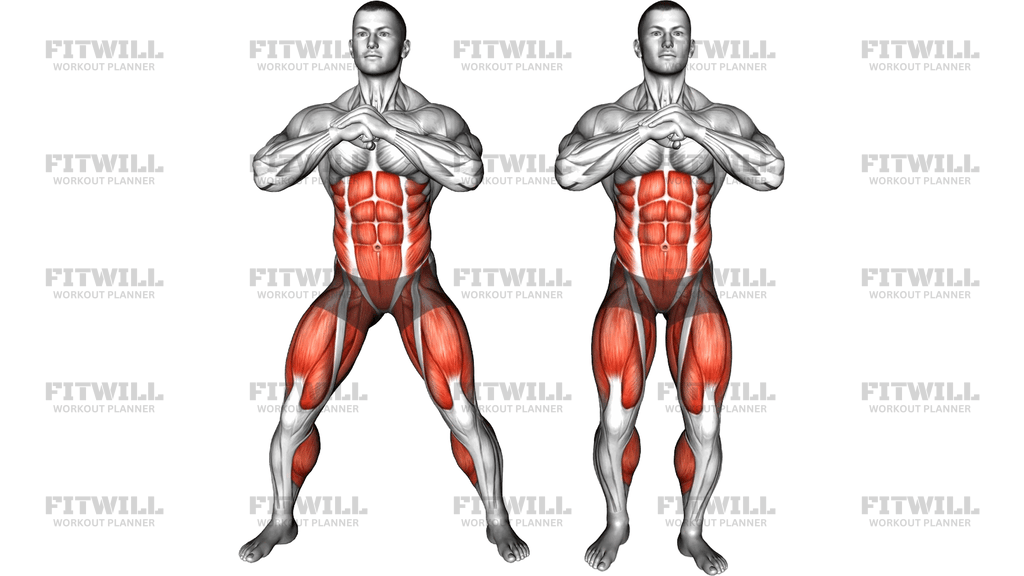
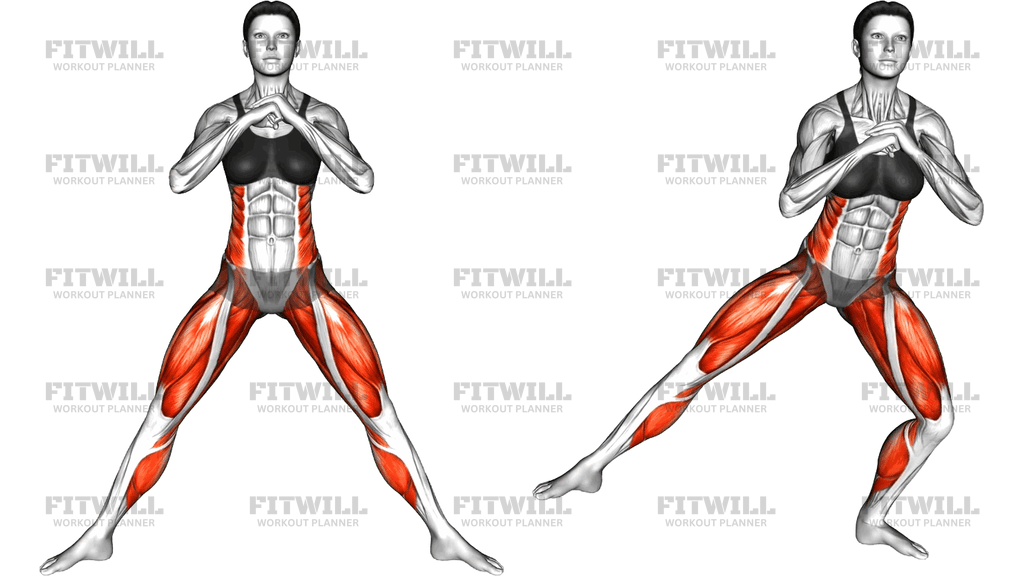
Side Lunge Stretch (Version 2) (Advanced)
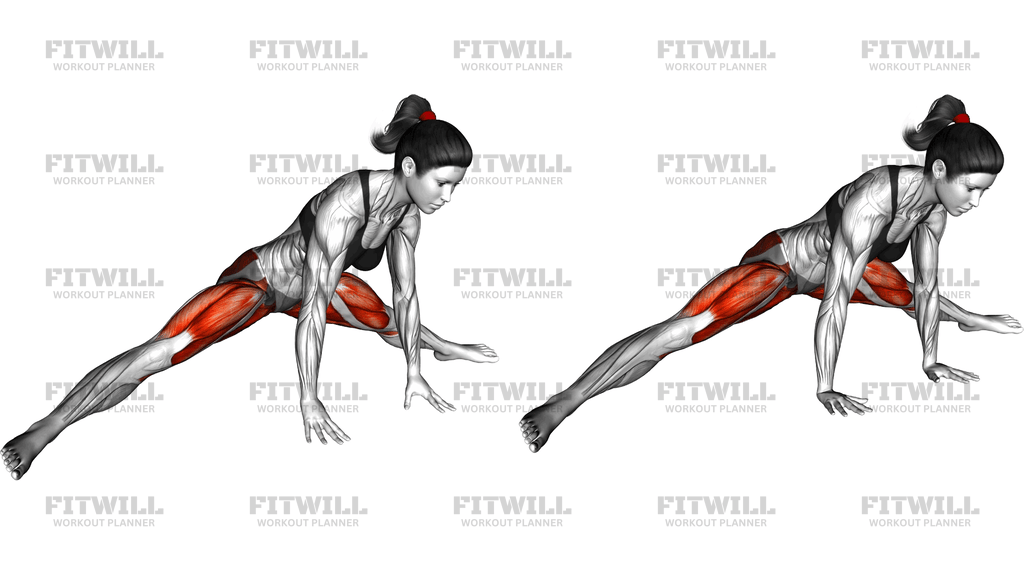
The Side Lunge Stretch (Version 2) (Advanced) is a deep lateral hip mobility drill that takes the classic side lunge and holds it at its most demanding range. You shift your weight fully over one bent leg while the other leg stays straight and extended out to the side, with the foot pulled up so the heel stays grounded. The hands are clasped together in front of the chest, which acts as a counterbalance and helps you sit back into the position without collapsing forward. Compared to a standard side lunge stretch, this advanced version requires a lower hip position, a straighter working leg, and more control through the ankle, knee, and hip of the bent side.
The primary target is the adductor group along the inner thigh of the extended leg, which is placed under a long, steady stretch in a wide, abducted position. The bent leg experiences the opposite demand: the glutes, quads, and hip external rotators work to support your body weight while controlling the depth of the squat. The calf and ankle of the bent leg also get loaded in dorsiflexion, and the extended leg's hamstring and calf receive a secondary stretch because the knee stays locked long and the toes point upward.
This stretch is especially useful for people whose sports demand wide ranges of hip abduction under load — martial artists, sprinters, hockey and soccer players, and weightlifters working toward a deeper squat stance. It is also a practical tool for anyone who feels persistent tightness through the groin and inner thighs from long hours of sitting. Because you support yourself entirely with your own body weight, you can modulate the intensity moment to moment simply by shifting slightly more or less weight over the bent leg.
Setup matters a great deal here. Your stance needs to be considerably wider than shoulder width, and the extended leg must stay truly straight with the whole foot in contact with the floor. If the stance is too narrow, the stretch lands in the hip joint capsule rather than the adductor muscles, and the knee of the bent leg tends to track inward. Keeping the chest lifted and the hands clasped at chest height keeps the spine long, which is what separates a productive groin stretch from a rounded, unsupported slump.
Execute the movement by stepping out or shifting sideways, bending one knee while pushing the hips back and down, and letting the opposite leg lengthen until you feel a firm but tolerable stretch along the inner thigh. Pause in the low position, breathing steadily, then drive through the bent leg to return to standing before switching sides. Treat this as a hold-based stretch rather than a bouncing movement — sustained time under stretch is what produces lasting changes in range.
As an advanced variation, this drill is best approached after you are comfortable with a basic standing side lunge stretch. Warm up first with a few minutes of light cardio or easier dynamic leg swings, and never force depth. A mild stretching sensation is the goal; sharp pain, pinching in the groin, or discomfort inside the knee joint are signals to reduce the range immediately.
[ Workout Log & Planner ]
Put your next workout in Fitwill
Keep your plan and training log ready when you are.


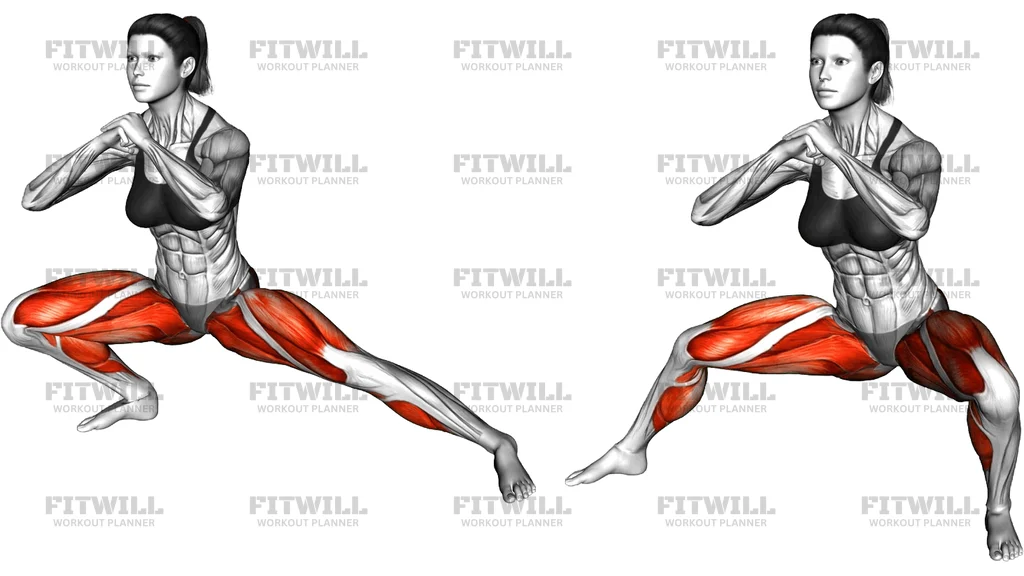
Instructions
- Stand tall with your feet roughly two to three shoulder widths apart, toes pointing forward or angled very slightly out.
- Clasp your hands together in front of your chest with elbows bent, keeping them there throughout the stretch to counterbalance your torso.
- Shift your weight toward one side and begin bending that knee, pushing your hips back and down as if lowering into a very deep lateral squat.
- Keep the opposite leg completely straight and press the back of that extended leg toward the floor, letting the foot roll up onto its heel with toes pulled toward your shin.
- Keep the bent knee tracking out over your toes — do not let it collapse inward toward the midline.
- Lower until you feel a strong stretch along the inner thigh of the straight leg, holding the low position with your chest up and spine long.
- Breathe slowly and deeply through the hold, allowing the stretch to ease slightly with each exhale rather than forcing deeper.
- Hold for 20 to 45 seconds, then push firmly through the whole foot of the bent leg to raise yourself back to the standing wide stance.
- Reset your stance if it narrowed during the hold, then repeat on the opposite side.
- Complete 2 to 3 holds per side, staying within a comfortable stretch range on each repetition.
Tips & Tricks
- If your hands drift away from your chest as you sink, you are likely compensating for balance — keep them clasped at chest height so your torso stays upright and the stretch stays in the adductors.
- A common mistake is letting the extended foot roll outward so the toes point up and the ankle collapses; actively pull the toes toward your shin to keep the inner-thigh stretch honest.
- If the bent knee caves inward, widen your stance slightly and consciously drive the knee toward the pinky toe of that foot.
- Do not bounce at the bottom of the position; pulsing aggressively in a deep groin stretch commonly aggravates the adductor attachment near the pelvis.
- Shorten the hold and raise your hips a few inches if you feel pinching in the groin crease — depth can be rebuilt gradually over weeks.
- Warm the hips first with dynamic leg swings or an easier standing side lunge; going into this advanced version cold usually limits range and increases strain risk.
- If your heels lift as you sink, your ankle mobility may be the limiting factor — reduce the depth rather than rising onto the ball of the bent foot.
- Keep your gaze forward and your back neutral; leaning the chest toward the extended leg turns this into a hamstring stretch and reduces the adductor lengthening you are aiming for.
- Support yourself with a hand on a wall or sturdy object if balance is the limiting factor — losing balance mid-hold often causes people to jerk out of the stretch.
Frequently Asked Questions
Which muscles does the Side Lunge Stretch (Version 2) (Advanced) target?
The main target is the adductor group on the inner thigh of the extended leg, with secondary stretch in the hamstring and calf of that leg. The bent leg works isometrically through the glutes and quads to hold your body weight in a deep lateral position.
How is this advanced version different from a regular side lunge stretch?
This version demands a much lower hip position, a fully straight extended leg with the heel down and toes pulled up, and greater ankle and knee control on the bent side. The basic version lets you keep more weight forward and a softer bend in the extended leg.
Can beginners do this stretch safely?
Beginners can attempt it but should keep the hips higher, shorten the stance slightly, and hold for shorter durations. It is smarter to first build tolerance with a standard standing side lunge stretch before progressing to this deeper variation.
How long should I hold the low position?
Aim for 20 to 45 seconds per side for 2 to 3 rounds. Longer, relaxed holds are more effective for range of motion than short, forceful ones, especially in the adductors.
Why do my heels lift off the floor when I sink into the stretch?
That usually points to limited ankle dorsiflexion on the bent-leg side. Reduce your depth until both heels stay grounded, and work on calf and ankle mobility separately to improve over time.
Should I feel this in my groin or in my knee?
The stretch sensation should sit along the inner thigh of the straight leg. Any sharp pulling at the groin attachment or discomfort inside the knee joint means the range or foot position needs adjusting — come up higher and recheck that your toes and knees are pointing forward.
What can I use if my balance is poor in the deep position?
Place one hand on a wall, squat rack, or sturdy chair for light support. This lets you relax into the stretch instead of tensing up to stay upright, while keeping the hands-free version as a progression.
Is it better to do this stretch before or after training?
Use shorter, gentler holds as part of a warm-up for lower-body sessions, and save longer, deeper holds for after training or dedicated mobility work. Deep static stretching immediately before heavy lifting can temporarily reduce force output.
How often should I practice the Side Lunge Stretch (Version 2) (Advanced) to improve flexibility?
Three to five sessions per week is a realistic frequency for noticeable change in adductor range. Consistency with moderate-intensity holds beats occasional aggressive sessions.
Who should be cautious with this stretch?
Anyone with a recent groin strain, hip labral irritation, or knee ligament issues should clear it with a qualified professional first. In all cases, avoid pushing into pain and stay within a stretch you can breathe through calmly.