Seated Neck Side Upward Stretch
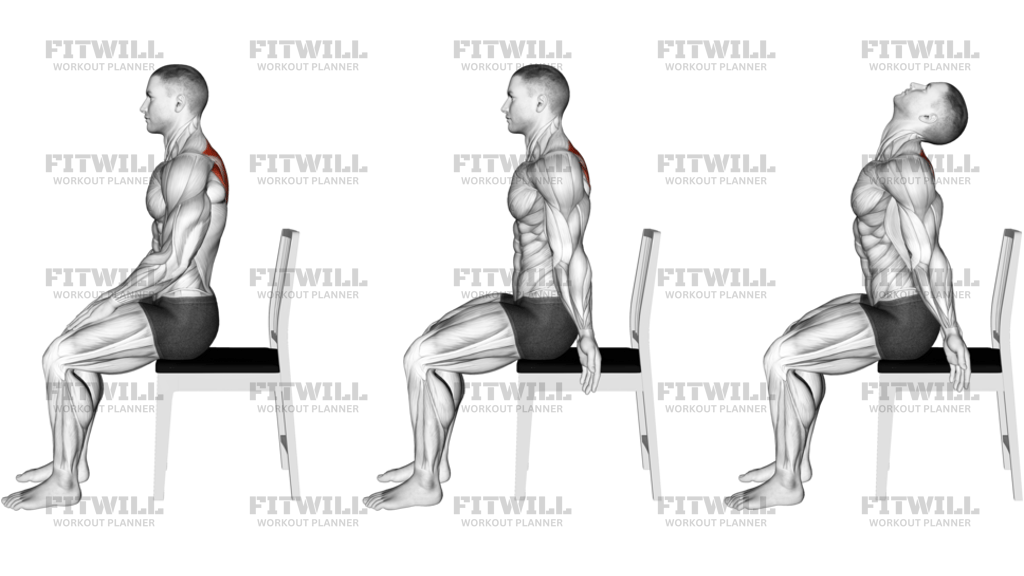
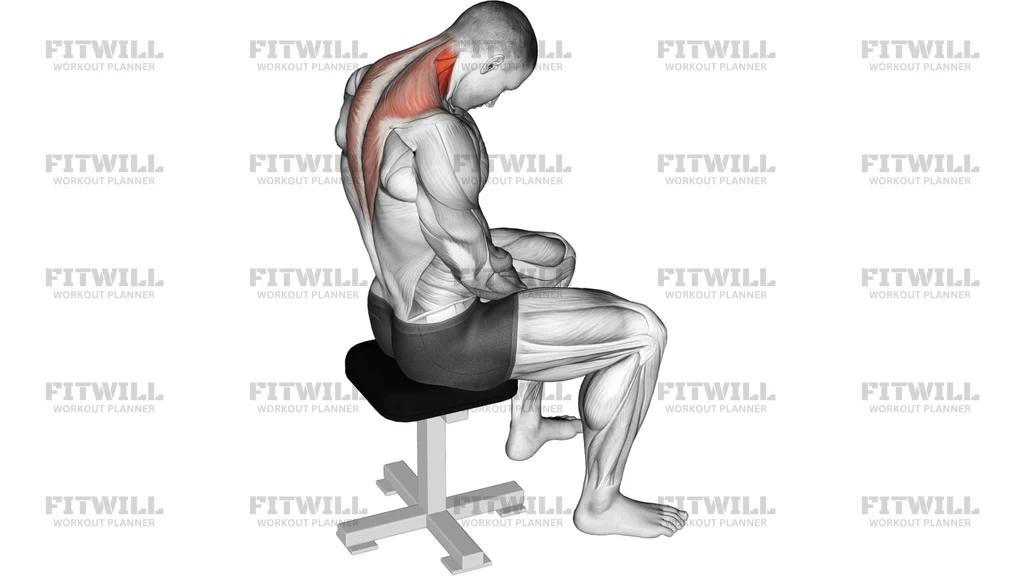
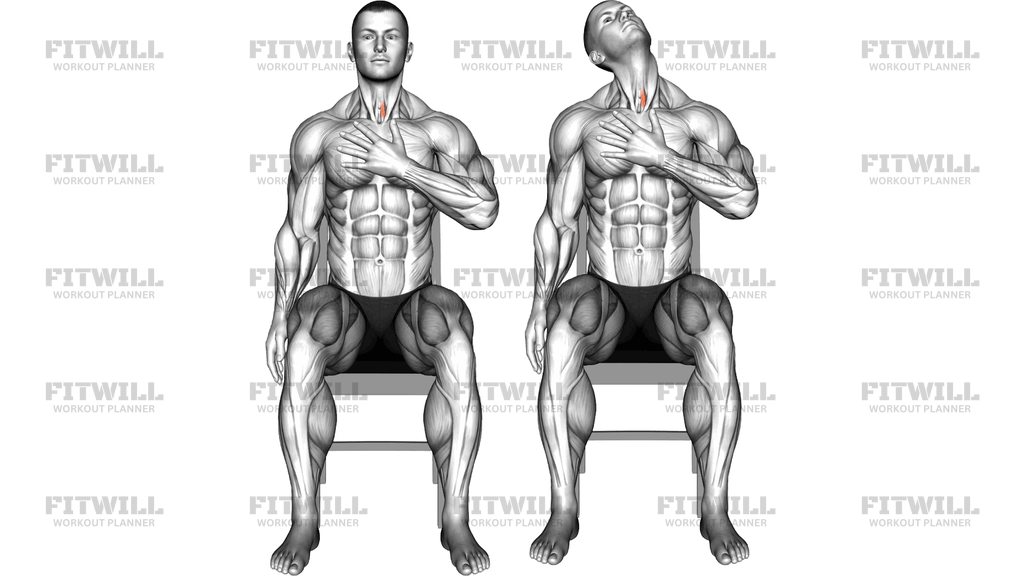
The Seated Neck Side Upward Stretch is a self-applied stretch for the front and side of the neck, performed from an upright seated position. You anchor the tissue of your upper chest with one flat hand, then slowly tilt and rotate your head back and to the side so the face turns toward the ceiling. This combined position lengthens the sternocleidomastoid and the smaller muscles along the front and lateral neck that rarely get stretched in everyday posture.
This movement is especially useful for people who spend long hours at a desk, drive frequently, or look down at phones, since all of these habits shorten the front-of-neck muscles over time. It is also a good follow-up for lifters after heavy pressing days, when the neck and upper chest area tend to tighten up. Because it is done seated with a hand anchoring the chest, it is easy to control and requires no equipment beyond a bench or sturdy chair.
The setup matters more than most people expect. Sitting tall with a stable torso means the stretch comes from the neck itself rather than from your shoulders shrugging or your back arching. The hand placed flat on the upper chest does two jobs: it holds the chest and collarbone area quiet, and it gently draws the superficial tissue downward so the neck muscles can lengthen more fully as the head tilts back and rotates.
To execute it well, move the head slowly and stop at the first clear stretch sensation along the front or side of the neck. The tilt, the backward extension, and the rotation happen together as one smooth diagonal path, not as three separate jerks. Keep the jaw relaxed and the shoulders level. You should feel a long, mild pull, never sharp pain, tingling, or pressure in the head.
A practical approach is two to three rounds per side, holding fifteen to thirty seconds each. It fits well into a morning routine, a mid-day desk break, or a cool-down after training. If you feel lightheaded or the stretch changes character at any point, come out of the position and shorten the range on the next attempt.
[ Workout Log & Planner ]
Put your next workout in Fitwill
Keep your plan and training log ready when you are.


Instructions
- Sit upright on a bench or sturdy chair with your feet flat on the floor, hip-width apart, and your spine tall over your hips.
- Rest your left hand on your thigh and place your right palm flat on your upper chest just below the collarbone, fingers pointing toward the opposite shoulder.
- Roll your shoulders back and down, and lightly brace your core so your torso stays still throughout the stretch.
- Exhale and slowly tilt your head backward so your face turns toward the ceiling, leading with the chin.
- As you extend, guide the head slightly to the side and rotate it so you feel a diagonal pull along the front and side of the neck.
- Let the hand on your upper chest gently glide the skin and tissue downward to deepen the stretch without adding head pressure.
- Hold the end position for fifteen to thirty seconds while breathing steadily through your nose.
- Slowly bring your chin back to a neutral position, keeping the movement controlled rather than letting the head snap forward.
- Switch hands, place the opposite palm on your upper chest, and repeat the same path to stretch the other side.
- Complete two to three repetitions per side, resetting your seated posture between each hold.
Tips & Tricks
- A common mistake is letting the shoulder on the stretching side creep up toward the ear, which shortens the very muscles you are trying to lengthen. Check that both shoulders stay level before you begin.
- Keep the pressure from your chest-hand light. Pressing hard on the sternum area changes the angle of the chest and can make the stretch feel restrictive instead of releasing the neck.
- If you feel the stretch more in the back of the neck than the front, you are extending too far back. Reduce the backward tilt and add a touch more rotation until the pull returns to the front-side line.
- Do not force the chin higher at the end position. The diagonal head path only needs to reach the point of a clear, comfortable pull to be effective.
- Keep your jaw loose and your tongue resting away from the roof of your mouth. Clenching the jaw tends to tense the front-of-neck muscles and reduces the stretch.
- Avoid holding your breath during the hold. Exhaling as you tilt back and breathing steadily through the hold usually lets the position settle deeper on its own.
- If your lower back arches as you look up, brace your trunk lightly or sit with your back supported so the extension stays in the neck.
- Move into and out of the position slowly. The neck responds poorly to fast end-range movement, so the return to neutral deserves the same control as the stretch itself.
- If you notice dizziness or tingling, stop immediately and reduce the range noticeably on the next attempt, staying well short of end range.
Frequently Asked Questions
Which muscles does the Seated Neck Side Upward Stretch target?
The main targets are the front and side-of-neck muscles, particularly the sternocleidomastoid, along with the scalenes and upper fibers of the trapezius. The hand anchoring the upper chest helps these muscles lengthen as the head tilts back and rotates.
Why does the Seated Neck Side Upward Stretch use a hand on the chest?
The flat palm anchors the tissue of the upper chest and collarbone area so it does not travel with the head as you extend. This anchoring makes the stretch on the front of the neck noticeably more specific and consistent.
Is the Seated Neck Side Upward Stretch suitable for beginners?
Yes, it is a good beginner neck stretch because it is performed seated, uses very light self-assistance, and stays easy to control. Beginners should simply use a smaller backward tilt and stop at a mild pull.
How long should I hold the Seated Neck Side Upward Stretch?
Fifteen to thirty seconds per side works well for most people, repeated two to three times per side. If you are new to stretching the neck, start closer to fifteen seconds with a gentler angle.
Should I feel the Seated Neck Side Upward Stretch on the same side as the head tilt or the opposite side?
You should feel it on the front and side of the neck opposite the direction your face turns, since those muscles lengthen as the head extends and rotates away from them. If the pull is only at the back of the neck, back off the extension slightly.
How is the Seated Neck Side Upward Stretch different from a basic side neck stretch?
A basic side stretch usually involves tilting the ear toward the shoulder with the head neutral, targeting the side of the neck more directly. This version adds backward extension and upward rotation, which shifts the emphasis to the front-of-neck muscles.
How often can I do the Seated Neck Side Upward Stretch?
It is gentle enough to perform daily, especially if you sit at a desk or drive for long periods. Once per day, or after upper-body training sessions, is a sensible frequency for most people.
Is it safe to do the Seated Neck Side Upward Stretch if I get dizzy looking up?
If looking up or turning your head regularly causes dizziness, work with a much smaller range or check with a qualified professional before using this stretch. Never push through symptoms in the neck, and stop immediately if they appear.
Can I do the Seated Neck Side Upward Stretch without a bench?
Yes, any stable seat such as a chair works, as long as you can sit upright with both feet flat on the floor. The bench simply provides a consistent, firm surface that makes good seated posture easier to hold.