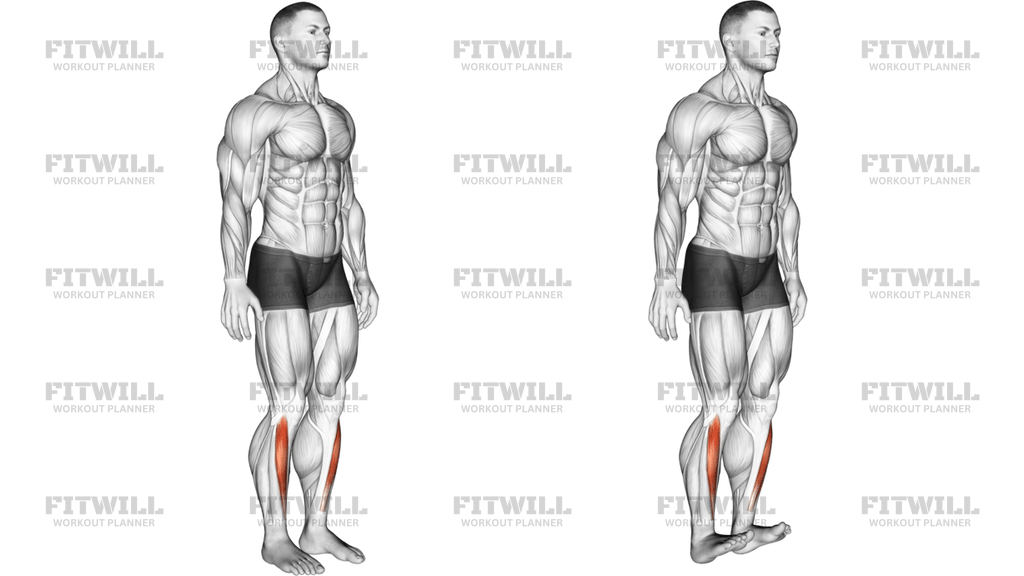
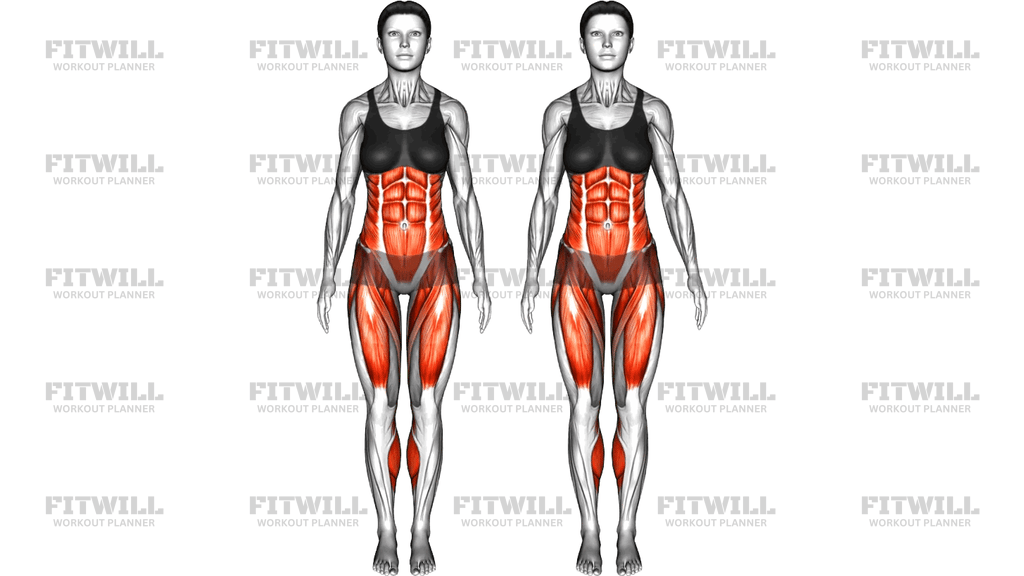
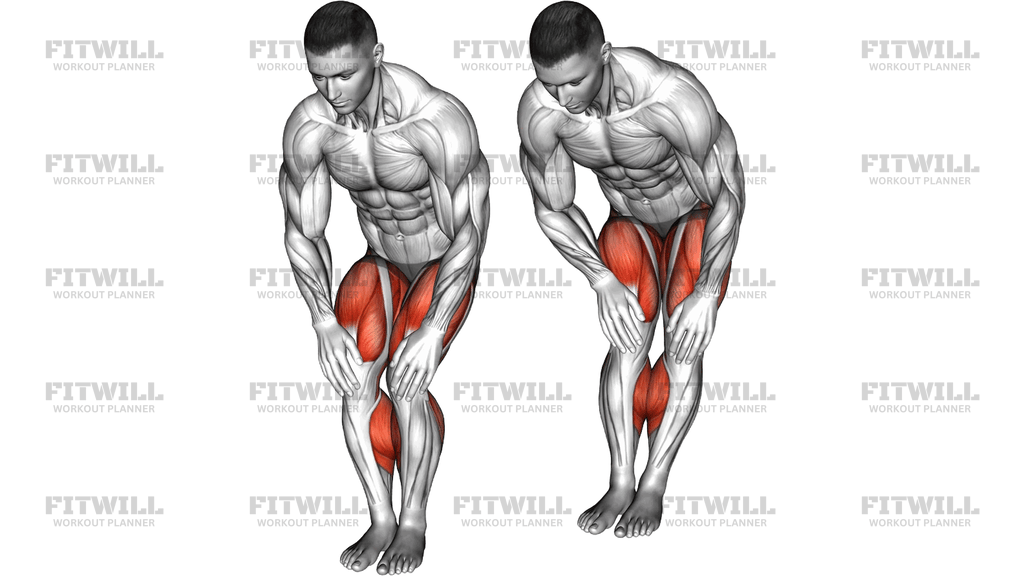
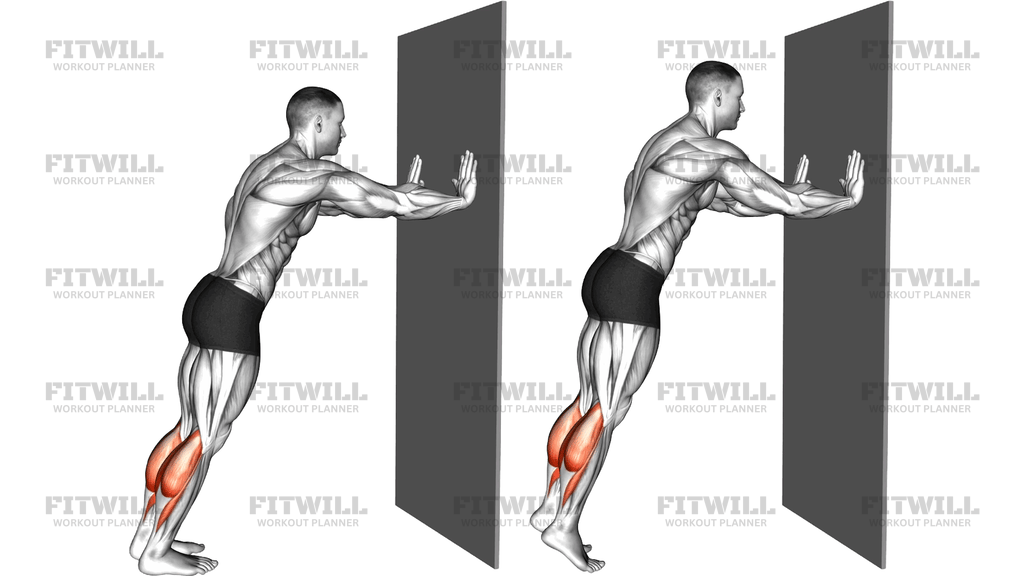
Chair Squat Calf Rock
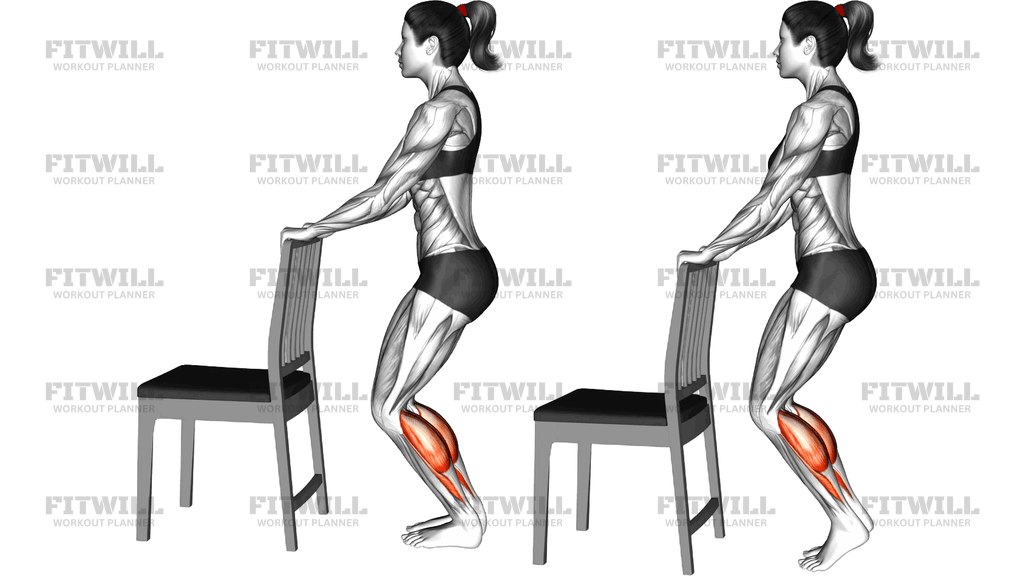
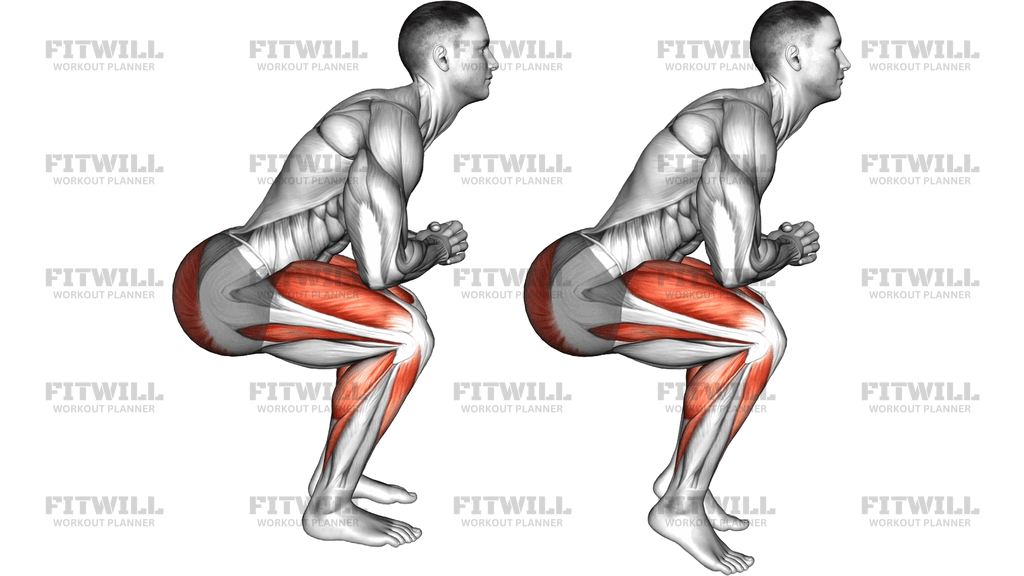
The Chair Squat Calf Rock combines a supported squat hold with continuous heel raises, so you train your calves while your thighs and hips work to keep you stable. Instead of standing upright like a traditional calf raise, you lower into a partial squat as if you were about to sit down on a chair, then repeatedly rock up onto the balls of your feet and lower your heels back toward the floor. This keeps constant tension on the calf muscles from a bent-knee angle, which places more of the load on the soleus while the gastrocnemius, quads, and glutes handle the isometric demand.
This exercise is especially useful for people who find standing calf raises too easy or too passive, since the squat hold removes any chance of resting between reps. It is also a smart choice for beginners working on squat mechanics: holding the seated position while rocking the ankles teaches you to keep your weight balanced over the mid-foot and to feel how ankle mobility affects your squat depth. Because a chair or bench sits behind you, you always have a safety target to touch or sit back onto if you lose balance.
The main work happens in the lower legs. The gastrocnemius and soleus drive the heel lift, the smaller ankle stabilizers keep you from wobbling side to side, and the quads and glutes hold your squat position isometrically the entire time. That combination makes this a useful accessory movement for runners, lifters who want stronger calves at bent-knee angles, and anyone rehabbing general ankle strength and control after time away from training.
Setup matters here more than in most calf exercises. Your stance width and how far you sit back determine both the calf stretch and the balance challenge. Stand with feet about hip-width apart in front of a sturdy chair or bench, shift your hips back and down into a half squat, and keep your torso leaning slightly forward with your arms extended in front for balance. From there, the rocking motion should be slow and deliberate: press through the balls of your feet to lift your heels as high as the position allows, pause briefly at the top, then lower your heels with control.
A few practical points will keep this safe and effective. Keep your knees tracking over your toes and avoid letting them cave inward as your heels rise, since the wobble at the top of each rep is where most people lose form. Start with a shallow squat hold and a small heel range, and only deepen the squat or extend the pause once you can complete your reps without your ankles shaking. If you feel the work shifting into your thighs and away from your calves, reduce the squat depth until you can feel each heel raise clearly.
[ Workout Log & Planner ]
Put your next workout in Fitwill
Keep your plan and training log ready when you are.


Instructions
- Place a sturdy chair or bench behind you and stand facing forward with your feet about hip-width apart, toes pointing straight ahead.
- Hinge your hips back and lower into a half squat, stopping just above the seat so your thighs are roughly parallel to the floor or slightly higher.
- Extend both arms straight in front of your chest for balance and let your torso lean forward slightly, keeping your chest up and your back neutral.
- Brace your core and squeeze your thighs to lock in the squat position before your heels move at all.
- Press through the balls of both feet and lift your heels as high as you can while keeping your knees bent and your squat depth unchanged.
- Hold the top position for one to two seconds, feeling the contraction through your calves.
- Lower your heels slowly back to the floor without letting your hips rise or drop, keeping your squat height identical from rep to rep.
- Breathe steadily throughout, inhaling as your heels lower and exhaling as you press up.
- Complete your target reps, then stand all the way up or sit fully onto the chair to rest before your next set.
Tips & Tricks
- If your hips drift upward as your heels rise, that is a sign the calf work is too hard from that depth — reduce the squat angle so you can keep your hips locked in place.
- Watch your knees in a mirror: when your heels lift, the knees tend to drift inward. Actively push them slightly outward over your little toes on every rep.
- Do not rush the rocking. A two-second lift and a two-second lower turns this into a strength exercise, while bouncing turns it into a balance test you will fail.
- Keep your weight spread across the balls of your feet rather than rolling onto the outer edges, which is a common way people cheat the calf contraction at the top.
- If you lose balance at the top of the heel raise, hover one or two fingertips over the back of the chair rather than gripping it, so your legs still do the stabilizing work.
- The deeper the squat hold, the more the soleus takes over and the harder your thighs work. Start shallow and progress depth over weeks, not within one set.
- Stop the set when your heels can no longer reach the same height — partial reps from fatigue teach sloppy ankle mechanics.
- Warm up your ankles with a few slow bodyweight squats or ankle circles first, since cold ankles are the most likely reason this exercise feels unstable.
Frequently Asked Questions
What muscles does the Chair Squat Calf Rock work?
The calves are the primary movers, with the soleus taking on extra work because your knees stay bent throughout. Your quads and glutes also contract isometrically to hold the squat position, and the ankle stabilizers keep you balanced on the balls of your feet.
Why do this instead of a regular standing calf raise?
In the bent-knee squat position the gastrocnemius is shortened, so the soleus does more of the lifting — a angle most standing calf raises miss. The constant squat hold also means your thighs never get a chance to rest between reps.
How deep should the squat be during the Chair Squat Calf Rock?
Start with a shallow chair squat where your thighs are slightly above parallel, which is enough to load the calves while staying stable. Deepen the hold only when you can finish all your reps without your hips rising or your knees caving in.
Do I actually need a chair for this exercise?
The chair is mainly a safety target and a depth reference, so you can perform the movement without one once you are confident in the position. Keeping it behind you is still a good idea when you are new or training to fatigue.
Is the Chair Squat Calf Rock suitable for beginners?
Yes, and it is actually a good beginner exercise because the chair teaches proper sit-back mechanics for squatting while building ankle strength. Begin with a shallow hold, fewer reps, and fingertips near the chair for balance before progressing.
Why do my thighs burn more than my calves during this movement?
That usually means your squat hold is too deep or your heels are not lifting through a full range, so the isometric quad demand is drowning out the calf work. Raise your squat height slightly and focus on pressing high onto the balls of your feet each rep.
How many reps and sets should I do?
Two to three sets of 10 to 15 slow, controlled rocks is a solid starting point. Because the movement is harder than it looks, prioritize full heel range and steady tempo over high rep counts.
My ankles wobble badly at the top of each rock — how do I fix it?
Reduce how high you lift your heels until the wobble stops, and keep your arms extended forward to counterbalance. Wobbling usually reflects weak ankle stabilizers, which improve quickly if you train the smaller range consistently.
Can I hold weights while doing the Chair Squat Calf Rock?
You can, but adding load before your balance is solid usually degrades the rocking motion. Master the bodyweight version first, then hold a light dumbbell or kettlebell at your chest only if your heels still reach full height with control.