Plank Row
The Plank Row combines two demanding positions into one movement: a solid high plank and a one-arm rowing action. From a push-up position with your feet set wider than hip width, you lift one hand off the floor and drive the elbow up and back in a rowing pattern, squeezing the shoulder blade toward the spine before returning the hand under the shoulder. Because only three points of contact remain, the torso naturally wants to twist, and preventing that rotation is where most of the work happens.
This movement earns its place in a program because it trains the lats, mid-back, and rear shoulders through the rowing arm while the opposite side works isometrically to hold the plank. The abs and obliques have to brace hard to keep the hips square to the floor, and the supporting shoulder and arm take on significant stabilizing duty. It is essentially a strength and control exercise, not a conditioning drill, so quality of position matters far more than speed or reps.
Setup details make or break this exercise. Feet should be spread wide to give the base lateral stability, hands stacked directly under the shoulders, and the body forming one straight line from heels to head. If the hands drift forward of the shoulders or the feet sit too close together, the torso will rotate the moment one hand lifts and the rowing action turns into a messy shoulder shrug.
To execute well, brace the abs and squeeze the glutes before the hand ever leaves the floor, then pull the elbow toward the ceiling, keeping it close to the ribs rather than flaring wide. Think about driving the elbow back toward the hip instead of reaching with the hand. Pause briefly at the top, feel the shoulder blade retract, then lower the hand back down with control and re-set before switching sides.
The Plank Row suits intermediate trainees who already own a solid plank, and it works well as a warm-up activation drill, a core finisher, or a bodyweight alternative when no rowing equipment is available. Anyone doing pushing-dominant training will appreciate how it balances pressing volume with pulling mechanics while doubling as anti-rotation core work.
The main safety point is the lower back: when fatigue sets in, the hips sag or rotate and the lumbar spine takes loads it is not positioned to handle. Stop the set when you can no longer keep the hips level, and if holding the plank is the limiting factor, regress to a plank with shoulder taps until the bracing strength catches up.
[ Workout Log & Planner ]
Put your next workout in Fitwill
Keep your plan and training log ready when you are.


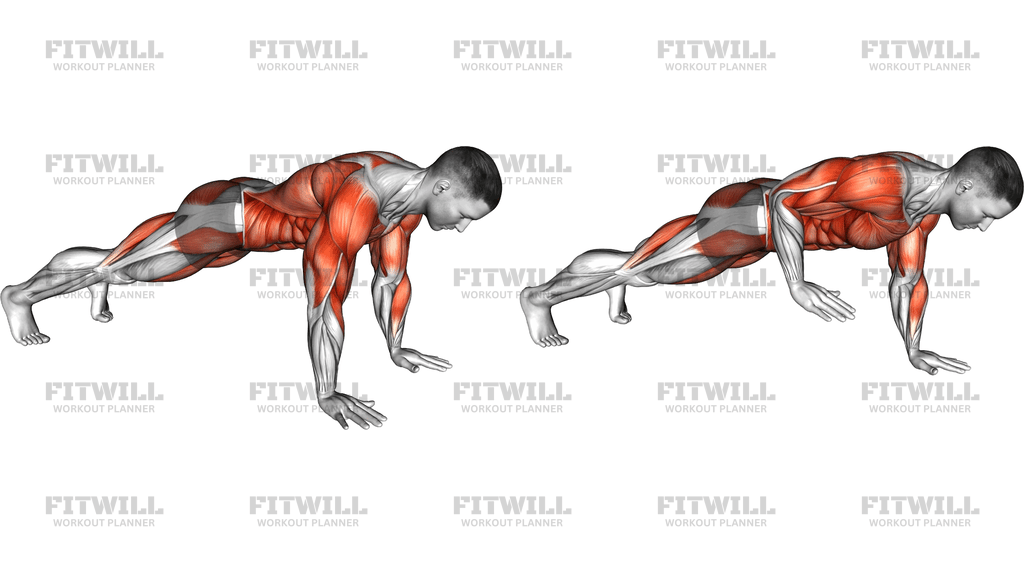
Instructions
- Set up in a high plank with your hands on the floor directly under your shoulders and your arms straight.
- Spread your feet noticeably wider than hip width, toes tucked, heels pressing back, so your base can resist side-to-side rotation.
- Form one straight line from your heels through your hips to the top of your head, and look at the floor slightly ahead of your hands.
- Brace your abs, squeeze your glutes, and take a breath before any movement begins.
- Lift one hand off the floor and pull your elbow up toward the ceiling, keeping it close to your ribs as if rowing a weight toward your hip.
- Squeeze the working shoulder blade back toward your spine at the top, with the elbow finishing above or slightly behind the torso.
- Lower the hand back to the floor under control, placing it exactly where it started, and re-grip the floor.
- Exhale as you row, inhale as the hand returns, and keep breathing steadily rather than holding your breath through the rep.
- Complete all reps on one side or alternate hands, pausing for a beat in the plank between reps to reset your line.
- End the set as soon as your hips begin to sag, rotate, or shift side to side.
Tips & Tricks
- Widen your feet further if you feel yourself tipping toward the rowing side; a narrow foot stance is the most common reason this movement falls apart.
- If your supporting shoulder creeps up toward your ear, push the floor away and lengthen that arm; the plank row should feel stable, not shrugged.
- Keep the rowing elbow brushing past your ribs. An elbow flaring out to the side shifts work to the shoulder and loses the lat and mid-back focus.
- Watch for hand placement drift: many people let the working hand land forward of its starting point, which shortens the base on the next rep.
- Slow the lowering phase down. Most people rush the return and lose their bracing, so treat placing the hand back down as part of the rep.
- If your hips rotate toward the ceiling on the rowing side, imagine balancing a glass of water on your lower back for the entire set.
- Build up with a plank plus shoulder taps first if you cannot hold a high plank for 45-60 seconds; the row only adds load to a position you should already own.
- Avoid turning this into a speed drill. A controlled two-second row with a pause beats five fast, twisting reps every time.
- Keep your neck neutral by fixing your gaze on a spot on the floor about a hand length in front of you rather than craning up.
Frequently Asked Questions
What muscles does the Plank Row work?
The rowing side targets the lats, rhomboids, traps, and biceps, while the supporting arm and shoulder work isometrically. Your abs and obliques brace throughout to stop the torso from rotating, which is a large share of the total effort.
Is the Plank Row suitable for beginners?
It is best treated as an intermediate progression. If you cannot hold a strict high plank for close to a minute, start with plank shoulder taps or a knee-supported version and build up before adding the rowing action.
Why should my feet be wide during the Plank Row?
A wide stance widens your base of support laterally, which is exactly the direction your body wants to tip when one hand leaves the floor. Narrow feet almost guarantee hip rotation and a twisting, low-quality rep.
How do I keep my hips from rotating during the Plank Row?
Brace your abs and glutes before lifting the hand, keep the row moderate in intensity, and think about pressing the supporting hand firmly into the floor. If rotation still happens, the movement is exceeding your current bracing strength, so reduce reps or regress the exercise.
Can I add dumbbells to the Plank Row?
Yes, performing it with a light dumbbell under each hand turns it into the renegade row, which adds load but also demands an even more stable wrist and plank position. Master the bodyweight version first so the rowing pattern and hip control are solid before adding weight.
What is the most common mistake in the Plank Row?
Shrugging the rowing shoulder and flaring the elbow out wide, which turns a lat and mid-back row into an upper-trap and shoulder exercise. Keep the elbow close to your ribs and finish by pulling the shoulder blade back, not by lifting the hand higher.
How many reps and sets should I do of the Plank Row?
Two to four sets of 6-10 controlled rows per side works well, with the set ending when your plank position breaks down rather than when your pulling arm tires. Rest 45-90 seconds between sets so your bracing recovers.
What can I substitute if the Plank Row is too hard?
Plank shoulder taps train the same anti-rotation bracing with less demand, and a bent-over dumbbell row covers the rowing pattern separately. Combining those two movements replicates the Plank Row's effects while you build the required stability.
Is the Plank Row safe for my lower back?
It is generally well tolerated as long as your hips stay level and your spine stays neutral. The risk comes from pushing through fatigue once the plank position sags or twists, so cut the set off at the first sign of hip breakdown rather than grinding extra reps.